


Plant care guide
Large Plant Care Guide
Care for your plants with confidence
Professional care advice for large office and home potted plants — keep your green space in top condition.
-
Hong Kong delivery
Professional packing and delivery to your door -
Seven-day plant health promise
We review eligible quality issues within seven days -
Care support when you need it
Ask our plant team about your space and routine
Three care habits
Three simple steps for healthier plants
-
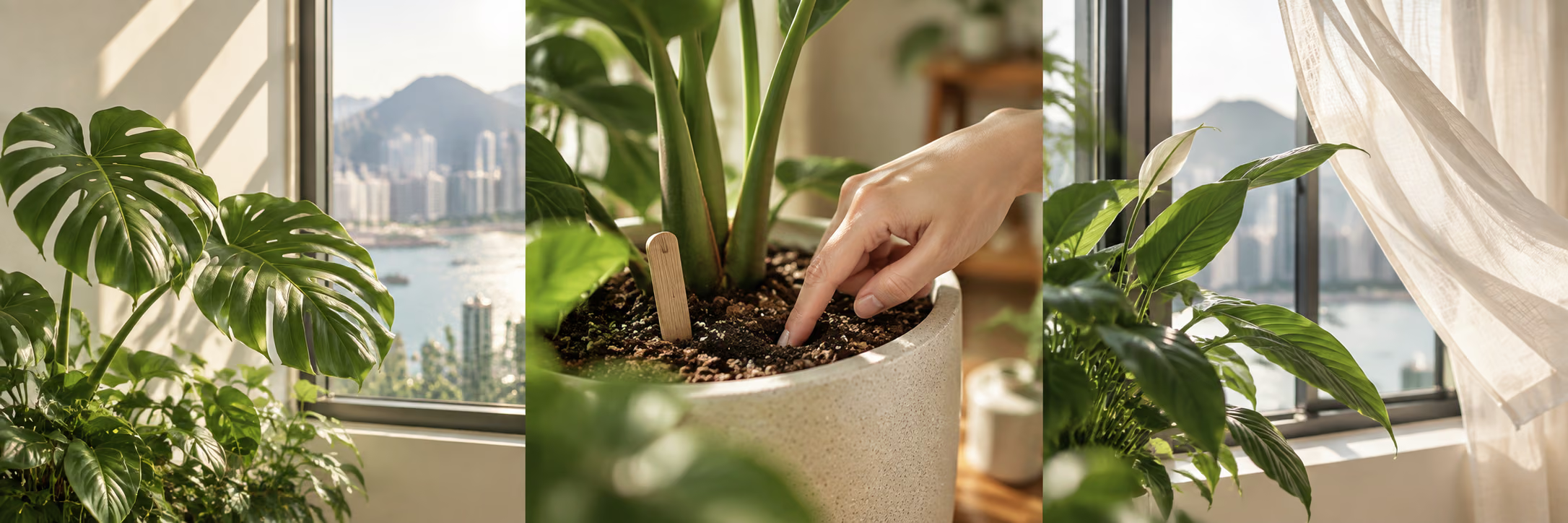
Check the light
Understand the light in your home or office before choosing a plant and its position. -
Water when dry
Check about 5 cm into the soil and water only when it is dry; water thoroughly, then empty standing water. -
Keep air moving
Avoid direct air-con draughts and prevent soil from staying damp for too long after watering.
Easy Care for Your Greenery
The Fiddle Leaf Fig, Bird of Paradise, Money Tree, Dragon Tree and other large potted plants are among the most popular choices for office and home greening. Beyond elevating the ambience of a space, they also improve air quality, creating a more comfortable working and living environment.
Drawing on practical experience with hundreds of corporate and residential clients, the PlantShop.hk team has compiled this large plant care guide, specially tailored to Hong Kong’s climate, air-conditioned offices and home environments.
Care Golden Rule: The leading cause of death for large indoor plants in Hong Kong is “over-caring” — specifically, watering too frequently. Large plants hold more soil and it takes considerably longer to dry out. Unless the plant is showing signs of thirst, always remember the golden principle: Better dry than wet.
Large Plant Care FAQ
How to Water Correctly?
Golden Rule: Better Dry Than Wet
Large plants such as the Fiddle Leaf Fig and Bird of Paradise have deeper root systems and a greater volume of soil, meaning they take considerably longer to dry out. The most common cause of plant loss is root rot resulting from prolonged waterlogging. The rule is simple: only water when the soil is completely dry — if it still feels slightly damp, wait.
Correct Watering Steps
- Check Soil Moisture — Insert your finger or a wooden chopstick about 5 cm into the soil (go deeper for particularly large pots). Only water when it feels completely dry.
- Water Slowly and Thoroughly — Large pots should be watered 2–3 times in succession, allowing water to slowly seep through until it drains from the holes at the bottom.
- Drain Excess Water — After 15–20 minutes, pour away any water that has collected in the saucer to prevent root rot.
Office vs Home Watering Frequency
- Office (with air conditioning): Drier air — approximately every 7–10 days in spring/summer, and every 10–14 days in autumn/winter.
- Home (natural ventilation): Higher humidity — approximately every 10–14 days in spring/summer, and every 14–21 days in autumn/winter.
- Window-side position: Stronger light and faster evaporation mean more frequent watering is needed compared with spots further inside.
Note: Large pots hold a considerable volume of soil. Ensure good ventilation after watering to prevent mould from prolonged dampness. During humid weather (such as spring humidity spells), consider improving ventilation and extending the interval between watering.
Where to Place for the Right Light?
Light Requirements Overview
Different varieties require different light conditions. You can select the most suitable plant species based on the specific placement location.
Large Plant Light Requirement Categories
| Type | Representative Plants | Suitable Position |
|---|---|---|
| Bright Indirect Light | Fiddle Leaf Fig, Bird of Paradise, Rubber Plant | 1–2 metres from the window, or soft light behind curtains |
| Semi-Shaded Environment | Money Tree, Dragon Tree, Dracaena | Office centre, corridors, 2–3 metres from the window |
| Shade-Tolerant | Snake Plant, Monstera, Chinese Evergreen | Deep interior, meeting rooms, near bathrooms |
Special Notes for Offices
- Avoid placing plants directly under air-con vents, as this can dry out and yellow the leaves.
- Meeting rooms typically lack sufficient natural light; opt for shade-tolerant varieties such as the Snake Plant.
- Reception lobbies featuring skylights or floor-to-ceiling windows make ideal showpiece positions for large plants like the Fiddle Leaf Fig.
Signs of Insufficient Light
- New leaves emerge smaller and paler; stems begin to stretch and etiolate.
- Lower leaves turn yellow and drop in large numbers.
- Growth stalls with no new leaves appearing over an extended period.
When to Fertilise?
Fertilising Basics
Indoor plants grow more slowly than those placed outdoors. Fertilising correctly keeps plants looking lush and encourages healthy new leaf growth. When fertilising, we recommend using half the stated dosage.
Fertilising Schedule
- Spring/Summer (Mar–Sep) — Growing Season: Fertilise every 6–8 weeks.
- Autumn/Winter (Oct–Feb) — Dormant Period: Pause or reduce fertilising by half.
- Newly Purchased Plants: No fertilising is required for the first 3–6 months, as slow-release fertiliser will have already been applied at the nursery.
Fertiliser Choices for Large Pots
| Type | Features | Recommended Use |
|---|---|---|
| Slow-Release Fertiliser | Lasts 3–6 months; lower risk of root burn | Ideal for offices — saves time and effort |
| Liquid Fertiliser | Fast-acting; must be diluted as directed | Use during the growing season; dilute to half the concentration stated on the packaging |
| Organic Fertiliser | Gentle on roots; improves soil quality; though some brands may have an odour | Well-suited to homes, especially those with children or pets |
Important Reminder: Large pots hold a considerable volume of soil — when in doubt, always dilute rather than concentrate. Over-fertilising leads to salt accumulation in the soil, resulting in brown leaf tips. Follow the principle of “dilute and apply frequently”.
How to Spot Plant Health Problems?
Common Problems Overview
When large plants are under stress, they display clear distress signals. Identifying and addressing these early can prevent plant loss and the need for costly replacements.
Common Large Pot Problems — Quick Reference
| Symptom | Likely Cause | Solution |
|---|---|---|
| Lower Leaves Yellowing | Natural ageing or overwatering | Remove yellow leaves; check soil moisture and adjust watering frequency |
| Heavy Leaf Drop | Sudden environmental change, relocation or direct air-con draught | Maintain a stable environment; avoid frequent moving; keep away from air-con vents |
| Stems Becoming Soft | Severe root rot from prolonged overwatering | Stop watering immediately; inspect roots; repot and trim rotten roots if necessary |
| Brown Leaf Tips | Air too dry, water quality issues or over-fertilising | Increase humidity by misting; switch to filtered water; pause fertilising and flush the soil |
| Spots on Leaves | Pests, disease or fungal infection | Isolate affected plants; remove diseased leaves; treat with a natural pesticide |
| Stems Stretching (Etiolation) | Severely insufficient light | Move to a brighter position; trim stretched sections to encourage new growth |
Office Special Tip: Following a move into a new office environment, large plants may shed a number of adaptive leaves during the first 2–4 weeks. This is entirely normal. Maintain consistent care and the plant will gradually settle into its new surroundings.
When to Repot? How to Do It?
When to Repot
Indoor plants grow slowly, but once the roots have filled the pot or the soil’s nutrients are depleted, repotting becomes necessary. Office plants may be repotted every 1.5–2 years. Please enquire if you require repotting services.
Signs That Repotting Is Needed
- Roots are visibly protruding through the drainage holes or growing in circles across the soil surface.
- Soil dries out unusually quickly — within a day or two of watering — indicating the roots have filled the pot.
- Plant growth has stalled with no new leaves emerging over an extended period.
- White salt deposits or a crust have formed on the surface of the soil.
- The plant is visibly leaning and unstable in its pot.
Large Pot Repotting Steps
- Choose a New Pot — Select one that is only 5–8 cm larger in diameter than the current pot; going too large can lead to waterlogging and root rot. For offices, lightweight plastic or faux-ceramic pots are recommended for ease of handling.
- Prepare Soil — Use a quality potting mix suited to large plants, incorporating perlite (approximately 20%) to improve aeration and drainage.
- Remove the Plant — Gently lay the pot on its side, tap firmly around the rim, and ease the plant out with its root ball intact. Never tug hard on the stems.
- Inspect the Roots — Carefully loosen any circling roots, and trim away those that are black, rotten or excessively long.
- Place in New Pot — Add a drainage layer of clay pebbles or gravel to the base (approximately 3–5 cm), add fresh potting mix, position the plant, then fill in around it and lightly firm the soil.
- Water to Settle — Water thoroughly, then move to a cool, well-ventilated spot and allow 5–7 days to recover before resuming normal care.
Note: Avoid fertilising for at least one month after repotting to allow the roots to settle and adapt. It is normal for large plants to take 2–4 weeks to resume active growth following repotting.
Hong Kong Indoor Environment — Special Tips
Hong Kong’s Indoor Environment Overview
Hong Kong’s humid climate, combined with constantly air-conditioned offices and varied home environments, calls for a considered approach to large plant care. Below are our practical tips for local conditions:
Air-Conditioned Office Environment
- Air conditioning may lower humidity levels, sometimes causing leaf edges to brown. Trim as appropriate and consider humidity-boosting measures.
- Never place plants directly under air-con vents; maintain a distance of at least 2 metres.
- On weekends when the air con is switched off, move plants to a more naturally ventilated position.
- Meeting room plants should be rotated periodically to brighter spots to allow them to “recharge”.
Home Environment
- West-facing windows receive intense afternoon sun in summer; move large plants at least 1 metre away from the glass, or use curtains to provide shade.
- Grease from cooking can clog leaf stomata; large plants are not recommended in kitchen areas.
- Bathrooms tend to have high humidity, making them well-suited to shade-tolerant varieties such as Monstera.
Seasonal Care
- Spring/Summer (Mar–Sep): Peak growing season — increase watering frequency and commence fertilising.
- Spring Dampness: Pause watering, run a dehumidifier, and inspect the undersides of leaves for signs of pests.
- Autumn/Winter (Oct–Feb): Reduce watering, pause fertilising, and avoid placing plants near heaters.
- Typhoon / Heavy Rain Days: Ensure window-side plants are sheltered from rain splashing in, which can lead to waterlogging and root rot.
Water Quality
- Hong Kong tap water contains chlorine; allow water to stand in an open container overnight before use, or opt for filtered water directly.
- Large pots require a significant amount of water; consider collecting air-con condensate for watering — it is at room temperature and free of chlorine.
Light first
Light Requirements Guide
Select the most suitable large plants for your space based on the natural light available in your office or home.

PlantShop care desk
Need professional help?
PlantShop.hk provides plant care services for offices and homes, including regular care, urgent plant support and repotting. We can help you plan the next step.