


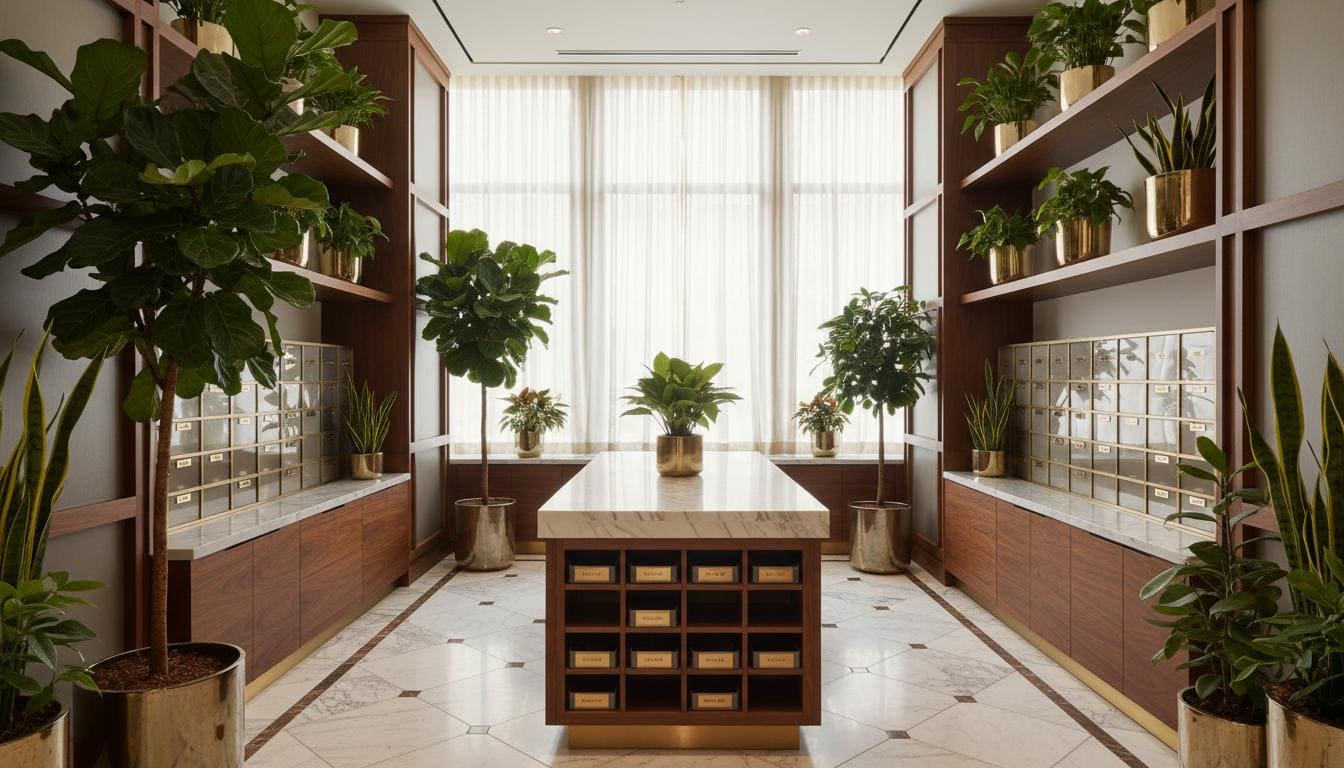

A Planter Is Your Plant’s Home You’ve found a beautiful plant. Pair it with the wrong planter, and the whole impression is undercut before a single leaf has time to establish itself. A planter isn’t purely decorative — it directly determines whether the plant thrives or declines. Poor drainage invites root rot. An oversized pot stays saturated. Wrong materials restrict root aeration. Here’s what you need to know.
Choosing Planters for Large Plants
Five Common Planter Materials
Ceramic
Two types: glazed and unglazed. Unglazed ceramic breathes well, suits most species, and retains moisture at a rate that reduces watering frequency. Glazed ceramic has lower breathability but an expanded palette of colours and finishes. Both are weighty, offering excellent stability — though they shatter if dropped. Price: HK$200–2,000. The most versatile choice for most Hong Kong homes.
Concrete
Industrial character, commanding weight, immovable in strong wind. Durable and long-lived. Two considerations: fresh concrete is alkaline (pH approximately 12–13), so take care with acid-preferring species initially; and breathability is average, making it less suited to moisture-sensitive varieties. Alkalinity neutralises naturally over time. Price: HK$300–1,500.
Plastic
Lightweight, accessible, available in every style and finish. Low breathability, but root rot is not inevitable with correct drainage. The surface lacks the refinement of ceramic or concrete, but the practicality is real. Many plants arrive in plastic nursery pots — consider using these as inner pots inside a more considered outer vessel. Price: HK$50–500.
Natural Fibre (Woven Baskets)
Exceptional breathability and the warmth that ceramic and concrete rarely achieve — essential for Scandinavian or tropical-resort aesthetics. Requires an inner pot for moisture control; woven baskets don’t hold water well and have shorter lifespans. Suited to ferns and trailing plants. Price: HK$100–800.
Metal
Brass, copper, and stainless steel carry an unmistakably considered modernity. Brass and copper develop a patina over time that no other material replicates. The pivotal limitation: metal conducts heat rapidly — summer sun through a window can overheat soil and damage roots. Keep metal planters away from direct sun indoors, or use an inner liner. Price: HK$500–3,000.
How to Calculate Size
Diameter
Planter diameter should be one-third to one-half of the plant’s canopy spread. An Areca Palm with a 1-metre canopy needs a 35–50cm pot.
Height
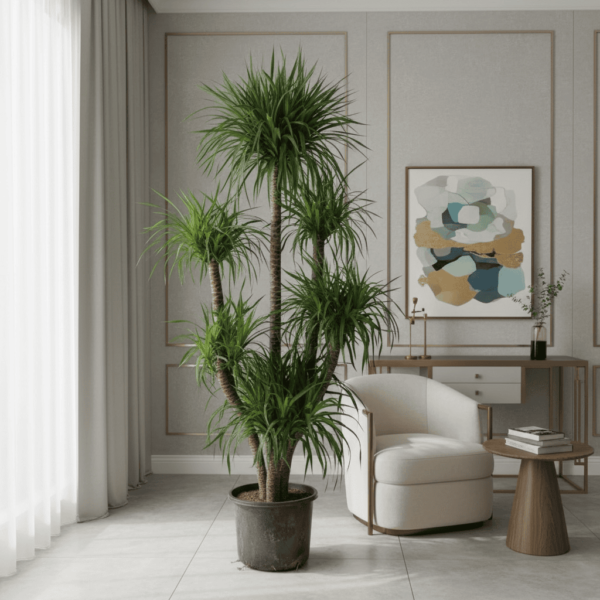
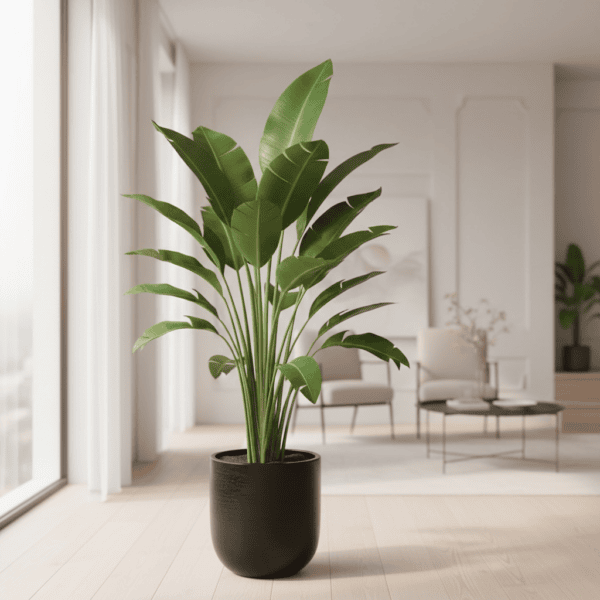
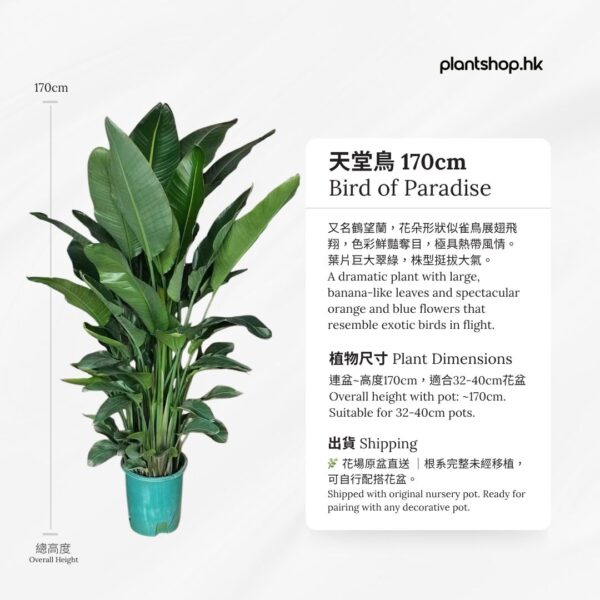
Planter height should match or slightly exceed the diameter. Tall plants — Madagascar Dragon Tree, Giant Bird of Paradise — need deeper pots for a stable centre of gravity.
Room to Grow
For newly purchased plants, choose one size up from the current pot (5–10cm larger in diameter). Larger is not better — an oversized pot retains excess moisture and invites root rot. Plants prefer being slightly snug.
Drainage: The Real Key to Survival
Root rot is the leading cause of indoor plant death, and 90% of root rot originates in poor drainage. Drainage holes are non-negotiable. Regardless of material, the pot must have holes — at least 1–2cm in diameter, with multiple openings in large pots.
How to create a drainage layer: 2–3cm of clay pebbles at the base. Cover with mesh fabric to prevent soil washing through and clogging the holes. Add potting mix above.
Using a saucer: Empty standing water 30 minutes after watering. For humidity benefit, use a pebble humidity tray — water in the tray, pot elevated above the waterline on pebbles.
Style Pairing Guide
| Style | Materials | Colours | Forms |
|---|---|---|---|
| Modern Minimalist | Concrete, white ceramic | White, grey, black | Cylinder or cube |
| Scandinavian | Woven baskets, pale ceramic | Cream, light grey | Soft, rounded |
| Industrial | Concrete, metal | Grey, black, metallic | Geometric, angular |
| Japanese | Raw pottery, stone | Earth tones, matte | Asymmetric, organic |
Common Mistakes to Avoid
Pot Too Large
Excess soil dries slowly and invites root rot. One size up only.
No Drainage Holes
Standing water causes rot. Choose pots with holes, or drill them yourself.
Ignoring Weight
Large planters are heavy. Consider floor load capacity and how you’ll move them before ordering.
Pro Tips
Buy the plant first, then choose the pot: know the actual dimensions before committing. Invest in a considered planter for your living room focal point — it changes the whole composition. Keep planter materials consistent within a room. Add wheels to large pots: the practical advantage is considerable.
PlantShop specialises in 130–180cm large plants, each hand-selected. Every plant comes with a care card — because we believe one well-chosen plant beats ten afterthoughts. — PlantShop Horticulture Team
Related Products
Below are the plants mentioned in this article, available for direct purchase. Each comes with a care card and WhatsApp support:



FAQs
What is this guide about?
A Planter Is Your Plant's Home You've found a beautiful plant. Pair it with the wrong planter, and the whole impression is undercut before a single leaf has time to establish itself. A planter isn't purely decorative — it directly determines whether the plant thrives or declines. Poor drainage invi…
Who is this article for?
Hong Kong residents and offices looking for practical indoor plant advice related to Choosing Planters for Large Plants | Ma….
Where can I buy plants in Hong Kong?
PlantShop.hk offers delivery across Hong Kong. Browse the shop or contact WhatsApp +852 4492 9648 for recommendations.
