




A Green Home for Humans and Pets New plant buyers with cats or dogs face a specific tension: they want to bring life to the home, but they’re alert to the risk of a curious animal taking a mouthful of something it shouldn’t. The good news is that the selection of beautiful, confirmed-safe species is wider than most people expect. All recommendations below have been verified non-toxic to cats and dogs by the ASPCA (American Society for the Prevention of Cruelty to Animals).
Why Non-Toxic Plants Matter Cats and dogs are naturally investigative — they may chew leaves, bat at trailing fronds, drink from saucers, or excavate soil. Common symptoms after ingesting toxic plants: vomiting, diarrhoea, drooling, lethargy, and in severe cases, respiratory distress. If you suspect poisoning, contact your veterinarian immediately.
The practical rule: before any plant enters the home, verify its safety. The ASPCA database is the most comprehensive reference available.
7 Non-Toxic Large Plant Recommendations — pet safe large plants
Areca Palm (Dypsis lutescens) — Top Pick ASPCA
confirmed non toxic to cats and dogs. Elegant arching fronds that immediately create a resort quality atmosphere in the living room. Actively regulates indoor humidity through transpiration, and reasonably undemanding to maintain. Needs bright indirect light near a window.
Height: 1.5–2.5m | Placement: Living room, generous spaces
Boston Fern (Nephrolepis exaltata)
ASPCA-confirmed non-toxic. A classic, its graceful fronds are among the most recognisable indoor specimens. Thrives in humidity — can be content in a bathroom. While non-toxic, consuming large quantities may cause mild digestive discomfort; discouraging nibbling is still sensible.
Height: 50cm–1m (trailing longer) | Placement: Wall-mounted, shelves, bathroom
Spider Plant (Chlorophytum comosum)
ASPCA-confirmed non-toxic. Effortless to care for, and propagates prolifically — the trailing baby plantlets are irresistible to some cats, who will bat them like toys. Entirely harmless.
Height: 30–60cm (trailing to 1m) | Placement: Cabinet tops, shelves, wall-mounted
African Violet (Saintpaulia)
ASPCA-confirmed non-toxic. Compact blooms in a range of rich colours. Not technically “large,” but a considered pot on a side table or desktop adds genuine warmth.
Height: 15–20cm | Placement: Windowsill, desktop
Calathea (Calathea spp.)
ASPCA-confirmed non-toxic across all varieties. Among the most visually distinctive indoor plants available — leaf patterns in deep greens, purples, and creams with high ornamental value. Requires humidity; dry air will brown the leaf edges.
Height: 30–60cm | Placement: Living room, humid spaces
Pilea (Pilea peperomioides)
ASPCA-confirmed non-toxic. Round, cheerful leaves — called the “Friendship Plant” because it produces offsets so readily that sharing becomes the natural impulse.
Height: 20–40cm | Placement: Desktop, shelves
Parlour Palm (Chamaedorea elegans)
ASPCA-confirmed non-toxic. A refined palm form with decent height, undemanding about light, and straightforward for beginners. Safe and considered — an underrated choice for pet households.
Height: 1–2m | Placement: Living room corner, study
⚠ These Common Plants Are Toxic to Cats and Dogs — Do Not Bring Them Home
| Plant | Toxicity Level | Symptoms |
|---|---|---|
| Peace Lily | High | Burning mouth, vomiting |
| Golden Pothos | Medium | Oral irritation, vomiting |
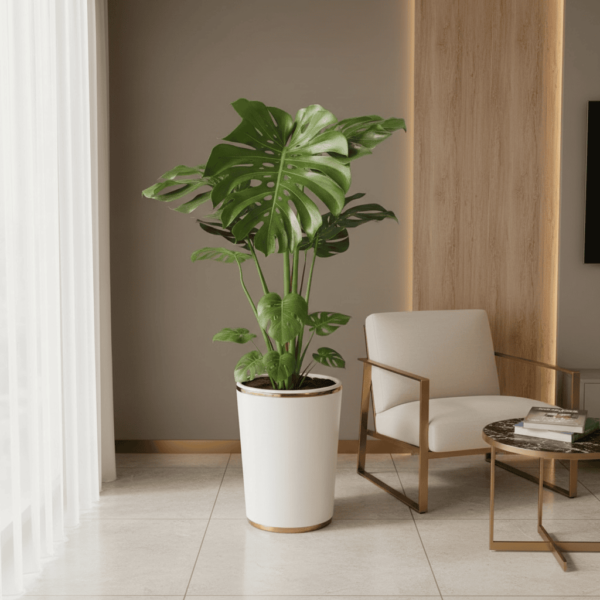
| Monstera | Medium | Oral irritation, swelling |
| English Ivy | Medium | Vomiting, diarrhoea |
| Aloe Vera | Medium | Diarrhoea, discoloured urine |
| Lilies (cats only) | Extremely High | Kidney failure |
| Rubber Plant (Ficus elastica) | Medium | Vomiting, diarrhoea, skin irritation |
| Fiddle-Leaf Fig | Medium | Oral irritation, digestive upset |
What to Do If Your Pet Ingests a Toxic Plant Remove the plant from reach immediately. Check your pet’s mouth for residual plant material. Monitor closely for abnormal symptoms. Contact your veterinarian or a pet poison hotline. Bring a sample of the plant if attending the clinic.
PlantShop specialises in 130–180cm large plants, each hand-selected. Pet households can WhatsApp us to confirm safe varieties before purchasing. Every plant comes with a care card. — PlantShop Horticulture Team
Related Products
Below are the plants mentioned in this article, available for direct purchase. Each comes with a care card and WhatsApp support:




FAQs
7 Non-Toxic Large Plant Recommendations Areca Palm (Dypsis lutescens) — Top Pick ASPCA
confirmed non toxic to cats and dogs. Elegant arching fronds that immediately create a resort quality atmosphere in the living room. Actively regulates indoor humidity through transpiration, and reasonably undemanding to maintain. Needs bright indirect light near a window.
Boston Fern (Nephrolepis exaltata)
ASPCA-confirmed non-toxic. A classic, its graceful fronds are among the most recognisable indoor specimens. Thrives in humidity — can be content in a bathroom. While non-toxic, consuming large quantities may cause mild digestive discomfort; discouraging nibbling is still sensible.
Spider Plant (Chlorophytum comosum)
ASPCA-confirmed non-toxic. Effortless to care for, and propagates prolifically — the trailing baby plantlets are irresistible to some cats, who will bat them like toys. Entirely harmless.
African Violet (Saintpaulia)
ASPCA-confirmed non-toxic. Compact blooms in a range of rich colours. Not technically "large," but a considered pot on a side table or desktop adds genuine warmth.
