



Plantshop.hk · Care Encyclopedia
How to Care for Cozy Home Bundle in Hong Kong
From HK$2,166 · Hong Kong delivery
Hong Kong care guide — useful before you buy and after it arrives.
Shop this plant at PlantShop.hkA set of easy, friendly houseplants chosen for Hong Kong homes, with a spot for every corner from the living room to the bathroom. The one rule that matters most: water when the soil is dry, and keep plants out of the air-con draught.
LightMedium to low indoor light; sunnier windowsills for light-lovers
WateringWater when top 2–3 cm is dry; every 5–7 days in air-con summers
Best spot in HKLiving room, windowsill, bathroom or bedroom, away from air-con vents
PetsSome houseplants are toxic to pets — keep high or ask us
Care in a nutshell
This Cozy Home collection is designed specifically for Hong Kong families. The plant selection changes with the seasons, and every variety is chosen to look beautiful in a different corner of your home while being similarly easy to care for. Just remember not to place plants where the air conditioning blows directly on them, and check the soil 2–3 cm down: water when it is dry, which is usually about once a week. A simple mix of 70% potting soil, 15% perlite and 15% compost or worm castings suits most of them. Hong Kong homes typically sit at 23–26°C with air conditioning and 28–32°C without, and most indoor plants cope with both. The key to happy plants is stability: find them a good spot and let them settle in, as they do not like being moved around constantly. If you ever have questions, we are just a message away on WhatsApp.
Shop · Cozy Home Bundle (from HK$2,166)
Origin & characteristics
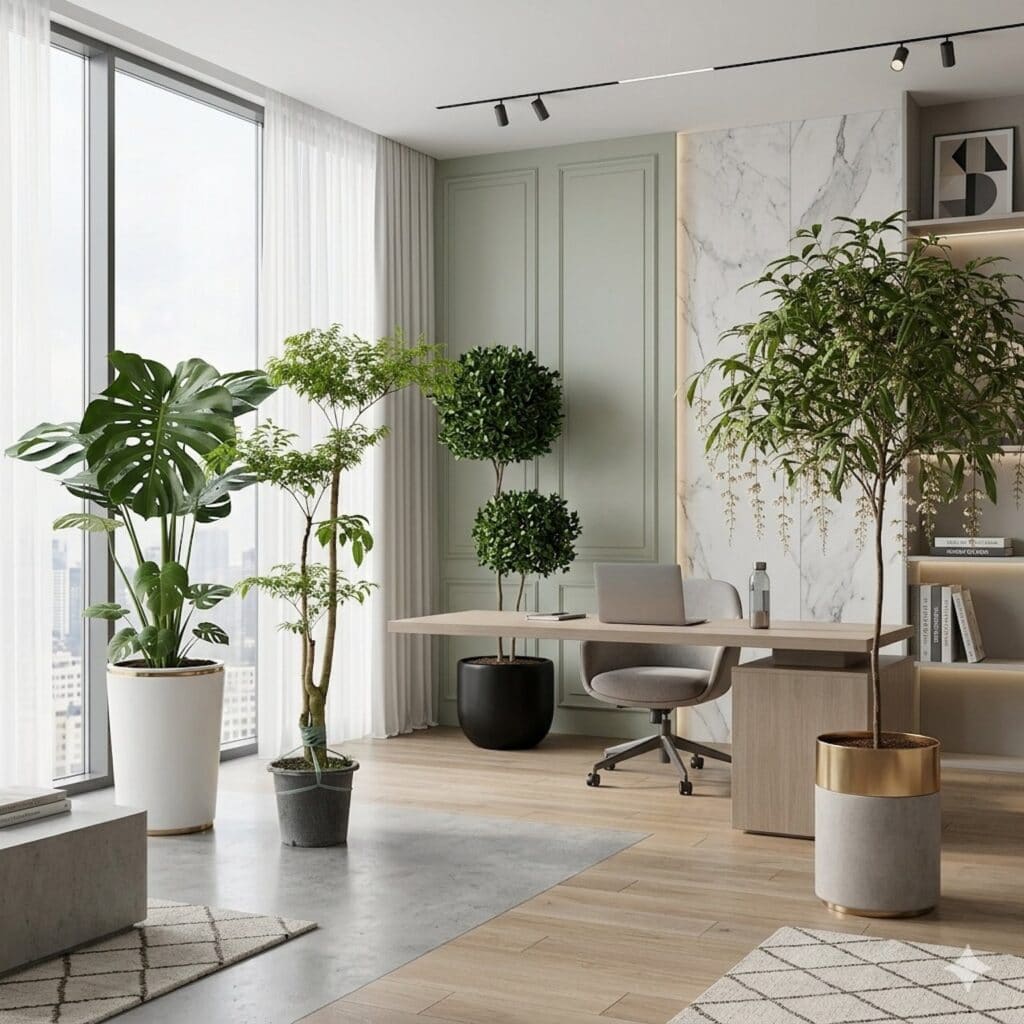
The Cozy Home Collection is designed for Hong Kong families seeking to weave greenery into the fabric of daily life. Living spaces in this city are often compact, but every home — no matter how small — deserves the companionship of plants. The varieties selected for this collection are approachable, easy-going, and forgiving, making them ideal for gardening newcomers and busy working professionals alike. The composition is adjusted seasonally, with our team curating varieties that suit the current season and coordinate harmoniously in both style and care requirements.
The collection is built around "scene-based design" — different plants are matched to different living spaces to create a cohesive, welcoming atmosphere throughout the home. The living room gets a substantial, graceful centrepiece that brings energy to family gatherings. The kitchen receives fresh, practical herbs for cooking. The bathroom hosts humidity-loving, shade-tolerant plants that transform your shower into a spa-like forest retreat. The bedroom gets calm, gentle varieties that help you unwind and drift off to sleep.
Research into environmental psychology has demonstrated profound effects of indoor plants on mental and physical wellbeing. The American Horticultural Therapy Association notes that interacting with plants can lower blood pressure, reduce cortisol (the stress hormone), and elevate positive emotions (Ulrich, 1999). In a fast-paced, high-pressure city like Hong Kong, a green corner at home is the ultimate "stress-relief oasis." A local study found that Hong Kong residents with plants at home reported significantly lower stress levels and higher satisfaction with their living environment compared to those without (Lau et al., 2020).
"Cozy" goes beyond visual appeal — it engages multiple senses. Some varieties in this collection offer subtle fragrance (such as lavender and lemon balm). Others have soft, tactile leaves (like asparagus fern and lamb's ear). Some can be plucked for a fresh cup of tea or a sprig of seasoning (mint, rosemary). This multisensory engagement deepens the bond between people and plants, creating a genuine sense of living alongside nature.
Light
Hong Kong flats face every direction, and this collection is designed to work across the full spectrum of light conditions found in typical homes.
Room-by-room placement guide:
- Living room (beside TV cabinet / coffee table): Typically in the centre of the flat with moderate light. Choose rounded, medium-sized specimens 30–60 cm tall — substantial enough to be a visual focal point without obstructing views or traffic
- Kitchen windowsill: Usually one of the brightest spots in the home. Ideal for sun-loving herbs. If counter space is limited, use narrow planters or hanging pots
- Bathroom (window sill or counter): High humidity, lower light — a paradise for shade-tolerant, moisture-loving plants. Ensure the space is ventilated; enclosed bathrooms without airflow can lead to fungal issues
- Bedroom (bedside table or desk): Plants release carbon dioxide at night through respiration, but the amount is negligible and harmless to humans. If this concerns you, choose CAM plants (such as orchids or snake plants) that absorb CO2 at night, or simply place plants a little further from the bed
- Study / workspace: Research shows that plants in work areas improve concentration and creativity (Raanaas et al., 2011). A small desk plant takes up minimal space while providing a soothing visual break from screen fatigue
Orientation adjustments for Hong Kong flats:
| Facing | Light characteristics | Placement advice |
|---|---|---|
| South | Most abundant light | Most positions work; provide shade for west-facing afternoon sun exposure |
| East | Gentle morning sun | Window positions suit sun-loving varieties; interior spaces suit semi-shade plants |
| West | Strong afternoon sun | Filter window light with curtains; keep plants 1–2 metres from windows |
| North | Primarily indirect light | Choose shade-tolerant varieties; supplement with grow lights if needed |
Regular rotation: Turn pots 90 degrees every 1–2 weeks to ensure even light exposure and prevent lopsided growth. This routine also gives you a natural opportunity to check plant health.
Watering
Home watering should be simple and regular — build it into your weekly routine.
Core principles:
- Dry-test method: Insert your finger 2–3 cm into the soil. Water only when dry at that depth; if still moist, wait
- Seasonal rhythm: Summer (air-conditioned homes) every 5–7 days; winter every 7–10 days. Hong Kong summers are humid, but air-conditioned rooms are surprisingly dry
- Thorough soaking: Water until it flows from the drainage holes — this ensures the deep roots receive moisture. Surface-only watering trains roots to stay near the surface, weakening the plant over time
- Empty the saucer: Always discard standing water within 30 minutes to prevent root suffocation
Room-specific watering tips:
- Living room plants: Usually in larger pots with more soil, which dries more slowly. In winter, 10-day intervals may be sufficient
- Kitchen plants: Heat and steam from cooking can accelerate soil drying. Check moisture more frequently
- Bathroom plants: High humidity means the surface may stay moist while deeper roots are actually dry. Test deeper into the soil before deciding not to water
- Window plants: More light and heat mean faster evaporation; summer watering may be needed every 3–4 days
Holiday care: If you're away for 3–5 days, most houseplants will manage fine. For longer absences (over a week):
- Use self-watering devices (wick systems or drip feeders)
- Move plants to a more humid location such as the bathroom
- Cover the soil surface with damp sphagnum moss to slow drying
- Ask a friend or neighbour to water on your behalf
Soil & pot
Soil mix: A quality general-purpose potting mix is the simplest solution for most home plants:
- Quality potting mix (pre-blended with perlite and coco coir): 70%
- Additional perlite (for extra aeration): 15%
- Well-rotted compost or worm castings: 15%
This blend suits the majority of home foliage plants, providing good drainage, aeration, and moderate nutrition. If your collection includes culinary herbs (such as mint or rosemary), increase the coarse sand proportion to 20%, as herbs prefer faster-draining soil.
Pot selection — matching your home style:
- Simple white ceramic: The versatile classic — suits Nordic, Japanese minimalist, and modern interiors. White sets off green foliage beautifully, making leaves appear more vivid
- Cement pots: The choice for industrial and loft-style homes. The raw, rugged texture contrasts strikingly with the soft organic forms of plants
- Woven basket cachepots: Perfect for bohemian, farmhouse, or rustic styles. Place the plastic nursery pot inside the basket — warm, eco-friendly, and charming. Ensure the basket base doesn't trap water
- Coloured ceramic: Adds a splash of personality to playful interiors. Morandi tones (muted, low-saturation colours) are particularly easy to coordinate and look sophisticated
- Glass containers / hydroponic vases: Ideal for water-propagated pothos or peace lilies. Watching roots develop in clear water adds an extra dimension of interest. Change water regularly to prevent mosquito breeding
Pot sizing: For Hong Kong's compact homes, pots 15–25 cm in diameter with plants 30–60 cm tall are the sweet spot — large enough to make a presence, small enough not to overwhelm the space.
Drainage: Drainage holes are absolutely essential. If you fall in love with a decorative pot without holes, use the cachepot method — keep the plant in a plastic pot with drainage, and place this inside the decorative outer pot, remembering to empty any accumulated water.
Temperature & humidity
Hong Kong home temperatures typically range from 23–26°C (with air conditioning) to 28–32°C (without). Most indoor plants adapt comfortably to this range.
Air-conditioned environment:
- Hong Kong's long summer air conditioning season maintains 23–25°C, which most plants find comfortable
- Direct cold airflow from air conditioning vents dehydrates leaves and causes brown, crispy edges. Redirect the airflow or use a screen to block the draught
- Air-conditioned rooms have low humidity (40–50%), and some tropical plants may need supplemental humidity
Humid summers:
- Without air conditioning, humidity can reach 80–90%. Ensure good ventilation to prevent fungal diseases
- Space plants at least 10–15 cm apart to promote airflow between them
- If you notice brown spots or grey mould, remove affected leaves immediately and improve ventilation
Winter management:
- Hong Kong winters are brief, but the New Territories and high-rise flats can experience cold surges
- Most indoor plants tolerate minimums of 10–15°C; below this, move plants indoors or away from draughty windows
- Avoid placing plants near window gaps where cold drafts enter
Home humidity boosters:
- Position plants near fish tanks — the evaporating water raises local humidity
- Kitchen humidity rises during cooking; a quick mist of nearby plants takes advantage of this
- Post-shower bathrooms are filled with steam — a free "spa treatment" for humidity-loving plants
- Using a humidifier benefits both your plants and your own skin and respiratory health
Common problems
| Issue | Likely cause | What to do |
|---|---|---|
| Yellowing leaves | Overwatering / root rot, natural ageing, insufficient light | Check soil moisture; remove only old bottom leaves; move to a brighter position |
| Brown, crispy leaf tips | Low humidity, poor water quality, cold AC draft | Increase humidity; use settled water; redirect air conditioning airflow |
| Dusty leaves | Normal household dust accumulation | Wipe with a damp cloth every two weeks to restore shine and photosynthetic efficiency |
| Slow growth | Seasonal dormancy, nutrient deficiency, pot too small | Winter slowdown is normal; repot and fertilise in spring |
| Tiny flying insects | Overly wet soil, decomposing organic matter | Reduce watering, let surface soil dry; cover soil with sand or fine gravel |
| Lopsided, leaning growth | Uneven light, stretching toward window | Rotate pot regularly; move to a brighter, more evenly lit position |
Not sure your spot gets enough light, or something looks off? Send us a photo on WhatsApp 4492 9648 and we’ll take a look.
Questions people ask
Is the Cozy Home collection suitable for small Hong Kong flats?
Yes. It is designed for Hong Kong families, with gentle, easy-care varieties. For limited space, choose pots 15–25 cm wide and plants 30–60 cm tall, which suit most Hong Kong homes without feeling cramped.
How often should I water houseplants in a Hong Kong home?
Water when the top 2–3 cm of soil is dry. In an air-conditioned home that is roughly every 5–7 days in summer and every 7–10 days in winter, and sunny windowsills may need water every 3–4 days in summer.
Does air conditioning harm indoor plants in Hong Kong?
It can. Direct air from a vent dehydrates leaves and causes brown tips, so redirect the airflow or use a screen. Air-conditioned rooms are also dry (around 40–50% humidity), so some tropical plants may need extra humidity.
Are the plants in the Cozy Home collection safe for cats and dogs?
Not all of them. Some common houseplants, such as peace lilies, pothos and aglaonemas, are toxic to cats and dogs, so keep them out of reach or in hanging planters, or ask us on WhatsApp for pet-safe alternatives.
Fertiliser guide
Home plant feeding follows the principle of "little and often."
- Growing season (March–October): Every 2 weeks with diluted balanced liquid fertiliser (e.g., 20-20-20 at half the manufacturer's recommended strength)
- Dormant season (November–February): Monthly at most, or pause feeding entirely
- Slow-release: Apply a 3–4 month formulation to the soil surface each spring for baseline nutrition
- Organic options: Worm compost tea, diluted banana peel water (potassium source), and cooled coffee grounds (nitrogen source, used sparingly and only when composted) are all excellent home-made options
- Culinary herbs: After harvesting, apply nitrogen-rich fertiliser to encourage fresh new growth
Fun facts
Can plants actually "hear" you? Although they don't have ears, scientific research has shown that plants can detect sound vibrations and respond to specific frequencies. An experiment by the Korean Institute of Landscape Architecture found that plants exposed to classical music (particularly Mozart and Vivaldi) grew 20% faster than control plants, with more luxuriant, deeper green foliage (Jeong & Park, 2000). While the mechanism is not fully understood, scientists speculate that sound vibrations may stimulate cellular activity or influence gene expression.
Even more remarkably, plants can "communicate" with each other. When one plant is attacked by pests, it releases volatile organic compounds (VOCs) into the air. Neighbouring plants "detect" these chemical signals and preemptively activate their own defence mechanisms, such as increasing defensive chemicals in their leaves (Karban et al., 2000). In other words, the plants in your home are quietly "warning each other" and forming a microscopic defence network — all without you noticing.
Research has also shown that caring for plants can reduce feelings of loneliness, particularly for those living alone or elderly individuals. A University of Florida study found that establishing a "care relationship" with plants provides emotional fulfilment similar to pet ownership, but with far less demand on time and resources (Hall & Dickson, 2011). In a city where more people are living alone than ever before, a houseplant may be the perfect roommate — silent, undemanding, yet always there.
References (expand to view sources)
References
- Ulrich, R.S. (1999). Effects of gardens on health outcomes: Theory and research. In: C.C. Marcus & M. Barnes (Eds.), Healing Gardens: Therapeutic Benefits and Design Recommendations (pp. 27–86). Wiley.
- Lau, S.Y., Gou, Z. & Liu, Y. (2020). Healthy building and indoor environmental quality: A review on residential environment. Indoor and Built Environment, 29(10), 1450–1468.
- Raanaas, R.K., Evensen, K.H., Rich, D., Sjøstrøm, G. & Patil, G. (2011). Benefits of indoor plants on attention capacity in an office setting. Journal of Environmental Psychology, 31(1), 99–105.
- Jeong, M.J. & Park, C.W. (2000). The effect of sound waves on the growth of plants. Journal of the Korean Institute of Landscape Architecture, 28(1), 103–110.
- Karban, R., Baldwin, I.T., Baxter, K.J., Laue, G. & Felton, G.W. (2000). Communication between plants: Induced resistance in wild tobacco plants following clipping of neighboring sagebrush. Oecologia, 125(1), 66–71.
- Hall, C. & Dickson, M. (2011). Economic, environmental, and health/well-being benefits associated with green industry products and services. HortTechnology, 21(4), 384–391.
- RHS (Royal Horticultural Society) (2023). Houseplants for Different Rooms. https://www.rhs.org.uk
- Missouri Botanical Garden (2023). Indoor Plant Care for Beginners. https://www.missouribotanicalgarden.org
⚠️ Pet / toxicity: Some common houseplants (such as peace lilies, pothos, and aglaonemas) are toxic to cats and dogs if ingested. If you share your home with pets, position plants out of reach, choose hanging planters, or ask us on WhatsApp to recommend pet-safe alternatives. The ASPCA maintains a comprehensive online database of non-toxic plant options.
Shop at Plantshop
View all Bundle Deals →


For Hong Kong homes and offices. Stock and pricing follow the product page.
FAQs
Origin & characteristics
The Cozy Home Collection is designed for Hong Kong families seeking to weave greenery into the fabric of daily life. Living spaces in this city are often compact, but every home — no matter how small — deserves the companionship of plants. The varieties selected for this collection are approachable, easy-going, and forgiving, making them ideal for gardening newcomers and busy working professionals
Watering
Home watering should be simple and regular — build it into your weekly routine.
Soil & pot
Soil mix: A quality general-purpose potting mix is the simplest solution for most home plants:
Temperature & humidity
Hong Kong home temperatures typically range from 23–26°C (with air conditioning) to 28–32°C (without). Most indoor plants adapt comfortably to this range.
