



Plantshop.hk · Care Encyclopedia
How to Care for Wellness Collection in Hong Kong
From HK$2,248 · Hong Kong delivery
Hong Kong care guide — useful before you buy and after it arrives.
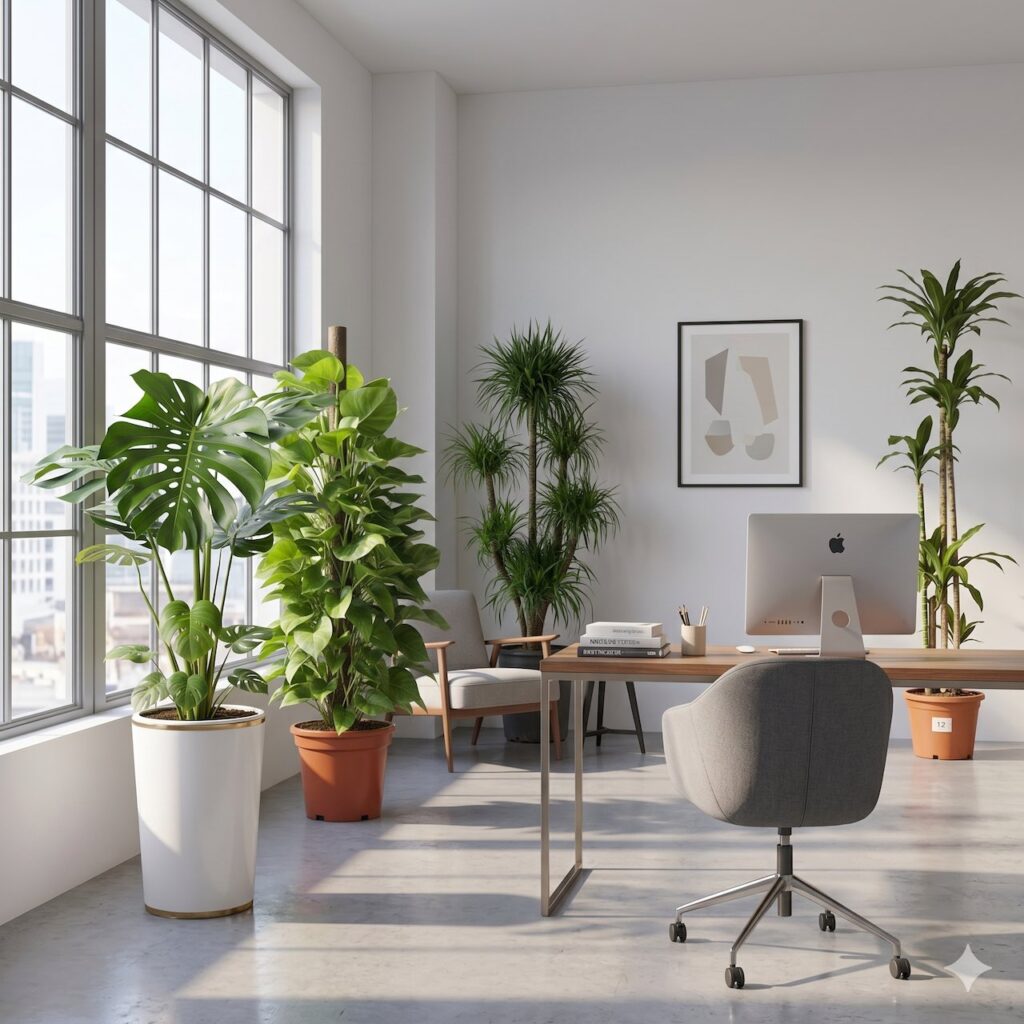
Shop this plant at PlantShop.hkBeautiful to look at and hard-working behind the scenes: this set of NASA-validated plants quietly takes up formaldehyde, benzene and trichloroethylene around the clock, ideal for Hong Kong’s newly renovated flats. The one rule: wipe the leaves weekly so the stomata stay clear.
LightBright diffused light 1–2 m from a window; shade-tolerant ones further in
WateringEvery 3–5 days in summer, 7–10 days in winter; check with a finger
Best spot in HKLiving room or study window; great for new flats and offices
PetsSome plants in the set (peace lily, Aglaonema) are toxic to cats & dogs
Care in a nutshell
Just moved into a newly renovated place in Hong Kong and noticing that furniture smell? This collection is exactly what you need — NASA-validated air-purifying plants that absorb formaldehyde and other harmful gases. Remember to wipe the leaves once a week, because clean stomata are essential for purification to work. Place several around your living room and study, and the whole home will feel fresher and cleaner. They are happiest at 18–27°C, so water by the finger test rather than a fixed timetable.
Shop · Wellness Collection (from HK$2,248)
Origin & characteristics
Indoor air pollution is one of the most overlooked environmental health risks facing modern urban dwellers. The World Health Organization (WHO) identifies volatile organic compounds (VOCs) — including formaldehyde, benzene, and trichloroethylene — as significant contributors to respiratory irritation, headaches, and potential carcinogenic risk with long-term exposure. In Hong Kong, these pollutants are nearly ubiquitous: they off-gas from new furniture plywood, paint, carpets, cleaning products, and even printer toner.
In 1989, NASA conducted a groundbreaking study to solve air quality challenges for space stations. Dr. B.C. Wolverton's team placed various common houseplants in sealed chambers, injected high concentrations (15–20 ppm) of formaldehyde, benzene, and trichloroethylene, and measured air quality after 24 hours. The results were remarkable: certain plants removed up to 90% of harmful chemicals. Follow-up research (Wolverton et al., 1993) revealed that air purification involves not just leaf surfaces but also root systems and the rhizosphere microorganisms surrounding them — pollutants absorbed by roots are broken down into harmless substances by beneficial bacteria.
Plantshop.hk's Fresh Air Collection uses NASA's research data as its foundation, combining it with an understanding of Hong Kong's specific conditions (high-rise density, limited ventilation, many newly renovated flats) to select large-leaved, high-transpiration species proven effective at removing VOCs. The collection composition is adjusted seasonally to ensure optimal air-purifying performance year-round.
How plants purify air
- Leaf absorption: As stomata open and close for gas exchange, airborne VOCs enter leaf tissue alongside carbon dioxide, where enzymes break them down
- Rhizosphere degradation: Microorganisms in the potting soil (particularly Pseudomonas and Bacillus species) mineralise pollutants absorbed by roots, converting them to carbon dioxide and water
- Transpiration-driven circulation: The plant's transpiration stream creates negative pressure that continuously draws surrounding air toward the root zone, establishing a steady flow of air through the plant-soil system
Light
Air-purifying efficiency is directly linked to photosynthetic activity — the more vigorously a plant photosynthesises, the more frequently its stomata open, and the greater the volume of air processed.
- Ideal positions: Living room windowsills (1–2 metres from the glass), study desk sides, or office corners near windows. These locations typically provide bright, indirect light (PAR 50–150 μmol/m²/s), sufficient to drive active photosynthesis while avoiding leaf scorch from direct sun
- Light-tier placement: The collection's plants are grouped into three light-requirement categories:
- High-light varieties (certain palm species): Best at east- or north-facing windows, receiving 3–5 hours of gentle direct sun daily
- Medium-light varieties (peace lily, Chinese evergreen): Suited to positions 2–3 metres from windows in living room centres or corridor ends
- Low-light varieties (snake plant, pothos): Can thrive in bathrooms, bedroom bedside tables, or atop office cabinets on ambient indoor light alone
- Supplemental lighting: If your flat has very poor natural light (internal windows or windowless rooms), use full-spectrum LED grow lights (PPFD approximately 30–50 μmol/m²/s) running 8–12 hours daily. This maintains both plant health and air-purifying capacity
- Regular rotation: Turn plants 90 degrees each week to ensure all leaf surfaces receive adequate light and to distribute the "purifying surface" evenly throughout the room
Watering
Watering strategy for air-purifying plants must balance two goals: maintaining healthy plant growth, and sustaining the transpiration stream that drives air circulation.
- Transpiration and purification efficiency: Research shows that high-transpiration plants (such as peace lilies and rhapis palms) typically achieve higher purification efficiency because the continuous water movement through the plant creates negative pressure that draws air toward the roots. Maintaining moderately moist (not waterlogged) soil supports this process
- Seasonal adjustments:
- Summer (May–October): Hong Kong's heat increases transpiration; water every 3–5 days. Air-conditioned rooms feel cooler but are also drier — the finger-test method remains the most reliable indicator
- Winter (November–April): Slower growth and reduced transpiration mean watering every 7–10 days. If heating is used, be aware that heated air becomes extremely dry and may actually increase misting needs
- Water temperature: Use room-temperature water (20–25°C). Cold water shocks the roots. In winter, Hong Kong tap water may be below 10°C — let it warm to room temperature before using
- Saucer drainage: Empty saucers within 30 minutes to prevent root oxygen deprivation and mosquito breeding (a dengue fever risk that Hong Kong residents should take seriously)
Soil & pot
Soil mix
Air-purifying plants need soil that supports three functions simultaneously: healthy root development, active rhizosphere microbial communities, and balanced moisture retention with aeration.
- Recommended recipe:
- Quality organic potting mix (with compost): 40%
- Peat moss or coco coir: 30% (moisture retention and pH buffering)
- Perlite: 20% (aeration and drainage)
- Vermiculite: 10% (moisture retention and mineral release)
- Microbial activation: Every 3–4 months, apply a beneficial rhizosphere microbial inoculant to maintain root zone microbial diversity — this is critical for VOC degradation performance
- Soil replacement timing: Each spring (March–April), replace the top 2–3 cm of soil with fresh mix, or perform a complete repot every 1–2 years. Fresh soil introduces new microbial communities, restoring some of the air-purifying capacity that declines with long-term planting
Pot selection
- Breathability priority: Terracotta, cement, or plastic pots with side ventilation holes are ideal, ensuring adequate root oxygen for respiration
- Sizing: Avoid oversized pots. Wolverton's research showed that air-purifying efficiency correlates with the ratio of leaf surface area to root ball volume, not simply pot size. Choose a pot only 2–3 cm larger in diameter than the root ball
- Colour and placement: Light-coloured pots reflect light and help keep root zones cool; dark pots absorb heat, which can overheat soil near windows
Temperature & humidity
Temperature
- Optimal range: 18–27°C — the typical temperature range for most Hong Kong indoor environments
- Air-conditioned room management:
- Never place plants directly in the path of cold airflow
- Set air conditioning no lower than 23°C
- When using "dry" dehumidifier mode, watch carefully for dehydration signs
- Winter cold protection: During cold surges, avoid placing plants against window glass (nighttime glass temperature can be 5–8°C below room temperature)
Humidity
Most air-purifying plants originate from tropical rainforests and prefer 50–70% humidity.
- Hong Kong summers: Natural humidity is typically sufficient, sometimes excessive (>80%). Ensure good ventilation to prevent mould
- Air-conditioned rooms / winter: Humidity can drop to 30–40%; active humidification is needed:
- Grouping method: Cluster 3–5 collection plants together — they mutually elevate surrounding humidity. This is why Plantshop.hk designs air-purifying plants as sets rather than individual specimens: grouping is not only more attractive but functionally beneficial
- Humidity tray: Shallow dish with pebbles and water, pot placed on pebbles above the water line
- Regular misting: Fine morning or evening misting of leaf surfaces; avoid midday when water droplets can act as lenses and burn leaves
Common problems
| Issue | Likely cause | What to do |
|---|---|---|
| Dusty, dull leaves | Hong Kong's airborne particulates accumulate on leaf surfaces, clogging stomata and reducing purification efficiency | Wipe leaves weekly with a damp cloth, cleaning both upper and lower surfaces. A diluted solution of 1 part beer to 10 parts water can restore leaf shine and promote stomatal opening |
| Plant rapidly yellows after moving into newly renovated flat | VOC concentrations (formaldehyde, benzene) are too high, causing physiological stress (phytotoxicity) | The plant is "overloaded." First ventilate the space thoroughly for 2–4 weeks to reduce VOC levels, then introduce plants. Begin with highly tolerant species like snake plants as "first responders" |
| Do plants compete with humans for oxygen at night? | Under normal circumstances, the effect is negligible. One adult's nighttime oxygen requirement equals the consumption of approximately 700 medium-sized potted plants | Placing 1–2 plants in the bedroom is completely harmless. In fact, CAM-type plants (such as snake plants) release oxygen at night, making them ideal bedroom companions |
| How long until purification effects are noticeable? | Plant purification is a continuous, gradual process, not instant. Wolverton recommends 1–2 medium plants (approximately 5000 cm² leaf area) per 9 square metres (approximately 100 square feet) | For newly renovated flats, combine full collection placement with regular window ventilation; noticeable odour reduction typically occurs within 2–4 weeks. Long-term maintenance requires consistent plant care |
| Some varieties produce unusual odours when flowering | Certain air-purifying plants (such as peace lily) release trace volatile compounds from their flowers that some people find distinctive | These are not harmful gases. If the scent bothers you, remove flower stalks at the bud stage — this does not affect the plant's leaf-based air purification function |
Not sure your spot gets enough light, or something looks off? Send us a photo on WhatsApp 4492 9648 and we’ll take a look.
Questions people ask
Do air-purifying plants really work in Hong Kong homes?
They help, but they are not an instant fix. Purification is a continuous, small-scale process, so think of the plants as a back-up to opening your windows rather than a replacement.
When can I bring plants into a newly renovated flat?
Ventilate the flat for 2–4 weeks first to bring VOC levels down, then add the plants. Tougher species such as snake plants make good first arrivals.
Do air-purifying plants take oxygen from the bedroom at night?
No, the effect is negligible. One adult needs about as much oxygen as the night-time use of roughly 700 medium plants, so 1–2 plants in a bedroom is perfectly fine.
Is the Fresh Air collection safe for cats and dogs?
Not entirely. Some plants in the set, such as peace lily and Chinese evergreen, contain calcium oxalate crystals that are toxic to cats and dogs. Keep them out of reach, or ask us on WhatsApp for pet-safe alternatives.
Fun facts
The "680 plants" reality check
In 2019, Waring & Waring of Drexel University published a provocative review titled Potted plants do not improve indoor air quality, arguing that to match NASA's sealed-chamber purification results in a typical home, you would need 10–1000 plants per square metre — approximately 680 plants for a 1500-square-foot flat. This sounds discouraging, but the calculation assumes a completely sealed environment with no ventilation. In reality, most Hong Kong flats have at least some natural airflow, and plants function as "auxiliary purifiers" — continuously, silently, and without energy consumption, they reduce indoor VOC concentrations. Combined with regular ventilation, they make a meaningful, measurable contribution to indoor air quality.
Another intriguing finding comes from National University of Singapore research: in air-conditioned offices with plants, employee sick leave self-reports dropped by 15%, and concentration test scores improved by 12% (Bergs, 2002). This may reflect not only chemical air purification but also plants' ability to adsorb particulate matter (PM2.5 and PM10) and release negative ions, improving indoor environmental quality through multiple pathways simultaneously.
References (expand to view sources)
References
- Wolverton, B.C., Johnson, A. & Bounds, K. (1989). Interior Landscape Plants for Indoor Air Pollution Abatement. NASA Stennis Space Center, NTRS Document 19930073077. https://ntrs.nasa.gov/api/citations/19930073077/downloads/19930073077.pdf
- Wolverton, B.C., Wolverton, J.D. (1993). Plants and soil microorganisms: removal of formaldehyde, xylene, and ammonia from the indoor environment. Journal of the Mississippi Academy of Sciences, 38(2), 11–15.
- Waring, M.S. & Waring, A.K. (2019). Potted plants do not improve indoor air quality: a review and analysis of reported VOC removal efficiencies. Journal of Exposure Science & Environmental Epidemiology, 30, 253–261. https://doi.org/10.1038/s41370-019-0175-9
- Bergs, J. (2002). The effect of healthy plants on the amount of sick leave of office workers. Acta Horticulturae, 617, 43–50.
- World Health Organization (2021). WHO Global Air Quality Guidelines. WHO Press. https://www.who.int/publications/i/item/9789240034228
- Missouri Botanical Garden (2023). Indoor Plant Care Guide. https://www.missouribotanicalgarden.org
- Royal Horticultural Society (2023). Houseplant Care Guide. https://www.rhs.org.uk
⚠️ Pet / toxicity: Some air-purifying plants in this collection (such as peace lily Spathiphyllum and Chinese evergreen Aglaonema) are toxic to cats and dogs, containing insoluble calcium oxalate crystals that can cause oral pain, excessive drooling, and vomiting if ingested. If you share your home with pets, place plants on surfaces pets cannot reach, or ask our team to recommend pet-safe alternatives. Detailed toxicity information is available through the ASPCA database.
Shop at Plantshop
View all Bundle Deals →


For Hong Kong homes and offices. Stock and pricing follow the product page.
FAQs
Origin & characteristics
Indoor air pollution is one of the most overlooked environmental health risks facing modern urban dwellers. The World Health Organization (WHO) identifies volatile organic compounds (VOCs) — including formaldehyde, benzene, and trichloroethylene — as significant contributors to respiratory irritation, headaches, and potential carcinogenic risk with long-term exposure. In Hong Kong, these pollutant
Watering
Watering strategy for air-purifying plants must balance two goals: maintaining healthy plant growth, and sustaining the transpiration stream that drives air circulation.
Soil & pot Soil mix
Air-purifying plants need soil that supports three functions simultaneously: healthy root development, active rhizosphere microbial communities, and balanced moisture retention with aeration.
Fun facts
The "680 plants" reality check
