



Plantshop.hk · Care Encyclopedia
How to Care for Dragon Tree in Hong Kong
From HK$880 · Hong Kong delivery
Hong Kong care guide — useful before you buy and after it arrives.
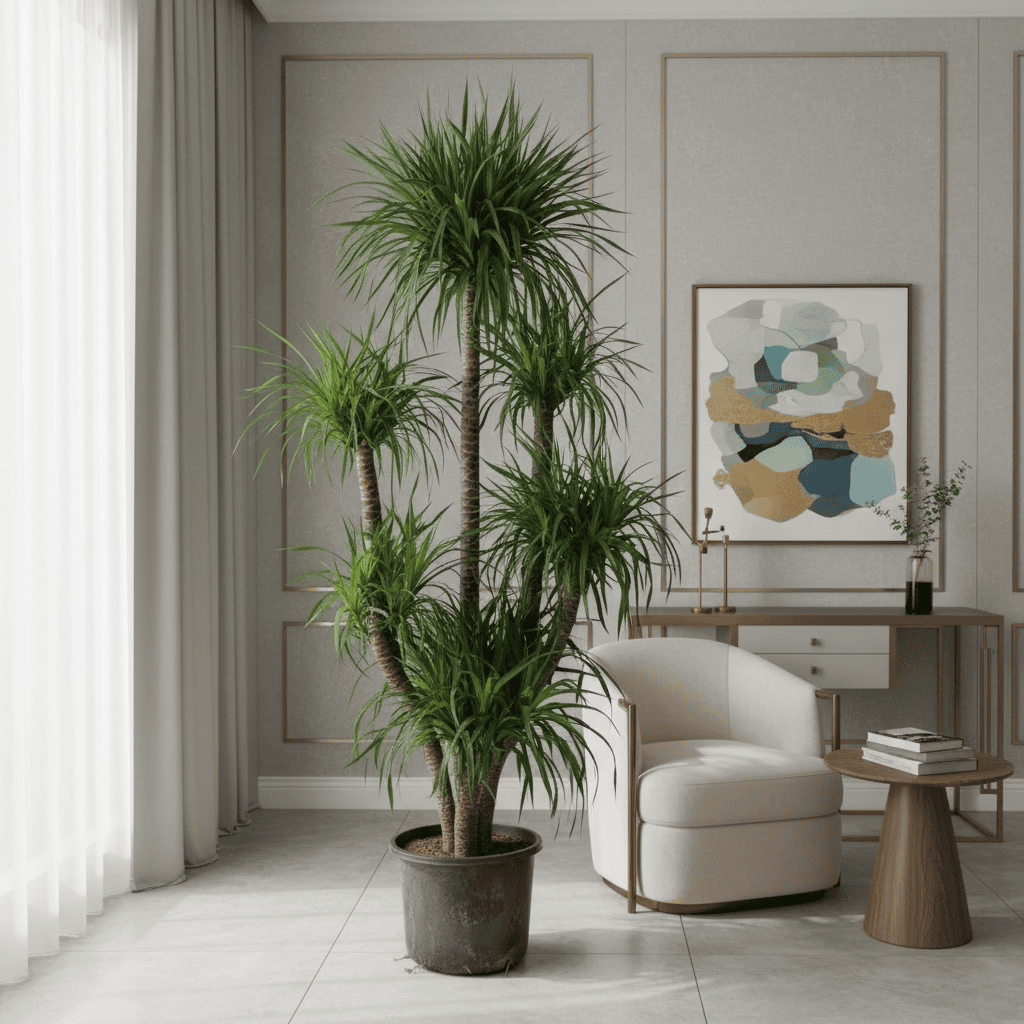
Shop this plant at PlantShop.hkA Hong Kong collector's favourite: the Socotra Dragon Tree from Yemen, with a one-of-a-kind umbrella canopy and crimson "dragon's blood" sap. The one rule that matters most: better dry than wet, with plenty of airflow.
LightBright indirect light; south/west window, sheer curtain at noon
WateringLet soil dry fully; every 5–7 days in summer
Best spot in HKAiry spot near a window; air-conditioned rooms suit it
PetsSaponins: toxic to cats & dogs — keep out of reach
Care in a nutshell
To grow a Socotra Dragon Tree in Hong Kong, remember that it hates being stuffy and wet, so your air-conditioned home is actually its happy place. In muggy summers, be extra careful not to overwater, and never let the pot sit in water. It thrives at 18–28°C, and it copes with dry spells well because its home island gets only 200–300 mm of rain a year. It grows very slowly, so you are buying a living sculpture that rewards patience. If you enjoy watching a plant's form develop over the years, it is well worth collecting.
Shop · Dragon Tree (from HK$880)
Origin & characteristics
The Socotra Dragon Tree belongs to the Asparagaceae family, genus Dracaena. Its genus name derives from the Greek "drakaina," meaning "female dragon" — according to legend, the tree's crimson resin is the blood of a slain dragon. The species name "cinnabari" refers to the ancient port of Cinnabarum, where dragon's blood resin was historically traded.
Native to the Socotra Archipelago in Yemen, located at the junction of the Arabian Sea and the Gulf of Aden, this tree grows on the isolated island group that has been a UNESCO World Natural Heritage Site since 2008. The archipelago's long geographic isolation has produced a unique flora and fauna found nowhere else on Earth, and the dragon tree is undoubtedly its most iconic representative species.
Distinctive characteristics:
- Umbrella-shaped canopy: The mature tree's most recognisable feature is its dense, symmetrical, inverted umbrella-shaped crown. The thick trunk branches at the top into a network of limbs that spread outward and then curve upward, creating a canopy that looks like a giant green mushroom standing on an arid plateau. This unique form is an evolutionary adaptation to the island's dry, foggy environment — the broad canopy intercepts moisture from sea-borne fog, channelling condensed water down the branches to the roots.
- Slow growth: The dragon tree is an extremely slow grower. In the wild, ancient specimens can reach 10+ metres in height and live for hundreds or even thousands of years. As a potted plant in Hong Kong, it requires considerable patience — this is a plant for those who appreciate the slow, meditative process of watching a living sculpture evolve over decades.
- Foliage: Long, narrow, sword-shaped leaves, 30–60 cm in length, densely clustered at branch tips. Leaf colour ranges from grey-green to blue-green, with a waxy coating that reduces water loss through transpiration.
- Dragon's blood resin: When the bark is damaged, the tree exudes a vivid crimson sap known historically as "dragon's blood." This resin has been prized since antiquity as a natural dye, medicine, and incense. Modern research has identified multiple polyphenolic and flavonoid compounds in the resin with demonstrated antioxidant and antimicrobial properties. On Socotra Island, dragon's blood remains an important part of traditional medicine, cosmetics, and religious rituals.
In Hong Kong, the Socotra Dragon Tree is an advanced collector's plant. Its sensitivity to high humidity means the wet subtropical summers require careful management of ventilation and drainage.
Light
The Socotra Dragon Tree requires plentiful to bright indirect light, ideally from a south- or west-facing window with sheer curtains to filter the harshest midday sun. Its native habitat on Socotra's foggy plateau receives abundant daily light, so indoor placement in a dark location will not suffice.
Hong Kong placement guide:
- Best spots: Living room near a window, south-facing terrace with partial shade, or a bright conservatory
- Avoid: Deep inside a study, bedside table (unless right against the window), bathrooms, or positions with permanently drawn curtains
- Supplemental lighting: If natural light is inadequate, provide full-spectrum grow lights for 10–12 hours daily
Insufficient light causes the canopy to become sparse and open, with leaves spaced far apart on elongated stems — a condition known as etiolation that ruins the tree's compact sculptural form.
Watering
The guiding principle for watering a Socotra Dragon Tree is "better dry than wet." Its native habitat receives only 200–300 mm of annual rainfall, concentrated in a brief wet season. The plant has evolved exceptional drought tolerance. In Hong Kong's humid subtropical climate, overwatering is the dragon tree's greatest enemy.
Watering frequency guide:
- Spring & autumn (15–25°C): Approximately every 7–10 days, waiting until the soil is dry to 3–5 cm below the surface
- Summer (25–32°C): Approximately every 5–7 days, but always follow the "dry first" principle; during consecutive rainy, highly humid weather, extend to 10+ days
- Winter (below 15°C): Approximately every 14–21 days, keeping the soil barely moist
Important notes:
- The pot must have drainage holes. After watering, allow all excess water to drain away completely — never let the pot sit in standing water
- The dragon tree is sensitive to fluoride and chlorine in tap water, which can cause leaf tip burn over time. Use filtered water, overnight-settled water, or rainwater
- Slight brown tips on older leaves are normal ageing; however, if multiple leaves simultaneously develop brown tips, this indicates a water quality or humidity problem
Soil & pot
The Socotra Dragon Tree demands an extremely free-draining, airy growing medium. Use a specialist mix designed for succulents or palms, or prepare your own:
Recommended mix ratio:
- Coarse sand or perlite: 40%
- Cactus potting mix or quality indoor plant soil: 30%
- Akadama or Kanuma clay (medium grade): 20%
- Coco peat or coconut husk chips: 10%
The key feature of this mix is its high proportion of inorganic particles, which allows excess water to drain rapidly while retaining just enough moisture for root uptake. Aim for a slightly acidic to neutral pH (6.0–7.0).
Pot selection:
- Material: Terracotta or unglazed clay pots are ideal — their porosity helps moisture evaporate. Glazed or plastic pots require more careful drainage management
- Size: The dragon tree grows very slowly and does not need frequent upsizing. Choose a pot only 5–8 cm larger than the root ball. Oversized pots hold too much moisture and encourage root rot
- Drainage: Must have adequate drainage holes. Place a layer of clay pebbles or coarse gravel at the bottom as a drainage layer
Temperature & humidity
Temperature: The Socotra Dragon Tree prefers warm, dry conditions with an ideal growing range of 18–28°C. It has limited cold tolerance — prolonged exposure below 10°C can cause frost damage, and temperatures below 5°C pose a risk of death. Hong Kong winters are generally not a concern, but during rare cold surges, move the plant indoors. Temperatures above 30°C in summer are tolerated well provided ventilation is adequate.
Humidity: This is the biggest challenge for growing the Socotra Dragon Tree in Hong Kong. While Socotra Island experiences frequent fog, the air circulation there is excellent, and humidity fluctuates significantly. Hong Kong summer indoor humidity frequently reaches 80–90%, and combined with poor ventilation, this can lead to root rot and fungal infections.
Management strategies:
- Position the tree where air circulates freely — near a window or in a location with cross-ventilation
- Air-conditioned rooms generally suit the dragon tree well, as air conditioning indirectly lowers indoor humidity
- Avoid placing it in kitchens or bathrooms where humidity levels are high
- Do not deliberately increase humidity (misting, humidifiers) — this can be harmful
- If leaves accumulate dust, wipe gently with a slightly damp soft cloth rather than spraying water on the foliage
Common problems
| Issue | Likely cause | What to do |
|---|---|---|
| Leaf tips or margins scorching brown | Hard water (fluoride/chlorine), overwatering, or excessive humidity | Switch to filtered or rainwater; check drainage; improve ventilation |
| Canopy becoming sparse and open, leaf spacing widening | Insufficient light | Move to a brighter position, or supplement with grow lights |
| Stem base turning soft and rotten | Overwatering, poor drainage, fungal infection | Stop watering immediately; inspect roots; if rot has set in, cut away affected tissue and propagate from healthy stem cuttings |
| Leaves yellowing and dropping overall | Root damage (too wet/too dry), low temperature, environmental shock | Check soil moisture; adjust position; avoid frequent moving |
| Brown spots appearing on leaves and spreading | Fungal infection (common in high humidity) | Remove affected leaves; improve ventilation; reduce leaf wetness; apply organic fungicide if severe |
| Growth completely stalled (no new leaves for 6+ months) | Low temperature, insufficient light, or nutrient deficiency | Check environmental conditions; apply diluted liquid fertiliser in spring/summer |
Not sure your spot gets enough light, or something looks off? Send us a photo on WhatsApp 4492 9648 and we’ll take a look.
Questions people ask
Can a Socotra Dragon Tree grow indoors in Hong Kong?
Yes, if it gets bright light and good airflow. Place it near a south- or west-facing window with a sheer curtain at midday, or add a full-spectrum grow light for 10–12 hours a day.
How often should I water a Socotra Dragon Tree?
Roughly every 7–10 days in spring and autumn, every 5–7 days in summer and every 14–21 days in winter. Always wait until the soil 3–5 cm below the surface is completely dry.
Why are my dragon tree's leaf tips turning brown?
Usually fluoride or chlorine in tap water, overly wet soil or very humid air. Switch to filtered water, rested water or rainwater, and improve ventilation.
Is a Socotra Dragon Tree safe for cats and dogs?
No. Like all Dracaena, it contains saponins that are toxic to cats and dogs, so keep it on a high shelf or in a room your pets cannot reach.
Fun facts
Real "dragon's blood": The Socotra Dragon Tree (D. cinnabari) and the Canary Islands Dragon Tree (D. draco) are the two primary historical sources of true "dragon's blood" resin. Ancient Romans used dragon's blood as a wound coagulant, laxative, and dye. In medieval Europe, alchemists considered it a precious magical substance believed to purify the soul. Today, Socotra Island residents still collect dragon's blood resin for traditional medicine, varnish, and cosmetics. Interestingly, much of the "dragon's blood" sold in commercial products today actually comes from the palm genus Daemonorops, not from true dragon trees.
The ecological umbrella: The dragon tree's umbrella canopy is not merely beautiful — it is a masterwork of evolutionary engineering. The wide canopy maximises interception of sea-borne fog and cloud moisture, channelling condensed water down the branches to the roots. On Socotra's arid plateau, where rainfall is minimal, this self-made water collection system is the key to the tree's centuries-long survival. The dense canopy also provides shade and habitat for numerous birds, insects, and reptiles, making it a vital pillar of the local ecosystem.
IUCN conservation status: Due to climate change, overgrazing, and unsustainable harvesting of dragon's blood resin, wild Socotra Dragon Tree populations continue to decline. The International Union for Conservation of Nature (IUCN) has classified the species as Vulnerable. When purchasing a Socotra Dragon Tree, always choose a plant from a cultivated, propagation-based source to support conservation efforts.
References (expand to view sources)
References
- Adolt, F., & Pavlis, J. (2004). Age structure and growth of Dracaena cinnabari populations on Socotra. Trees, 18(1), 43–53. https://link.springer.com/article/10.1007/s00468-003-0279-0
- International Union for Conservation of Nature (IUCN). (2017). The IUCN Red List of Threatened Species: Dracaena cinnabari. https://www.iucnredlist.org/
- Royal Botanic Gardens, Kew. (2024). Plants of the World Online: Dracaena cinnabari. https://powo.science.kew.org/
- UNESCO World Heritage Centre. (2008). Socotra Archipelago — World Heritage List. https://whc.unesco.org/en/list/1263/
- Gupta, D., et al. (2008). Dragon's blood: Botany, chemistry and therapeutic uses. Journal of Ethnopharmacology, 115(3), 361–380. https://www.sciencedirect.com/science/article/abs/pii/S0378874107006146
⚠️ Pet / toxicity: All Dracaena species contain saponins, which are toxic to cats and dogs. If ingested, symptoms may include vomiting, diarrhoea, excessive drooling, and loss of appetite. Keep the Socotra Dragon Tree well out of reach of pets — place it on a high shelf or in a room your pets cannot access. For humans, the red resin has traditional medicinal applications, but other plant parts should not be consumed.
Shop at Plantshop
View all Plants →
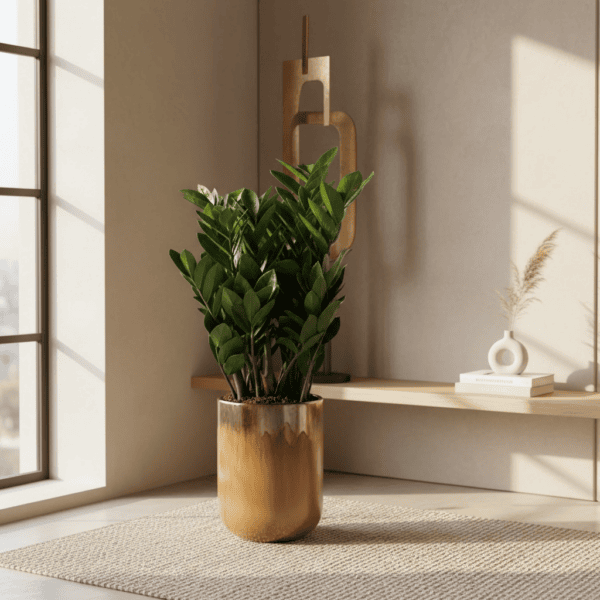
For Hong Kong homes and offices. Stock and pricing follow the product page.
FAQs
Origin & characteristics
The Socotra Dragon Tree belongs to the Asparagaceae family, genus Dracaena. Its genus name derives from the Greek "drakaina," meaning "female dragon" — according to legend, the tree's crimson resin is the blood of a slain dragon. The species name "cinnabari" refers to the ancient port of Cinnabarum, where dragon's blood resin was historically traded.
Watering
The guiding principle for watering a Socotra Dragon Tree is "better dry than wet." Its native habitat receives only 200–300 mm of annual rainfall, concentrated in a brief wet season. The plant has evolved exceptional drought tolerance. In Hong Kong's humid subtropical climate, overwatering is the dragon tree's greatest enemy.
Soil & pot
The Socotra Dragon Tree demands an extremely free-draining, airy growing medium. Use a specialist mix designed for succulents or palms, or prepare your own:
Temperature & humidity
Temperature: The Socotra Dragon Tree prefers warm, dry conditions with an ideal growing range of 18–28°C. It has limited cold tolerance — prolonged exposure below 10°C can cause frost damage, and temperatures below 5°C pose a risk of death. Hong Kong winters are generally not a concern, but during rare cold surges, move the plant indoors. Temperatures above 30°C in summer are tolerated well provid
