



Plantshop.hk · Care Encyclopedia
How to Care for Green Gem Ficus (Lübao) in Hong Kong
From HK$680 · Hong Kong delivery
Hong Kong care guide — useful before you buy and after it arrives.
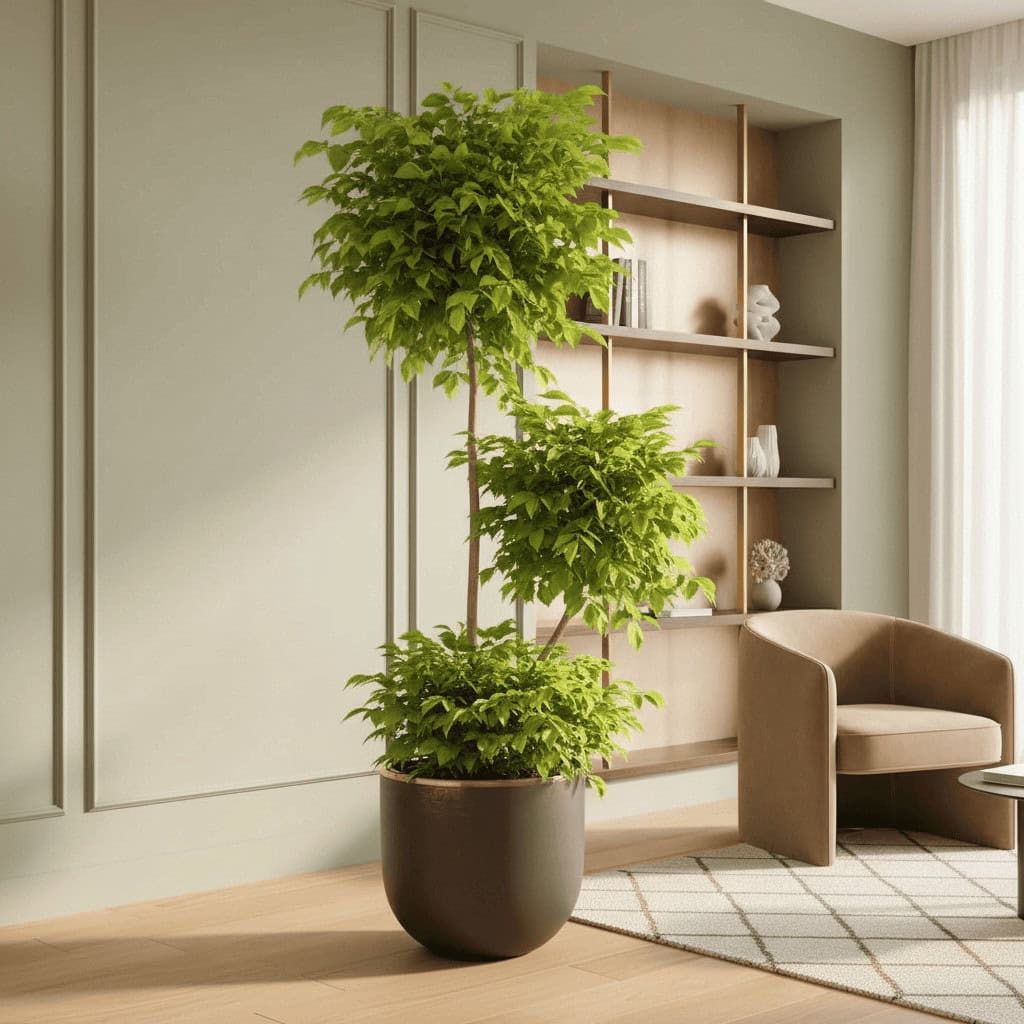
Shop this plant at PlantShop.hkA hardy, easygoing Hong Kong favourite for beginners and bonsai fans alike, with round, plump emerald leaves and a compact, graceful shape. The two rules that matter most: give it bright light and let the soil dry before watering.
LightBright indirect light; east/south window, 1–2 m back
WateringWater when 3 cm down feels dry; every 5–7 days in spring/summer
Best spot in HKEast- or south-facing window, or a sheltered terrace
PetsLatex is toxic to cats & dogs — keep out of reach
Care in a nutshell
To grow a Green Gem (Chinese Banyan) in Hong Kong, you are choosing the potted version of a native tree that is incredibly hardy and easygoing. Give it light, with a spot within 1–2 metres of an east- or south-facing window and at least 4–6 hours of bright light daily. Let the soil dry before watering, so don’t water every day: insert a finger about 3 cm into the soil and water when it feels slightly dry. Use a mix of 50% general potting mix, 25% perlite and 25% coco peat or peat. It is happiest at 18–28°C and tolerates down to about 8–10°C; summer heat above 30°C has minimal impact, and on a windy terrace you can raise coco peat to 30%. Rotate the pot every so often so it grows evenly on all sides.
Shop · Green Gem Ficus (Lübao) (from HK$680)
Origin & characteristics
Ficus microcarpa L. has several common names: Chinese Banyan, Small-Leaf Fig, Green Gem, and in Hong Kong, it is affectionately known as "Luk Bo" (Green Treasure) — a reference to its precious jade-like green foliage. It belongs to the mulberry family (Moraceae) and is native to the tropical rainforests of Southeast Asia, northern Australia, and Pacific islands. In Hong Kong, it is a common native tree species, widely planted as a street tree and in parks.
The Chinese Banyan is an evergreen tree that can reach 15–20 metres in the wild, with a spreading canopy and prolific aerial roots that can develop into spectacular pillar roots. As a potted "Green Gem," it is typically maintained at 30 cm to 1.5 metres, with smaller, thicker leaves in deep, glossy green — oval to elliptical with a slightly rounded tip. This is the result of horticultural selection and bonsai training: by restricting root space, regular pruning, and providing adequate light, leaf size can be kept compact.
The Green Gem is exceptionally versatile in horticultural applications — it works equally well as a small indoor potted plant, a medium-sized bonsai specimen, or an outdoor hedge. Its flexible branches are easily trained with wire, it tolerates pruning extremely well, and wounds heal quickly. It is one of the most popular bonsai tree species worldwide. The bark becomes increasingly mottled with age, peeling to reveal lighter inner layers — a characteristic highly prized in bonsai aesthetics.
Light
The Chinese Banyan has a broad tolerance for light, ranging from bright indirect light to partial sun. Indoors, position within 1–2 metres of an east- or south-facing window, receiving at least 4–6 hours of bright light daily. Compared to the Fiddle-Leaf Fig, the Chinese Banyan is more accepting of lower light, though prolonged dim conditions will cause pale colour, leggy stems, and wide leaf spacing.
Hong Kong summer sun is strong — if placing outdoors on a terrace, protect from direct midday sun (11am–3pm) with shade cloth or a sheltered position. Winter sun is gentler and the plant can accept longer periods of direct light. The Chinese Banyan is less sensitive to environmental changes than the Fiddle-Leaf Fig, with a shorter adjustment period after moving. Occasional rotation of the pot does not cause mass leaf drop, making it a more "beginner-friendly" choice.
An interesting detail: new leaves emerge with a copper-red colour in good light, gradually transitioning to deep green. This is normal. If new leaves stay pale green and fail to darken, this is a sign of insufficient light.
Watering
The Green Gem's watering principle is "dry first, soak second." Insert your finger approximately 3 cm into the soil and water when it feels slightly dry. In spring and summer, this is typically every 5–7 days; in autumn and winter, every 7–10 days. The Chinese Banyan has better drought tolerance than the Fiddle-Leaf Fig — forgetting to water once or twice will not cause serious damage. Leaves may soften and droop slightly, but typically recover quickly after watering. Prolonged drought, however, will cause leaf margins to brown and leaves to drop.
The Chinese Banyan is also somewhat more tolerant of occasional overwatering than the Fiddle-Leaf Fig, but sustained waterlogging must still be avoided. After Hong Kong's summer downpours, promptly empty saucers. During consecutive rainy days, pause watering. In winter when temperatures are lower and evaporation slower, reduce watering and keep the soil slightly dry.
Leaf care: Every 2–4 weeks, wipe leaves with a damp cloth to remove dust and inspect for pests. The thick leaves can tolerate occasional misting to increase ambient humidity, but avoid frequent spraying in poorly ventilated spaces to prevent fungal issues. Water quality is not a major concern — regular tap water is fine, though overnight-settled water avoids temperature shock to the roots.
Soil & pot
The Chinese Banyan adapts well to a range of soils. A general-purpose potting mix will meet basic needs. To mitigate root rot risk in Hong Kong's humid conditions, use an improved formula: general-purpose potting mix 50% + perlite 25% + coco peat or peat 25%. This ensures free drainage while retaining adequate moisture. For outdoor terrace plants in windy, fast-evaporating positions, slightly increase the water-retention component (raise coco peat to 30%).
For pot selection, the Green Gem is equally flexible. Terracotta offers the best drainage and aeration; plastic is lightweight and practical for beginners; cement or ceramic provides excellent aesthetics for interior decor. When cultivated as bonsai, shallow pots showcase root features but require more frequent watering. All pots must have drainage holes — place a layer of clay pebbles at the bottom as a drainage layer.
Growth rate is moderate; depending on light and feeding, repot every 1–2 years. Spring (March–April) is the best time. When repotting, assess root development: if you want to control size, trim some roots and return to the same pot size (called "root pruning and soil refresh"); if you want the plant to grow larger, move to a pot 5–8 cm larger in diameter.
Fertilising: During the growing season (March–October), apply a balanced liquid or slow-release fertiliser every 3–4 weeks. The Chinese Banyan has moderate feeding needs — excess fertiliser causes salt accumulation. Bonsai specimens should receive fertiliser at half strength to control growth. Stop fertilising in winter (November–February).
Pruning is an important part of Green Gem maintenance. It tolerates pruning exceptionally well — "the more you prune, the denser it grows." Perform major pruning in spring, removing overlong branches, crossing branches, and weak or diseased growth to encourage new bud development. Light trimming in summer maintains shape. Use sharp scissors and make clean cuts. The white latex that oozes from cuts can be wiped away with a damp cloth and will dry naturally. For bonsai training, aluminium wire can be used to shape branches, but avoid wrapping too tightly to prevent bark damage.
Temperature & humidity
The Green Gem's optimal temperature range is 18–28°C, with a minimum tolerance of approximately 8–10°C. Hong Kong winters generally require no special protection, but during strong cold surges when temperatures remain below 10°C, move potted plants indoors or to a sheltered position. Prolonged cold causes leaves to yellow and drop, and tender shoots may blacken from frost damage. Summer temperatures above 30°C have minimal impact, though watering frequency should be increased.
For humidity, the Chinese Banyan adapts well to 40–70% relative humidity, making it ideal for Hong Kong homes. Summer humidity is usually adequate; winter heating or dehumidifier use may drop humidity below 30%, in which case place a humidity tray beneath the pot or group plants together to raise local humidity. In humid conditions, aerial roots may become more active — occasional small aerial roots emerging from stems are a sign of healthy growth.
Common problems
| Issue | Likely cause | What to do |
|---|---|---|
| Leaves yellowing and dropping (starting from bottom) | Overwatering/poor drainage | Check drainage holes; reduce watering; if necessary, unpot and inspect roots |
| Stems leggy, leaves sparse and small | Insufficient light | Move to a brighter position with at least 4 hours of indirect light daily |
| Leaf tips or margins brown and dry | Dry air or salt accumulation | Increase humidity; flush soil with clean water to remove salts |
| Yellow spots or distorted leaves on leaf surface | Red spider mites or thrips | Wipe leaves with damp cloth; treat with neem oil or insecticidal soap for severe cases |
| White cottony masses on stems | Mealybug infestation | Wipe insects with alcohol-soaked cotton; repeat every other day until cleared |
| New leaves staying pale green, not darkening | Nitrogen deficiency or weak light | Apply nitrogen-containing balanced fertiliser; increase light exposure |
Not sure your spot gets enough light, or something looks off? Send us a photo on WhatsApp 4492 9648 and we’ll take a look.
Questions people ask
Is a Green Gem the same as a Chinese Banyan?
Yes. Green Gem is the Hong Kong name for the potted Chinese Banyan (Ficus microcarpa), also called Small-Leaf Fig. It is a different plant from the Fiddle-Leaf Fig.
Can a Green Gem live indoors in Hong Kong?
Yes. It tolerates a broad range of light, so a spot 1–2 metres from an east- or south-facing window is enough. It copes with lower light better than a Fiddle-Leaf Fig and settles quickly after being moved, which makes it beginner-friendly.
How often should I water a Green Gem?
In spring and summer, usually every 5–7 days; in autumn and winter, every 7–10 days. Water when the soil about 3 cm down feels slightly dry. It tolerates a missed watering better than a Fiddle-Leaf Fig, but prolonged drought browns the leaf margins.
Is a Green Gem safe for cats and dogs?
No. The white latex that oozes from broken stems or leaves is toxic to cats and dogs, and ingestion can cause oral irritation, drooling, vomiting and diarrhoea. Keep it out of reach and wear gloves when pruning.
Fun facts
The Chinese Banyan (Ficus microcarpa) is one of Hong Kong's most iconic "wall tree" species. In Central, Sai Ying Pun on Hong Kong Island, and the old districts of Kowloon, it is common to see Chinese Banyan seeds that arrived via bird droppings germinating in stone wall crevices, eventually developing spectacular root systems that grip the masonry. These wall trees are not only a unique feature of Hong Kong's urban landscape but also serve as excellent case studies in ecological "growth under adversity." In 2016, a research team from The Chinese University of Hong Kong even discovered that the micro-ecosystems of wall trees can support multiple fern, moss, and insect species, forming "vertical oases."
The Chinese Banyan also holds an important place in global bonsai culture. In Japan it is known as "Gajumaru," while in Taiwan it is called "Rong Shu" — a traditional species in Lingnan bonsai. Its aerial roots can be guided using "approach grafting" techniques to create the dramatic suspended-root effects of ancient trees. Interestingly, although the Chinese Banyan's syconium (fig "fruit") is inconspicuous, it is an important food source for urban birds and fruit bats. The mature orange-red "fruits" (actually inflorescences) attract Red-whiskered Bulbuls, Chinese Bulbuls, and other common Hong Kong birds.
References (expand to view sources)
References
- Hong Kong Herbarium. "Ficus microcarpa L." Check List of Hong Kong Plants. Agriculture, Fisheries and Conservation Department. https://www.herbarium.gov.hk/
- Missouri Botanical Garden. "Ficus microcarpa." Plant Finder. https://www.missouribotanicalgarden.org/PlantFinder/PlantFinderDetails.aspx?taxonid=277439
- Singapore National Parks Board. "Ficus microcarpa." Flora & Fauna Web. https://www.nparks.gov.sg/florafaunaweb/flora/2/9/2989
- Royal Horticultural Society. "Ficus microcarpa." https://www.rhs.org.uk/plants/110580/ficus-microcarpa/details
- Jim, C.Y. "Ecological and landscape characteristics of the wall trees in Hong Kong." Urban Forestry & Urban Greening, 2014. https://www.sciencedirect.com/science/article/abs/pii/S1618866714000454
⚠️ Pet / toxicity: The Green Gem, like all fig species, exudes a white milky latex when stems or leaves are damaged. This sap contains proteolytic enzymes and terpenoid compounds and is toxic to cats and dogs. Ingestion can cause oral irritation, excessive drooling, vomiting, and diarrhoea. People with sensitive skin may experience redness or itching from contact. Wear gloves when pruning. If your pet has a habit of chewing plants, place the Green Gem out of reach.
Shop at Plantshop
View all Plants →
For Hong Kong homes and offices. Stock and pricing follow the product page.
FAQs
Origin & characteristics
Ficus microcarpa L. has several common names: Chinese Banyan, Small-Leaf Fig, Green Gem, and in Hong Kong, it is affectionately known as "Luk Bo" (Green Treasure) — a reference to its precious jade-like green foliage. It belongs to the mulberry family (Moraceae) and is native to the tropical rainforests of Southeast Asia, northern Australia, and Pacific islands. In Hong Kong, it is a com
Watering
The Green Gem's watering principle is "dry first, soak second." Insert your finger approximately 3 cm into the soil and water when it feels slightly dry. In spring and summer, this is typically every 5–7 days; in autumn and winter, every 7–10 days. The Chinese Banyan has better drought tolerance than the Fiddle-Leaf Fig — forgetting to water once or twice will not cause serious dama
Soil & pot
The Chinese Banyan adapts well to a range of soils. A general-purpose potting mix will meet basic needs. To mitigate root rot risk in Hong Kong's humid conditions, use an improved formula: general-purpose potting mix 50% + perlite 25% + coco peat or peat 25%. This ensures free drainage while retaining adequate moisture. For outdoor terrace plants in windy, fast-evaporating positions, slightly
Temperature & humidity
The Green Gem's optimal temperature range is 18–28°C, with a minimum tolerance of approximately 8–10°C. Hong Kong winters generally require no special protection, but during strong cold surges when temperatures remain below 10°C, move potted plants indoors or to a sheltered position. Prolonged cold causes leaves to yellow and drop, and tender shoots may blacken from frost damage. Summer tempe
