



Plantshop.hk · Care Encyclopedia
How to Care for Monstera Deliciosa in Hong Kong
From HK$580 · Hong Kong delivery
Hong Kong care guide — useful before you buy and after it arrives.
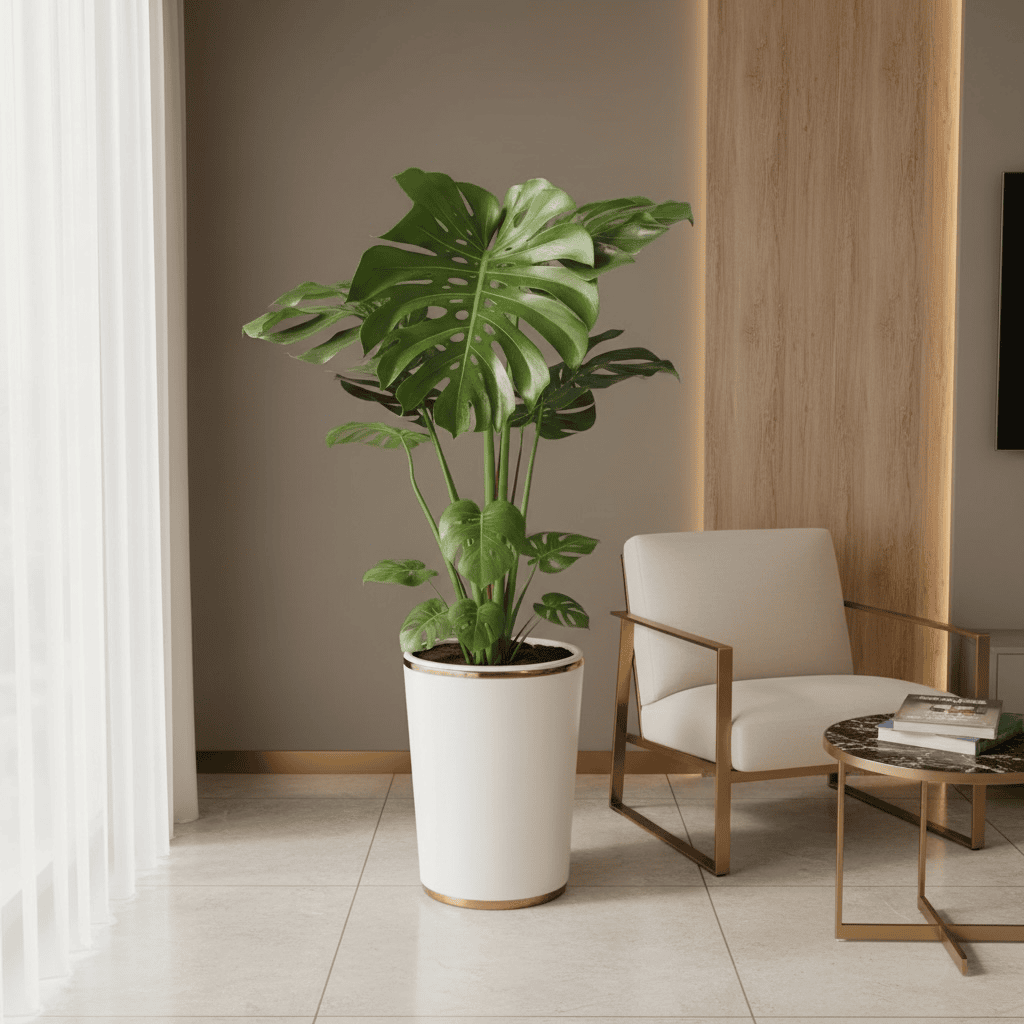
Shop this plant at PlantShop.hkIconic split leaves bring instant tropical-rainforest style to Hong Kong homes, and it suits beginners and experienced growers alike. The one rule that matters most: let the soil dry out before you water.
Light4–6 hrs bright indirect light; 1–3 m from an east/south window
WateringWater when the top 5 cm is dry; every 7–10 days in spring/summer
Best spot in HKBright spot near a window, away from midday sun
PetsToxic to cats & dogs — keep out of reach
Care in a nutshell
The most important thing with a Monstera in Hong Kong is not to overlove it: let the soil dry out before watering, and err on the side of underwatering rather than leaving the roots soggy. Hong Kong summers are humid enough that you don't need to mist constantly, and on muggy returning-humidity days it is better to open a window for airflow. For bigger leaves with beautiful splits, place it near a window with plenty of bright, indirect light, and within a couple of years the leaves will start developing those signature holes naturally. It thrives at 20–30°C and needs no feeding in winter. A good mix is 40% potting soil, 30% coco coir or peat, 20% perlite and 10% pine bark.
Shop · Monstera Deliciosa (from HK$580)
Origin & characteristics
Monstera deliciosa, commonly known as the Swiss Cheese Plant or Split-Leaf Philodendron (though it is not a true philodendron), belongs to the arum family (Araceae). It is native to the tropical rainforests of southern Mexico through Panama, and has since naturalised across tropical and subtropical regions worldwide, including much of Southeast Asia. The genus name "Monstera" comes from the Latin "monstrosus" meaning "monstrous" or "abnormal," a reference to the plant's extraordinary leaf morphology. The specific epithet "deliciosa" refers to the delicious flavour of its ripe fruit, said to taste like a combination of pineapple and banana.
In the wild, Monstera deliciosa is a vigorous evergreen climbing vine that can scramble up trees to heights of 20 metres. Young plants produce entire, heart-shaped leaves; as the plant matures and climbs higher, the leaves develop the characteristic deep splits and oval holes — a phenomenon botanists call "fenestration." These remarkable leaf adaptations serve multiple evolutionary purposes: the holes allow strong tropical winds to pass through, reducing drag and preventing the leaf stalks from snapping; they enable dappled light to filter down to lower leaves; and they allow heavy tropical rainfall to drain directly to the root zone rather than pooling on the leaf surface. Mature leaves can reach an impressive 1 metre in diameter, making this one of the largest-leaved houseplants available.
The plant's aerial roots are highly developed — in nature, these adventitious roots wrap around tree trunks to support upward climbing, while also absorbing moisture and nutrients from the air and surrounding debris. When they reach soil, they can develop into normal anchor roots. In indoor cultivation, aerial roots can be guided into the potting mix or a moss pole to support healthier, more vigorous growth.
The fruit of Monstera deliciosa is edible when fully ripe (the skin turns from green to yellow and the hexagonal scales begin to lift and fall away naturally), with a flavour described as a tropical fruit salad combining pineapple, banana, and mango. Indigenous peoples of Mexico have consumed it for centuries, calling it "cerimán" or "piña anona." However, unripe fruit contains high concentrations of insoluble calcium oxalate crystals (raphides) that can cause severe irritation and swelling in the mouth and digestive tract. All plant parts (leaves, stems, roots) contain these crystals and should never be consumed.
Light
Monstera deliciosa adapts to a broad light range, from bright indirect light to partial sun. The ideal position in a Hong Kong home is 1–3 metres from an east- or south-facing window, receiving 4–6 hours of bright, filtered light daily. Adequate soft light encourages larger leaves and earlier fenestration (the development of splits and holes); insufficient light produces smaller leaves without the signature perforations.
During Hong Kong summers, avoid direct midday sun (11am–3pm), which can scorch the leaves and cause unsightly brown patches. West-facing windows in particular should be filtered with a sheer curtain during summer afternoons. North-facing flats can support a monstera, but growth will be slower, leaves smaller, and fenestrations less pronounced — position the plant as close to the window as possible and rotate the pot regularly. As a general rule, the plant needs to reach sufficient maturity (typically 2–3 years of age) combined with adequate light before new leaves begin to develop fenestrations.
Monstera deliciosa is strongly phototropic — it will grow toward its light source. To prevent the plant from leaning to one side, rotate the pot 90 degrees every two weeks so all sides receive equal exposure.
Watering
The watering mantra for this plant is "dry soil first, water thoroughly." Insert your finger approximately 5 cm into the soil (about two knuckles deep); only water when the soil feels dry at that depth. During the spring and summer growing season, water roughly every 7–10 days. In autumn and winter, when growth naturally slows, extend the interval to every 10–14 days. The Swiss cheese plant has some tolerance for brief dry spells — leaves may soften and droop slightly, but typically recover well after watering. However, chronic underwatering will cause yellowing and browning at the leaf edges.
Hong Kong summers are hot and humid, which speeds evaporation, but typhoon-season downpours demand attention to drainage for any outdoor plants. Ensure excess water can escape freely and never sits in the saucer. In winter, when air conditioning or heating runs constantly, indoor air becomes very dry; if you notice leaf tips beginning to brown, this signals insufficient humidity. The single most common cause of death for indoor monsteras is root rot from persistent overwatering — soggy, waterlogged soil destroys the root system rapidly.
When watering, soak the soil thoroughly until water drains from the bottom of the pot, then discard any standing water from the saucer after 30 minutes. In winter, if tap water is very cold, let it stand overnight to reach room temperature before use, preventing cold shock to the roots. For leaf care, wipe the foliage gently with a damp cloth every 2–3 weeks to remove dust and maintain efficient photosynthesis. Hong Kong summer humidity is typically sufficient without additional misting, but during winter heating or dehumidifier use, occasional light misting around the plant can help — just ensure good ventilation and avoid misting at midday.
Soil & pot
Monstera deliciosa requires a loose, well-draining potting mix rich in organic matter. Recommended recipe: 40% general-purpose potting soil + 30% coco coir or peat + 20% perlite + 10% pine bark or coconut husk chips. This blend mimics the loose, humus-rich forest floor of its native tropical rainforest, allowing excess water to drain rapidly while retaining sufficient moisture for root uptake. Avoid pure peat-based or water-retentive mixes, which are poorly suited to Hong Kong's humid climate and increase the risk of root rot.
For pot selection, terracotta pots are the top choice — their porous walls allow air and moisture exchange, promoting healthy root respiration. Plastic pots are lighter and practical for larger specimens that may need occasional moving. Cement or glazed ceramic pots are visually striking but drain more slowly; use these only if you are disciplined about watering frequency. Every pot must have drainage holes; add a layer of clay pebbles at the base to create a drainage reservoir.
Monstera deliciosa grows at a moderate to fast rate depending on conditions. Repot every 1–2 years in spring. For mature specimens, choose a pot 8–12 cm larger in diameter than the current one, or consider adding a moss pole (sphagnum moss wrapped around a sturdy stake) for the aerial roots to cling to. Moss poles provide structural support and allow the aerial roots to absorb moisture and nutrients, leading to significantly more robust growth. To use one, insert the pole into the centre of the pot and guide the main stem to grow against it; keep the moss moist by watering it regularly. If aerial roots grow excessively long and look untidy, they can be trimmed or tucked back into the soil.
Temperature & humidity
The ideal temperature range for Monstera deliciosa is 20–30°C, with a minimum tolerable temperature of approximately 10°C. Hong Kong winters rarely threaten this plant, but during strong cold surges when temperatures persist below 12°C, move container plants indoors. Prolonged cold causes growth to stall and may produce yellowing leaves. In air-conditioned rooms, never position the plant where cold air blows directly onto the foliage — this causes desiccation and brown spotting.
Humidity preferences run at 50–70% relative humidity. Hong Kong summers often exceed 70%, which is ideal for this tropical species. However, be alert during "returning humidity" periods or the plum rain season — when ambient humidity approaches saturation, avoid frequent misting. Water films lingering on leaf surfaces can block stomatal respiration and invite fungal infections such as anthracnose. During these periods, improving air circulation is far more important than adding moisture. In winter, heating and dehumidifier use can drop indoor humidity below 30%; placing a humidity tray (shallow dish filled with pebbles and water) beneath the pot, or grouping plants together, can create a beneficial microclimate.
Fertilise during the growing season (April–September) every 3–4 weeks with a balanced liquid fertiliser to fuel leaf development. If you want to encourage fenestration, use a formulation with slightly higher nitrogen (such as NPK 3-1-2 ratio), as producing the elaborate leaf perforations demands substantial energy. Stop fertilising during winter (November–February). Newly purchased or recently repotted plants do not need fertilising for the first 2 months.
Pruning requirements are minimal. Remove old, yellowing, or damaged leaves by cutting the petiole at the base. If the plant grows too tall for your space, the top can be cut back in spring — the severed tip can be propagated as a cutting. Aerial roots that become overly long can be trimmed or redirected into the soil.
Common problems
| Issue | Likely cause | What to do |
|---|---|---|
| New leaves small without splits | Insufficient light or plant not mature enough | Move to a brighter position; young plants typically need 2–3 years before fenestrations appear |
| Brown leaf tips or edges | Air too dry or salt accumulation | Increase humidity around the plant; flush soil thoroughly with clean water to leach salts |
| Yellow spots on leaves that spread | Overwatering leading to root rot | Reduce watering, inspect roots, and repot with fresh well-draining mix if necessary |
| Black, wet-looking spots on leaves | Bacterial or fungal leaf spot | Remove affected leaves, improve air circulation, avoid wetting foliage, apply fungicide if needed |
| Dry brown spots on leaves | Red spider mites or scale insects | Wipe leaves with damp cloth; for severe cases, apply neem oil or insecticidal soap |
| Soft, mushy stem base with plant collapse | Severe root rot | Remove plant, cut away all rotten roots, replant in fresh soil, and drastically reduce watering |
Not sure your spot gets enough light, or something looks off? Send us a photo on WhatsApp 4492 9648 and we’ll take a look.
Questions people ask
Can a Monstera grow indoors in Hong Kong?
Yes, it is one of the best choices for Hong Kong homes. Place it 1–3 metres from an east- or south-facing window with 4–6 hours of bright, filtered light a day.
Why does my Monstera have no splits?
Usually not enough light, or the plant is still young. Young plants typically need 2–3 years before the splits and holes appear, and moving it somewhere brighter helps.
How often should I water a Monstera?
About every 7–10 days in spring and summer and every 10–14 days in autumn and winter. Push a finger about 5 cm into the soil and water only when it feels dry.
Is a Monstera safe for cats and dogs?
No. All parts contain calcium oxalate crystals that are toxic to cats and dogs, so keep the plant well out of their reach.
Fun facts
The fenestration of Monstera deliciosa is an evolutionary puzzle that fascinated even Charles Darwin. Modern research has identified at least three functional advantages of the holes: first, wind resistance reduction — tropical rainforests experience sudden strong gusts, and enormous intact leaves are vulnerable to tearing or having their stalks snap, whereas holes allow air to pass through; second, optimised light capture — in the dim forest understory where light is scattered and limited, holes allow light to penetrate more evenly to the plant's lower leaves; third, drainage — tropical deluges are torrential, and the perforations allow water to run off rapidly, reducing fungal growth on the leaf surface.
The edible fruit of Monstera deliciosa truly lives up to its species name "deliciosa" — a ripe fruit tastes remarkably like a tropical fruit salad blending pineapple, banana, and mango. Indigenous peoples of Central America have eaten it for centuries. However, the fruit must be absolutely ripe before consumption — unripe green fruit contains high concentrations of calcium oxalate raphides that cause severe oral and throat irritation, swelling, pain, and vomiting. All vegetative parts of the plant (leaves, stems, roots) also contain these irritant crystals, so accidental ingestion should be avoided, though normal handling is perfectly safe.
In Mexico, the plant is sometimes called "costilla de adán" (Adam's rib) because the fenestrated leaves are thought to resemble a ribcage. In contemporary interior design, the monstera leaf has become one of the most recognisable botanical motifs worldwide — gracing everything from wallpaper and textiles to café logos and Instagram feeds. Its distinctive silhouette has made it the unofficial ambassador of the "urban jungle" movement that has swept through Hong Kong homes over the past decade.
References (expand to view sources)
References
- Missouri Botanical Garden. "Monstera deliciosa." Plant Finder. https://www.missouribotanicalgarden.org/PlantFinder/PlantFinderDetails.aspx?taxonid=282750
- The Spruce. "How to Grow and Care for Monstera Deliciosa." https://www.thespruce.com/how-to-grow-monstera-deliciosa-5072671
- Royal Horticultural Society. "Monstera deliciosa." https://www.rhs.org.uk/plants/65916/monstera-deliciosa/details
- BBC Gardeners' World. "Monstera deliciosa." https://www.gardenersworld.com/plants/monstera-deliciosa/
- Barrière, F., et al. "Fenestration in Monstera: a look at the adaptive significance of leaf holes." Journal of Tropical Ecology, 2009.
- Dalcher, M. F., et al. "Fruit and seed morphology of Monstera and Rhaphidophora (Araceae)." Plant Systematics and Evolution, 2018.
⚠️ Pet / toxicity: All parts of Monstera deliciosa contain insoluble calcium oxalate crystals and are toxic to cats and dogs if ingested. Symptoms include oral irritation, excessive drooling, vomiting, difficulty swallowing, and gastrointestinal upset. While life-threatening cases are rare, households with pets that chew on plants should position the plant well out of reach or choose non-toxic alternatives. Wear gloves when pruning to avoid skin irritation from the sap. The fruit must be fully ripe before consumption — unripe fruit is strongly irritant.
Shop at Plantshop
View all Plants →
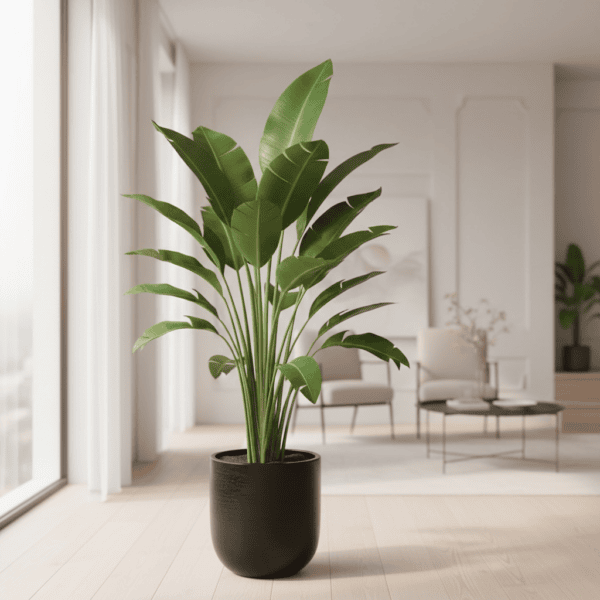
For Hong Kong homes and offices. Stock and pricing follow the product page.
FAQs
Origin & characteristics
Monstera deliciosa, commonly known as the Swiss Cheese Plant or Split-Leaf Philodendron (though it is not a true philodendron), belongs to the arum family (Araceae). It is native to the tropical rainforests of southern Mexico through Panama, and has since naturalised across tropical and subtropical regions worldwide, including much of Southeast Asia. The genus name "Monstera" comes from
Watering
The watering mantra for this plant is "dry soil first, water thoroughly." Insert your finger approximately 5 cm into the soil (about two knuckles deep); only water when the soil feels dry at that depth. During the spring and summer growing season, water roughly every 7–10 days. In autumn and winter, when growth naturally slows, extend the interval to every 10–14 days. The Swiss cheese pl
Soil & pot
Monstera deliciosa requires a loose, well-draining potting mix rich in organic matter. Recommended recipe: 40% general-purpose potting soil + 30% coco coir or peat + 20% perlite + 10% pine bark or coconut husk chips. This blend mimics the loose, humus-rich forest floor of its native tropical rainforest, allowing excess water to drain rapidly while retaining sufficient moisture for root uptake. Avo
Temperature & humidity
The ideal temperature range for Monstera deliciosa is 20–30°C, with a minimum tolerable temperature of approximately 10°C. Hong Kong winters rarely threaten this plant, but during strong cold surges when temperatures persist below 12°C, move container plants indoors. Prolonged cold causes growth to stall and may produce yellowing leaves. In air-conditioned rooms, never position the plant where col
