



Plantshop.hk · Care Encyclopedia
How to Care for Heavenly Bamboo in Hong Kong
From HK$680 · Hong Kong delivery
Hong Kong care guide — useful before you buy and after it arrives.
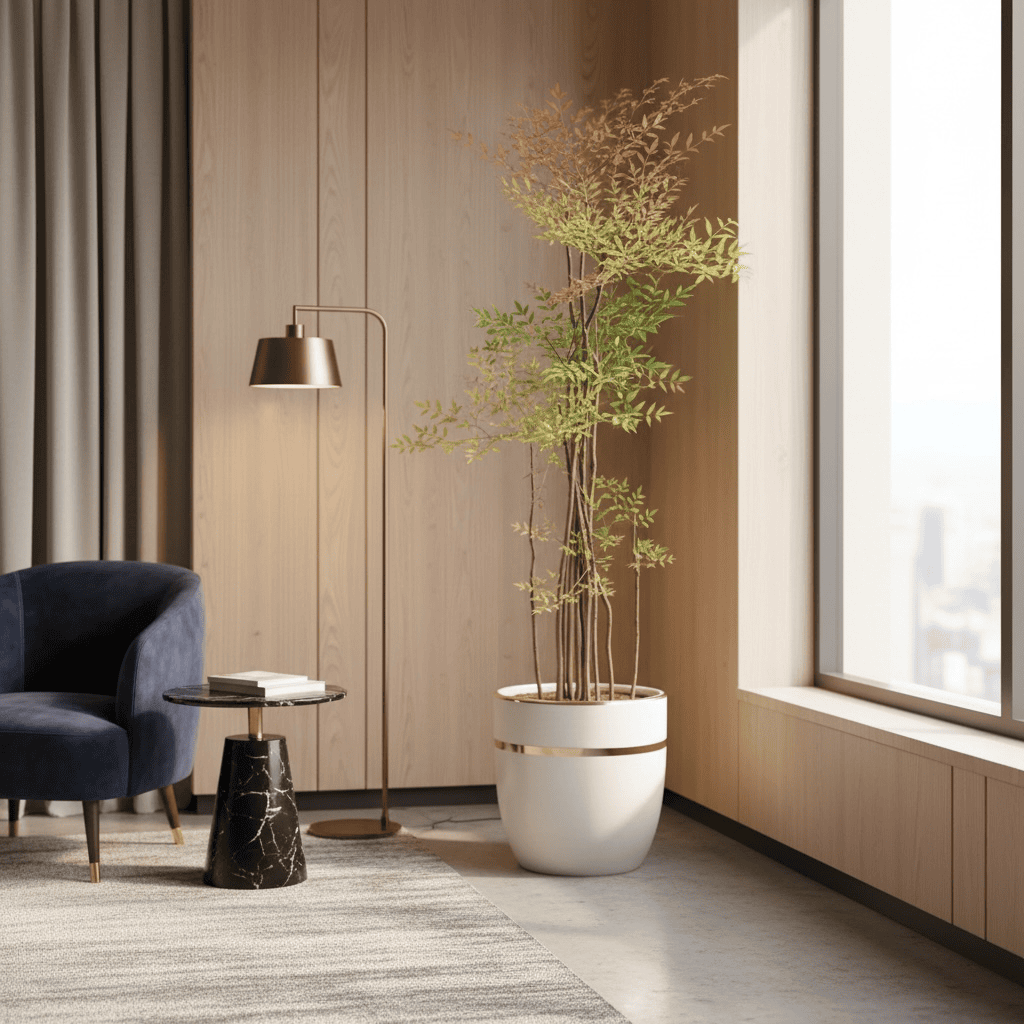
Shop this plant at PlantShop.hkHeavenly Bamboo (Nandina domestica) is an easy, festive shrub for Hong Kong balconies and homes, with leaves that turn from green to red and bright red berries in winter. The one rule that matters most: give it plenty of sun and cool autumn nights for the best colour.
Light4–6 hrs direct sun ideal; partial shade OK
WateringWater when dry; every 5–7 days spring-summer
Best spot in HKEast- or south-facing balcony or terrace
PetsToxic to cats, dogs & children — keep out of reach
Care in a nutshell
The real show with Heavenly Bamboo in Hong Kong happens in autumn and winter: the leaves turn from green to brilliant red, then the bright red berries appear, giving a festive feel. For the best colour, give it plenty of sunlight (soften midday sun, 11am–3pm, with 30–50% shade cloth in summer) and keep it outdoors through autumn so it feels cool nights of 10–15°C.
Don’t overwater: let the soil dry out before watering again. It is quite drought-tolerant once established, grows best at 15–25°C, and is fine in 40–60% humidity. A mix of 40% potting soil, 30% coco coir or peat, 20% perlite and 10% compost suits it well (pH 6.0–7.0). Note that all parts of the plant are toxic, so keep it away from pets and children.
Shop · Heavenly Bamboo (from HK$680)
Origin & characteristics
Nandina domestica, commonly known as Heavenly Bamboo or Sacred Bamboo, belongs to the barberry family (Berberidaceae). Despite the "bamboo" in its name, it bears no botanical relationship to true bamboos (family Poaceae). The name derives from its upright, cane-like stems with distinctly jointed nodes and its delicate compound leaves, which early Western botanists thought resembled bamboo. In fact, Nandina is more closely related to barberries (Berberis) and mahonias (Mahonia) than to any grass.
The plant is native to central and eastern China, Japan, and India, where it grows on hillsides, in thickets, and along stream banks. It has been cultivated in China for over 1,000 years as a traditional ornamental and bonsai subject. The Qing Dynasty gardening manual Hua Jing records: "Nandina, originally called tian zhu, has leaves like bamboo and produces red berries; the 'nan' (south) was added to distinguish it from true bamboo." In Japan, where it is called "nanten", the plant holds special cultural significance — the name sounds like "nan-ten", meaning "difficulties turning away," and it is regarded as a lucky plant that wards off misfortune. It is commonly planted around temples and in residential gardens.
Nandina domestica is an evergreen shrub reaching 1–2 metres in height, with upright stems that are reddish when young and mature to grey-brown. The leaves are 2–3 times pinnately compound, 20–50 cm long, with small oval leaflets 2–5 cm long arranged along delicate midribs. The thin, leathery leaflets are deep green in summer, then transform through autumn into shades of orange and brilliant crimson as temperatures drop — one of the most spectacular seasonal displays among container shrubs. In spring, clusters of tiny white to pale pink flowers appear in terminal panicles, developing into berries that ripen from green through to vivid red and persist through winter, providing months of rich colour.
Cultivated varieties such as "Fire Power" and "Firepower" offer even more intense autumn colouration with a more compact growth habit, though they typically produce few or no berries.
Light
Heavenly Bamboo adapts well to a range of light conditions, from full sun to partial shade. For the most vivid seasonal colour — especially the prized crimson autumn foliage — provide at least 4–6 hours of direct sunlight daily. In Hong Kong's intense summer sun, however, midday exposure (11am–3pm) can scorch the leaves; filter light with 30–50% shade cloth or position the plant where it receives morning sun and afternoon protection.
Partial shade conditions (2–3 hours of morning or afternoon direct sun) will support healthy growth, though leaf colour transitions may be less dramatic. East- or south-facing balconies are ideal. North-facing positions are viable but will produce more subdued green foliage with weaker autumn colour and reduced flowering and fruiting.
For the most spectacular winter display of red berries and crimson leaves, ensure the plant receives abundant sunshine combined with natural day-night temperature differentials during autumn. Cool nights of 10–15°C together with bright sun are the key triggers for intense colour development. Indoor environments lacking temperature variation will produce more muted seasonal changes.
Watering
Water Heavenly Bamboo using the "dry soil first" method — insert your finger 3–5 cm into the soil and only water when it feels dry at that depth. During the spring and summer growing season, water every 5–7 days, soaking until water drains from the bottom of the pot. In autumn and winter, extend the interval to every 7–10 days. Established plants have reasonable drought tolerance, and short dry spells will not cause serious damage, but prolonged drought leads to browning leaf margins and premature leaf drop.
Hong Kong summers bring high temperatures and heavy rainfall. For outdoor plants, ensure good drainage after downpours and promptly discard water from the saucer. During extended wet periods, pause watering and move container plants to a sheltered position. In winter, when temperatures drop and evaporation slows, reduce watering accordingly, but never allow the soil to become completely desiccated.
Heavenly Bamboo is not demanding about atmospheric humidity — 40–60% relative humidity is perfectly adequate, making it well-suited to Hong Kong homes. Summer humidity is naturally sufficient; during winter heating, occasional light misting can help. Wipe the foliage gently with a damp cloth once a month to remove dust and inspect for pests.
Soil & pot
Heavenly Bamboo is not fussy about soil but performs best in a loose, well-draining, organically rich potting mix. Recommended recipe: 40% general-purpose potting soil + 30% coco coir or peat + 20% perlite + 10% organic compost. This blend drains freely while providing slow-release nutrition. The ideal soil pH is slightly acidic to neutral (6.0–7.0).
Pot selection is flexible — terracotta, plastic, or glazed ceramic pots all work well. Terracotta offers the best drainage and aeration; plastic is lightweight and practical for plants that need moving; ceramic or cement pots provide visual weight and stability for a more formal display. Because the ornamental value of Heavenly Bamboo lies in its upright stems and elegant compound foliage, taller pots that complement its vertical habit are particularly effective. Every pot must have drainage holes; a layer of clay pebbles at the base improves drainage.
Growth rate is moderate. Repot every 2 years in spring, inspecting the roots and trimming any circling growth, then refreshing with new potting mix. If you want to control the plant's height, use the "root prune and replace" technique — trim back a portion of the roots and return the plant to a pot of the same size with fresh soil. Mature specimens can reach 1–2 metres, but container plants are typically maintained at 60 cm to 1 metre.
Temperature & humidity
Heavenly Bamboo grows best at 15–25°C. The species can tolerate brief periods down to approximately -10°C in the ground, but container plants are more vulnerable — maintain a minimum temperature above 5°C. Hong Kong winters generally require no special protection, but during cold surges when temperatures persist below 8°C, move container plants indoors or to a sheltered position. The cool temperatures of autumn (10–18°C) are the key trigger for the spectacular leaf colour change, so avoid bringing plants indoors too early in the season.
Summer temperatures above 30°C are well tolerated, though you should increase watering frequency and provide appropriate shade. In air-conditioned rooms, avoid positioning the plant where cold air blows directly onto the foliage. Humidity of 40–60% is sufficient, making this an excellent choice for Hong Kong's climate.
Fertilise during the growing season (March–September) every 3–4 weeks with a balanced liquid fertiliser or slow-release formula to support healthy foliage development. In autumn (October–November), switch to a formulation with higher phosphorus and potassium content to strengthen cold hardiness and enhance colour transitions. Stop fertilising in winter. No additional feeding is needed for the first 2 months after repotting.
Pruning requirements are light, as the natural growth habit is already attractive. Remove weak, diseased, overcrowded, or excessively elongated stems to maintain good air circulation and light penetration. After flowering, remove spent blooms to reduce energy expenditure. To control height, the main stems can be tip-pruned in spring. Mature plants benefit from "rejuvenation pruning" — in early spring, cut the oldest one-third of stems right back to soil level to stimulate fresh basal growth and keep the plant youthful. Avoid heavy pruning on plants under 3 years old.
Common problems
| Issue | Likely cause | What to do |
|---|---|---|
| Leaves stay green and don't turn red | Insufficient light or lack of temperature variation | Increase sun exposure; move outdoors in autumn to experience natural day-night temperature differences |
| Leaves turn yellow and drop (from bottom up) | Overwatering / poor drainage | Check drainage holes, reduce watering frequency, repot with root pruning if necessary |
| Elongated stems with sparse foliage | Insufficient light or excess nitrogen | Increase light exposure; switch to balanced fertiliser; prune stem tips |
| White powdery coating on leaves | Powdery mildew (poor ventilation + high humidity) | Improve air circulation; spray with baking soda solution; apply fungicide for severe cases |
| Brown spots on leaves that spread | Fungal infection (high humidity + poor airflow) | Remove affected leaves, improve ventilation, reduce leaf wetting |
| No flowers or berries | Insufficient light or plant too young | Increase light exposure; note that some cultivars (e.g., Fire Power) naturally produce few berries |
Not sure your spot gets enough light, or something looks off? Send us a photo on WhatsApp 4492 9648 and we’ll take a look.
Questions people ask
Can Heavenly Bamboo grow indoors in Hong Kong?
Yes, in the brightest window with the pot rotated regularly, but the autumn colour will be more muted. Indoor environments lack the day-night temperature difference that triggers the red foliage.
How often should I water Heavenly Bamboo in Hong Kong?
Every 5–7 days in spring and summer and every 7–10 days in autumn and winter. Insert a finger 3–5 cm into the soil and water only when it feels dry.
Does Heavenly Bamboo need protection from Hong Kong winters?
Usually not. Keep container plants above 5°C, and during cold surges when temperatures stay below 8°C, move them indoors or to a sheltered spot.
Is Heavenly Bamboo safe for cats, dogs and children?
No. All parts, including the red berries, contain alkaloids and cyanogenic glycosides and are toxic to cats and dogs, causing vomiting, diarrhoea and difficulty breathing. The berries are attractive to children and pets, so place the plant well out of reach.
Fun facts
The genus name Nandina is unusual among plant scientific names — it is not derived from Latin or Greek, but is simply a latinised spelling of the Japanese name "nanten". This happened because the Swedish botanist Carl Peter Thunberg first scientifically documented the plant in Japan during the late 18th century and adopted the local name directly. The specific epithet "domestica" refers to the plant's long history of cultivation by humans.
In Japanese culture, Heavenly Bamboo occupies a special place in New Year celebrations. Because "nanten" sounds like "nan-ten" (meaning "turning away difficulties"), the plant is regarded as a powerful symbol of good fortune that can avert bad luck. Traditional New Year decorations called "kadomatsu" often combine nandina berries with pine branches and plum blossoms. In the Japanese art of flower arrangement (ikebana), nandina leaves are a classic material symbolising longevity and good fortune. In traditional Chinese horticulture, nandina is grouped with wintersweet, narcissus, and sacred bamboo as one of the refined winter offerings for scholarly studios.
From a phytochemical perspective, Nandina domestica contains several bioactive alkaloids including nantenine and domesticine. These compounds have attracted research interest for their potential pharmacological properties, but they also make the plant toxic. Interestingly, while the red berries are poisonous to many mammals, certain bird species such as the light-vented bulbul (Pycnonotus sinensis, commonly seen in Hong Kong) can consume the berries without harm and subsequently disperse the seeds — a classic example of mutualistic co-evolution between plants and animals.
References (expand to view sources)
References
- Flora of China. "Nandina domestica." eFloras, Missouri Botanical Garden & Harvard University Herbaria. http://www.efloras.org/
- Missouri Botanical Garden. "Nandina domestica." Plant Finder. https://www.missouribotanicalgarden.org/PlantFinder/PlantFinderDetails.aspx?taxonid=282360
- Royal Horticultural Society. "Nandina domestica." https://www.rhs.org.uk/plants/110584/nandina-domestica/details
- Poison Control. "What to know about Nandina domestica – or 'Heavenly Bamboo'." https://www.poison.org/articles/nandina-domestica-heavenly-bamboo
- Forrester, M.B. "Pediatric Nandina domestica ingestions reported to poison centers." Human & Experimental Toxicology, 2018. https://pubmed.ncbi.nlm.nih.gov/28421827/
- Chen Haozi. Hua Jing, Qing Dynasty gardening manual. (Traditional Chinese horticultural literature)
⚠️ Pet / toxicity: All parts of Nandina domestica — including leaves, stems, roots, and berries — contain multiple bioactive alkaloids and cyanogenic glycosides, and are toxic to cats and dogs if ingested. Symptoms include vomiting, diarrhoea, difficulty breathing, seizures, and in severe cases may lead to coma. The vivid red berries are particularly attractive to children and pets and require extra vigilance. Research by US Poison Control Centres indicates that while human ingestion of small quantities of berries typically does not cause serious consequences, the risk to pets is significantly higher. Position Heavenly Bamboo well out of reach of both pets and young children. Pet owners may consider the non-fruiting cultivar "Fire Power" as a safer alternative, or choose a non-toxic substitute. Wear gloves when pruning to avoid skin contact with sap.
Shop at Plantshop
View all Plants →
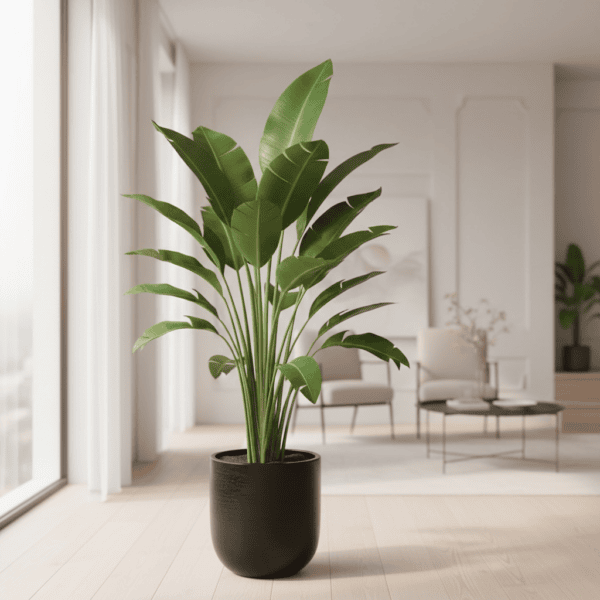
For Hong Kong homes and offices. Stock and pricing follow the product page.
FAQs
Origin & characteristics
Nandina domestica, commonly known as Heavenly Bamboo or Sacred Bamboo, belongs to the barberry family (Berberidaceae). Despite the "bamboo" in its name, it bears no botanical relationship to true bamboos (family Poaceae). The name derives from its upright, cane-like stems with distinctly jointed nodes and its delicate compound leaves, which early Western botanists thought resembled bambo
Watering
Water Heavenly Bamboo using the "dry soil first" method — insert your finger 3–5 cm into the soil and only water when it feels dry at that depth. During the spring and summer growing season, water every 5–7 days, soaking until water drains from the bottom of the pot. In autumn and winter, extend the interval to every 7–10 days. Established plants have reasonable drought tolerance, and sh
Soil & pot
Heavenly Bamboo is not fussy about soil but performs best in a loose, well-draining, organically rich potting mix. Recommended recipe: 40% general-purpose potting soil + 30% coco coir or peat + 20% perlite + 10% organic compost. This blend drains freely while providing slow-release nutrition. The ideal soil pH is slightly acidic to neutral (6.0–7.0).
Temperature & humidity
Heavenly Bamboo grows best at 15–25°C. The species can tolerate brief periods down to approximately -10°C in the ground, but container plants are more vulnerable — maintain a minimum temperature above 5°C. Hong Kong winters generally require no special protection, but during cold surges when temperatures persist below 8°C, move container plants indoors or to a sheltered position. The cool temperat
