



Watering, Light, Species, and What to Do When Things Go Wrong — office plant faq
Keeping plants alive confounds more people than it should — largely because the mistakes are a short, predictable list that no one explains clearly upfront. Below are the questions we receive most often, answered with the directness they deserve.
Watering
How often should I water? Species and season determine the answer. As a general frame: spring and summer (growing season), every 5–10 days; autumn and winter (dormant period), every 10–14 days. Drought-tolerant varieties — Snake Plant among them — can sustain a 2–3 week interval without visible complaint. The most reliable method: press a finger 2–3cm into the soil and water only when it reads as dry. The principle to carry: err toward dry, not wet.
How much water? Water thoroughly, until it drains cleanly from the base. Then empty the saucer without exception — roots that sit in standing water begin to rot with a speed that consistently surprises people who have not witnessed it before.
Can I use tap water? Yes. Hong Kong tap water contains a modest chlorine concentration that has minimal impact on most indoor plants. If you are attentive to this, allow it to stand overnight and the chlorine will dissipate. Most plants will not register the difference either way.
Light
My office has no windows. Can I keep plants? Yes, with the right selection. Shade-tolerant varieties — Snake Plant, Pothos manage low light conditions with competence. Supplement with a grow light for best results. That said, even the most shade tolerant specimens have a threshold below which they will not survive indefinitely.
Can indoor plants handle direct sun? Most cannot. Intense direct sun scorches leaf tissue irreversibly. Bright indirect light — the quality found beside a window filtered by sheer curtains — is the correct condition for the majority of indoor plants.
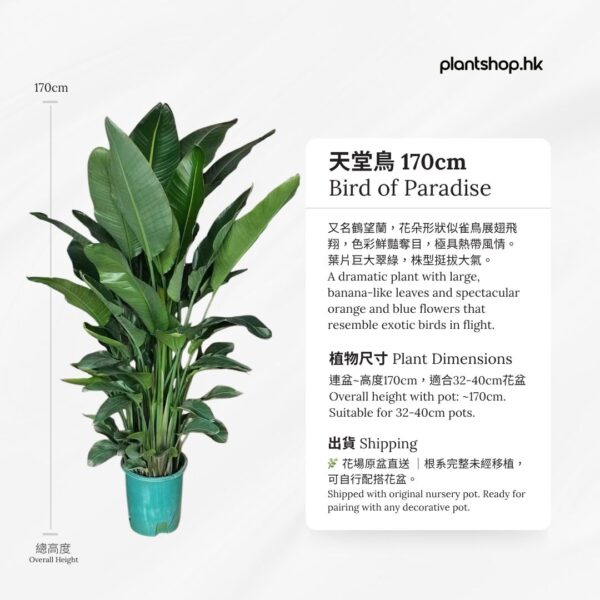
Is a north-facing window bright enough? North-facing exposure delivers weaker light and suits shade-tolerant varieties. For light-demanding specimens such as the Fiddle-Leaf Fig or Giant Bird of Paradise, look for south- or east-facing windows.
Troubleshooting
What if the leaves turn yellow? Identify which leaves. One or two ageing leaves at the base yellowing is natural senescence — remove them and proceed. Multiple leaves yellowing simultaneously almost always indicates overwatering or a critical light deficit. Audit soil moisture and reconsider the plant’s position.
What if the leaf tips turn brown? The air is almost certainly too dry — an extremely common condition in Hong Kong’s air-conditioned offices. Increase misting frequency, or set the pot on a humidity tray. Mist the air around the plant rather than directly onto the leaf surface; sustained leaf spraying over time encourages bacterial growth.
What if the plant is dropping leaves? Leaf drop is typically triggered by environmental disruption — immediately after relocating a plant — or by a sudden shift in temperature or humidity. Stabilise the environment and the plant will generally settle and produce new growth once it acclimatises. If dropping persists, examine the roots for rot.
What if there are pests? For limited infestations: diluted soapy water or a specialist insecticide applied directly. For severe cases: isolate the plant immediately to contain spread. Consistent ventilation is the most effective preventative measure available.
How do I save a plant with root rot? Root rot is not necessarily a terminal diagnosis: Stop watering immediately. Remove the plant and rinse the root system clean. Excise all rotten sections — brown, soft tissue — with clean scissors. Repot in fresh, dry medium. Position in a well-ventilated spot, water sparingly, and allow roots to recover their integrity.
Species Selection
Which plants are easiest to care for? For beginners, or anyone who cannot guarantee consistent attention: Snake Plant — practically impervious to neglect. Pothos — resilient, fast-growing, forgiving of inconsistency. ZZ Plant (Zamioculcas zamiifolia) — undemanding. Spider Plant — propagates with ease; safe for pets.
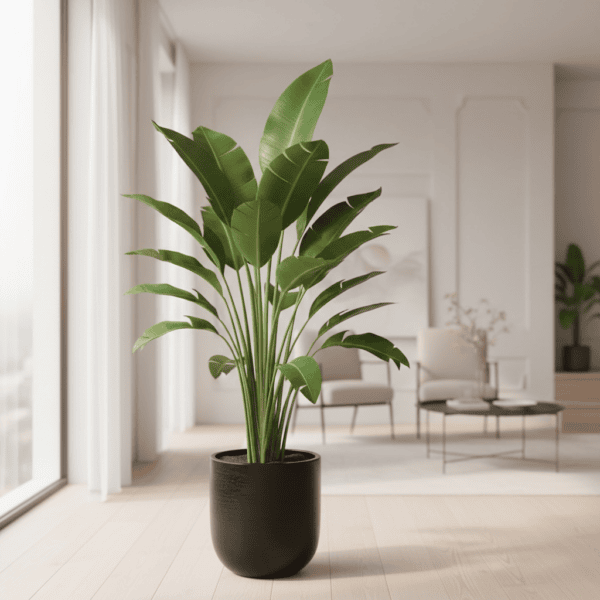
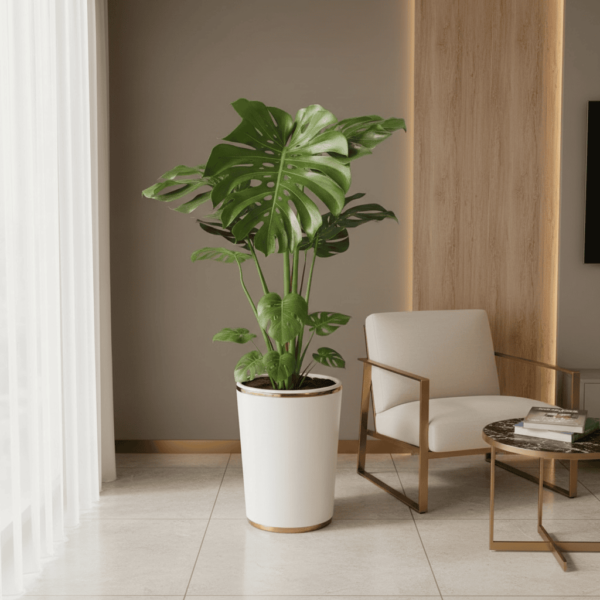
Which plants carry the most visual presence? For a designer register: Fiddle-Leaf Fig (Ficus lyrata), Monstera (Monstera deliciosa), Giant Bird of Paradise (Strelitzia nicolai). All three reach heights that add immediate texture and spatial authority. PlantShop carries these in 130–180cm specimens, each selected for strong form before shipping.
Which plants are safe for cats and dogs? Many common indoor plants are toxic to pets — a consideration that deserves serious attention. Safe: Spider Plant (Chlorophytum comosum). Avoid: Pothos, Snake Plant, Ivy, Peace Lily, Money Tree. When uncertain, the ASPCA database is the definitive reference.
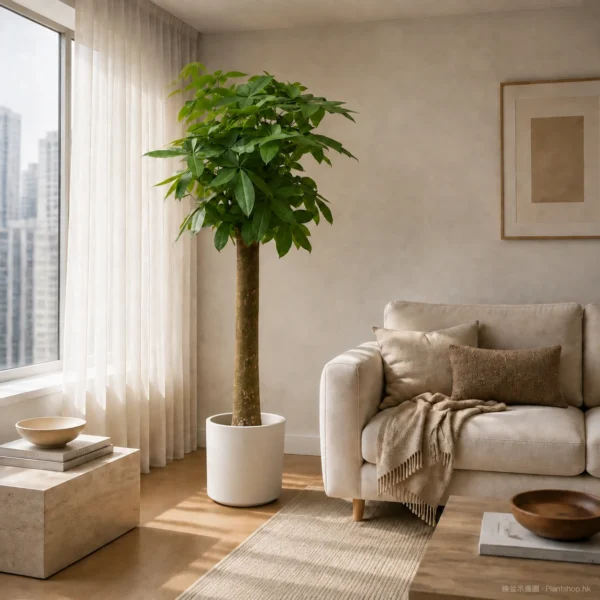
Which plants suit the wealth corner? Traditional feng shui designates the diagonal from the entrance as the wealth corner — suited to Money Tree (Pachira aquatica) or ZZ Plant, both associated with prosperity symbolism. Feng shui operates as a traditional cultural framework without scientific validation, but if the plant is vigorous and the position is right, those are the qualifications that matter most.
Can I use artificial plants? From a feng shui perspective, artificial plants carry no vitality and are not recommended. Practically: if maintenance is impossible, high-quality artificial alternatives are an option — but they must be cleaned with rigour. Dusty artificial plants are worse than no plants at all. One real, living plant is worth ten inert substitutes.
Are cacti suitable for offices? Yes, with a placement caveat. Position them in corners or on shelves — not in walkways where people will brush against them. Traditional feng shui appropriately assigns cacti to sha positions facing corridors and stairwells, which in practice simply means keeping them clear of the main circulation path.
Office Plant Decisions
Should a company buy or rent plants? If dedicated maintenance staff are available, purchase is the more economical long-term strategy. If no one has the bandwidth to care for plants, rental — which includes scheduled professional maintenance — is the more rational choice. A hybrid approach functions well: purchase for high-visibility positions, rent for the rest.
PlantShop corporate clients receive dedicated service with direct WhatsApp response and 3–7 business day delivery.
What if a plant dies? PlantShop.hk offers a 7-day quality guarantee — contact us if a plant arrives in poor condition. Beyond that initial period, care is what sustains them. Watering discipline and appropriate lighting are the two factors that determine the vast majority of outcomes. Every plant is personally inspected before it ships.
Questions Remaining?
Contact PlantShop.hk — we are available, and interested in helping.
PlantShop Horticulture Team. 130–180cm plants, hand-picked. WhatsApp for a direct reply. 3–7 business day delivery.
Related Products
Below are the plants mentioned in this article, available for direct purchase. Each comes with a personal care card and WhatsApp support from a real person:




FAQs
Watering, Light, Species, and What to Do When Things Go Wrong
Keeping plants alive confounds more people than it should — largely because the mistakes are a short, predictable list that no one explains clearly upfront. Below are the questions we receive most often, answered with the directness they deserve.
Watering
How often should I water? Species and season determine the answer. As a general frame: spring and summer (growing season), every 5–10 days; autumn and winter (dormant period), every 10–14 days. Drought-tolerant varieties — Snake Plant among them — can sustain a 2–3 week interval without visible complaint. The most reliable method: press a finger 2–3cm into the soil and water only when it reads as
Troubleshooting
What if the leaves turn yellow? Identify which leaves. One or two ageing leaves at the base yellowing is natural senescence — remove them and proceed. Multiple leaves yellowing simultaneously almost always indicates overwatering or a critical light deficit. Audit soil moisture and reconsider the plant's position.
Species Selection
Which plants are easiest to care for? For beginners, or anyone who cannot guarantee consistent attention: Snake Plant — practically impervious to neglect. Pothos — resilient, fast-growing, forgiving of inconsistency. ZZ Plant (Zamioculcas zamiifolia) — undemanding. Spider Plant — propagates with ease; safe for pets.
