



Plantshop.hk · Care Encyclopedia
How to Care for Ti Plant in Hong Kong
From HK$580 · Hong Kong delivery
Hong Kong care guide — useful before you buy and after it arrives.
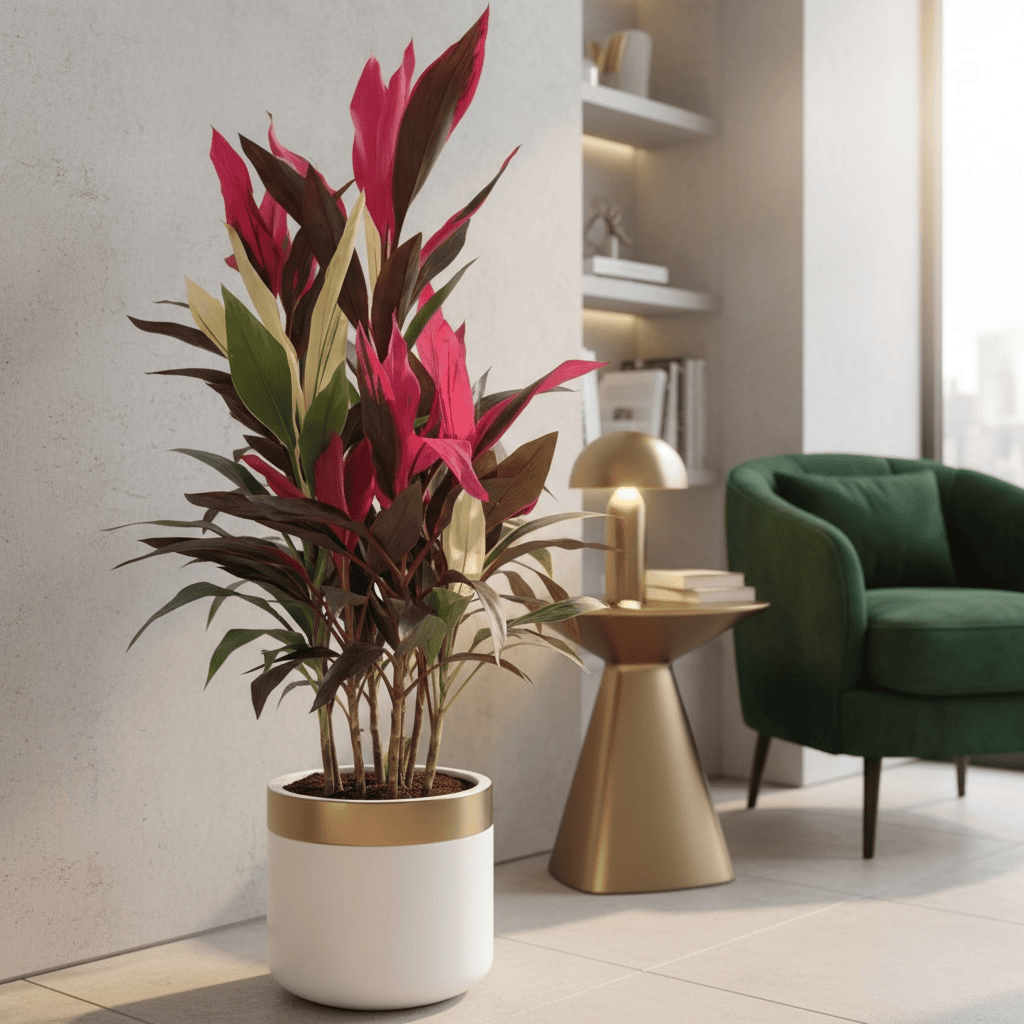
Shop this plant at PlantShop.hkThe Dream Ti Plant’s magenta-to-pink gradient foliage brings a romantic, tropical-island mood to any light, making it one of the most colourful indoor plants for Hong Kong homes. The one rule that matters most: bright indirect light, and keep it on the dry side rather than waterlogged.
LightBright, indirect light; avoid summer west sun
WateringWater when top 2–3 cm is dry; every 4–6 days in summer
Best spot in HKLiving-room window, office or lobby; away from AC vents
PetsMildly toxic to cats & dogs — keep out of reach
Care in a nutshell
The Dream Ti Plant is a natural focal point for a Hong Kong home or office. Place it on an east- or north-facing windowsill, or 1–2 metres from a south-facing window, and the magenta and pink will glow. Use the finger test: insert 2–3 cm into the soil and water only when dry — every 4–6 days in summer and every 7–10 days in winter. It fears waterlogging far more than drought. Ti plants are sensitive to fluoride and chlorine, so use tap water that has stood for 24+ hours, and when winter air conditioning dries the air, mist the surrounding air or use a pebble tray, or the leaf tips will brown.
Origin & characteristics
The Dream Ti Plant is a popular cultivar of Cordyline fruticosa, belonging to the asparagus family (Asparagaceae). Cordyline fruticosa is native to Southeast Asia, New Guinea, northeastern Australia, and the Pacific islands, and is one of the most historically significant and culturally meaningful ornamental plants in tropical horticulture. In Hawaii, Tahiti, and Samoa, the ti plant is known as "Ti Plant" or "Good Luck Plant" — not merely a garden ornamental, but an indispensable part of daily life. Its leaves are used for weaving, construction, and religious ceremonies; the rhizome can be fermented to produce alcoholic beverages; and the plant is believed to bring good fortune and ward off evil spirits (Consultaplantas, 2024).
The 'Dream' cultivar stands out with these distinctive horticultural features:
- Dreamy leaf colour: Deep magenta-purple forms the base colour, with pink, rose, and light green stripes and washes scattered across the centre and margins, creating a watercolour-like gradient effect. New leaves are lighter in colour, deepening with maturity, so multiple colour layers can coexist on a single plant.
- Elegant leaf form: Long, lance-shaped leaves, approximately 20–35 cm long and 5–8 cm wide, with a thick, glossy texture and subtly wavy margins.
- Upright habit: Stems grow vertically with a terminal cluster of leaves. Mature height is approximately 60–120 cm — taller than 'Baby Doll' but more compact than wild-type ti plants, making it suitable as a medium-sized indoor foliage plant.
- Good adaptability: Well-adapted to indoor environments, with better shade tolerance than many other colourful foliage plants.
The Dream Ti Plant is extremely popular in Hong Kong, appearing in homes, office lobbies, and hotel atriums. Its gorgeous yet sophisticated colours make it an easy visual focal point in any space, complementing both modern minimalist and tropical-themed interiors.
Light
The Dream Ti Plant has moderate light requirements with a fairly wide adaptation range — a major advantage that makes it such a successful indoor plant:
- Ideal light: Bright, indirect light — east-facing or north-facing windowsills, or 1–2 metres from a south-facing window. Good light makes the magenta-purple colour more intense and the pink stripes more vivid.
- Tolerable range: Semi-shade positions are also acceptable — leaf colour will deepen slightly (more magenta) while still maintaining rich colour layering. This characteristic makes it particularly well-suited to Hong Kong's indoor environments.
- Avoid: Strong direct summer sun, especially through glass, which can cause scald spots, faded colour, or scorched leaf edges. If placed at a south-facing window, filter with sheer curtains or move back from the glass.
Because 'Dream' leaves are predominantly dark-coloured, they are theoretically more sun-tolerant than light-coloured varieties, but Hong Kong's summer heat combined with the greenhouse effect of glass can still stress the foliage. Rotate the pot every two weeks to ensure even, symmetrical growth.
Watering
Ti plants have particular water management requirements — both overwatering and underwatering cause problems:
- Watering principle: Water when the top 2–3 cm of soil has dried. In summer, water every 4–6 days; in winter, every 7–10 days. Water thoroughly until it drains from the bottom, then discard saucer water.
- Water quality: Ti plants are quite sensitive to fluoride and chlorine in tap water. Long-term use of untreated tap water causes leaf tip browning. According to American horticultural statistics, 87% of ti plant leaf tip browning cases are related to fluoride toxicity or low humidity (Alibaba LifeTips, 2024). Use tap water that has stood for 24+ hours, filtered water, or rainwater.
- Seasonal adjustment: Winter growth is slow and water requirements drop significantly — extend watering intervals. Better slightly dry than waterlogged. Prolonged wet conditions cause root rot, especially during Hong Kong's cool, humid winters.
Soil & pot
- Soil mix: Light, well-draining, organic-rich, slightly acidic medium (pH 6.0–6.5). Suggested mix: quality peat-free potting mix 3 parts + coco peat 2 parts + perlite 2 parts + organic compost 1 part. Good drainage is the key to preventing root rot (Louisiana Nursery, 2024).
- Pot selection: A medium pot, 20–25 cm in diameter, suits most mature specimens. Terracotta pots offer excellent breathability for healthy roots; plastic pots require more careful watering control. Regardless of material, drainage holes are essential.
- Repotting: Approximately every 2–3 years, with spring being the optimal time. Choose a new pot only 3–5 cm larger in diameter. Ti plants have fine, sensitive roots — keep the root ball intact during repotting, only gently loosening the outer roots.
- Fertiliser management: During the growing season (April–September), apply half-strength balanced liquid fertiliser (such as 10-10-10 or 20-20-20) every 3–4 weeks. A slightly higher nitrogen content helps maintain vivid leaf colour (Louisiana Nursery, 2024). Stop fertilising in autumn and winter. Avoid fertiliser contact with the stem.
Temperature & humidity
- Optimal temperature: 18–27°C — well-suited to Hong Kong's typical indoor environments.
- Minimum tolerable temperature: Approximately 15°C. Prolonged exposure below 15°C stalls growth; below 10°C may cause cold damage with browning and leaf drop. Hong Kong indoor winter temperatures are generally safe, but avoid placing directly in air-conditioning airflow or near doorways with cold drafts.
- Humidity requirements: Ti plants prefer higher humidity (60%+). Hong Kong summers are naturally humid enough, but winter air conditioning or heating can drop humidity below 40%, causing leaf tip browning. Humidity-boosting methods include:
- Misting surrounding air 2–3 times per week (avoid spraying directly on leaves, especially during dark weather)
- Placing the pot on a tray of wet pebbles (water should not touch the pot base)
- Grouping plants together to create a humid microclimate
- Using a humidifier
Cleaning care: Every 2–3 weeks, gently wipe leaves with a slightly damp soft cloth to remove dust, maintain leaf gloss, and keep colours vivid. Remove any yellowed basal leaves to keep the plant tidy and attractive.
Common problems
| Issue | Likely cause | What to do |
|---|---|---|
| Leaf tips scorch brown | Fluoride toxicity, hard water, or dry air | Switch to filtered or rainwater; increase humidity; choose a lower-fluoride water source |
| Colour darkens, pink stripes fade | Severely insufficient light | Move to a brighter position; gradually increase light |
| Entire leaves turn yellow and drop | Overwatering causing root rot, or temperature too low | Check soil drainage; reduce watering; move away from cold drafts |
| Stem base softens, plant collapses | Severe root rot | Reduce watering; check drainage; if severe, prune healthy top growth and propagate from cuttings |
| Powdery white coating on leaves | Mealybug or scale insect infestation | Wipe insects with cotton bud dipped in alcohol; apply neem oil or insecticidal soap; severe cases may require systemic insecticide |
Not sure your spot gets enough light, or something looks off? Send us a photo on WhatsApp 4492 9648 and we’ll take a look.
Questions people ask
Can a Dream Ti Plant grow indoors in Hong Kong?
Yes. It has better shade tolerance than many colourful foliage plants and keeps good colour in semi-shade, though the leaves deepen slightly. Bright, indirect light gives the most vivid colour.
How often should I water a Dream Ti Plant?
Roughly every 4–6 days in summer and every 7–10 days in winter. Check that the top 2–3 cm of soil is dry first — it is better slightly dry than waterlogged.
Why use settled water for a Dream Ti Plant?
Ti plants are quite sensitive to fluoride and chlorine in tap water, and long-term use of untreated tap water causes leaf tip browning. Use tap water that has stood for 24+ hours, filtered water or rainwater.
Is a Dream Ti Plant safe for cats and dogs?
It is mildly toxic. The leaves contain saponins, and ingestion may cause vomiting, diarrhoea or drooling. The risk is relatively low, but keep it where pets cannot easily reach it.
Fun facts
The soul of Hawaiian hula: Cordyline fruticosa is one of the soul plants of Hawaiian hula dance. Traditionally, the dancers' grass skirts (pa'u) were woven from ti plant leaves. In ancient Hawaii, the ti plant was called "kī" and was considered a sacred plant possessing powerful spiritual force. People believed that planting ti plants around their homes could ward off evil, so they were widely cultivated around dwellings and temples. In important ceremonies, priests used ti plant leaves to make offerings and talismans.
In breeding history, 'Dream' belongs to the "semi-miniature" category of ti plant cultivars — intermediate between dwarf varieties (such as 'Baby Doll') and standard large varieties. Its unique magenta-pink colouration is not created by a single pigment, but by the distribution of anthocyanins (producing red-purple) and chlorophyll (producing green) in different regions of the leaf. Light intensity and temperature affect the ratio of these two pigments — stronger light increases anthocyanin production, making leaves redder; weaker light allows chlorophyll to dominate, shifting colour toward green. This means the same 'Dream' plant may display subtle colour variations across different seasons, adding an extra dimension of visual interest.
It is also worth noting that the ti plant was included in NASA's 1989 air purification study, but subsequent research (Georgia University, 2012) concluded that in typical home environments, the air purification effect of ti plants is negligible and should not be considered a primary air-cleaning method (Alibaba LifeTips, 2024). The true value of the Dream Ti Plant lies in its irreplaceable ornamental beauty and cultural significance.
References (expand to view sources)
References
- Consultaplantas. (2024). Cordyline fruticosa or Ti plant: Care and Growing. http://www.consultaplantas.com/
- Louisiana Nursery. (2024). Cordyline Varieties & Care Guide. https://louisiananursery.com/cordyline-varieties-care-guide/
- LifeTips (Alibaba). (2024). Ti Plant (Cordyline fruticosa) Care Guide. https://lifetips.alibaba.com/plant-care/ti-plant-cordyline-fruticosa
- The Old Farmer's Almanac. (2024). Cordyline: The Complete Guide to Growing and Care Tips. https://www.almanac.com/plant/cordyline
- University of Georgia. (2012). Interior Plantscape and Indoor Air Quality. College of Agricultural and Environmental Sciences.
- Missouri Botanical Garden. Cordyline fruticosa. https://www.missouribotanicalgarden.org/
⚠️ Pet / toxicity: The Dream Ti Plant is mildly toxic to cats and dogs. Its leaves contain saponin compounds; ingestion may cause vomiting, diarrhoea, or drooling. While toxicity is relatively low and generally requires consumption of a larger quantity to produce symptoms, it is still advisable to position the plant where pets cannot easily reach it. If you suspect your pet has ingested leaves, observe for any abnormal symptoms and consult a veterinarian promptly.
Shop at Plantshop
View all Plants →
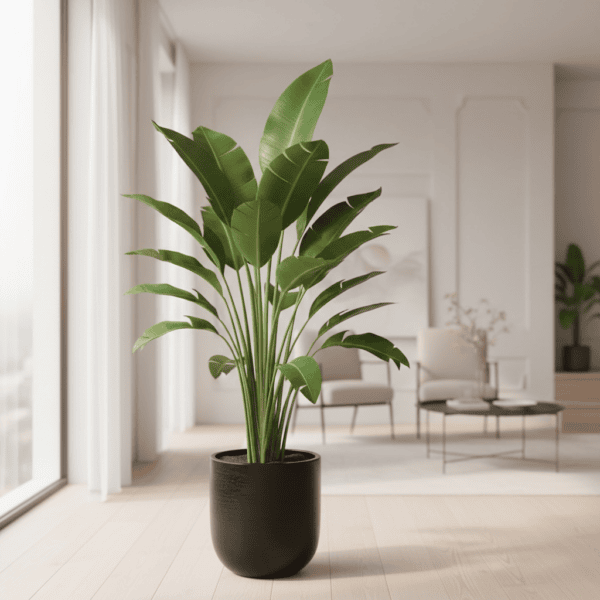
For Hong Kong homes and offices. Stock and pricing follow the product page.
FAQs
Origin & characteristics
The Dream Ti Plant is a popular cultivar of Cordyline fruticosa, belonging to the asparagus family (Asparagaceae). Cordyline fruticosa is native to Southeast Asia, New Guinea, northeastern Australia, and the Pacific islands, and is one of the most historically significant and culturally meaningful ornamental plants in tropical horticulture. In Hawaii, Tahiti, and Samoa, the ti plant is known as &q
Watering
Ti plants have particular water management requirements — both overwatering and underwatering cause problems:
Fun facts
The soul of Hawaiian hula: Cordyline fruticosa is one of the soul plants of Hawaiian hula dance. Traditionally, the dancers' grass skirts (pa'u) were woven from ti plant leaves. In ancient Hawaii, the ti plant was called "kī" and was considered a sacred plant possessing powerful spiritual force. People believed that planting ti plants around their homes could ward off evil, so
Keywords
Dream Ti Plant, Cordyline fruticosa 'Dream', ti plant, medium potted plant, colourful foliage, indoor greenery, Hong Kong home plant, tropical foliage, magenta-purple plant, foliage shrub, cordyline care, pink houseplant
