



Plantshop.hk · Care Encyclopedia
How to Care for Areca Palm in Hong Kong
From HK$580 · Hong Kong delivery
Hong Kong care guide — useful before you buy and after it arrives.
Shop this plant at PlantShop.hkA feathery, tropical-looking palm that suits Hong Kong living rooms and appears in NASA’s Clean Air Study. The care rules that matter most: bright indirect light, a thorough soak only when the soil has dried, and no direct air-con blasts.
LightBright indirect light; east/north window, 1–2 m back
WateringWater when top 3 cm is dry; every 4–6 days in summer
Best spot in HKEast- or north-facing window, away from air-con vents
PetsNon-toxic to cats & dogs (ASPCA-listed)
Care in a nutshell
To grow an Areca Palm in Hong Kong, give it a bright, east- or north-facing spot with soft, filtered light, and shield it from harsh south or west sun. Test the soil with your finger before watering; when the top few centimetres have dried, give it a thorough soak. Our air-conditioned homes are dry, so keep the palm out of the direct airflow and consider a small humidifier to stop the leaf tips crisping. When repotting, keep the root ball intact so the plant does not go into shock. It is happiest at 18–30°C, which suits most of Hong Kong’s year.
Shop · Areca Palm (from HK$580)
Origin & characteristics
The Areca Palm, also known as the Butterfly Palm or Yellow Palm, is native to the eastern coastal regions of Madagascar. It belongs to the palm family (Arecaceae) and is a perennial evergreen shrub. Its former scientific name, Chrysalidocarpus lutescens, has now been unified under the genus Dypsis. In its native habitat, it grows along the edges of humid tropical rainforests and riverbanks, reaching heights of 6–12 metres, though in container cultivation it typically remains between 1.5–3 metres.
Its stems are yellow-green when young, covered with a waxy white powder that gradually gives way to woody, clearly segmented trunks as the plant ages. The clumping habit creates a distinctly tropical ambience. The most iconic feature of the Areca Palm is its feather-like compound fronds, each reaching 1.5–2 metres in length. Every frond consists of dozens of pairs of narrow leaflets arranged symmetrically along a central rachis, resembling oversized green feathers. The leaf bases form a sheath that wraps tightly around the stem — a classic characteristic of the palm family.
Mature specimens in favourable conditions produce small yellow-white flowers followed by oval berries, though flowering and fruiting are rarely seen indoors.
In Hong Kong, the Areca Palm is one of the most popular large indoor foliage plants for several reasons: its moderate growth rate means it will not suddenly take over your living room; it tolerates a wide light range from semi-shade to bright indirect light; and its clumping form effectively fills awkward corners, adding visual depth to living rooms and offices. Notably, the Areca Palm was listed in NASA's Clean Air Study as having air-purifying capabilities, with the ability to absorb formaldehyde, benzene, and trichloroethylene from indoor air.
The root system is fibrous and shallow but spreads wide, so choosing a pot with balanced width and depth is important. The plant is somewhat sensitive to environmental changes — a few yellow leaves after purchase or repositioning is normal acclimatisation. With proper care, the plant typically stabilises within one to two months.
Light
In its native habitat, the Areca Palm grows beneath taller tree canopies, receiving filtered scattered light. Therefore, it thrives best in bright indirect light or semi-shaded conditions. In Hong Kong homes, a position 1–2 metres from an east-facing or north-facing window is ideal, where it can enjoy soft morning light or steady, bright diffused illumination throughout the day.
North-facing units receive weaker light, but the Areca Palm can still adapt — growth will simply slow, and new fronds may be smaller. If your space is genuinely dim, consider supplementing with a full-spectrum LED grow light for 4–6 hours daily. South-facing or west-facing windows are not recommended for direct placement, especially in summer when Hong Kong's intense sunlight streaming through glass can scorch the leaflets, causing brown-tipped margins. If a south-facing position is your only option, filter the light with sheer curtains or blinds, or move the plant 2–3 metres back from the window.
The Areca Palm exhibits phototropism — leaving it in one direction for too long will cause the entire plant to lean toward the window, spoiling its symmetry. Rotate the pot 90 degrees every two weeks to ensure even light distribution on all sides.
If placing the Areca Palm outdoors on a balcony or in a garden, be aware that it cannot tolerate Hong Kong's summer full sun. Position it where overhead plants or shade cloth provide protection, receiving only gentle morning sun or late afternoon light.
Watering
The Areca Palm has moderately high water requirements — it enjoys moist conditions but absolutely despises standing in water. Mastering the watering rhythm is the key skill for keeping this palm healthy.
How to tell when to water: Insert your finger approximately 3 cm into the soil (about two knuckles deep). If it feels dry, it is time to water; if moisture remains, wait a few more days. During Hong Kong's summer (May–September), when temperatures are high and evaporation is rapid, check every 3–4 days — in most cases, water every 4–6 days. In winter (December–February), when growth slows, extend this to every 7–10 days. In air-conditioned rooms where the air is dry, soil dries faster, so check more frequently.
The golden rule is to water thoroughly: Slowly and evenly pour water around the perimeter of the pot until it drains from the bottom holes. Wait five minutes, then discard any water collected in the saucer. Never let the pot sit in standing water — this is the leading cause of root rot. If the surface soil has dried to the point of cracking and pulling away from the pot edge, or the plant shows slight wilting, it has been left too long. Water immediately and thoroughly — do not use the "little and often" approach; one deep soak is what the roots need.
Water quality: The Areca Palm tolerates tap water reasonably well, but long-term use of chlorinated or fluoridated water can cause brown tips where minerals accumulate at the leaf edges. For best results, let tap water stand overnight before use, or use filtered water or rainwater. Water temperature should be close to room temperature — avoid using very cold water in winter.
Soil & pot
The Areca Palm prefers rich, well-draining yet moisture-retentive soil — this may sound contradictory, but what it means is that the soil should maintain consistent moisture while allowing excess water to drain away quickly without pooling at the bottom.
Recommended mix: Use quality potting mix as the base, blend in 20–30% perlite or coarse sand to improve drainage, and add 10–20% leaf mould or coco peat for moisture retention and organic matter. If you tend to forget watering, add a little extra coco peat to help retain moisture. If you are prone to overwatering, increase the perlite proportion.
For pH, the Areca Palm prefers slightly acidic to neutral soil (pH 6.0–7.0). Hong Kong tap water is alkaline, which can gradually raise soil pH over time. Every 3–4 months, you can add a very dilute solution of citric acid or white vinegar (1–2 drops per litre of water) during watering, or use a liquid fertiliser formulated specifically for palms.
Pot selection: Plastic pots are lightweight and retain moisture well, making them ideal for beginners. Terracotta pots offer the best aeration, helping soil dry faster, but require more frequent watering. Whichever material you choose, drainage holes are absolutely essential. The Areca Palm's roots spread horizontally, so a wide, relatively shallow pot is preferable — wide pots also help the plant stay upright, as the tall fronds make it top-heavy and prone to tipping.
Repotting: Every 1–2 years, ideally in spring (March–May). The new pot should be 5–8 cm larger in diameter than the old one. The Areca Palm's roots are sensitive — during repotting, preserve the existing root ball as much as possible and avoid aggressively disturbing the roots to reduce transplant shock. After repotting, place the plant in a shaded spot for one to two weeks while the roots adapt to their new environment.
Temperature & humidity
The Areca Palm is a tropical plant with an optimal growing temperature of 18–30°C, which aligns perfectly with Hong Kong's climate for most of the year. It can briefly tolerate temperatures around 10°C, but prolonged exposure below 15°C will significantly stall growth, and leaves may yellow or develop brown spots. During Hong Kong's occasional winter cold snaps when temperatures drop below 10°C, if your home lacks heating, move the palm away from windows and draw curtains at night to reduce heat loss.
Air conditioning is a fact of life in Hong Kong summers, but avoid placing the Areca Palm directly in the path of cold air discharge. The cold draft causes rapid water loss from the leaves, leading to drying and curling. Ideally, position the palm at least 1.5 metres away from air-conditioning vents, or use a deflector to redirect airflow.
Humidity is a critical factor for indoor Areca Palm care. It prefers 50–70% relative humidity, but Hong Kong's air-conditioned indoor environments often drop to 30–40% or lower. Insufficient humidity manifests as browning and drying of leaf tips and margins. Methods to increase humidity include:
- Grouping plants together to create a microclimate through collective transpiration.
- Humidity trays: A shallow dish filled with pebbles and water half-way up, with the pot sitting on the pebbles (the pot base should not touch the water).
- Humidifier: Especially in air-conditioned rooms, maintaining humidity above 50% benefits both the plant and human occupants.
- Regular misting: Spray water into the surrounding air (avoid direct misting on leaves, which can encourage fungal growth in poorly ventilated spaces).
Common problems
| Issue | Likely cause | What to do |
|---|---|---|
| Leaf tips turn brown, spreading upward | Low humidity or hard water | Increase humidity (humidifier, humidity tray); switch to filtered or overnight-settled water |
| Lower older fronds turn yellow and drop | Natural ageing or overwatering | If only the bottom one or two fronds yellow, this is normal; if multiple lower fronds yellow simultaneously, check for root rot |
| New fronds small, pale, growth stalled | Insufficient light or nutrient deficiency | Move to a brighter position; apply diluted liquid fertiliser every two weeks during growing season; consider repotting |
| Yellow-brown spots on fronds with sunburn marks | Direct sun scorching leaves | Immediately move away from direct sun; filter light with curtains or relocate to a spot with diffused light; damaged fronds will not recover |
| Overall yellowing with spotted discolouration | Spider mites or scale insects | Inspect undersides of fronds and leaf-stem junctions; wipe with damp cloth; apply horticultural oil or insecticidal soap for severe infestations |
| Stem base soft, blackened, with foul odour | Root rot (overwatering or poor drainage) | Stop watering immediately; remove plant and inspect roots; prune away rotted roots and replant in a smaller pot with fresh soil |
Not sure your spot gets enough light, or something looks off? Send us a photo on WhatsApp 4492 9648 and we’ll take a look.
Questions people ask
Can an Areca Palm live in an air-conditioned room?
Yes, but keep it away from the air-con vent. Cold airflow dries the fronds quickly, so aim for at least 1.5 m from the outlet or redirect the airflow.
How often should I water an Areca Palm in Hong Kong?
In summer (May–September) most plants need water every 4–6 days; in winter (December–February) every 7–10 days. Push a finger about 3 cm into the soil and water only when it feels dry.
Is an Areca Palm safe for cats and dogs?
Yes. It is non-toxic to cats and dogs and is listed as pet-friendly by the ASPCA. Chewing a lot of foliage may still cause mild stomach upset.
Can I keep an Areca Palm on a sunny balcony in Hong Kong?
Not in full sun. It cannot take Hong Kong’s strong summer sunlight, so choose a spot shaded by netting or other plants that gets soft morning or evening light.
Fun facts
The Areca Palm featured in NASA's landmark 1989 Clean Air Study, which demonstrated its ability to remove formaldehyde, benzene, and trichloroethylene from indoor air. While later research by plant scientists pointed out that achieving significant air purification would require an impractical number of plants per square metre, the Areca Palm remains a staple on most air-purifying plant lists. At the very least, its large leaf surface area does help trap dust and airborne particles.
A lesser-known fact: the Areca Palm is actually considered endangered in its native Madagascar. Due to deforestation and habitat destruction, wild populations continue to decline. Almost all Areca Palms available in the horticultural trade are propagated artificially, so keeping one thriving in your home is, in a small way, contributing to the conservation of the species.
Madagascar is one of the world's most biodiverse islands, with over 90% of its wildlife and plants found nowhere else on Earth, including more than 170 species of palms. The Areca Palm's ability to adapt to such a wide range of cultivated environments is a testament to the remarkable resilience of the palm family — an ancient lineage that has existed since the Cretaceous period.
References (expand to view sources)
References
- Missouri Botanical Garden. Dypsis lutescens Plant Finder. https://www.missouribotanicalgarden.org/PlantFinder/PlantFinderDetails.aspx?taxonid=279702
- Royal Horticultural Society (RHS). Dypsis lutescens. https://www.rhs.org.uk/plants/359042/dypsis-lutescens/details
- Wolverton, B. C., Johnson, A., & Bounds, K. (1989). Interior Landscape Plants for Indoor Air Pollution Abatement. NASA Technical Memorandum, NASA TM-101766.
- IUCN Red List of Threatened Species. Dypsis lutescens. https://www.iucnredlist.org
- Dransfield, J., Uhl, N. W., Asmussen, C. B., et al. (2008). Genera Palmarum: The Evolution and Classification of Palms. Royal Botanic Gardens, Kew.
- Leisd Conservatory, Hong Kong. Palm Collection Plant Information. https://www.lcsd.gov.hk/en/parks/hkp/plants.html
⚠️ Pet / toxicity: The Areca Palm is non-toxic to cats and dogs and is listed as pet-safe by the ASPCA. However, if a pet chews and ingests a large quantity of leaves, the plant fibre may cause mild gastrointestinal upset. It is still advisable to keep the plant out of easy reach of curious pets.
Shop at Plantshop
View all Plants →
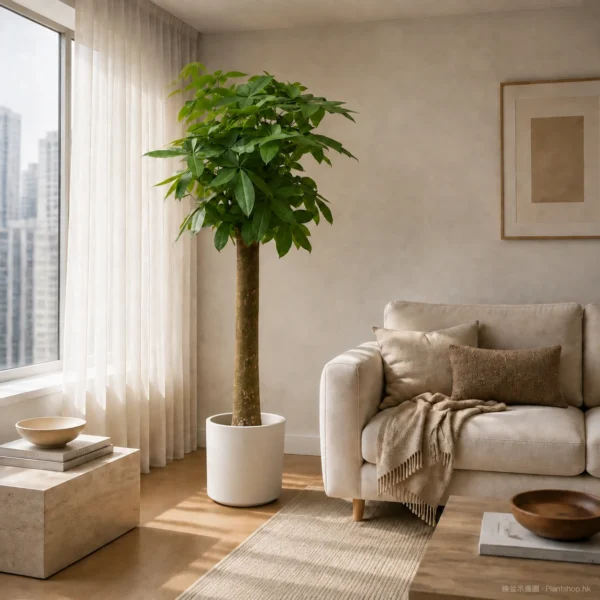
For Hong Kong homes and offices. Stock and pricing follow the product page.
FAQs
Origin & characteristics
The Areca Palm, also known as the Butterfly Palm or Yellow Palm, is native to the eastern coastal regions of Madagascar. It belongs to the palm family (Arecaceae) and is a perennial evergreen shrub. Its former scientific name, Chrysalidocarpus lutescens, has now been unified under the genus Dypsis. In its native habitat, it grows along the edges of humid tropical rainforests and riverbanks, reachi
Watering
The Areca Palm has moderately high water requirements — it enjoys moist conditions but absolutely despises standing in water. Mastering the watering rhythm is the key skill for keeping this palm healthy.
Soil & pot
The Areca Palm prefers rich, well-draining yet moisture-retentive soil — this may sound contradictory, but what it means is that the soil should maintain consistent moisture while allowing excess water to drain away quickly without pooling at the bottom.
Temperature & humidity
The Areca Palm is a tropical plant with an optimal growing temperature of 18–30°C, which aligns perfectly with Hong Kong's climate for most of the year. It can briefly tolerate temperatures around 10°C, but prolonged exposure below 15°C will significantly stall growth, and leaves may yellow or develop brown spots. During Hong Kong's occasional winter cold snaps when temperatures drop bel
