



Plantshop.hk · Care Encyclopedia
How to Care for False Aralia in Hong Kong
From HK$780 · Hong Kong delivery
Hong Kong care guide — useful before you buy and after it arrives.
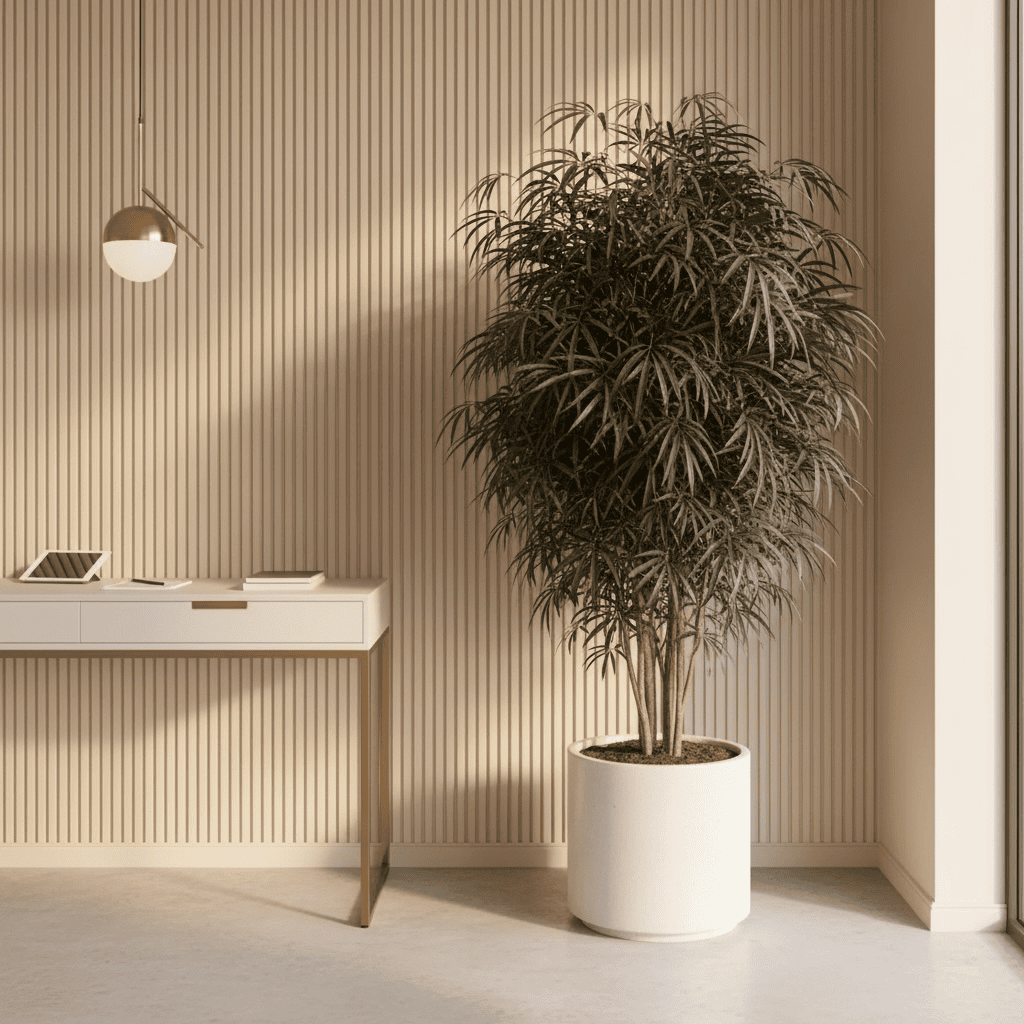
Shop this plant at PlantShop.hkOne of the most eye-catching foliage plants for Hong Kong living rooms and offices: palm-like leaves fan out like a peacock’s plume, with deeply serrated leaflets and a metallic sheen. The key rule: bright filtered light, and water only when the soil feels dry.
LightBright diffused light; 1–2 m from an east/north window
WateringWater when top 2–3 cm is dry; every 3–5 days in summer
Best spot in HKLiving room or office near a window, 1.5 m from AC vents
PetsMildly toxic to cats & dogs — keep out of reach
Care in a nutshell
False aralia in Hong Kong needs two things in balance: light and water. Place it where it gets diffused light from a window — not direct sun, not dark — and before watering, poke your finger into the soil about 2–3 centimetres. Only water when it feels dry, then water thoroughly until it drains from the bottom, and always empty the saucer. Do that and it’s basically unkillable. If you run air conditioning heavily, don’t place it where the outlet blows directly — the leaf edges will dry to a crisp. Turn the pot every two weeks so it grows evenly and looks its best. It is happiest at 18–27°C with humidity above 50%.
Shop · False Aralia (from HK$780)
Origin & characteristics
False aralia is native to New Caledonia, a French territory in the southwest Pacific, and belongs to the ginseng family (Araliaceae). This species has undergone multiple taxonomic revisions in horticulture — formerly classified under Dizygotheca, most contemporary botanical literature and horticultural references now merge it into the genus Schefflera. Both scientific names still appear in circulation. In its native habitat, false aralia grows as an evergreen shrub or small tree reaching 2–3 metres, but in container cultivation it is typically maintained at 1–1.5 metres.
False aralia's most distinctive identifying feature is its hand-shaped compound leaf, each composed of 7–11 narrow leaflets radiating outward from a central point like the eye patterns on a peacock's feather. Leaflet margins bear irregular deep serrations; the leaf surface is deep green with a metallic lustre, while the undersides are paler. New growth emerges in striking copper-red or reddish-brown tones, gradually maturing to deep green and giving the plant a rich multi-layered appearance.
In Hong Kong conditions, false aralia grows at a moderate rate. Its light requirements are not extreme, but light intensity directly affects leaf form: under ample diffused light, leaves remain compact with pronounced serrations; under weak light, leaves enlarge while texture becomes loose, and leaf drop may occur. It rarely flowers indoors — its entire ornamental value rests on its extraordinary foliage.
False aralia has a shallow root system that prefers loose, aerated growing media and is extremely sensitive to waterlogging. In its native forest understory habitat, it evolved adaptations for diffused light and higher humidity — characteristics that partially align with Hong Kong indoor conditions, though air-conditioned dry air requires extra attention.
Light
For false aralia in Hong Kong indoor cultivation, finding a position with ample yet filtered light is paramount. Its ideal light environment is bright diffused light — the kind of illumination where looking toward the window is comfortable rather than squinting, yet the entire space feels bright. East- or north-facing windows at 1–2 metres typically provide the best combination, offering gentle morning light or indirect daylight.
If your flat faces west or south, avoid placing false aralia directly beside the window where summer midday sun strikes, as Hong Kong summer sun is intense and direct exposure scorches leaves with yellow-brown scorch marks. Consider using sheer curtains for shading, or move the plant 2–3 metres back from the window.
Conversely, placing false aralia in a dark corridor, windowless bathroom, or far corner away from windows will trigger protest in the form of leaf loss — lower leaves gradually yellow and drop, leaving a bare topped stem that looks unsightly. If this occurs, move the plant closer to light as soon as possible, but increase light gradually — sudden moves from dark to bright positions scorch leaves.
False aralia exhibits phototropism — growing toward its light source. Rotate the pot 90 degrees every two weeks for balanced growth and a more attractive symmetrical form.
Watering
Watering is the key to false aralia success, and the principle can be summed up in one word: moderate. This plant dislikes perpetually soggy soil but cannot tolerate drying to the point of cracking.
The practical test for watering timing: insert your finger approximately 2–3 cm into the soil (about one knuckle deep); if it feels dry, water; if still slightly moist, wait another day or two. Hong Kong summer temperatures are high with rapid evaporation, typically requiring watering every 3–5 days; winter air conditioning dries the air but plant growth slows, extending to every 7–10 days. Every flat's ventilation and humidity differ, so cultivate the "finger test" habit rather than following a rigid schedule.
Watering method: use the soak method or thorough drench — pour water slowly around the pot edge, allowing even penetration throughout the entire soil mass until water flows from the drainage holes. Always empty the saucer afterward to prevent roots from sitting in water. Never use the "splash" method — applying small amounts of water that only wet the surface — which causes roots to grow upward seeking moisture while lower roots dry out, weakening the entire plant.
Water quality: false aralia has reasonable tolerance for tap water chlorine, but for best results leave tap water standing overnight to allow chlorine to dissipate, or use filtered water or rainwater. Water temperature should approximate room temperature; avoid using cold tap water directly in winter, which shocks roots.
Soil & pot
False aralia's core soil requirements are good drainage and high aeration. General foliage plant potting mix from garden centres can serve as a base, but amendment is recommended: mix general potting soil with perlite or coarse river sand at a ratio of approximately 7:3 to increase drainage speed. If you live in a particularly humid area (near the Hong Kong coast or in poorly ventilated flats), adjust the ratio to 6:4 or add a small amount of bark chips for additional aeration.
For pH, false aralia prefers slightly acidic to neutral soil (approximately pH 5.5–6.5). Hong Kong tap water is generally alkaline, and long-term use may gradually raise soil pH. Every 3–4 months, apply a diluted acidic liquid fertiliser (formulated for foliage plants), or add a small amount of peat moss when repotting to adjust acidity.
Repotting: false aralia needs repotting approximately every 1–2 years, with spring (March–May) being optimal as temperatures warm and the plant enters its growth phase. The new pot diameter should be only 2–3 cm larger than the old one — jumping to a much larger pot makes soil difficult to dry out and risks root rot. Always ensure adequate drainage holes; plastic, terracotta, or ceramic pots all work, but terracotta offers the best breathability and faster soil drying, making it the safer choice for beginners.
If false aralia has reached a height you are happy with and you want to stop further upward growth, choose a "soil change without pot change" — remove the plant with its root ball, trim outer aged roots and old soil, and replant into the same pot with fresh mix. This operation stimulates new root growth while maintaining plant health.
Temperature & humidity
False aralia's preferred temperature range is 18–27°C, matching most Hong Kong indoor environments. Minimum tolerable temperature is approximately 10°C; below this growth stalls and leaves may yellow; prolonged exposure below 5°C risks frost damage. Hong Kong winters are brief but occasional cold snaps drop temperatures to single digits. If your flat has no heating, remember to move false aralia away from windows during cold fronts, or draw curtains at night to insulate against cold air.
Summer air conditioning is standard Hong Kong practice, but direct airflow from air-con outlets causes false aralia leaves to rapidly lose moisture, with edges curling and browning. The solution is simple: place false aralia at least 1.5 metres from air-con outlets, or adjust airflow direction. If unavoidable, consider using a humidifier to maintain surrounding humidity.
For humidity, false aralia prefers 50%+ relative humidity, but Hong Kong indoor air conditioning typically pushes humidity below 40%. Methods to raise humidity: the most practical is placing it among other plants to create a microclimate; alternatively, use a pebble tray (ensuring the pot base does not directly contact water); or mist the surrounding air with a spray bottle (avoid direct leaf spraying, especially in poorly ventilated conditions where fungal problems can develop).
Common problems
| Issue | Likely cause | What to do |
|---|---|---|
| Lower leaves yellowing and dropping | Insufficient light or overwatering | Check whether the placement receives adequate light; use the finger test to assess soil moisture; if light is sufficient, reduce watering frequency or check that drainage holes are clear |
| Leaf tips or edges turning brown and dry | Air too dry or direct air-con draft | Move plant away from air-con outlet; raise surrounding humidity (mist surrounding air, humidifier, or plant grouping); avoid placing directly in front of air-con |
| Leaves developing yellow-brown spots | Direct sun scorch | Immediately move away from strong light; use sheer curtains for shading or relocate to diffused light position; damaged leaves cannot recover — wait for new growth |
| Leaves becoming loose, serrations less pronounced | Chronic insufficient light | Gradually increase light intensity; move to brighter position; prune excessively leggy branches to encourage new leaf growth in better light |
| Entire plant wilting, soil perpetually wet | Root rot (overwatering or poor drainage) | Stop watering; inspect root health; if rotted roots are present, trim thoroughly and repot in fresh mix and clean pot |
| New leaves small, growth stalled | Insufficient nutrients or roots pot-bound | Apply diluted liquid fertiliser every two weeks during growing season (spring through autumn); if more than two years since last repot, consider spring repotting into a slightly larger pot |
Not sure your spot gets enough light, or something looks off? Send us a photo on WhatsApp 4492 9648 and we’ll take a look.
Questions people ask
Where should I put a false aralia in a Hong Kong flat?
Within 1–2 metres of an east- or north-facing window, where it gets bright diffused light. For west- or south-facing flats, filter midday sun with a sheer curtain or move it back 2–3 metres.
How often should I water a false aralia?
Roughly every 3–5 days in a Hong Kong summer and every 7–10 days in winter. Push a finger 2–3 cm into the soil and only water when it feels dry.
Does a false aralia flower indoors?
Very rarely. It is grown for its distinctive foliage rather than flowers.
Is false aralia safe for cats and dogs?
Not entirely. It contains saponins, and large quantities of leaves may cause vomiting, diarrhoea or oral irritation in cats and dogs. Keep it out of their reach.
Fun facts
False aralia's taxonomic history is rather interesting. It was once independently classified under Dizygotheca (literally "twin seeds," referring to fruits that typically appear in pairs), but with the development of molecular systematics, botanists discovered its extremely close genetic relationship to Schefflera, and the merger followed. So you might hear the name "false Schefflera" from older gardening books or veteran plant enthusiasts.
False aralia and the more common dwarf umbrella tree (Schefflera arboricola) are close relatives, yet their appearances differ dramatically: dwarf umbrella tree has rounder, glossier leaves resembling duck feet, while false aralia has narrow, deeply serrated leaves with a texture somewhere between fern and palm. This unique texture makes false aralia highly popular in both Nordic and tropical rainforest interior design styles.
New Caledonia, false aralia's native home, is a global biodiversity hotspot — over 80% of the island's plant species are endemic, found nowhere else on Earth. False aralia grows in the island's moist forest understory, an ecological background that explains its adaptation to Hong Kong's indoor diffused light environments.
References (expand to view sources)
References
- Missouri Botanical Garden. Schefflera elegantissima Plant Finder. https://www.missouribotanicalgarden.org/PlantFinder/PlantFinderDetails.aspx?taxonid=276442
- Royal Horticultural Society (RHS). Schefflera elegantissima. https://www.rhs.org.uk/plants/96699/schefflera-elegantissima/details
- Flora of Australia Online. Araliaceae family treatment. https://profiles.ala.org.au/opus/foa/profile/Schefflera%20elegantissima
- Hong Kong Agriculture, Fisheries and Conservation Department. Hong Kong Herbarium. https://www.herbarium.gov.hk
- Frodin, D. G. & Govaerts, R. (2003). World Checklist and Bibliography of Araliaceae. Royal Botanic Gardens, Kew.
- Lowman, M. D. & Rinker, H. B. (Eds.). (2004). Forest Canopies (2nd ed.). Academic Press.
⚠️ Pet / toxicity: False aralia belongs to the Araliaceae family and contains saponin compounds. If cats or dogs ingest large quantities of leaves, vomiting, diarrhoea, or oral irritation may result. Although toxicity is mild to moderate, for safety place the plant in positions inaccessible to pets. If you suspect pet ingestion, consult a veterinarian promptly.
Shop at Plantshop
View all Plants →
For Hong Kong homes and offices. Stock and pricing follow the product page.
FAQs
Origin & characteristics
False aralia is native to New Caledonia, a French territory in the southwest Pacific, and belongs to the ginseng family (Araliaceae). This species has undergone multiple taxonomic revisions in horticulture — formerly classified under Dizygotheca, most contemporary botanical literature and horticultural references now merge it into the genus Schefflera. Both scientific names still appear in circula
Watering
Watering is the key to false aralia success, and the principle can be summed up in one word: moderate. This plant dislikes perpetually soggy soil but cannot tolerate drying to the point of cracking.
Soil & pot
False aralia's core soil requirements are good drainage and high aeration. General foliage plant potting mix from garden centres can serve as a base, but amendment is recommended: mix general potting soil with perlite or coarse river sand at a ratio of approximately 7:3 to increase drainage speed. If you live in a particularly humid area (near the Hong Kong coast or in poorly ventilated flats
Temperature & humidity
False aralia's preferred temperature range is 18–27°C, matching most Hong Kong indoor environments. Minimum tolerable temperature is approximately 10°C; below this growth stalls and leaves may yellow; prolonged exposure below 5°C risks frost damage. Hong Kong winters are brief but occasional cold snaps drop temperatures to single digits. If your flat has no heating, remember to move false ara
