



Anyone who has moved between a Japanese office and a Hong Kong office carries a particular observation home: Japanese companies tend toward small, considered plants at the entrance or on individual desks; Hong Kong companies often greet you with greenery at waist height — sometimes at full human height — before you have reached the reception counter. The scale of the gesture is entirely different.
Both are Asian business cultures of significant sophistication. Why do they understand “office plants” so differently?
Plant Selection: The Difference Between Scale and Intimacy — hong kong office plant culture
Hong Kong — Plants as Spatial Declaration
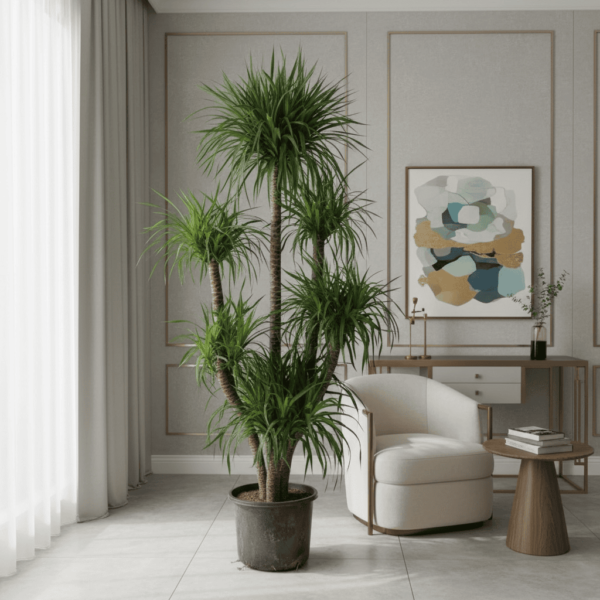
The large specimens that define Hong Kong’s commercial interiors — Bird of Paradise, Dragon Tree, Fiddle-Leaf Fig, Money Tree — are plants that command. They reflect the spatial logic of a business culture built on first impressions: a two-metre specimen in the reception signals something categorically different from a small succulent on the counter, and the distinction is intentional.
Hong Kong’s business culture is also threaded through with feng shui — Money Tree in the wealth corner, ZZ Plant for prosperity, Dragon Tree to deflect sha energy. Plants here are not purely aesthetic objects. They carry a function, and they are placed accordingly.
Japan — Plants as the Texture of Daily Life
Japanese offices are more likely to feature moss bonsai (kokedama), miniature potted landscapes, or seasonal flowers. Large plants exist, but the overall orientation is toward intimacy — a small plant on a desk corner is a private object, maintained for the person who sits there, not a message directed at visitors.
This sensibility derives from Japan’s “within-one-metre aesthetic” — a cultivated attentiveness to textures and details that fall within arm’s reach, the accumulated richness of the immediately proximate rather than the grand gesture.
Placement Philosophy: Grandeur and the Value of Empty Space
Hong Kong — Plants Define Spatial Function
Plant placement in Hong Kong’s offices is purposeful and systematic: reception requires grandeur, the executive office requires wealth energy, the wealth corner requires its Money Tree. Plants participate in the spatial brief. The logic is practical in the most direct sense — there is a correct plant for each position, and the positions are known.
Japan — Plants Merge With Daily Rhythm
Japanese offices distribute greenery in a manner closer to the incidental: seasonal flowers at the entrance, individual employees bringing their own small pots, a varied row of compact plants along the meeting room windowsill. Greenery becomes the atmospheric background of the environment rather than a focal element within it — not a destination for the eye, but the quality the eye rests against.
Cultural Context: Feng Shui and the Intelligence of Seasonality
Hong Kong and the Primacy of Auspiciousness
When Hongkongers select plants, auspiciousness is among the first considerations: Money Tree, ZZ Plant, Lucky Bamboo — all carry meanings that connect to wealth, career, and interpersonal fortune. Feng shui practitioners prescribe wealth corner positions and sha-neutralising placements with the confidence of a spatial brief. Plants become instruments for managing the energy of a room.
The logic is, at its core, a form of environmental psychology. Position the right elements, feel composed in your surroundings, and a composed mind produces better outcomes. The metaphysical language encodes practical spatial intelligence.
Japan and the Discipline of Seasonality
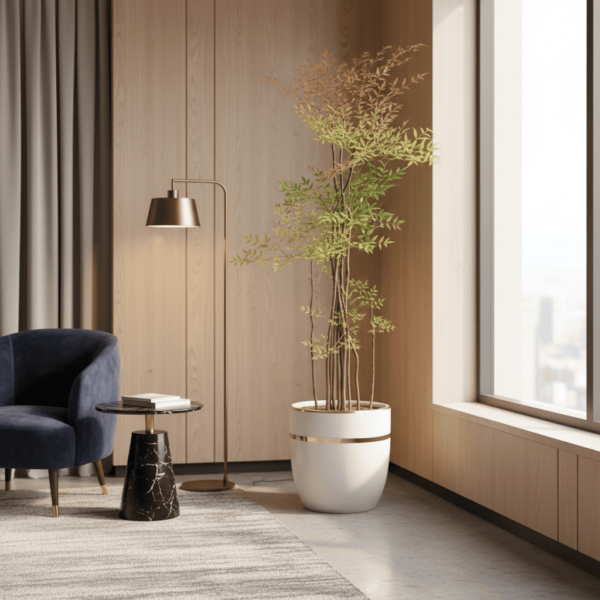
Japan’s sensitivity to seasonal change is deeply embedded in its cultural life. Cherry branches in spring, hydrangeas through summer, red maple in autumn, heavenly bamboo in winter — office plants shift with the calendar. This kisetsukan, or “seasonal awareness,” is not decoration for its own sake. It marks the passage of time and introduces a variation into the daily routine that provides, quietly and reliably, something to notice and anticipate.
Two Approaches, Each Complete on Its Own Terms
Both aesthetics carry genuine value. The question is what quality you want your space to carry.
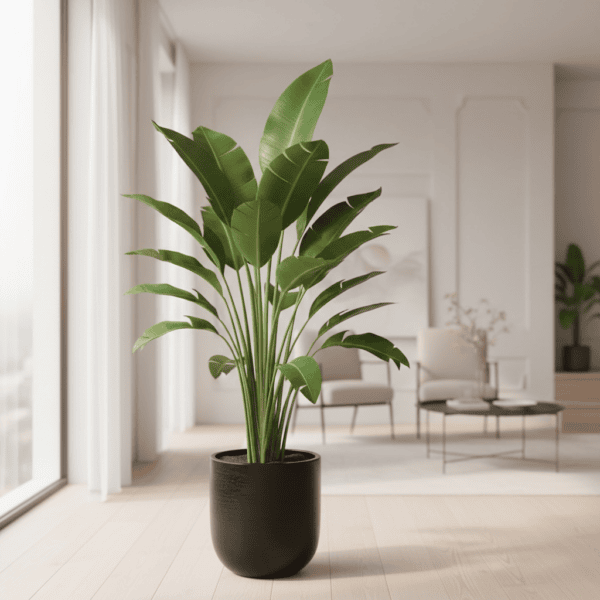
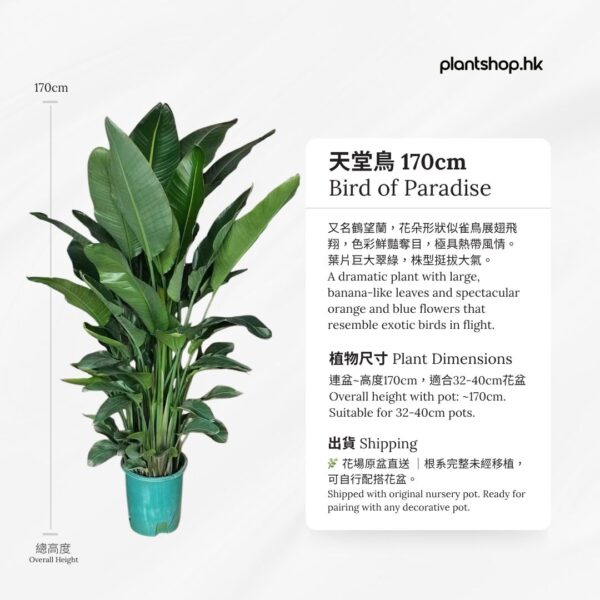
Hong Kong’s strength is the willingness to invest in substantial plants and integrate them into a considered spatial design. A two-metre Bird of Paradise in reception announces both grandeur and commitment.
Japan’s strength is making greenery part of every person’s daily rhythm — bringing your own plant to work, tending it across the weeks, observing its growth — a private restorative practice that a shared floor plant cannot replicate at the individual level.
What Each Might Learn from the Other
What Hong Kong can learn from Japan:
- Detail and texture — not every plant needs to be a spatial event. A single, considered small plant on a desk tells an employee that their personal space has been thought about.
- Seasonal rotation — regularly introducing different plants and flowers keeps the office feeling responsive rather than fixed.
- Personal participation — inviting employees to bring their own plants cultivates a genuine relationship with the environment, rather than a passive one.
What Japan can learn from Hong Kong:
- The authority of large plants — one substantial specimen in reception or a common area transforms the first impression of the entire space.
- Feng shui spatial logic — connecting plant placement to spatial function makes greening more systematic, more purposeful, and easier to maintain with consistency.
- Plant variety — Hong Kong’s tropical large-plant vocabulary introduces a visual layering and depth that the intimacy of smaller specimens cannot achieve alone.
Blending Both Aesthetics
The most resolved offices often draw from both traditions: a Bird of Paradise in reception (Hong Kong’s command of spatial arrival), Snake Plant or a miniature bonsai on individual desks (Japan’s investment in personal scale). A Monstera in the meeting room corner; seasonal flowers at the entrance. Large plants establish the spatial architecture; small plants provide the daily warmth. That, in full, is three-dimensional greening.
You need not travel to Tokyo for the reference, nor commit rigidly to either model. Identify the position in your office that most needs attention, and begin there — one pot, large or small, matched to what the space requires. The plants will, in time, tell you what else they need.
PlantShop serves Hong Kong corporate clients, specialising in 130–180cm large plants — each hand-picked by a horticulturist. WhatsApp us for a direct reply and help finding plants that suit your company’s particular aesthetic. 3–7 business day delivery, free shipping to urban Hong Kong.
Related Products
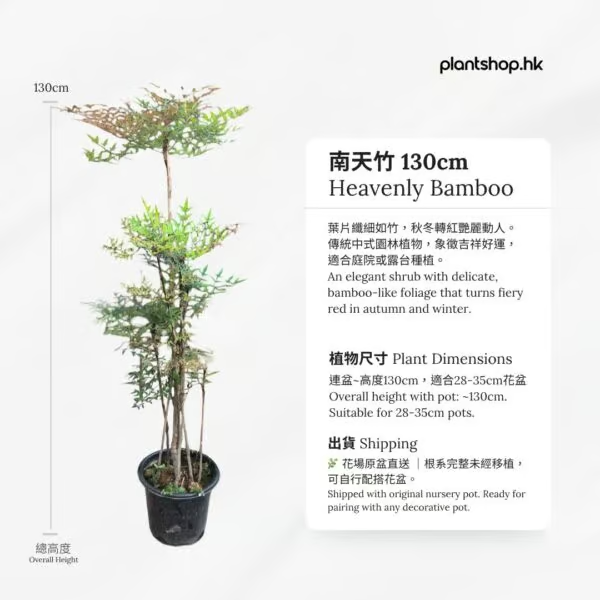
Below are the plants mentioned in this article, available for direct purchase. Each comes with a personal care card and WhatsApp support from a real person:


FAQs
Plant Selection: The Difference Between Scale and Intimacy Hong Kong — Plants as Spatial Declaration
The large specimens that define Hong Kong's commercial interiors — Bird of Paradise, Dragon Tree, Fiddle-Leaf Fig, Money Tree — are plants that command. They reflect the spatial logic of a business culture built on first impressions: a two-metre specimen in the reception signals something categorically different from a small succulent on the counter, and the distinction is intentional.
Japan — Plants as the Texture of Daily Life
Japanese offices are more likely to feature moss bonsai (kokedama), miniature potted landscapes, or seasonal flowers. Large plants exist, but the overall orientation is toward intimacy — a small plant on a desk corner is a private object, maintained for the person who sits there, not a message directed at visitors.
Placement Philosophy: Grandeur and the Value of Empty Space Hong Kong — Plants Define Spatial Function
Plant placement in Hong Kong's offices is purposeful and systematic: reception requires grandeur, the executive office requires wealth energy, the wealth corner requires its Money Tree. Plants participate in the spatial brief. The logic is practical in the most direct sense — there is a correct plant for each position, and the positions are known.
Japan — Plants Merge With Daily Rhythm
Japanese offices distribute greenery in a manner closer to the incidental: seasonal flowers at the entrance, individual employees bringing their own small pots, a varied row of compact plants along the meeting room windowsill. Greenery becomes the atmospheric background of the environment rather than a focal element within it — not a destination for the eye, but the quality the eye rests against.
