



Nine out of ten meeting rooms in Hong Kong are identical: four white walls, a long table, a row of black chairs, LED panels overhead. After forty-five minutes, you’re fighting the pull toward the door. That’s not weakness — that’s environmental design working against you.
A well-positioned plant in the corner changes the room more than most people anticipate. We had a client — an advertising agency — who placed a Giant Bird of Paradise in the meeting room where they ran client presentations. Within a week, multiple clients mentioned unprompted that the room felt “more relaxed.” The plant didn’t sharpen the creative work. It simply stopped the room feeling like an interrogation chamber. Sometimes that’s the whole brief.
What Plants Do in a Meeting Room — meeting room plant design
Visual relief
A tall Madagascar Dragon Tree or Burgundy Rubber Plant in the corner gives the eye somewhere to land that isn’t the colleague directly across from you. It softens the room’s boxy geometry — a small effect that accumulates across a long session.
Natural space division
Some meeting rooms serve double duty as presentation area and discussion space. A few medium plants placed between zones create a psychological boundary — softer than a partition, less claustrophobic than a wall.
Air purification — the honest version
Many articles claim plants “significantly purify meeting room air.” In a sealed room, a handful of potted plants will not meaningfully reduce CO₂ or formaldehyde levels. NASA’s famous study took place in a sealed laboratory chamber, not a ventilated room with a door that opens every hour. The primary purpose of meeting room plants is ambiance and aesthetics, not air filtration. One living plant is worth ten artificial ones — but it isn’t an HEPA filter. We won’t pretend otherwise.
Which Plants Work Best in Meeting Rooms
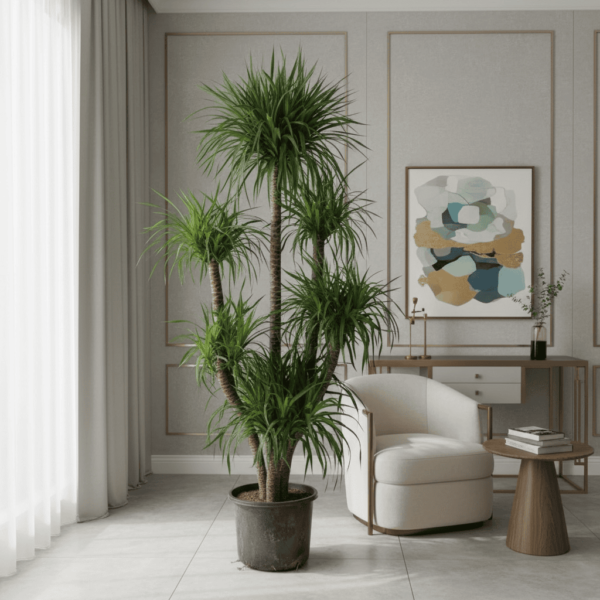
Madagascar Dragon Tree — The Safe Choice
Upright, refined, stable. Handles low light without complaint essential in windowless meeting rooms. Water once or twice a month and leave it entirely alone. Position either side of the projection screen or in a corner. Instant professional presence.
Peace Lily — Smooth Sailing
Its white spathe resembles a sail — a Hong Kong office classic because it carries a quiet association (shun feng shun shui — smooth sailing). Thrives in shade, communicates when thirsty by drooping, and recovers within hours of watering. Excellent beside meeting room windows or on a console in lower-light settings.
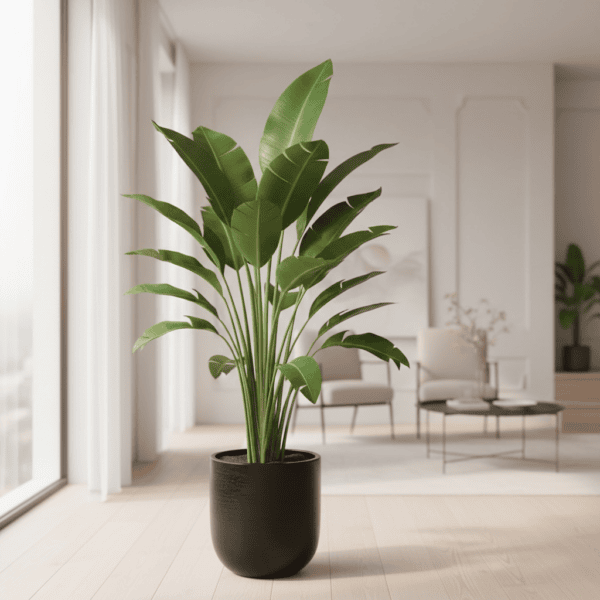
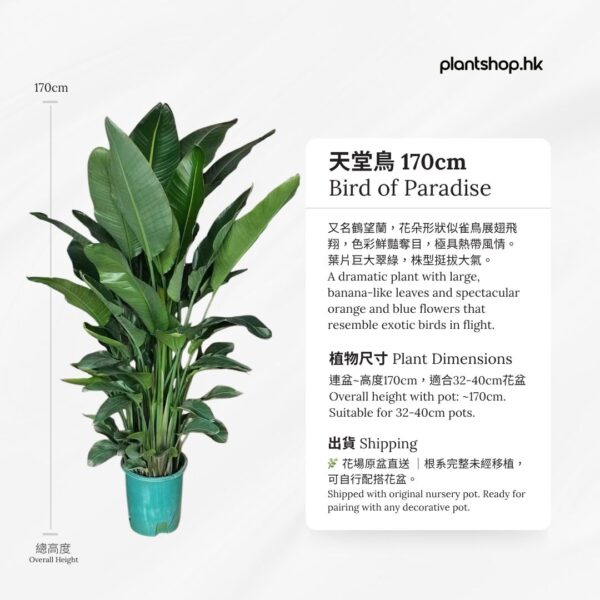
Giant Bird of Paradise — For Creative and Design Industries
Its spreading leaves bring genuine tropical energy. Note: indoor Giant Bird of Paradise rarely flowers — it needs intensely strong light and specific humidity conditions to bloom. What you’re working with is the foliage. For advertising agencies and design studios, that dramatic posture is itself a statement.
Burgundy Rubber Plant — Composed and Undemanding
Deep green, thick-leaved. It radiates stability — appropriate for law, finance, accounting. Needs watering once or twice a month and will ask almost nothing of you in return.
Fiddle-Leaf Fig — Beautiful, With Conditions
For companies that want to signal design sensibility large, luminous leaves that photograph beautifully and give any meeting room a considered, editorial quality. The caveat it needs a window with decent light. In a windowless room it will drop leaves. Be honest about your light conditions before committing.
Choosing Placement by Room Size
Small meeting room (4–6 people)
One or two plants maximum. Near a window or in a corner — a compact Peace Lily or slender Madagascar Dragon Tree. Don’t obstruct the walkway.
Medium meeting room (8–12 people)
Three or four plants — one large plant as the visual focal point, others on windowsills. A unified pot colour scheme creates a cohesive composition.
Large meeting room (15+ people)
A green enclave near the presentation area, mixing heights for layered depth. A planted wall panel is also an option.
Practical Notes
- Don’t interrupt sightlines — plants cannot obscure the projection screen or whiteboard.
- Choose forgiving species — nobody has been assigned “meeting room plant waterer.” Drought-tolerant and shade-tolerant species are the responsible choice.
- Unify the pots — mixed materials and colours look unconsidered. Choose one finish and hold it across all meeting rooms on a floor.
- Rotate every two weeks — turn plants so all sides receive light and growth stays even.
PlantShop specialises in 130–180cm large potted plants for office environments. We offer on-site space assessment, professional placement, and post-installation care guidance. Every plant comes with a care card. WhatsApp us for real-person support.
Related Products
Below are the plants mentioned in this article, available for direct purchase. Each comes with a personal care card and real human WhatsApp support:



FAQs
What Plants Do in a Meeting Room Visual relief
A tall Madagascar Dragon Tree or Burgundy Rubber Plant in the corner gives the eye somewhere to land that isn't the colleague directly across from you. It softens the room's boxy geometry — a small effect that accumulates across a long session.
Natural space division
Some meeting rooms serve double duty as presentation area and discussion space. A few medium plants placed between zones create a psychological boundary — softer than a partition, less claustrophobic than a wall.
Air purification — the honest version
Many articles claim plants "significantly purify meeting room air." In a sealed room, a handful of potted plants will not meaningfully reduce CO₂ or formaldehyde levels. NASA's famous study took place in a sealed laboratory chamber, not a ventilated room with a door that opens every hour. The primary purpose of meeting room plants is ambiance and aesthetics, not air filtration. One living plant is
Which Plants Work Best in Meeting Rooms Madagascar Dragon Tree — The Safe Choice
Upright, refined, stable. Handles low light without complaint essential in windowless meeting rooms. Water once or twice a month and leave it entirely alone. Position either side of the projection screen or in a corner. Instant professional presence.
