



Plants as Silent Portfolio — design studio plants hong kong
When a client walks into your studio, the first thing they absorb is not the work on the walls. It is the character of the space itself: the quality of the light, the materials underfoot, and whether the plants — if there are any — reveal someone who chose them with intention or simply placed them to fill a corner. A neglected, straggly specimen can undermine an entire aesthetic proposition in a single glance. One or two large plants chosen with precision elevate the room before you have said a word and before they have looked at a single piece of work.
PlantShop specialises in large indoor plants (130–180cm) and works regularly with designers to dress studios. Here is what consistent proximity to that process has taught us.
Plant Selection Principles for Design Environments
Less, More Precisely Chosen Designer spaces do not require density of greenery. They require curation: 1–2 large statement plants to establish the spatial register 3–5 medium plants to inhabit transitional zones Small accent specimens for deliberate, specific touches Negative space carries as much weight as the plants themselves — it is not absence but composition
Line and Form in Conversation With the Space A plant’s silhouette should be in dialogue with the architecture around it, not merely occupying a position: Modern Minimalist: Fiddle-Leaf Fig (Ficus lyrata), Rubber Plant (Ficus elastica) — broad leaves, resolved architectural lines Industrial: Monstera (Monstera deliciosa), cacti — raw texture, unexpected form that earns its place in a harder environment Scandinavian: Ferns, trailing plants — soft, organic, introducing warmth without visual noise Japanese: Small bonsai, moss — deliberate, restrained, with purposeful empty space that the composition organises itself around
The Pot Is a Design Object For designers, the planter is not secondary to the plant. It is half the decision:
Style | Pot Material | Reference Brands Minimalist | Cement, white ceramic | HAY, Menu Industrial | Metal, aged iron | Serax, Dutchbone Scandinavian | Light timber, woven | Ferm Living, Muuto
Japanese | Coarse pottery, stone | Local ceramicist works
A well-chosen planter transforms an ordinary plant into a considered object. Budget for it from the outset.
Designer Plant Reference
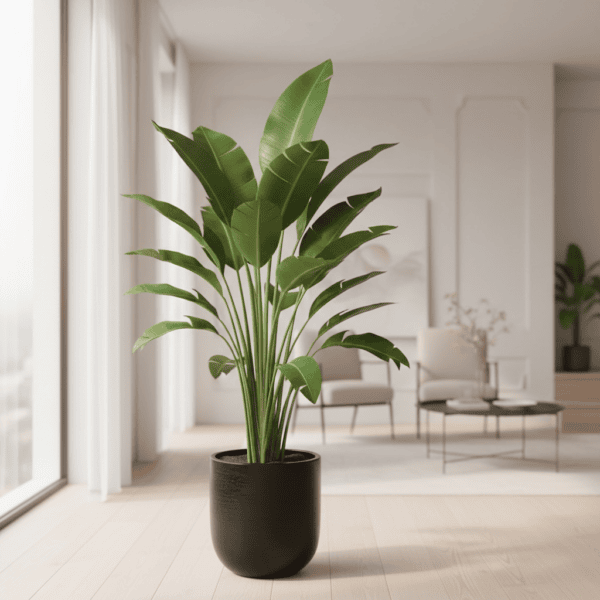
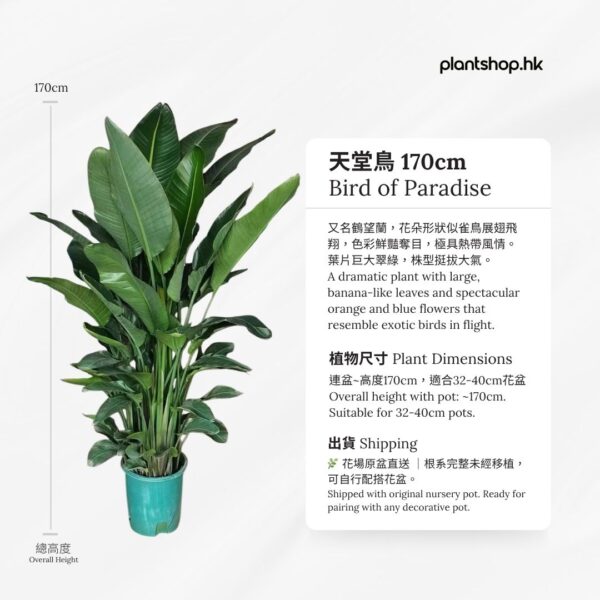
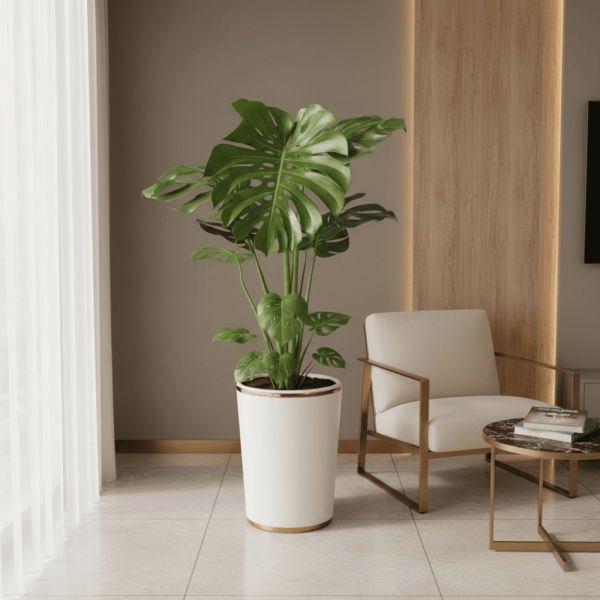
Statement Plants: Fiddle-Leaf Fig — violin-shaped leaves with the visual authority of a modern sculpture; a single specimen positioned in a corner commands the room. Note: toxic to cats and dogs. Monstera — those split, fenestrated leaves have made it one of the most photographed plants of the past decade, and they have earned their position. Also toxic to pets. Rubber Plant — deep lacquered green, composed and dignified; accommodates lower light with a grace that many visually impressive plants cannot match. Giant Bird of Paradise (Strelitzia nicolai) — tall, broad-leaved, immediately impressive at 130–180cm; the natural choice for reception areas that need to announce themselves.
Desktop Plants: Snake Plant — clean vertical lines, essentially indestructible, effortlessly resolved in almost any setting Air Plant — requires no soil; design potential is limited only by the imagination of the display
Small Bonsai — signals taste and patience; demands both in equal measure
Trailing / Climbing Plants:
Pothos — fast-growing, trails with liquid ease from shelf or cabinet edges Ivy — a classic that does not date; its evergreen loyalty rewards consistent care String of Pearls — singular and conversation-generating; a plant that people will cross the room to examine
Spatial Arrangement
Reception and Entrance The first impression is not a second chance: one large statement plant (130–180cm Fiddle-Leaf Fig or Giant Bird of Paradise), not a single yellow leaf in sight — spotted neglect at the entrance announces a fundamental inattention to detail — and a planter that is consistent with the overall design language.
Work Areas Designers need both inspiration and clarity of mind: one small plant per desk (Snake Plant or Air Plant), medium plants in communal zones for a gentle spatial rhythm, density restrained below the threshold where it begins to distract from the work itself.
Meeting Room Professional without stiffness: one or two medium plants in the corners; something that contributes without competing; compact potted specimens can occupy the table during extended sessions without imposing.
Break Area This is the one zone with latitude for experimentation: unusual varieties, creative groupings, warm lighting that transforms the corner into something that reads as elsewhere.
The Details That Distinguish the Considered From the Assembled
Plant and colour in dialogue:
Deep green against pale walls — strong, lucid contrast Variegated or pale green against darker surfaces — layering and depth
Flowering varieties as accent colours that echo the brand palette
Layered heights:
Floor-level large plants (130–180cm) Desktop medium plants (30–60cm) Shelf or wall-mounted smaller specimens
Trailing plants for movement and the quality of things that are still becoming
Texture in conversation:
Smooth, lacquered leaves against rough cement — a visual argument between surfaces Soft ferns against hard metal — the unexpected softness that resolves a harder material Organic plant silhouettes against geometric architecture — the balance that makes a space feel authored rather than assembled
PlantShop works with designers on studio installations. Every plant is hand-selected for form and condition. Each purchase includes a professional care card and direct WhatsApp follow-up — assurance for both you and your client. Delivery is professionally managed; the plant arrives on-site exactly as intended.
A studio is its own best portfolio. Photograph it with rigour. Healthy, well-chosen plants demonstrate that the studio attends to every detail — which is precisely the proposition a design practice is selling. — PlantShop Horticulture Team
Related Products
Below are the plants mentioned in this article, available for direct purchase. Each comes with a personal care card and WhatsApp support from our team:



FAQs
Plants as Silent Portfolio
When a client walks into your studio, the first thing they absorb is not the work on the walls. It is the character of the space itself: the quality of the light, the materials underfoot, and whether the plants — if there are any — reveal someone who chose them with intention or simply placed them to fill a corner. A neglected, straggly specimen can undermine an entire aesthetic proposition in a s
Plant Selection Principles for Design Environments
Less, More Precisely Chosen Designer spaces do not require density of greenery. They require curation: 1–2 large statement plants to establish the spatial register 3–5 medium plants to inhabit transitional zones Small accent specimens for deliberate, specific touches Negative space carries as much weight as the plants themselves — it is not absence but composition
Spatial Arrangement
Reception and Entrance The first impression is not a second chance: one large statement plant (130–180cm Fiddle-Leaf Fig or Giant Bird of Paradise), not a single yellow leaf in sight — spotted neglect at the entrance announces a fundamental inattention to detail — and a planter that is consistent with the overall design language.
