



Why Greening Belongs in the Renovation Brief — new office greening hong kong
A new office is one of the most consequential moments in a company’s development — expansion, repositioning, a fresh spatial chapter. And yet greening almost invariably arrives last. Renovation first. Furniture second. IT infrastructure third. Plants — we’ll sort those after we’ve moved in. This is the equivalent of remembering the plating after the food is already on the table. The food may be perfectly prepared, and the moment for presentation is already gone.
Plants are not decorations appended to a finished space. They are structural elements, with the needs of structural elements: light, drainage, floor load capacity, proximity to ventilation. A lighting design that does not account for grow lights in darker corners will leave plants struggling in positions the design brief committed to. A floor plan without drainage access near designated planting zones becomes an improvised problem on installation day.
The cost of this oversight is consistent and entirely avoidable. One client installed full-height glass curtain walls across an entire meeting room wall — excellent natural light, in principle. After plants were placed, the team discovered the AC vent was aimed directly at the designated positions. Three months later, every leaf margin was shrivelled and dry. Had greening been incorporated in the design phase, this would simply not have occurred.
The Timeline That Works
Three months before the move: the greening supplier should be in conversation with the interior designer — assessing natural light by zone, ventilation patterns, foot traffic routing, and establishing both aesthetic vision and working budget. This phase is alignment: the supplier must understand your brand identity; the designer must understand what plants require to survive and thrive.
Two months before the move: confirm species and quantities; select planter styles. Custom planters — imported, bespoke, brand-coloured ceramic — require lead time. The firing process alone can extend to several weeks. Decide now, not when the movers are booked.
One month before the move: place orders, confirm installation dates, coordinate with the renovation team on sequencing. Plants enter last — after construction dust has settled, before employees arrive.
Within one week of the move: plants are delivered, placed, and assessed. This is the observation phase: are the plants acclimatising to their positions? Do any require adjustment? What is the initial colleague response?
Budget Allocation
A rough distribution that reflects genuine priorities:
Plants: approximately 40% Planters: approximately 30% — many companies underestimate this. A quality planter can make a modest plant read as three times more expensive Installation: approximately 10% First-year maintenance: approximately 15% Contingency: approximately 5% — some species will not adapt to the specific conditions of your office, and replacement is not a failure; it is part of the process
Scale reference by floor area and headcount: start-ups occupying 500–1,000 sq ft can manage around HK$25,000; SMEs in 2,000–5,000 sq ft should budget HK$50,000–100,000; larger enterprises scale accordingly. The figure matters less than the principle: greening belongs in the renovation budget, not as a discretionary afterthought.
One additional consideration worth stating clearly: formaldehyde off-gassing from new renovation materials is real and measurable. Snake Plant, Peace Lily, and Ivy are all documented formaldehyde-absorbing species. Positioning them in freshly renovated areas serves both aesthetic and air quality purposes simultaneously.
Phased Implementation: Sequential Is Not Compromised
If budget is constrained, implement in three deliberate phases rather than spreading a thin coverage across the entire floor.
Phase one covers the core 20% of space that 80% of people encounter — reception, meeting rooms, the CEO’s office, the break room. This absorbs approximately 60% of the total budget and establishes the register of the entire office from day one.
Phase two, deployed one month after the move, expands to open office areas, corridors, and pantry — the zones where employees spend the majority of their working hours.
Phase three, three months after the move, involves responsive adjustment: replacing species that have not acclimatised, introducing seasonal touches, refining positions in light of how the space is being used.
Greening is a long-term investment. There is no requirement to finalise everything on day one. What matters is that the first phase is executed with full attention — because those plants will form employees’ first understanding of how seriously this company regards its own environment.
Our Position
Moving into a new office is a genuine opportunity to articulate company culture in spatial terms. The question employees arrive with is already formed: is this a place that breathes, or a clean white box? Greening is not an add-on to the move — it is the moment the space acquires a character of its own. Begin planning three months out. The outcome is categorically different from any last-minute effort, and the worst scenario is not having nothing on day one. It is standing in the space three months later and understanding exactly what should have been done from the start.
PlantShop has completed numerous new office opening projects within demanding timelines. We specialise in 130–180cm large potted plants, each hand-selected to arrive in prime condition on move-in day. WhatsApp us to begin — a person follows up, from plant selection through to final placement confirmation.
—— PlantShop Horticulture Team
Related Products
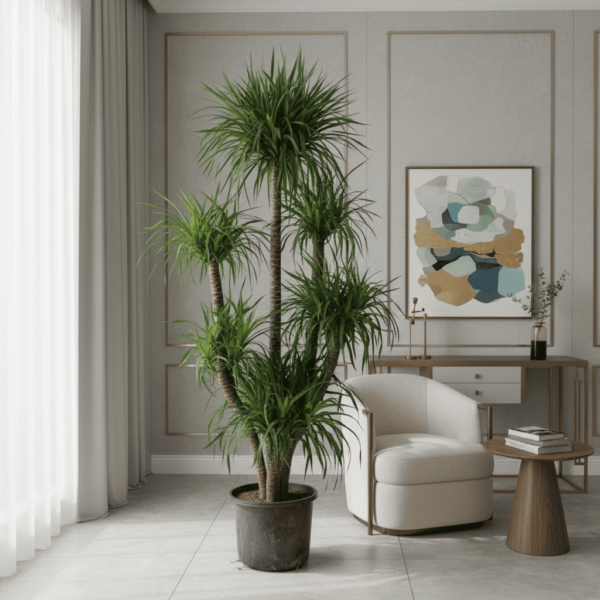
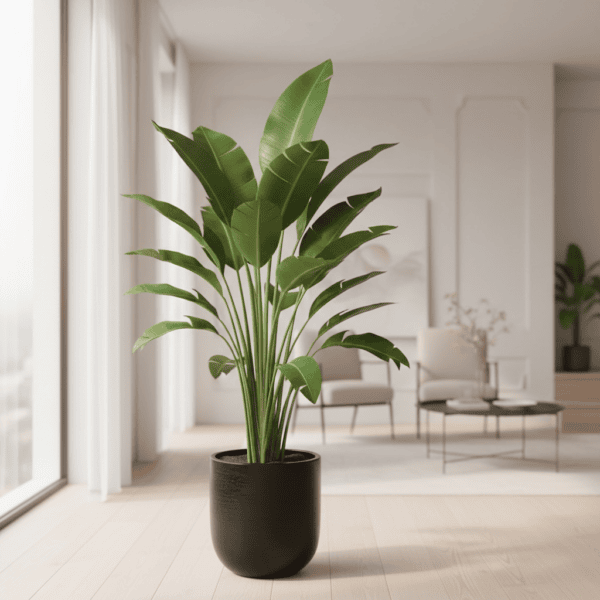
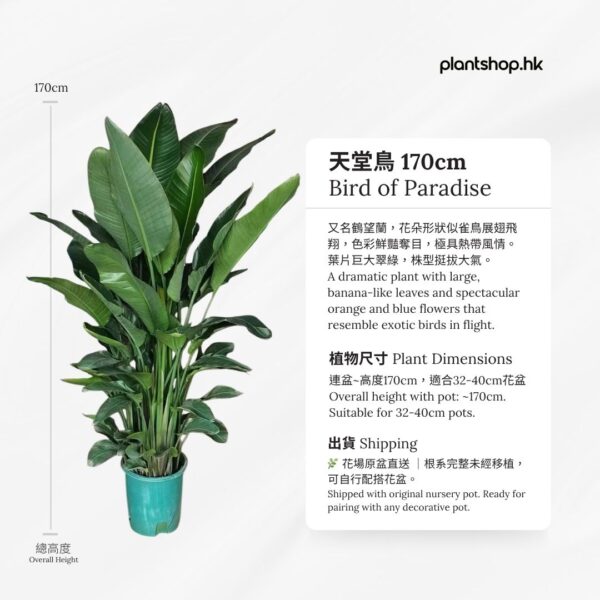
The plants mentioned in this article are available for direct purchase. Each comes with a personal care card and WhatsApp support from a real person:

7-day health guaranteeFree delivery over HK$1,500WhatsApp help from a real person
FAQs
Why Greening Belongs in the Renovation Brief
A new office is one of the most consequential moments in a company's development — expansion, repositioning, a fresh spatial chapter. And yet greening almost invariably arrives last. Renovation first. Furniture second. IT infrastructure third. Plants — we'll sort those after we've moved in. This is the equivalent of remembering the plating after the food is already on the table. The food may be pe
The Timeline That Works
Three months before the move: the greening supplier should be in conversation with the interior designer — assessing natural light by zone, ventilation patterns, foot traffic routing, and establishing both aesthetic vision and working budget. This phase is alignment: the supplier must understand your brand identity; the designer must understand what plants require to survive and thrive.
Budget Allocation
A rough distribution that reflects genuine priorities:
Phased Implementation: Sequential Is Not Compromised
If budget is constrained, implement in three deliberate phases rather than spreading a thin coverage across the entire floor.
