



Hong Kong’s Seasons Are Subtle — But Plants Feel Every One of Them Many people assume that because Hong Kong doesn’t have a dramatic winter, a single care routine holds all year. Consider what the indoor environment does: summer AC runs around the clock, desiccating the air and cooling roots that were never meant to be chilled. Winter heaters drop indoor humidity below 30%, and leaf tips brown without explanation. March brings humidity so thick the walls run with condensation. These are Hong Kong’s seasons — less theatrical than snow, no less real for a plant’s roots.
This guide is four adjustments per season. You don’t need to memorise much.
Spring (March–May): — seasonal plant care hong kong
The Plant Goes to Work From March, as temperatures rise, you’ll see new shoots pushing through — the growth season, the most important period of the year.
Watering: Increase frequency as plants drink more and soil dries faster. Shift from your winter schedule toward once a week. But March also brings the wet season — if humidity stays above 90% for several consecutive days, extend the interval further. The soil is drying more slowly than usual.
Fertilising: When new shoots appear, begin feeding. Diluted liquid fertiliser every 2–3 weeks. For the effortless approach, scatter slow-release granules on the soil surface — they’ll sustain the plant through spring and summer.
Repotting: The optimal window. If the pot is too small or the soil has compacted, spring is the ideal moment. Plants are building toward vigorous growth and recover from transplant quickly.
Pruning: Clear winter damage. Leaves damaged by cold or turned yellow — remove them in spring so the plant directs its energy toward fresh growth.
Summer (June–August):
The AC Challenge Hong Kong summers are fierce, but it’s rarely the heat that compromises plants — it’s what happens indoors.
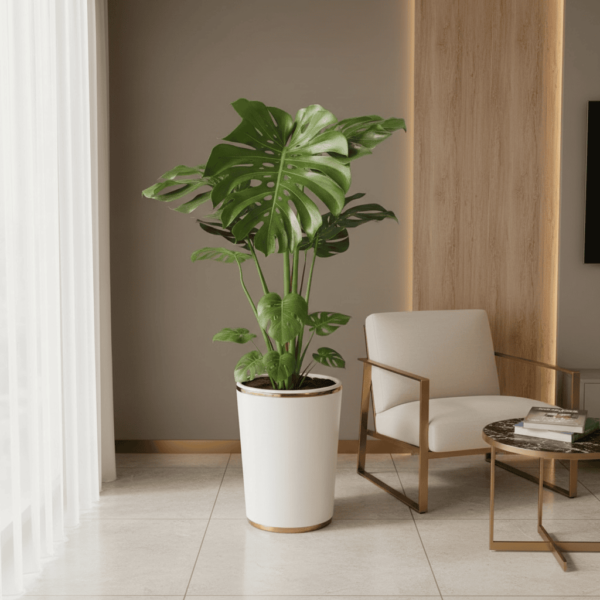
AC desiccates everything. Air conditioning runs almost continuously, pulling humidity from the air and drying soil at a rate moisture-loving plants struggle to accommodate — Areca Palm and Monstera may need watering twice a week. Use the finger test without exception. A cup of water near your plants, or a damp cloth near the saucer, raises local humidity marginally but measurably.
Western sun is pitiless in summer. Afternoon light through west-facing windows scorches leaves with brown patches. Draw the curtains or use sheer fabric as a filter. Most large foliage plants need bright indirect light — not direct exposure.
Direct AC airflow on plants is a problem. Roots under an AC vent become chilled and lose the capacity to absorb water properly. Move plants clear of the airstream, or rotate the pot.
🌿 Going on Holiday? For 3–4 days, most large plants manage independently. Water thoroughly the day before and move pots to a shadier position to slow evaporation. For a full week, ask a neighbour to water once — or add water to the saucer (for moisture-loving plants like Snake Plant and Monstera only; not for Fiddle-Leaf Fig).
Continue fertilising through summer, but if temperatures exceed 32°C for several consecutive days and plants appear to enter semi-dormancy, pause during the heat spike.
Autumn (September–November):
Winding Down Early September can still feel like summer, but after the Mid-Autumn Festival, temperatures drop and plants begin to slow naturally.
Watering: Ease off. Cooler weather extends the drying time — extend your intervals accordingly. If you were watering every 5 days in summer, shift to 7–10 days. The finger test, not the calendar.
Reducing fertiliser for winter:
From October, taper from every 2 weeks to once monthly, and stop entirely by November. Let the plant ease toward rest.
Clean and inspect: Autumn is the natural moment to check for pests. Summer heat and humidity invite insects — wipe leaves with a damp cloth and inspect undersides for webbing or residue.
Rotate pots: As the sun’s angle drops in autumn and winter, plants with previously good indirect light may now find themselves in dimmer spots. Shift them slightly closer to windows, or rotate so all sides receive even exposure.
Winter (December–February):
The Quiet Season Hong Kong winters don’t freeze, but heating creates its own particular pressure.
Heaters desiccate everything. When heating runs for hours, indoor humidity can drop below 30%. Brown, brittle leaf tips appear first. Mist the air around your plants (not the leaves directly), or group plants together — they create a small, shared humidity microclimate.
Minimal fertiliser. Most plants are resting from December through February. Stop fertilising entirely and wait for new shoots in March before resuming.
Water infrequently. Plants drink at a fraction of their summer rate; soil dries extremely slowly. Watering every 10–14 days is likely sufficient. When uncertain, wait a few more days. Most winter root rot happens because people are still operating on summer watering rhythms.
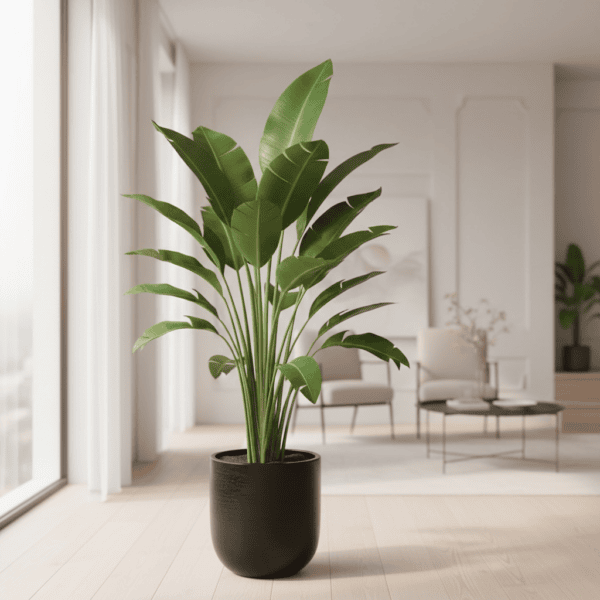
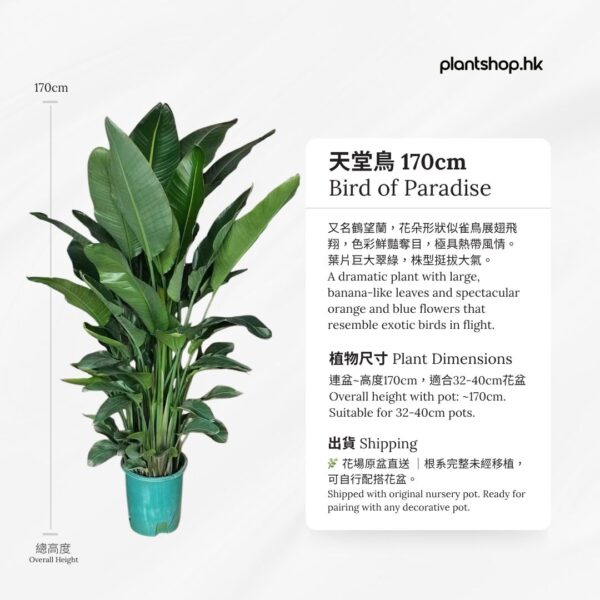
Watch for cold snaps. Hong Kong rarely drops below 5°C, but it happens. Move plants away from windows at night — temperatures near glass can be substantially lower than the rest of the room. Giant Bird of Paradise and Areca Palm are sensitive to cold damage.
Common Winter Question:
Why Are My Leaf Tips Turning Brown? The most likely cause is dry air from the heater. Second possibility: overwatering causing root rot. Check soil moisture first — wet means stop watering; dry means increase humidity around the plant. Trim the brown portions cleanly and let spring’s new growth replace them.
One seasonal rhyme worth keeping: fertilise in spring, shade in summer, water less in autumn, stop fertiliser in winter. Follow the weather, and the plant follows your lead.
PlantShop specialises in 130–180cm large plants, each hand-selected for healthy roots and full form. Whether buying new or caring for existing plants, WhatsApp us with seasonal questions — a real person will respond. Every plant comes with a care card with seasonal instructions written out clearly.
Related Products
Below are the plants mentioned in this article, available for direct purchase. Each comes with a care card and WhatsApp support:



FAQs
Spring (March–May):
The Plant Goes to Work From March, as temperatures rise, you'll see new shoots pushing through — the growth season, the most important period of the year.
Summer (June–August):
The AC Challenge Hong Kong summers are fierce, but it's rarely the heat that compromises plants — it's what happens indoors.
Autumn (September–November):
Winding Down Early September can still feel like summer, but after the Mid-Autumn Festival, temperatures drop and plants begin to slow naturally.
Reducing fertiliser for winter:
From October, taper from every 2 weeks to once monthly, and stop entirely by November. Let the plant ease toward rest.

