



Let the planting contribute through form
For office greenery without deliberately added fragrance, specify the flowers and perfumed decorations you want to exclude, then check the actual plant, growing mix and care products. A foliage label describes what is chiefly admired. It cannot guarantee that a plant will never flower, have an odour or prompt an individual reaction.
In this article
Reception may already carry the aromas of coffee, cleaning and daily occupation. A planting scheme can bring something different through leaf shape, a darker green against a pale wall, or the finish of a container. Put those choices into a precise brief so procurement, administration and the supplier can assess the same requirements.
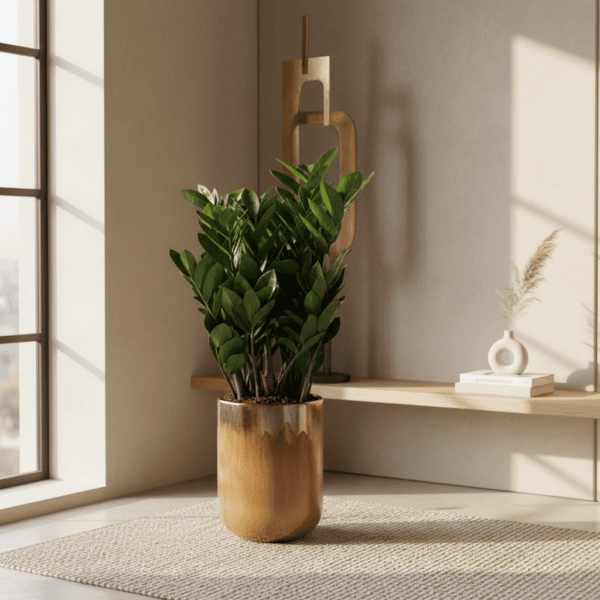
Distinguish three sources of scent
First, consider the plant itself. RHS notes that scent can come from flowers or foliage. NC State records that Madagascar Dragon Tree rarely flowers indoors, but its flowers are fragrant. Check the selected species and current flower development, rather than relying on a flowerless product photograph.
Second, consider additions such as perfumed decorations, sprays or care products. Third, consider the mix and its condition: a persistent unusual odour after installation needs its source investigated rather than masked. Keeping these questions separate helps identify whether a change belongs to the plant, the materials or the care arrangement.
Make the procurement brief answerable
| Item | Example requirement | Confirm with the supplier or responsible person |
|---|---|---|
| Visual direction | Build interest through foliage, tone and containers | Proposed species and actual dimensions |
| Flowers and leaves | Do not select plants for a pronounced scent | Current buds and known flower or foliage characteristics |
| Added materials | No perfumed decorations or scented treatment | Container, top-dressing and care-product list |
| Trial and follow-up | Observe acceptability in a limited area | Position, lead, review and relocation arrangements |
| Later changes | Notify before changing species, materials or products | Agreement process and updated record |
Find out how the position works in ordinary use
Agree a limited placement with the responsible person and the colleagues who use the area. Observe it during normal working life, recording concurrent cleaning or fragrance-product changes as well as the new plants. Give people room to say that the position does not suit them; the exercise is not a request to endorse a predetermined choice.
Location, timing, a description and a requested adjustment are useful records. Public disclosure of medical information is not required. If someone reports discomfort, the office lead should use existing workplace arrangements, without asking the person to repeatedly approach, rub or smell a plant to test their response.
Check the delivery and keep the brief in use
At delivery, check identity, flower development, containers and materials, recording and agreeing any substitutions. Revisit the low-fragrance requirement when plants, top-dressing or care products change. An unscented installation on the first day does not authorise later perfumed additions.
For a persistent unusual smell, record its location and circumstances and arrange assessment of the mix, drainage or another suspected source. If a move or replacement is appropriate, establish who decides, how it will be carried out and what the existing service covers. Any trial, relocation or replacement charge depends on the agreed arrangement, rather than being assumed part of a plant purchase.
Work with leaf shape, tone and the space around it
Broad, dark foliage can give a reception cabinet a clear visual anchor. Narrow leaves on visible stems leave more of a view open, while a consistent container finish connects different plant forms. These are choices to assess through actual proportions, light and room for care.
Does the absence of flowers make a plant suitable for everyone? No such conclusion follows: the plant, mix, products and individual acceptability still matter. Can planting deal with another smell in the office? Have the responsible person address its source. Pots are not being offered here as odour-control or ventilation equipment; choose the greenery once the relevant conditions are clear.
Build the scheme through foliage and tone
These foliage forms offer design options to discuss with the supplier, alongside checks on flowers, materials and care. None is offered as an odour-free or non-allergenic guarantee.
- ZZ Plant: Upright leaf stems and ordered leaflets create a composed outline without a display built around flower colour. Check the delivered plant and added materials.
- Madagascar Dragon Tree: Narrow-leaved crowns on visible stems keep more of the view open. Indoor flowering is uncommon, but the flowers are fragrant, so check flower development at purchase and during care.
- Burgundy Rubber Plant: Dark broad foliage contrasts with a pale container. Choose it for that visual role and site suitability, without adding unverified scent or health claims.
Featured
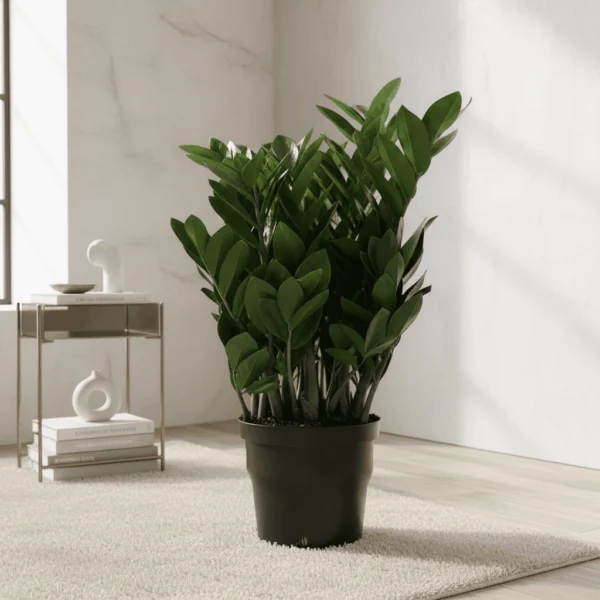
ZZ Plant
ZZ Plant — Glossy, deep green leaflets on upright stems; it copes with lower light and infrequent watering.
- Light: Bright indirect light to sun, introduced gradually.
- Watering: Water thoroughly only after most of the mix dries; never leave standing in water.
Hong Kong care guide: ZZ Plant (light, watering & common issues)
Before & after purchase · Plantshop Care Encyclopedia


Madagascar Dragon Tree
Madagascar Dragon Tree — Slender canes topped with narrow, deep green leaves edged in red.
Hong Kong care guide: Madagascar Dragon Tree (light, watering & common issues)
Before & after purchase · Plantshop Care Encyclopedia

Featured

Burgundy Rubber Plant
Burgundy Rubber Plant — glossy dark foliage and a distinct branching form for your living room or workspace. Choose a position with bright, indirect light.
Hong Kong care guide: Burgundy Rubber Plant (light, watering & common issues)
Before & after purchase · Plantshop Care Encyclopedia
