


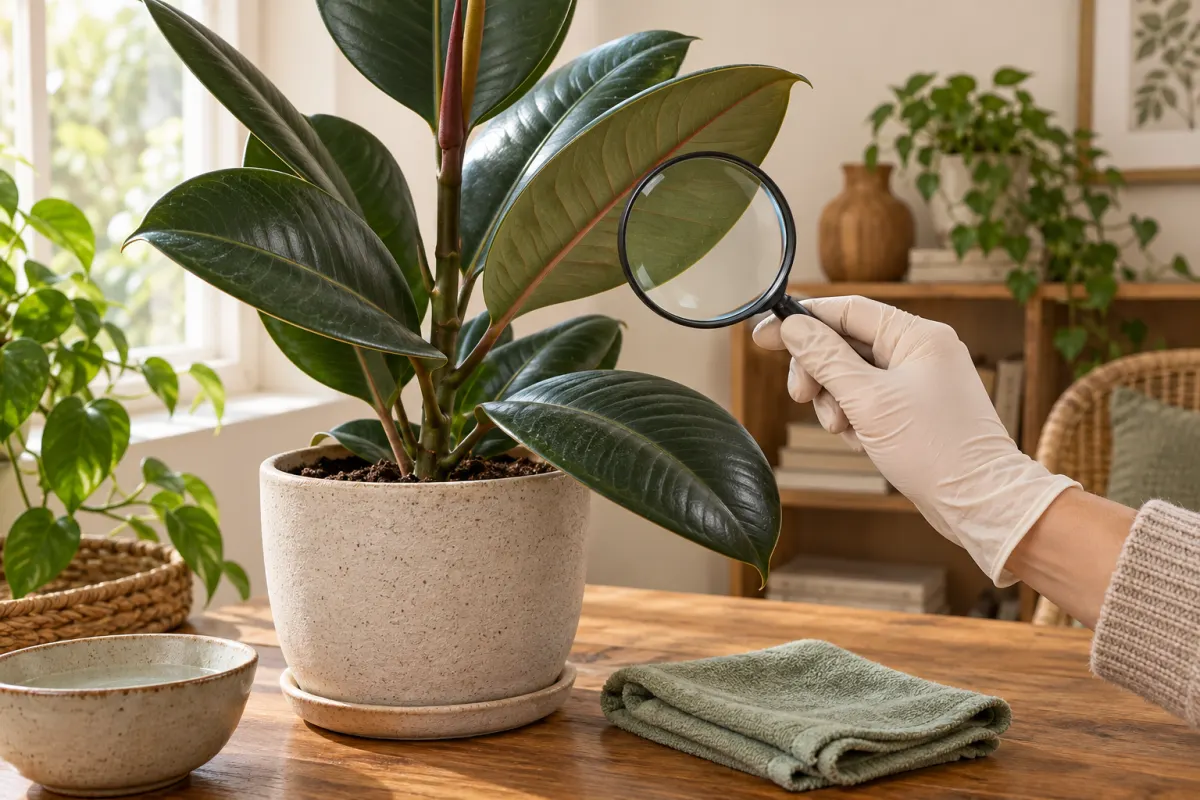

A black, soot-like film on a houseplant leaf may be sooty mould. Wiping the surface can remove the visible layer, but it can return while honeydew-producing insects remain active. Check the leaf, stem and nearby surfaces before treating the coating as a leaf disease.
What sooty mould is—and where it grows
Sooty mould is fungal growth on the surface of plant parts or nearby objects where honeydew has collected. Honeydew is a sweet, sticky waste product from sap-feeding insects. The fungi do not infect the plant tissue, but a heavy coating can block light from leaves and reduce photosynthesis. UC Statewide IPM describes the surface growth, its honeydew source and why dense coverage can affect a plant.
That distinction matters: a fungus is involved, but the first question is often “What is feeding and leaving honeydew?” rather than “Which fungicide should I use?” The visible black layer may sit on top of a leaf, pot rim, windowsill or other surface below the plant. Honeydew can also collect on the upper surface of leaves, so do not inspect only underneath.
Inspect the plant before you wipe everything clean
Take a close look at new growth, leaf axils, stem joints and the undersides of leaves. The University of Minnesota Extension recommends checking those locations for honeydew and sap-feeding pests on indoor plants. A magnifier helps because small insects and young stages can be easy to miss. Look for patterns rather than trying to identify an insect from stickiness alone.
On small screens, scroll the table sideways to see all columns.
| Clue | What it may suggest | Useful next check |
|---|---|---|
| Black film lifts on a damp cloth; the leaf tissue beneath looks intact | A surface deposit such as sooty mould or dirt. | Check whether it is sticky and whether honeydew-producing insects are present. |
| Sticky, shiny residue on leaves or furniture beneath the plant | Honeydew is one common cause. | Inspect new tips, leaf undersides, stem joints and nearby leaves for sap-feeders. |
| White cottony clusters in leaf joints | Mealybugs are possible. | Look carefully around axils and beneath leaves; a white patch alone is not confirmation. |
| Small raised shells or bumps on stems or leaf veins | Some scale insects produce honeydew. | Not every scale does: the University of Minnesota notes that armoured scales do not produce honeydew. |
| Dark areas remain part of the leaf after a gentle wipe | The tissue itself may be damaged; it is not enough to call it sooty mould. | Note whether the mark is spreading or accompanied by yellowing and seek a plant-specific diagnosis if it worsens. |
Honeydew on nearby furniture is useful evidence, but it does not tell you which insect is responsible. Iowa State University Extension identifies aphids, mealybugs and scale as common houseplant sources; Minnesota Extension also lists whiteflies. Some pests are tiny or hidden, and a plant may have been cleaned before you inspected it. No visible insect in one quick check does not rule them out.
A wipe test is a clue, not a diagnosis
Choose a small area and gently pass a damp, pale cloth over it. If black material transfers and the leaf surface underneath appears sound, that supports a removable surface layer. Dust or spilled material can also wipe away, so this test does not prove sooty mould. If a dark mark stays within the leaf, the tissue is rough, sunken or dying, treat it as a different symptom until identified; many unrelated problems can leave dark patches.
A leaf spot is part of the leaf’s tissue, whereas UC IPM describes sooty mould as growth on the surface over honeydew. That distinction is useful for deciding what to inspect next, not for naming a disease from a photograph. Avoid rubbing hard or using a leaf-shine product: damaged leaves cannot be restored by polishing, and products can leave their own residue.
Clean the film, then look for recurrence
After inspecting the plant, gently wipe the leaves of a small plant with a damp cloth, moving to a clean section of cloth as it darkens. On a larger plant, clean only leaves you can reach without tearing them. Let the foliage dry in its usual position. Avoid spraying the leaves with a product chosen from appearance alone.
Recheck the same leaves and stems over the next few days and when new growth appears. If sticky residue returns, that is a reason to repeat the insect inspection; it suggests the source may still be present. UC IPM notes that when honeydew-producing insect numbers fall, honeydew production lessens and sooty mould gradually decreases. Removing the film is useful for appearance and for seeing the leaf, but it does not remove the underlying cause.
A worked example: the leaf is clean, then black again
Imagine wiping a rubber-plant leaf clean and finding a tacky sheen on a shelf beneath it a week later. Instead of scrubbing the leaf repeatedly, inspect the stem joints, young tips and leaf undersides with good light. Look for waxy bumps, cottony clusters, small insects or fresh shiny residue. If you find nothing, check adjacent leaves and the pot rim, then keep a dated photo of the same areas to see whether the coating is spreading. Sticky furniture and recurring film strengthen the case for an ongoing honeydew source, but they still do not identify the pest. If the leaf itself becomes spotted or damaged, seek a closer diagnosis.
Frequently asked questions
Is sooty mould a root disease?
No. It is fungal growth on surfaces where honeydew has accumulated, not a diagnosis of root rot. Root and leaf symptoms can occur at the same time for separate reasons, so assess them separately.
Will washing the leaves solve the problem?
It removes visible residue and makes inspection easier. If sap-feeding insects continue to produce honeydew, the film can return. Check the plant and repeat the inspection rather than relying on wiping alone.
Should I treat the black layer with a fungicide?
Do not choose a treatment from colour alone. UC IPM’s management advice focuses on the honeydew-producing insects; the correct response depends on identifying the pest and the plant. If the mark remains in the leaf or symptoms worsen, get a plant-specific assessment.
Sources
- UC Statewide IPM Program, “Sooty Mold” — surface growth on honeydew, insect sources, possible photosynthesis impact and management focus.
- University of Minnesota Extension, “Managing insects on indoor plants” — houseplant honeydew checks, common pests and the distinction between soft and armoured scales.
- Iowa State University Extension, “What is this sticky substance all over my houseplant?” — sticky honeydew on lower leaves and nearby surfaces; common insect sources.
Related reading
- Large Plant Pest and Disease Control | Identification, Treatment, and Prevention
- Why Are My Plant’s Leaves Turning Yellow? 9 Causes and Fixes
Sources checked on 26 September 2026.
