



Begin with shelter, then observe
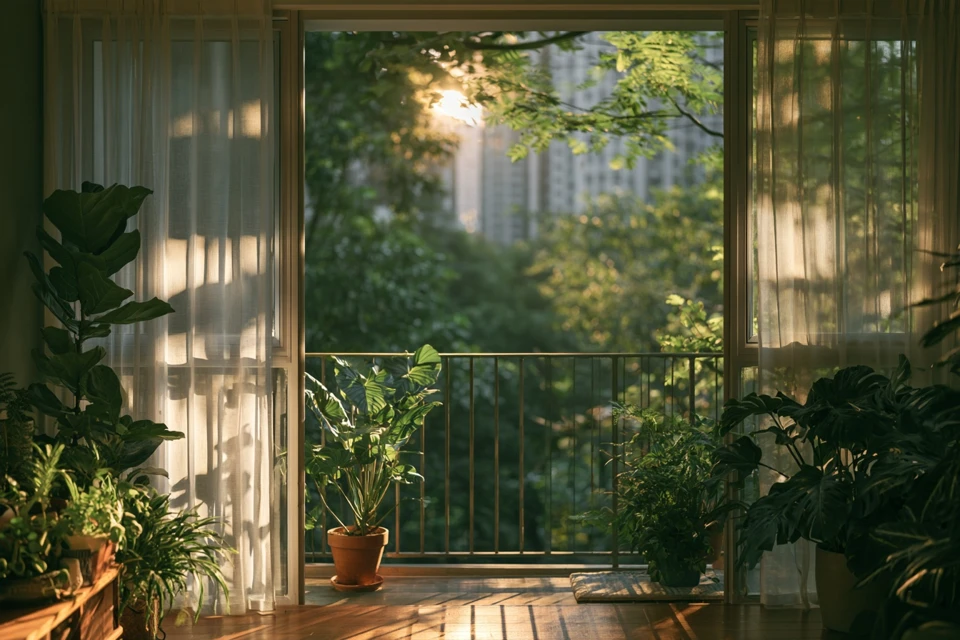
A plant thriving behind glass may look ready for the balcony, but the move changes more than the view. Shade can leave a Hong Kong balcony during the day, while wind between buildings exposes a corner that seemed sheltered in the morning.
In this article
Begin in a safe position protected from strong wind and harsh direct sun, then make changes gradually according to the species and its response. Plan care access and a manageable route back indoors before moving the pot. Reaching the outdoors is not, by itself, evidence that the plant can stay there.

A bright window is not outdoor exposure
UMN Extension advises starting moved houseplants out of direct sun and wind, then acclimatising them. Sudden outdoor sunlight can scorch leaves. On a Hong Kong balcony, let actual light, wind and rain guide the move rather than choosing a date from a calendar alone.
Outside, rain, wind and drying conditions change together. Do not increase exposure while blindly retaining an indoor watering calendar. After rain, check the mix and any cover-pot water; wet leaves do not establish that the rootball has received suitable moisture.
Make the balcony pass the practical checks
- Use stable flooring inside the balcony, never a railing top, external window position or place with a falling-object risk.
- Preserve doors, circulation, drains and care access. Opening the door should not require moving a heavy pot each day.
- Observe light and wind at several points in an ordinary day, noting when shade moves away. One morning photograph is insufficient.
- Confirm the species’ needs and a safe plan for strong wind, heavy rain or unsuitable conditions. Do not attempt difficult lifting as weather deteriorates.
If the only available spot is exposed, windy or difficult to retrieve the plant from safely, keep its indoor position. A balcony is not a compulsory upgrade for every houseplant.
Progress through observations, not a countdown
Begin in shade with suitable air movement and protection from strong wind. Check foliage, mix and container stability before considering a modest change appropriate to the species. A gradual transition can include staying where you are; it does not require another step towards the sun each day.
Note the date, exposure period, rain and response whenever the position changes. New scorch, pronounced wilting or moisture that becomes difficult to manage calls for more protection and reassessment. Increasing exposure to toughen an already struggling plant is the wrong direction, and no fixed timetable can guarantee adaptation.
Advance, hold or step back?
| Observation | Interpretation | Next step |
|---|---|---|
| Stable foliage and manageable care | Holding the position is reasonable | Consider a small change only if the species needs it |
| A sudden change in shade | The original assessment may no longer apply | Observe again before increasing exposure |
| New dry, scorched patches | Possible environmental injury | Return to shelter and assess other causes |
| Rocking pot or unsafe access | Unsuitable position | Stop using that location |
| Standing water after rain | Drainage plan is incomplete | Empty safely and improve the arrangement |
Inspect before returning indoors
Before returning indoors, inspect leaf undersides, stem junctions, pot rims and saucers for visible pests or unusual changes. Do not push a suspect plant straight back into a collection or pour outdoor standing water into another pot.
Quick questions
Will scorched leaves look new again?
Dead tissue will not recover its original appearance. Watch whether new damage stops and subsequent growth remains stable.
What about a single weekend outside?
Short exposure can still bring sun, wind and rain risks. If the purpose is photography or cleaning, there is little reason to add an intense-light experiment; return the plant to suitable conditions afterwards.
Assess the balcony before choosing the plant
Consider an outdoor move only after the balcony checks. These plants still need an individual assessment; an indoor product image is not a weather-resistance guarantee.
- Monstera Deliciosa: Its broad leaves need shelter and canopy clearance during a trial rather than immediate exposed placement.
- Burgundy Rubber Plant: Thick leaves grown indoors still need a gradual change in exposure; thickness is not permission for abrupt full sun.
- Fiddle-Leaf Fig: Assess the tall canopy together with container stability. Keep it indoors if balcony wind makes the position unsuitable.
Featured

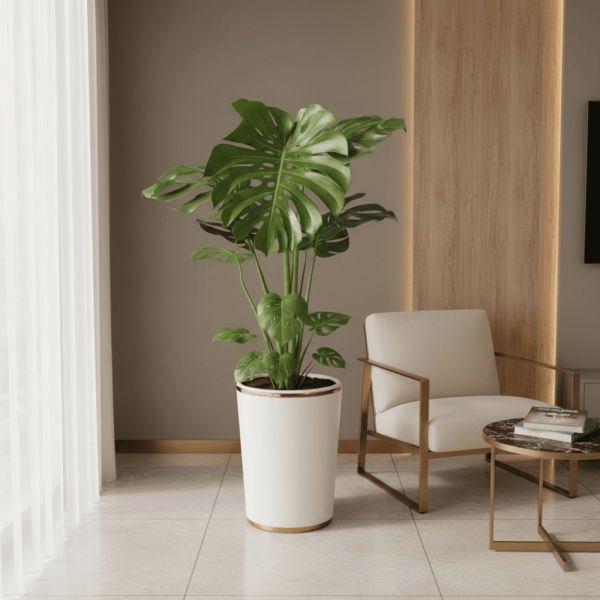
Monstera Deliciosa
Monstera Deliciosa — A large, 130–150cm indoor plant with sculptural split leaves that brings confident tropical form to living rooms, offices and entrances.
- Best in bright, indirect light; avoid harsh afternoon sun
- Let the compost become almost dry, then water thoroughly and allow it to drain
Hong Kong care guide: Monstera Deliciosa (light, watering & common issues)
Before & after purchase · Plantshop Care Encyclopedia

Featured

Burgundy Rubber Plant
Burgundy Rubber Plant — glossy dark foliage and a distinct branching form for your living room or workspace. Choose a position with bright, indirect light.
Hong Kong care guide: Burgundy Rubber Plant (light, watering & common issues)
Before & after purchase · Plantshop Care Encyclopedia
Featured

Fiddle-Leaf Fig
Fiddle-Leaf Fig — Large, violin-shaped leaves on an upright stem; it grows best in a steady, bright position.
- Light: Bright indirect light to gentle sun; keep the position stable.
- Watering: Water after the top 3–5 cm dries; reduce in winter or low light.
Hong Kong care guide: Fiddle-Leaf Fig (light, watering & common issues)
Before & after purchase · Plantshop Care Encyclopedia
