



Give greenery a place beyond the worktop
One table may handle chopping, supper and a laptop before the day is over. A plant can connect that busy kitchen to the sitting area, provided preparing dinner does not begin with moving its leaves. Run through an ordinary meal before deciding where the pot belongs.
In this article
Choose a suitably lit position beyond flames, steam, grease splashes, cleaning sprays and food preparation. Opening the fridge, taking out a pan, washing vegetables and wiping down should all remain straightforward. Kitchen humidity alone does not make a position suitable, and ornamental foliage is not an edible herb.
Map the kitchen through movement
First mark the heat and splash zone: hob, opening oven door, kettle steam, washing-up and draining areas. There is no universal clearance for every kitchen; allow space according to the appliances’ instructions and how they are used.
Next mark the food and utensil zone: chopping boards, clean crockery and ingredient storage. Compost, fallen leaves, runoff and plant cleaning do not belong there. Only then identify a possible plant zone, with suitable daylight, clear cabinet access and room for care without contact with food.
Check the light at the leaves
Look at the light where the leaves will sit. Wall cupboards, shelves and the extractor can cast shade even when a worktop looks bright. Task lighting at night does not establish the daylight available to a plant. If the kitchen’s practical position is too dark, the living-room side of the boundary may work better.
RHS includes direct heat and aerosol products among environmental causes of leaf damage. Placement can reduce those exposures before cleaning becomes a recurring chore. An extractor may be working well without keeping every trace of grease away from nearby foliage.
Try the position before filling it
| Daily action | What to watch | If it fails |
|---|---|---|
| Open the fridge and lower cupboards | Doors striking the pot or brushing foliage | Move it out of the opening route |
| Carry a hot pan to the table | Elbows and the carrying path | Place the plant beyond contact with hot items |
| Wash up and wipe surfaces | Splashes, cleaning liquids and drainage | Do not put the pot at the end of the water path |
| Prepare and serve food | Leaves extending above food | Preserve the complete preparation area |
| Care for the plant | A separate place for watering and runoff | Plan a dedicated plant-care location |
Give plant care its own routine
Collect fallen leaves and loose mix rather than sweeping them into the vegetable-washing sink. Move a manageable small pot to a suitable drainage area; arrange safe care access for a large one instead of lifting it onto the kitchen counter. Use a plant-appropriate cleaning method, not the cloth used on the hob.
If grease repeatedly reaches the foliage, identify the source and change the position rather than only cleaning more often. A canopy grows: a plant initially clear of the preparation area may later extend into it. Repeat the cabinet and cooking checks as part of ordinary upkeep.
A visual connection is enough
Quick questions
Can a plant act as a barrier beside the hob?
Do not use foliage as heat protection, a grease screen or a fire barrier. Keep the space required by equipment clear.
What about leaves falling towards food?
The plants discussed are ornamental, not ingredients. Prevent contact with preparation and serving areas rather than treating foliage as part of kitchen food handling.
What if no kitchen position works?
Place greenery on the living-room side, visible from the kitchen. That can connect the spaces without putting a pot in every functional zone.
Greenery beyond the cooking zone
Complete the cooking-route and light checks before comparing these ornamental forms. A product image cannot establish the proportions of your own kitchen.
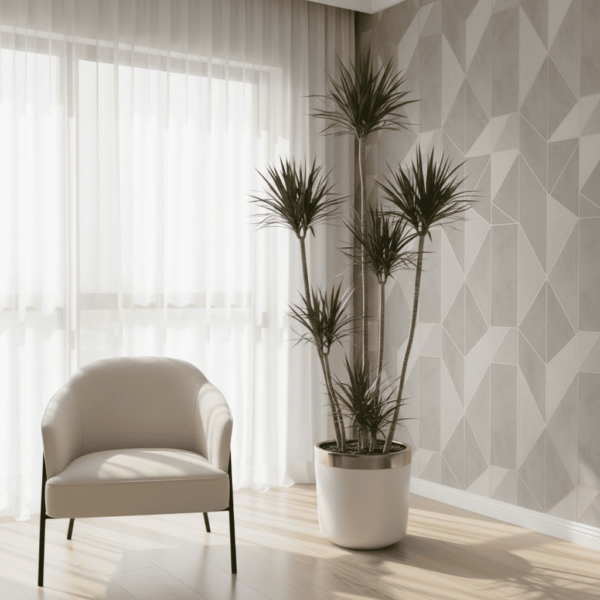
- Madagascar Dragon Tree: Slender stems offer a vertical line at the living-room boundary, with the crown still clear of doors and hands.
- Burgundy Rubber Plant: Broad dark foliage can complement timber cabinetry or pale walls from a suitably lit position beyond the work surface.
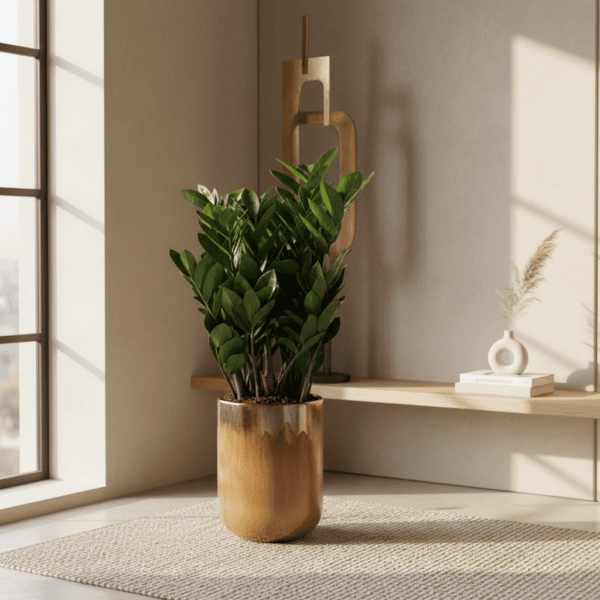
- ZZ Plant: Upright leaf clusters can make a distinct corner; drought tolerance is not a reason to place it beside an unlit cupboard.

Madagascar Dragon Tree
Madagascar Dragon Tree — Slender canes topped with narrow, deep green leaves edged in red.
Hong Kong care guide: Madagascar Dragon Tree (light, watering & common issues)
Before & after purchase · Plantshop Care Encyclopedia

Featured

Burgundy Rubber Plant
Burgundy Rubber Plant — glossy dark foliage and a distinct branching form for your living room or workspace. Choose a position with bright, indirect light.
Hong Kong care guide: Burgundy Rubber Plant (light, watering & common issues)
Before & after purchase · Plantshop Care Encyclopedia
Featured
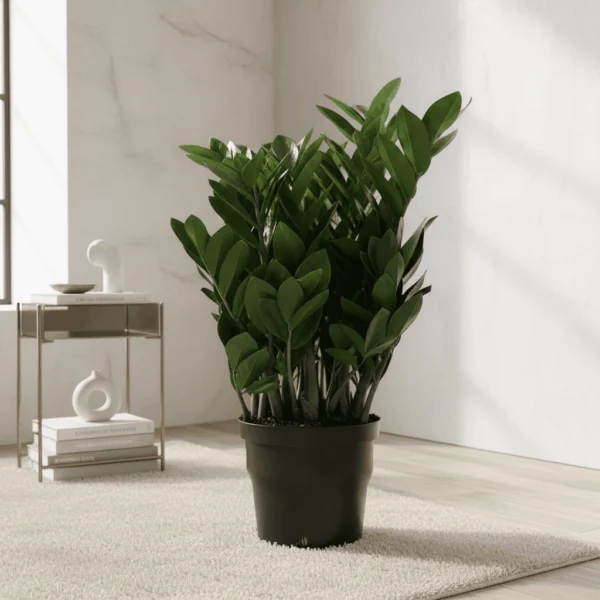
ZZ Plant
ZZ Plant — Glossy, deep green leaflets on upright stems; it copes with lower light and infrequent watering.
- Light: Bright indirect light to sun, introduced gradually.
- Watering: Water thoroughly only after most of the mix dries; never leave standing in water.
Hong Kong care guide: ZZ Plant (light, watering & common issues)
Before & after purchase · Plantshop Care Encyclopedia
