



When you step into a company for the first time, the conscious processing — the logo, the desk, the receptionist’s greeting — arrives second. What arrives first is the environment: the quality of the light, the temperature of the air, and whether anything in the space is alive. Plants or no plants. What kind. How they are tended. All of this communicates before a word is exchanged. A company willing to place real, living plants in its office announces, at minimum, that it believes the people who work there deserve more than a bare room. The choice of species, their scale, and the care they receive goes further — it surfaces something about the company’s actual values, often more candidly than any statement of culture printed on a wall.
Two Extremes Among Technology Companies — office plants corporate culture
Google’s offices are well-documented in their lushness: varied species throughout, employees invited to introduce greenery to their own workstations. The message is legible — *I trust you, I give you latitude, I encourage what is yours*. The diversity of plant life becomes a physical metaphor for cultural openness.
Apple runs in the opposite direction. Ultra-minimalist, a restrained plant count, each specimen chosen to pass an aesthetic standard, every pot consistent with the brand’s visual language. This is not scarcity. It is the discipline of “less is more” pressed to its most demanding application, where every detail must justify its presence.
Neither is superior. They reflect different values with equal conviction.
The Plant Language of Hong Kong’s Commercial Culture
Traditional finance companies tend toward Money Trees and ZZ Plants: symbols of stability and accumulated good fortune, chosen as much from cultural conviction as from feng shui prescription. Technology start-ups reach for Fiddle-Leaf Figs and Monstera — clean lines, contemporary visual intelligence, a projection of energy and forward momentum. Design firms signal their independence through the unexpected: unusual species, unconventional placement, an implicit refusal to default.
This is not overreading. The care a company extends to its office environment reflects the care it extends to the experience of the people who inhabit it. The correlation is not perfect, but it is consistent.
Greening as Cultural Evidence
An interior designer I know said it with precision: “The most difficult clients are the ones who say, ‘just put a few pots somewhere.’ Because behind those words is an unspoken position: this doesn’t matter.” When a company’s leadership believes the working environment doesn’t matter, the people working there feel — accurately — that their working experience doesn’t matter either.
I visited a local law firm that had kept a Madagascar Dragon Tree in its reception for twelve years. Over those twelve years, it witnessed the practice grow from three people to thirty, from a single room in Central to an entire office floor. That tree was not decoration. It was a marker: *we are rooted here, and we have grown*.
How to Begin
It does not require complexity. Step one: place a real, vigorous plant in the reception or employee lounge. Step two: ask colleagues whether they would like a plant at their desk, and give them a modest budget to choose. Step three: engage professional maintenance. Do not ask colleagues to water plants as a side duty — that is neither fair to the people nor to the plants.
PlantShop and Corporate Culture
Corporate culture is not a slogan on the wall. PlantShop has served corporate clients from multinationals to local SMEs, and the companies that leave the deepest impression are not those who spent the most. They are the ones who took the question seriously. A ten-person start-up whose founder personally attended the plant selection consultation — because he considered it “part of the company culture” — left a stronger impression than many organisations with far greater resources. We believe a good company does not require a luxurious office. It requires attention to detail.
If you want to express your company’s values through plants, PlantShop specialises in 130–180cm large greenery — Madagascar Dragon Trees, Fiddle-Leaf Figs, Monstera, and other widely sought varieties, each hand-selected. WhatsApp us for a direct reply. 3–7 business day delivery. — PlantShop Horticulture Team
Related Products
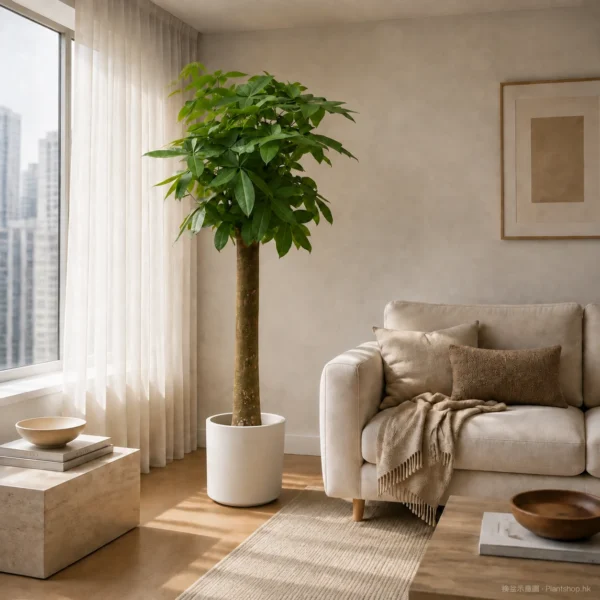
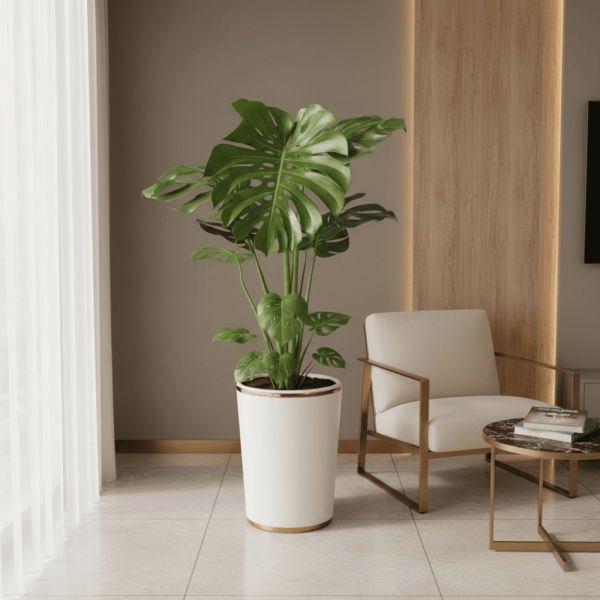
Below are the plants mentioned in this article, available for direct purchase. Each comes with a personal care card and WhatsApp support from our team:





FAQs
Two Extremes Among Technology Companies
Google's offices are well-documented in their lushness: varied species throughout, employees invited to introduce greenery to their own workstations. The message is legible — *I trust you, I give you latitude, I encourage what is yours*. The diversity of plant life becomes a physical metaphor for cultural openness.
The Plant Language of Hong Kong's Commercial Culture
Traditional finance companies tend toward Money Trees and ZZ Plants: symbols of stability and accumulated good fortune, chosen as much from cultural conviction as from feng shui prescription. Technology start-ups reach for Fiddle-Leaf Figs and Monstera — clean lines, contemporary visual intelligence, a projection of energy and forward momentum. Design firms signal their independence through the un
Greening as Cultural Evidence
An interior designer I know said it with precision: "The most difficult clients are the ones who say, 'just put a few pots somewhere.' Because behind those words is an unspoken position: this doesn't matter." When a company's leadership believes the working environment doesn't matter, the people working there feel — accurately — that their working experience doesn't matter either.
How to Begin
It does not require complexity. Step one: place a real, vigorous plant in the reception or employee lounge. Step two: ask colleagues whether they would like a plant at their desk, and give them a modest budget to choose. Step three: engage professional maintenance. Do not ask colleagues to water plants as a side duty — that is neither fair to the people nor to the plants.

