



Give the watering can a route of its own
A workable plant position keeps filling, carrying, pouring and removing runoff clear of electrical equipment, sockets and cables. Plan room for the person doing the care as well as for the pot. A saucer belongs in that plan, but it does not make the surrounding equipment waterproof.
In this article
- Give the watering can a route of its own
- Include what sits behind and below the furniture
- Rehearse the task with an empty can
- Check the arrangement you actually have
- Make drainage a task someone can finish
- Keep the care plan current when the office moves
- Questions the room should settle
- Quick questions
- Choose with care access in mind
Look below the cabinet as carefully as you look at its top. A floor box can sit beside a movable unit; a charging cable can run beneath an apparently clear edge. Rehearsing the task with a watering can reveals what a view from the doorway misses: a spout crossing a screen, a drip route towards a connection, or nowhere to put wet tools down.
Include what sits behind and below the furniture
Ask the facilities or office lead to identify floor boxes, extension units, chargers, printers and cable routes around the proposed position. Check beneath the plant, behind furniture and where movable cabinets normally stand. This is a layout check; the plant carer does not need to open sockets or equipment casings.
EMSD advises keeping water out of appliances, keeping water-filled vessels off them and allowing space for heat to dissipate. Give pots, cans and wet tools their own stable places, with leaves clear of equipment ventilation. The appliances’ instructions and the requirements of the actual location remain part of the arrangement.
Rehearse the task with an empty can
- Walk from the filling point with an empty can, checking tight seating areas, cables and drawers that may open into the route.
- Rehearse the pouring position: hands, spout and intended flow should stay controlled at the pot rather than crossing equipment.
- Establish how runoff can be inspected and removed safely. A heavy container may require appropriate equipment or assistance.
- Provide a place for the can and wet tools, then check the route for drips afterwards. Assign that task rather than relying on a general reminder to be careful.
Check the arrangement you actually have
| Position | Easily missed | A clearer arrangement |
|---|---|---|
| Floor plant beside a workstation | Floor socket below or a can crossing an extension unit | Confirm equipment positions and establish separate care access |
| Plant on a cabinet beside a computer | Filling and runoff pass screens or chargers | Move it to a designated care position only if safe, then drain before returning |
| Beside a printer or shared equipment | Foliage blocks ventilation or service access | Preserve operating and maintenance space; keep water and tools elsewhere |
| Planting shared between departments | The carer is unaware of new equipment or sockets | Assign change notifications and repeat the empty-can rehearsal after a move |
Make drainage a task someone can finish
Where a pot can be moved safely, water and drain it at an appropriate care position, then clean its exterior and base before returning it. For an immovable floor plant, agree how excess water will be observed, contained and removed. If every visit requires reaching over equipment, change the position or care arrangement.
Keep saucers, cover pots and protective pads accessible. An unstained surface outside can conceal water inside the cover pot, which may spill when moved. Do not improvise by wrapping an extension unit in a bag or covering appliances to accommodate an unsuitable watering position.
Keep the care plan current when the office moves
Put the plant reference, filling point, care method, drainage arrangement and responsible person on one work sheet. Rehearse the route again after equipment or furniture moves, and update an external plant carer before the next visit. An extension unit newly placed behind a pot changes the job even when the planting itself stays put.
If water reaches equipment or a connection, stop watering, keep people away from the affected area and alert facilities to arrange appropriate assessment. EMSD advises against touching appliances, sockets or switches with wet hands. Leave assessment to the appropriate person rather than wiping the equipment down and powering it up to test it; electrical repair is outside the plant carer’s task.
Questions the room should settle
Quick questions
Is there one safe distance for every office?
A single clearance cannot cover every arrangement. Equipment position, surfaces, watering methods and maintenance requirements differ; use the actual site and appropriate qualified advice.
Can a plant needing less water stand against a socket?
Less frequent watering does not replace a suitable layout. Every living plant still needs a workable method of care.
Choose with care access in mind
Compare canopy, stems and care access with these three options, then check the complete watering route for the selected plant.
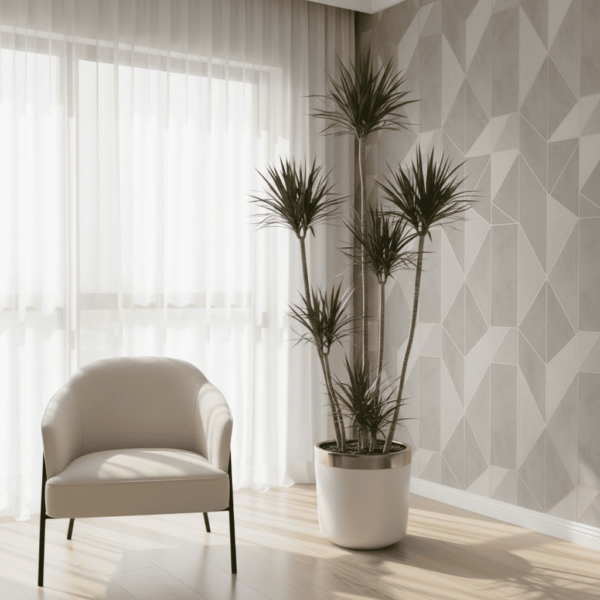
- Madagascar Dragon Tree: Narrow leaves and upright stems offer a relatively contained outline to assess. Allow for the actual crown and access to both equipment and plant.
- Burgundy Rubber Plant: Broad foliage makes a distinct feature. Beside shared equipment, check whether mature leaves will enter ventilation or maintenance space.
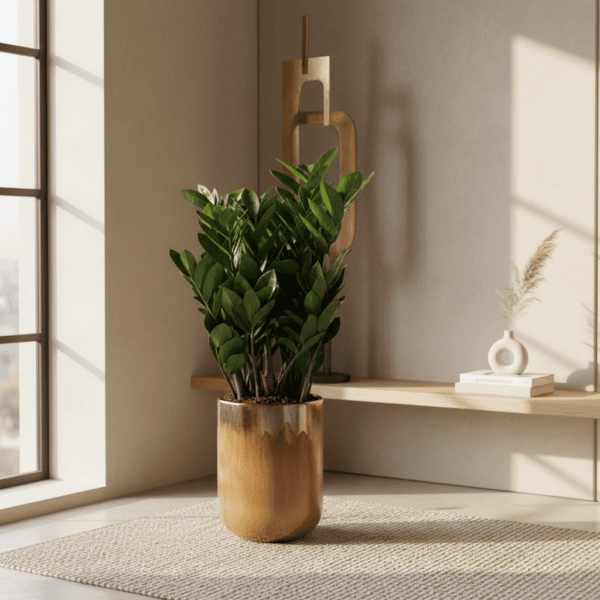
- ZZ Plant: Tolerance of drier intervals can help avoid unnecessary topping up. Its pot still needs suitable drainage and inspection access; the species is not a leak-prevention measure.

Madagascar Dragon Tree
Madagascar Dragon Tree — Slender canes topped with narrow, deep green leaves edged in red.
Hong Kong care guide: Madagascar Dragon Tree (light, watering & common issues)
Before & after purchase · Plantshop Care Encyclopedia

Featured

Burgundy Rubber Plant
Burgundy Rubber Plant — glossy dark foliage and a distinct branching form for your living room or workspace. Choose a position with bright, indirect light.
Hong Kong care guide: Burgundy Rubber Plant (light, watering & common issues)
Before & after purchase · Plantshop Care Encyclopedia
Featured
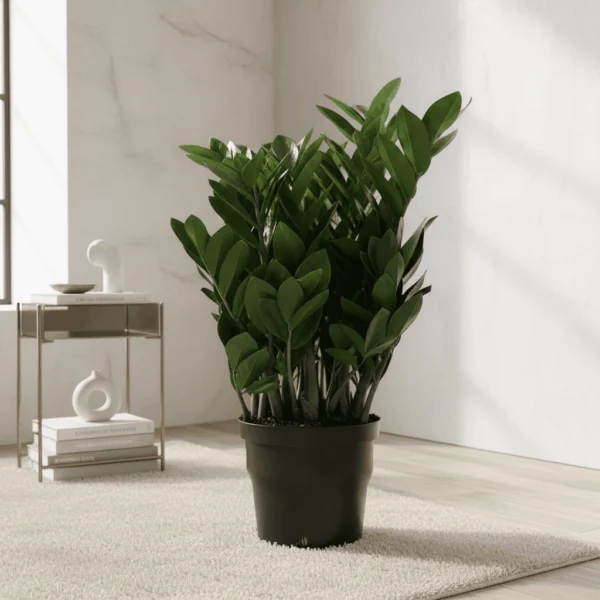
ZZ Plant
ZZ Plant — Glossy, deep green leaflets on upright stems; it copes with lower light and infrequent watering.
- Light: Bright indirect light to sun, introduced gradually.
- Watering: Water thoroughly only after most of the mix dries; never leave standing in water.
Hong Kong care guide: ZZ Plant (light, watering & common issues)
Before & after purchase · Plantshop Care Encyclopedia
