



The Toughest of the Plant World | Ranking the Most Resilient Office Plants
The office is demanding territory for plants. AC running all day, no guaranteed window access, three-day weekends with zero watering, and the occasional coffee cup that somehow ends up in the pot. If you’ve lost a plant at work, don’t internalise it — you almost certainly chose the wrong species. Here are six plants that are shade-tolerant, drought-resistant, and AC-proof. Ranked sixth to first — the higher, the tougher.
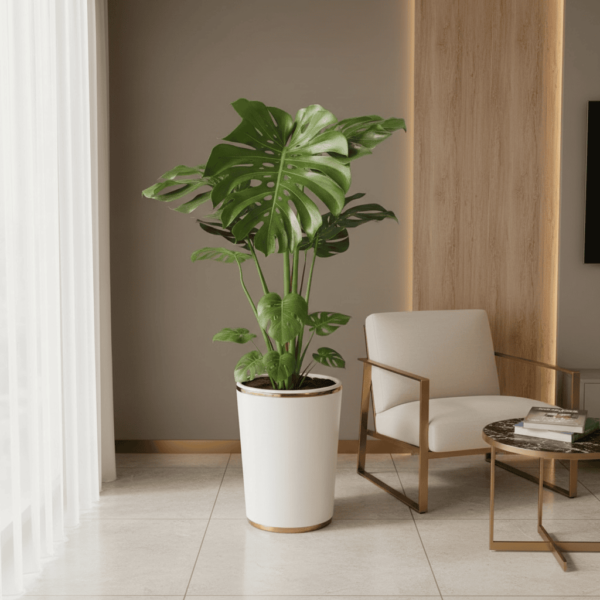
6th Place: Monstera (Monstera deliciosa)
Monstera’s broad, split leaves are instantly recognisable, and a single specimen placed in an office corner lifts the room immediately. Native to Central American rainforests, it evolved beneath the canopy in deep shade — which means it adapts reasonably well to low-light interiors. Honest caveat: in dark spots, Monstera grows slowly and leaves may not develop their signature fenestrations. For best results, give it bright indirect light — near a meeting room window is ideal. Water once or twice a week; wipe the leaves occasionally with a damp cloth.
Survival Rating: ★★★★ (4/5)
5th Place: Rubber Plant (Ficus elastica)
The Rubber Plant’s thick, lacquered leaves project a kind of calm authority — naturally at home in a director’s office or a meeting room. The waxy surface locks in moisture, giving it decent drought tolerance. It doesn’t grow quickly, so you won’t be constantly repotting or managing it. Needs medium to bright indirect light; position it near a window. Water once a week, dropping to every ten days in winter.
Survival Rating: ★★★★ (4/5)
4th Place: Peace Lily (Spathiphyllum)
One of the few large plants that thrives in low light — it can even flower under LED ceiling lights alone. It also communicates: when it needs water, the leaves droop with quiet drama. Water it and they recover within hours. The most legible plant on this list, which makes it forgiving even for beginners uncertain about timing.
Survival Rating: ★★★★½ (4.5/5)
Note: Toxic to cats and dogs.
3rd Place: ZZ Plant (Zamioculcas zamiifolia)
The ZZ’s underground rhizomes store water like a reserve tank — it can go weeks without watering in winter and look entirely unbothered. Its glossy, coin-shaped leaves hold a deep, satisfying green. It tolerates low light without complaint and is essentially pest-resistant. The only meaningful way to damage it is overwatering. In an office where plants are watered erratically and left in dim corners, that restraint is a genuine virtue.
Survival Rating: ★★★★★ (4.8/5)
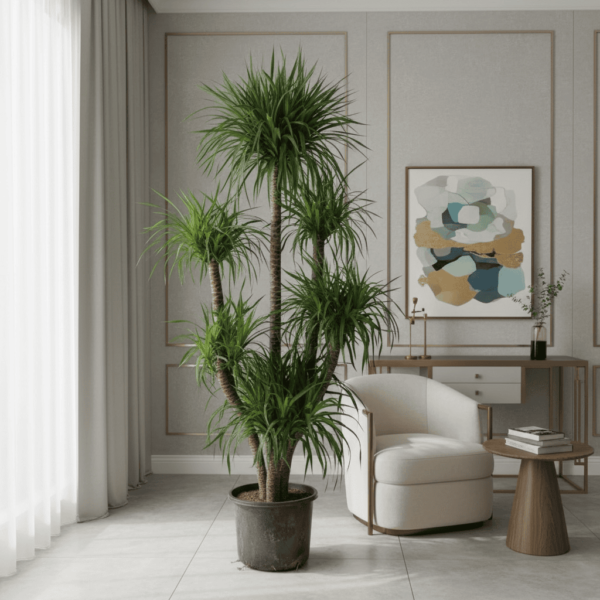
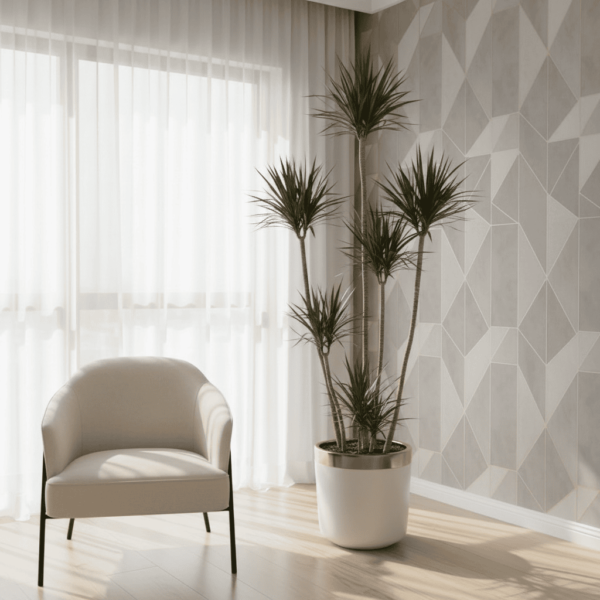
2nd Place: Madagascar Dragon Tree (Dracaena marginata)
The Dragon Tree’s dramatic, spiky silhouette punches well above its care requirements. Drought-tolerant to a fault: in winter, once or twice a month is sufficient. It tolerates a wide range of light conditions, from moderate to dim, and grows slowly enough that maintenance stays minimal. As lower leaves yellow and drop naturally over time, it matures into a distinctive palm-tree form. Essentially self-styling.
Survival Rating: ★★★★★ (4.9/5)
1st Place: Snake Plant (Sansevieria trifasciata) — The Undisputed Champion
The Snake Plant wins on every metric: shade tolerance, drought tolerance, AC tolerance, neglect tolerance. It survives in near-total darkness. It can go two months without water. It will not expire because someone went on holiday. Its upright, architectural form looks as though it was designed specifically for an office environment. It releases oxygen at night — one of the few CAM plants — making it useful in spaces occupied during evening hours. If you can keep only one plant alive in a challenging office, make it this one.
Survival Rating: ★★★★★ (5/5)
Note: Toxic to cats and dogs — though standard office placement poses minimal risk.
Choosing Plants by Office Size
Small office (under 10 people): One Madagascar Dragon Tree at the entrance as a focal point, two or three Snake Plants in the work area. Restrained, effective, low-maintenance.
Medium office (under 30 people): Money Tree at reception, Giant Bird of Paradise in the meeting room, Pothos as loose dividers across the open plan, Peace Lily at individual desks.
Large office (50+ people): Each zone warrants its own composition. Consider a professional greening service for regular maintenance — plants that are clearly cared for communicate something specific about how the company cares for its people.
Feng Shui Note: Traditional feng shui holds that a Money Tree at the entrance deflects negative energy and draws positive qi. In practice, the most measurable benefit of a vibrant plant by the door is this: seeing something green first thing in the morning improves your mood. That’s not mysticism. That’s just how it works.
Related Products
Below are the tough office plants mentioned in this article, available for direct purchase:





FAQs
The Toughest of the Plant World | Ranking the Most Resilient Office Plants
The office is demanding territory for plants. AC running all day, no guaranteed window access, three-day weekends with zero watering, and the occasional coffee cup that somehow ends up in the pot. If you've lost a plant at work, don't internalise it — you almost certainly chose the wrong species. Here are six plants that are shade-tolerant, drought-resistant, and AC-proof. Ranked sixth to first —
6th Place: Monstera (Monstera deliciosa)
Monstera's broad, split leaves are instantly recognisable, and a single specimen placed in an office corner lifts the room immediately. Native to Central American rainforests, it evolved beneath the canopy in deep shade — which means it adapts reasonably well to low-light interiors. Honest caveat: in dark spots, Monstera grows slowly and leaves may not develop their signature fenestrations. For be
5th Place: Rubber Plant (Ficus elastica)
The Rubber Plant's thick, lacquered leaves project a kind of calm authority — naturally at home in a director's office or a meeting room. The waxy surface locks in moisture, giving it decent drought tolerance. It doesn't grow quickly, so you won't be constantly repotting or managing it. Needs medium to bright indirect light; position it near a window. Water once a week, dropping to every ten days
4th Place: Peace Lily (Spathiphyllum)
One of the few large plants that thrives in low light — it can even flower under LED ceiling lights alone. It also communicates: when it needs water, the leaves droop with quiet drama. Water it and they recover within hours. The most legible plant on this list, which makes it forgiving even for beginners uncertain about timing.


