



Arrange together, care for each
A broad leaf beside the sofa, a lower pot in front and palm fronds catching the light: a few different forms can give a small corner depth. The composition may look like one piece, but it still contains several plants to care for. Group for display by space, leaf shape and proportion; make care decisions from each species, potting mix and present condition.
In this article
You can hold both ideas at once. Keep plants close enough to relate visually, with separate inner pots so each can be checked and adjusted. There is no need to combine different growing requirements in one shared pot of soil.

Leave a way into the arrangement
Start with the silhouette from your usual seat, then walk towards the window and check whether the front row shades the back. A smaller plant should not occupy an unsuitable dark position simply because it completes the composition. Any raised pot needs a stable support suited to its weight, rather than stacked books or an unsteady stool.
Leave access to the surface, inner container and saucer of each pot, with space between leaves for inspection and cleaning. If three plants must be moved before the fourth can be checked, routine care soon turns into guesswork.
Repeat a pot colour or material, and let the leaves bring the variation. A little space between them keeps the composition readable and the plants within reach.
A shared checking time, separate watering decisions
The University of Maryland’s watering guidance recommends responding to a plant’s needs rather than a fixed watering schedule. You can still choose a convenient time to check the group. The result may be that one pot needs water and another does not.
For example, Iowa State University describes the ZZ Plant’s tolerance of dry conditions, while NC State’s Areca Palm guidance describes moist but not soggy mix during growth. Placing them against the same wall does not give them the same moisture requirements.
Even plants of one species differ in pot size, mix, roots and position. Observe your own containers rather than turning a product name into a fixed number of waterings per week. If decorative top-dressing hides the mix, leave a place where it can be checked.
Follow the water to each tray
Decorative containers may form a matching set, but check each inner pot and how its water is collected. Deal with excess water after watering and confirm that the base is not standing in it. Run-off from a higher plant should not drain into a lower pot that may not need water.
A large shared tray can hide which container is sitting in water. If you use one to unite a display, keep each pot’s drainage visible and accessible rather than maintaining a pool for every container to absorb.
If one plant has suspected pests or unusual decline, move it apart for inspection instead of hiding the problem behind the composition. Check the condition of a new addition before placing it among established plants.
A display-and-care record for each pot
Copy these fields into a phone note. A, B and C are labels you assign to the inner pots, not watering categories. Record the actual result each time.
| Pot / display position | Care basis for this pot | Date and mix condition | Decision today | Drainage / next observation |
|---|---|---|---|---|
| A / back row by the window | Species, mix and root-zone requirements | Date: __ Condition: __ |
Water / leave for now | Excess water removed? Shade changed? |
| B / lower front row | Species, mix and root-zone requirements | Date: __ Condition: __ |
Water / leave for now | Excess water removed? Still accessible? |
| C / side position | Species, mix and root-zone requirements | Date: __ Condition: __ |
Water / leave for now | Excess water removed? Direct airflow? |
When someone else takes over, leave the decision method as well as the last watering date. “Watered on Sunday” offers less help than “check pot B first; do not add water while it is still wet”.
Let the corner grow and change
Review the group when new leaves open, a plant is repotted or curtain use changes. Former gaps may have closed and the front row may now shade the back. Retain suitable light for each pot when adjusting the heights and positions.
The corner should be easy to enjoy from the sofa and just as easy to understand when you reach for the watering can. Consult the care encyclopedia for species details, then connect those requirements to the conditions recorded in your own home.
Build the group from contrasting leaves
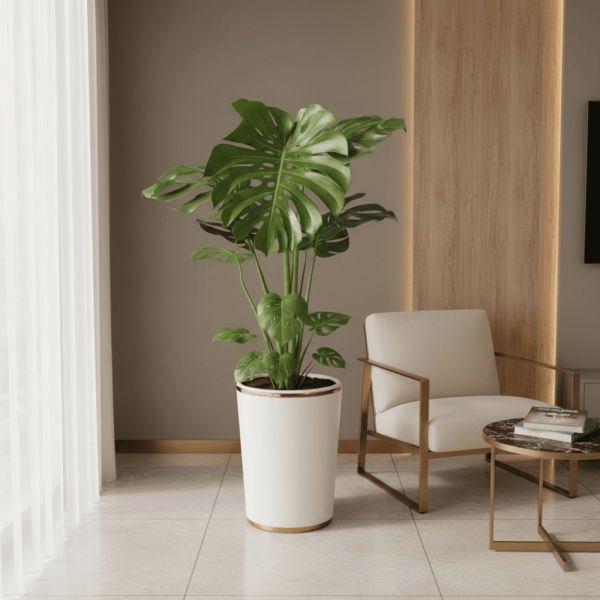
- Monstera: Broad leaves provide a focal point. Leave room to reach the inner pot beneath them.
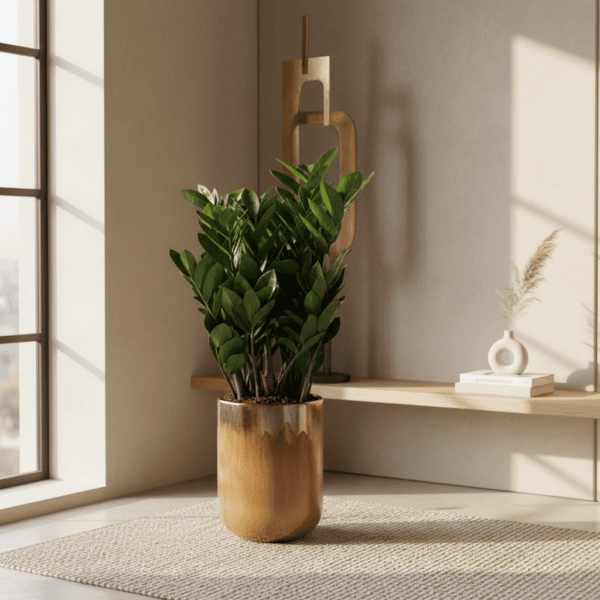
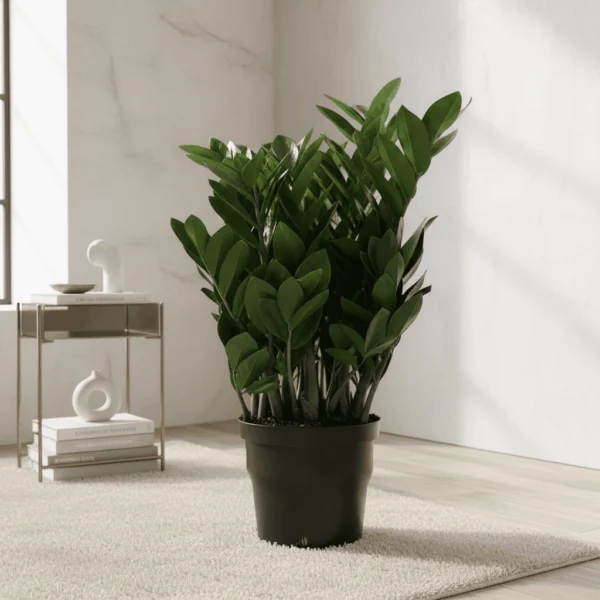
- ZZ Plant: Glossy leaflets contrast with larger leaves, while watering remains a decision based on its own mix.
- Areca Palm: Fine leaflets add another texture. Allow its fronds to spread instead of packing them between neighbouring plants.
Featured

Monstera Deliciosa
Monstera Deliciosa — A large, 130–150cm indoor plant with sculptural split leaves that brings confident tropical form to living rooms, offices and entrances.
- Best in bright, indirect light; avoid harsh afternoon sun
- Let the compost become almost dry, then water thoroughly and allow it to drain
Hong Kong care guide: Monstera Deliciosa (light, watering & common issues)
Before & after purchase · Plantshop Care Encyclopedia
Featured
ZZ Plant
ZZ Plant — Glossy, deep green leaflets on upright stems; it copes with lower light and infrequent watering.
- Light: Bright indirect light to sun, introduced gradually.
- Watering: Water thoroughly only after most of the mix dries; never leave standing in water.
Hong Kong care guide: ZZ Plant (light, watering & common issues)
Before & after purchase · Plantshop Care Encyclopedia


Areca Palm
Areca Palm — Feathery, arching fronds that soften a living room, studio or office corner.
- Light: Bright light indoors, protected from sudden intense western sun.
- Watering: Water as the surface dries, maintaining even moisture with drainage.
Hong Kong care guide: Areca Palm (light, watering & common issues)
Before & after purchase · Plantshop Care Encyclopedia
