


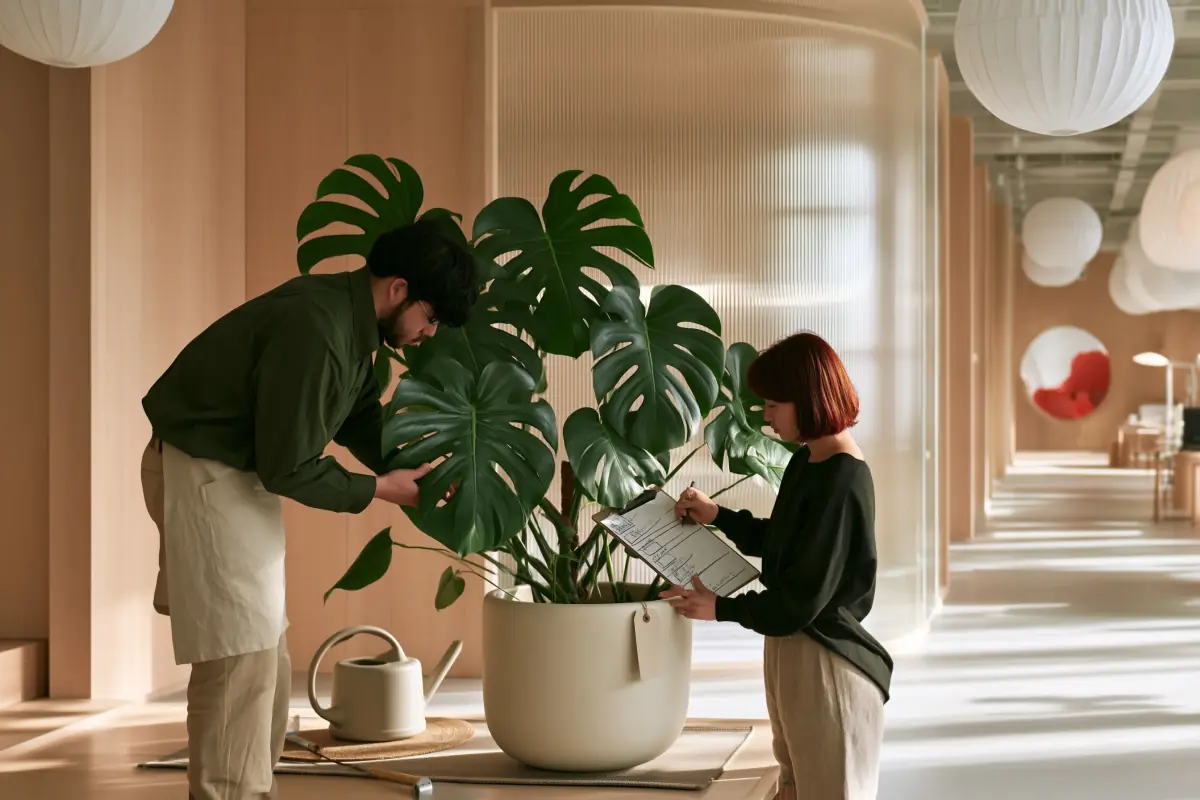

Recognisable at every address
A pale planter beside reception can echo one in a meeting room across town, even when the plants are different. One may stand by a window; the other may share a room where the blinds stay closed. For a coherent scheme across offices, agree the containers, proportions and placement principles, then choose plants for each site’s conditions.
Seen from an entrance, repeated finishes, related silhouettes and considered gaps can connect several interiors. An identical species and height at every address is less useful if the arrangement does not fit the room’s light or daily use.
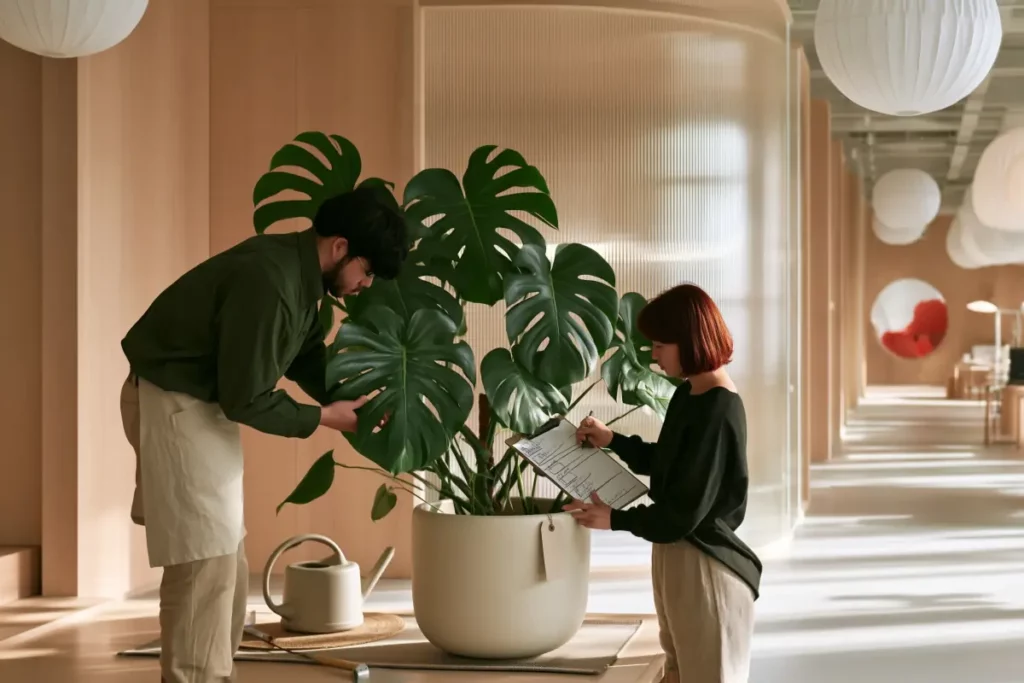
Give the planters a family resemblance
“Minimal and refined” leaves considerable room for interpretation. Translate it into decisions: an approved pot colour and finish, a restrained selection within each sightline, a clear entrance route and access to the inner container for care.
Describe proportion just as clearly. Record overall height including the pot, the widest part of the canopy and the base footprint. Distinguish the space occupied on arrival from the room allowed for growth. A single pot diameter cannot describe the whole arrangement.
A planter sample can be approved centrally, while floor protection, handling restrictions and drainage arrangements are checked locally. A matching finish does not make every accessory suitable for every floor.
Read each room before specifying its plants
- Actual light: Record windows, obstructions and ordinary blind use rather than judging brightness from an interior photograph.
- Air conditioning and entrances: Identify direct airflow, frequently opened doors and conditions outside working hours.
- How the area is used: Include reception duties, queues, meeting seats, trolleys and cleaning routes.
- Care arrangements: Name the person checking plants, access hours, water source and drainage arrangements.
Iowa State University’s guidance on environmental problems identifies unsuitable light and growing conditions as causes of houseplant difficulties. For several offices, the practical implication is to reassess a plant in its new position, even if the same species has worked well elsewhere.
A specification sheet for several sites
Complete this planning sheet for each position, keeping one current version available to the team.
| Item | Shared across the organisation | Completed for each site | Approved by |
|---|---|---|---|
| Planter colour, finish and form | Approved sample or reference | Suitable size and floor protection | ____ |
| Plant silhouette and overall proportion | Leaf-form direction and visual density | Species, total height and canopy spread | ____ |
| Light and environment | A consistent recording method | Blinds, obstructions, airflow and hours | ____ |
| Circulation and practical use | Clear routes and care access | Doors, seats, trolleys and cleaning routes | ____ |
| Care and replacement | Responsibilities and request process | Access times, contact and agreed scope | ____ |
| Exceptions and version date | Authority to approve a departure | Reason, photograph and confirmation date | ____ |
When the species changes, keep the design intention
If the intended species does not suit a position, ask what it was meant to do: provide height, form a fuller background or keep reception sightlines open at seated level. Compare alternatives against that role and the growing conditions, rather than asking only for something of roughly the same size.
A shared brief might allow different leaf forms in the same planter finish while retaining a comparable relationship with the furniture. This is a planning method, not a claim that two species are interchangeable. A position without suitable light should not receive a plant merely to meet a quantity.
At delivery, check agreed dimensions, condition and planter specifications. Living plants vary; a reference photograph cannot reasonably prescribe the position of every leaf.
Keep the brief in step with the office
Moving desks, adding screens or changing blinds can alter a previously suitable position. Ask the local team to record changes and refer them to the nominated decision-maker, so a plant is not moved into different conditions each time someone prefers another arrangement.
When enquiring about Plantshop corporate plant rental, share the site sheets, planter direction and access requirements together. Supply, care, replacement and arrangements between addresses depend on the confirmed scope and quotation. Record the confirmed service terms for each site alongside the visual brief.
Three forms to carry the scheme
- Fiddle-Leaf Fig: Its broad leaves offer a clear starting point for a visual brief, subject to suitable light and room for the canopy.
- Madagascar Dragon Tree: Stems and narrow leaves introduce a lighter pattern. Check the actual spread and seated sightlines of the specimen.
- ZZ Plant: Compare it as an option for a different height within the scheme. Lower-light tolerance does not make a position without light suitable.

Hot

Fiddle-Leaf Fig
Fiddle-Leaf Fig — Large, violin-shaped leaves on an upright stem; it grows best in a steady, bright position.
- Light: Bright indirect light to gentle sun; keep the position stable.
- Watering: Water after the top 3–5 cm dries; reduce in winter or low light.
- Ships in its original nursery pot; decorative planters are available as an upgrade.
Keep away from pets and children that chew leaves, and wash your hands after contact with the sap.
Hong Kong care guide: Fiddle-Leaf Fig (light, watering & common issues)
Before & after purchase · Plantshop Care Encyclopedia
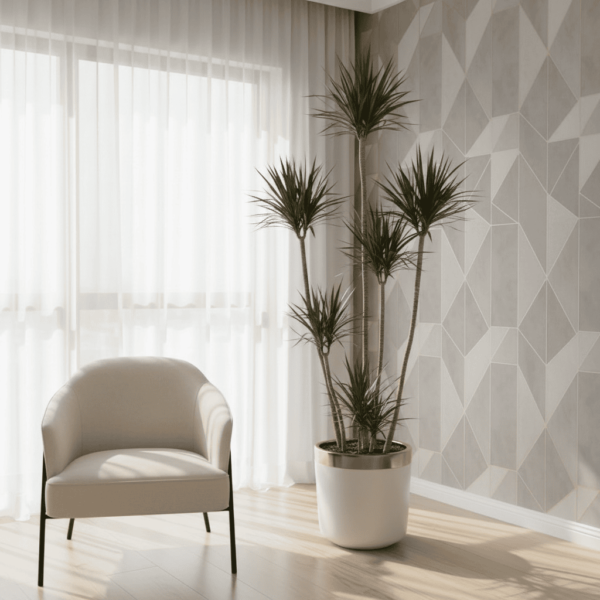

Madagascar Dragon Tree
Madagascar Dragon Tree — Slender canes topped with narrow, deep green leaves edged in red.
- Ships in its original nursery pot; decorative planters are available as an upgrade.
Pet safety is not confirmed for this plant. Keep it out of reach of cats, dogs and children.
Hong Kong care guide: Madagascar Dragon Tree (light, watering & common issues)
Before & after purchase · Plantshop Care Encyclopedia
Hot

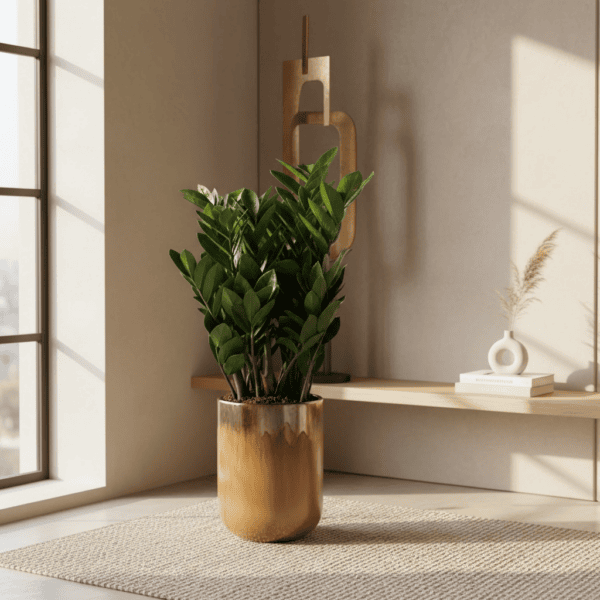
ZZ Plant
ZZ Plant — Glossy, deep green leaflets on upright stems; it copes with lower light and infrequent watering.
- Light: Bright indirect light to sun, introduced gradually.
- Watering: Water thoroughly only after most of the mix dries; never leave standing in water.
- Ships in its original nursery pot; decorative planters are available as an upgrade.
Keep away from pets and children that chew leaves, and wash your hands after contact with the sap.
Hong Kong care guide: ZZ Plant (light, watering & common issues)
Before & after purchase · Plantshop Care Encyclopedia