


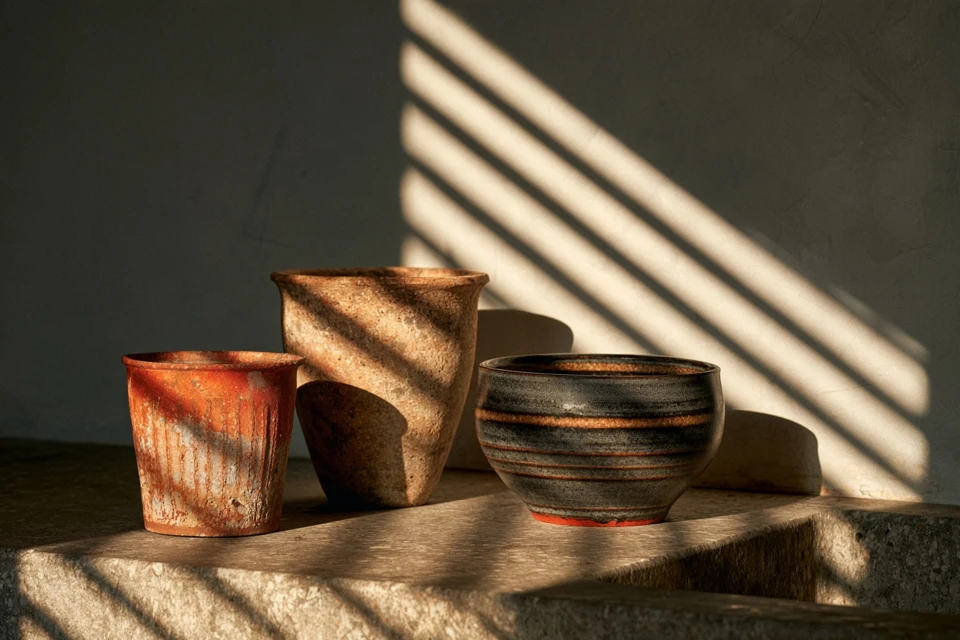

Inspect the pot while it is still empty
A favourite ceramic pot emerges from the cupboard and immediately suggests a new plant. Take a moment while it is still empty. A narrow neck, damaged base or awkward inner-pot fit is much easier to address before a rootball is involved.
In this article
Check the pot’s structure, previous use and drainage before cleaning it. Where disinfection is needed, use a method and product suitable for its material. A clean-looking surface does not establish that plant pathogens are absent, while an old water mark does not necessarily make a sound pot unusable.

The previous contents matter
Start with what you know about its last occupant. A container from a healthy plant has a different history from an unidentified second-hand pot or one associated with pests or root problems. Record that history where possible. A former paint or chemical container needs a different decision from an ordinary garden pot.
UMN Extension explains that soil and plant debris can carry pathogens between plants. Remove the visible residue before disinfection so the next step can work properly. Cleaning the pot is a sequence of tasks, not a quick spray followed by putting it away.
Inspect the parts that carry the load
- Base and walls: check cracks, brittleness, loose sections and sharp edges. Cosmetic repair does not establish structural strength under a filled pot.
- Drainage holes: check access and blockages. Do not drill an unfamiliar material before confirming a suitable method.
- Opening: can the inner pot be removed safely? A narrow neck over a wider body needs particular attention.
- Contact surfaces: inspect the saucer and pads. An intact-looking exterior is not a substitute for checking leaks.
For a cover pot, test the fit with an empty inner container first. Do not compress the rootball to make it fit. Direct planting and use as an outer cover are different jobs; decide which you intend before cleaning.
Clean in the right order
Remove old mix, roots, leaves and loose residue, collecting them rather than flushing them into a drain. Wash and brush the inside and outside in a way suitable for the material, including textured surfaces, the base and recesses. Keep garden residue away from food-preparation areas.
If disinfecting, use a product suitable for the material and purpose. Follow the label for concentration, contact time, rinsing and protection. Never mix cleaning chemicals or apply one bleach recipe indiscriminately to metal, timber, plastic and glazed ceramics. Dry as directed and store the cleaned pot separately from untreated containers.
Decide its next role
| Result | Possible role | Still check |
|---|---|---|
| Sound, draining and appropriately sized | A planting container matched to the plant | Medium, rootball fit and stability |
| Sound but without drainage holes | A cover for a removable draining inner pot | Runoff access and leaks |
| Opening too narrow for removal | Do not insert a new plant yet | Whether a non-growing use is appropriate |
| Cracked, brittle or sharp-edged | Stop using it to support a plant | Safe handling and an accepting disposal channel |
| Unidentified chemical contamination | Keep out of use | Whether professional cleaning or disposal is appropriate |
Reuse can mean choosing a different role
Quick questions
Can it go in a dishwasher?
Do not assume either the pot or appliance is suitable. Follow their instructions and do not wash garden containers with tableware.
Does a remaining white mark mean disinfection failed?
Visible deposits and pathogens are different matters; disappearing stains do not prove disinfection either.
What if I love the pot but the size is wrong?
Keep it for another suitable use or wait for a genuine match. Using up a container is not a reason to move a healthy plant into an oversized or inaccessible pot.
Compare plants after checking the pot
Match a plant to the old pot’s actual dimensions and available pot options. These three forms are starting points for comparison, not a promise that they fit your container.
- Fiddle-Leaf Fig: Its substantial canopy makes overall stability and removal space important alongside pot diameter.
- Burgundy Rubber Plant: Dark foliage can complement a pale reused pot, but colour matching does not replace fit and drainage checks.
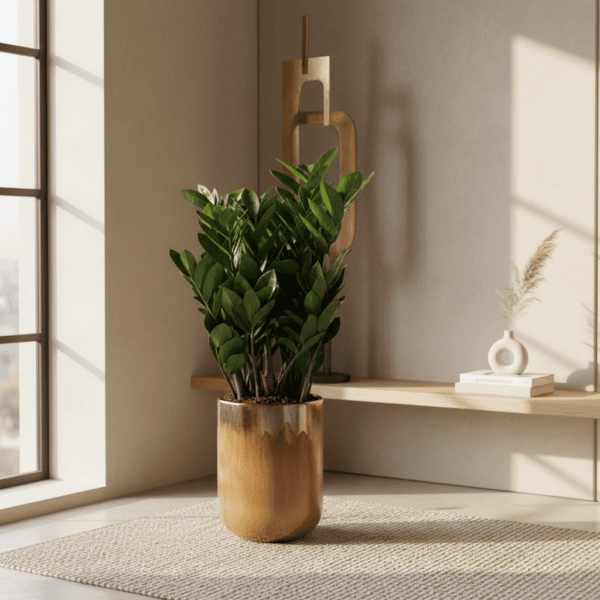
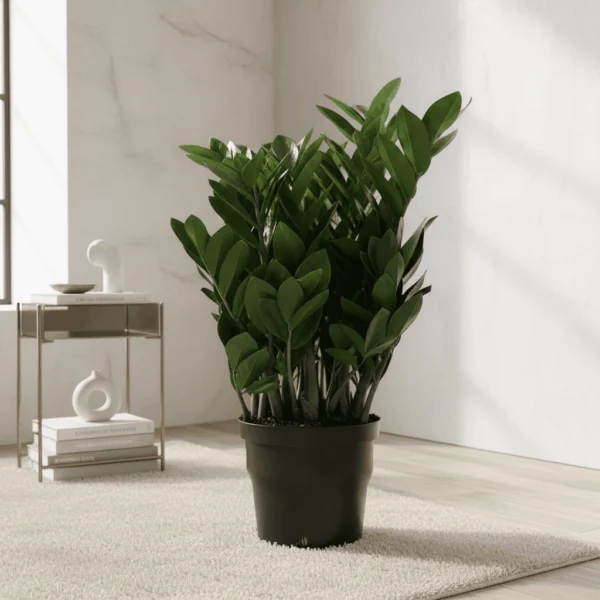
- ZZ Plant: Its upright leaf clusters offer a composed outline, but the rootball must still fit; a tidy silhouette is not a reason to force it through a narrow opening.

Featured

Fiddle-Leaf Fig
Fiddle-Leaf Fig — Large, violin-shaped leaves on an upright stem; it grows best in a steady, bright position.
- Light: Bright indirect light to gentle sun; keep the position stable.
- Watering: Water after the top 3–5 cm dries; reduce in winter or low light.
Hong Kong care guide: Fiddle-Leaf Fig (light, watering & common issues)
Before & after purchase · Plantshop Care Encyclopedia
Featured

Burgundy Rubber Plant
Burgundy Rubber Plant — glossy dark foliage and a distinct branching form for your living room or workspace. Choose a position with bright, indirect light.
Hong Kong care guide: Burgundy Rubber Plant (light, watering & common issues)
Before & after purchase · Plantshop Care Encyclopedia
Featured
ZZ Plant
ZZ Plant — Glossy, deep green leaflets on upright stems; it copes with lower light and infrequent watering.
- Light: Bright indirect light to sun, introduced gradually.
- Watering: Water thoroughly only after most of the mix dries; never leave standing in water.
Hong Kong care guide: ZZ Plant (light, watering & common issues)
Before & after purchase · Plantshop Care Encyclopedia
