



Give the unfolding leaf some space
A new leaf beside the curtains can become the most watched detail in the room. Is it opening? Was it more tightly rolled yesterday? Before touching it again, check whether the fabric or a neighbouring object is pressing against the tender growth.
In this article
Do not pull, peel or cut a leaf open simply because it remains rolled. Look for natural progress, nearby pressure and accompanying changes such as soft decay or visible pests. Several days without opening is not enough on its own to justify intervention. Move an obstruction away and take a baseline photograph; that is easier to compare than repeated handling.

Different plants reveal growth differently
A broad Monstera leaf, new growth at a Fiddle-Leaf Fig’s tip and a Rubber Plant leaf emerging from its protective covering do not look alike. Establish whether you are seeing the leaf, surrounding protective tissue or an older damaged part before copying a video about another species.
RHS associates some creasing or deformation with interrupted development and changes in temperature or watering. Note recent environmental changes alongside the developing leaf. A paler or softer new leaf also needs to be seen in the context of its subsequent development rather than immediately treated as a feeding deficiency.
Check around the leaf before touching it
- Check contact: are curtains, a support tie, wall or neighbouring leaf pressing on the growth? Move the obstruction, not the new leaf.
- Check the whole plant: is one leaf slow, or are other leaves drooping, stems soft or the root zone producing an odour?
- Check recent changes: a move towards glass, stronger air conditioning, repotting or irregular moisture may be relevant.
- Inspect visible surfaces for pests, sticky material or soft decay without forcing wrapped tissue apart.
Where contact is the only concern, remove the obstruction and record what follows. With a root-zone problem or continuing decline, the question has moved beyond how to open a leaf to why the whole plant is under stress.
Follow development without handling it
| View | Baseline note | Compare later |
|---|---|---|
| Whole new leaf | Roll direction, visible length and position | Natural progress rather than a daily completion target |
| Surroundings | Fabric, ties or hard surfaces in contact | Whether pressure remains after removing the obstruction |
| Older leaves and stem | Existing marks and posture | Any newly shared changes |
| Pot and environment | Recent care and moves | Whether several factors changed together |
Use comparable lighting and angles without beauty filters or colour enhancement. Do not flatten the leaf for the photograph; an apparently open leaf may simply be one you have repositioned.
Avoid forcing a visible result
Leave the leaf uncovered and visible. A wet tissue wrapped around it, hot air, a pin or washing-up liquid can add damage or hide changes while the original problem remains. If the environment needs adjusting, identify the particular issue before changing several conditions together.
Keep light and watering suitable for the species, avoiding another swing between extremes. Slow development does not call for stronger fertiliser or one humidity target for every plant. If the stem base softens, an odour develops or pests are visible, photograph the changes and arrange a closer assessment with the supplier.
An imperfect leaf is not a failed plant
Quick questions
Should a creased leaf be removed once it opens?
Appearance alone is not a reason to cut. Distinguish stable damage from continuing change and retain useful healthy tissue.
How long should I wait?
Species, conditions and growth stages do not share one deadline. Progress and accompanying warning signs matter more than a fixed number of days.
What if every new leaf struggles?
Review several records together with the light, medium and care history. Ask an experienced grower to look for a recurring factor rather than treating each leaf as an isolated emergency.
Choose a plant with room for new leaves
If watching new leaves is part of the pleasure, choose a plant with room to develop. New growth is not a weekly purchase promise.
- Monstera Deliciosa: Its broad leaves make unfolding easy to observe, provided the petiole and blade are not trapped behind a curtain.
- Fiddle-Leaf Fig: Follow new and older growth at the tips with consistent photographs rather than repeatedly handling tender leaves.
- Burgundy Rubber Plant: The contrast between developing and mature broad leaves helps you learn to distinguish unfinished growth from continuing deterioration.
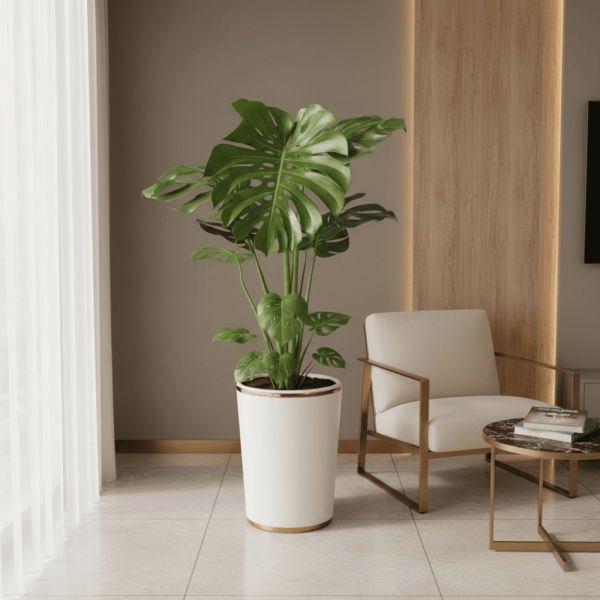
Featured

Monstera Deliciosa
Monstera Deliciosa — A large, 130–150cm indoor plant with sculptural split leaves that brings confident tropical form to living rooms, offices and entrances.
- Best in bright, indirect light; avoid harsh afternoon sun
- Let the compost become almost dry, then water thoroughly and allow it to drain
Hong Kong care guide: Monstera Deliciosa (light, watering & common issues)
Before & after purchase · Plantshop Care Encyclopedia

Featured

Fiddle-Leaf Fig
Fiddle-Leaf Fig — Large, violin-shaped leaves on an upright stem; it grows best in a steady, bright position.
- Light: Bright indirect light to gentle sun; keep the position stable.
- Watering: Water after the top 3–5 cm dries; reduce in winter or low light.
Hong Kong care guide: Fiddle-Leaf Fig (light, watering & common issues)
Before & after purchase · Plantshop Care Encyclopedia
Featured

Burgundy Rubber Plant
Burgundy Rubber Plant — glossy dark foliage and a distinct branching form for your living room or workspace. Choose a position with bright, indirect light.
Hong Kong care guide: Burgundy Rubber Plant (light, watering & common issues)
Before & after purchase · Plantshop Care Encyclopedia
