


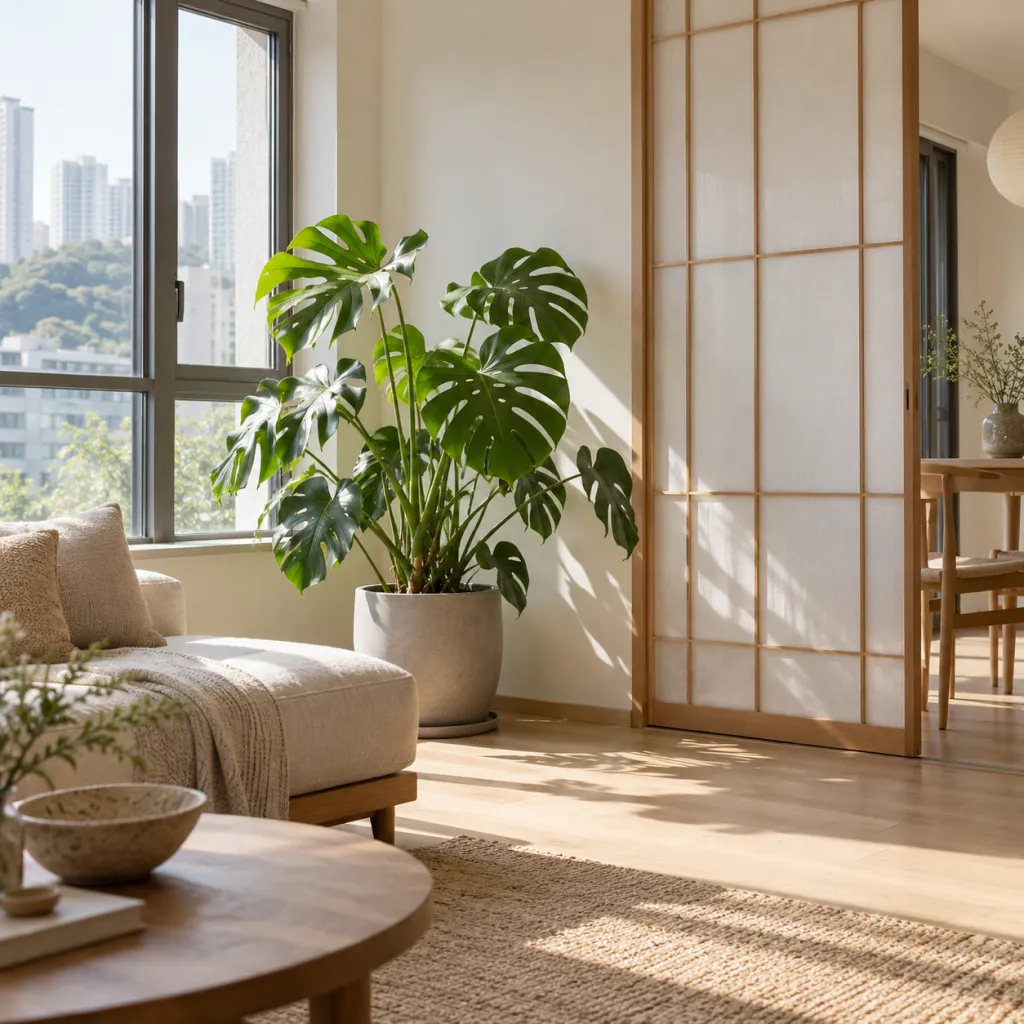

AI-generated styling illustration, not a photograph of available stock. Plant form, scale, pots and furnishings are illustrative; check the product page for what is supplied.
A low timber cabinet, a linen chair, a table with very little on it: the room is already doing something rather lovely. A plant need not become another collection to arrange. One generous leaf, or a modest sequence of upright stems, can be enough. The difficult part is deciding where that living shape can actually stay.
In a Hong Kong flat, the answer may depend on the layers between the room and the view. A sheer curtain makes a neighbour’s window less intrusive. A timber screen gives the sitting area some privacy. Both may be essential to the way you live. The plant has to work with that everyday arrangement, not with the curtains temporarily swept aside for a photograph.
The useful starting point: choose a position with suitable light, then decide whether it needs the spreading outline of a Monstera or the more contained rhythm of a ZZ plant. An unlit space behind a screen is not an opportunity that needs filling.
Let the timber do some of the work
Begin with the wood already in the room. Pale oak, warm ash or a darker cabinet each offers enough character without an elaborate planter. Our preference here is for one quiet pot surface and a clear view of the foliage. This is an editorial approach, rather than a rule about what qualifies as Japandi.
A dark pot can look beautiful against light timber, but test it before committing. Wrap an empty box in a dark cloth and place it where the planter might go. If the eye stops at the floor instead of travelling towards the leaves, try a softer colour. Use the box only as a visual prop; do not wrap a working plant pot and conceal its drainage.
There is no need to replace all the cushions or find a matching tray. Removing an unrelated ornament may do more for this arrangement than adding a carefully coordinated accessory.
Make the screen part of the planting plan
Plants need light, and the available position should guide the choice; see University of Minnesota Extension’s lighting guidance. A room’s style cannot establish its growing conditions. Nor can a phone photograph, which may make a shaded corner appear surprisingly bright.
- Keep the curtains as you normally use them. Record the candidate positions in the morning, around midday and later in the afternoon. Note direct sun and periods of obstruction.
- Compare the front and side of the screen. Do not assume its back is equally useful because the timber has gaps.
- Look towards the window from leaf height. A low cabinet or objects on the sill may interrupt the route between foliage and daylight.
- Perform the ordinary movements. Draw the curtains, open the window, sit down and get up. The leaves should not need to be pushed aside.
- Rehearse the care routine. You should be able to inspect the potting mix and remove runoff without dismantling the sitting area.
This is a comparison exercise, not a measurement of plant-usable light. If the position remains uncertain, describe the window, obstructions and daily curtain use when asking for help.
Two shapes, two different jobs
| What the room needs | Consider | Check before buying |
|---|---|---|
| A broad living shape beside low furniture | Monstera | The full leaf spread, support and curtain movement |
| A more contained, repeating outline | ZZ plant | Usable light and a watering routine based on the mix |
| Something behind a persistently dark screen | Leave the space open for now | Whether a different position is possible |
Monstera deliciosa offers the stronger visual gesture. Give it a relatively clear background rather than asking its leaf pattern to compete with a busy shelf. It is a climbing plant for indirect light; the RHS guide explains its support needs. Ask about the actual spread and support of the available specimen. If every leaf would need tying in to preserve the passage, choose another position.
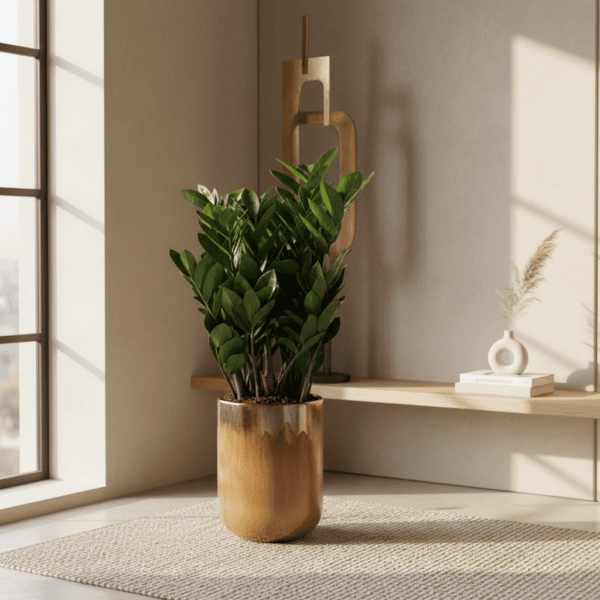
The ZZ Plant, Zamioculcas zamiifolia, is the quieter option in this particular scheme. Its repeated leaflets can sit comfortably beside a cabinet without providing the same broad canopy. Let its mix dry between waterings, as described by NC State Extension. Choose it because that outline and care pattern suit you, rather than because “easy care” sounds like permission to ignore the position.
A small arrangement to try at home
Imagine a linen armchair by the window and a low oak cabinet along the inner wall. Remove the basket and two small ornaments beside the chair. Test one plant position at the brighter end, using a paper footprint for the pot and separate markers for the outer leaves. Base both on the specimen you are considering, not on an atmospheric illustration.
Now sit in the chair. Can you still see a distinct plant shape? Can your arm rest naturally? Can someone close the curtain without touching a leaf? If all three work, the arrangement has earned its place. Only then choose the outer pot and confirm how the nursery pot will fit, drain and be lifted out.
The common mistakes are filling both sides for symmetry, choosing a broad plant from its pot diameter alone, and covering every practical detail with decorative moss. A considered room leaves room for maintenance too.
Questions before you choose
Must a Japandi plant have small leaves?
No. Here, the sense of restraint comes from the number of objects and the space around them. One large-leaved plant can be just as convincing as a finely textured one.
Does a sheer curtain make the position suitable?
Not by itself. Consider the daylight that reaches the window, neighbouring buildings and the curtain in its normal position. A fabric description is not a light assessment.
What height should the first plant be?
Compare the available specimen with the furniture and the usable leaf space. Confirm whether the quoted height includes the pot. Bring those measurements and a window photograph to the selection, then check current options on the product page.
Horticultural facts and product links checked on 28 October 2026. Styling suggestions are editorial guidance; current options and availability appear on the product pages.
Products mentioned
Featured

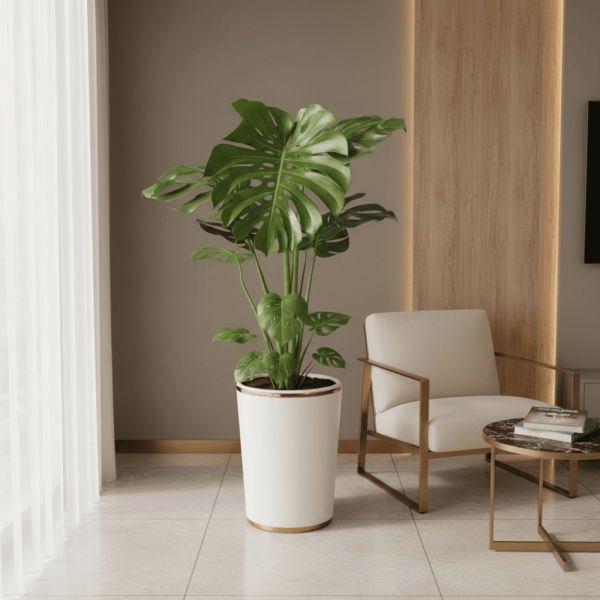
Monstera Deliciosa
Monstera Deliciosa — A large, 130–150cm indoor plant with sculptural split leaves that brings confident tropical form to living rooms, offices and entrances.
- Best in bright, indirect light; avoid harsh afternoon sun
- Let the compost become almost dry, then water thoroughly and allow it to drain
Hong Kong care guide: Monstera Deliciosa (light, watering & common issues)
Before & after purchase · Plantshop Care Encyclopedia
Featured
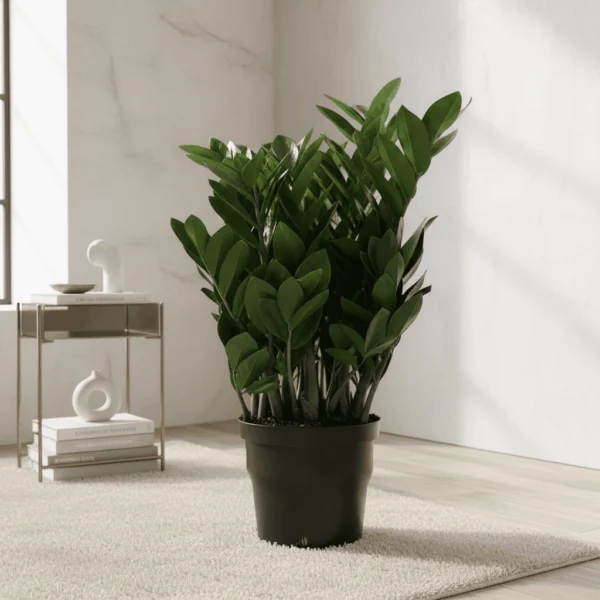
ZZ Plant
ZZ Plant — Glossy, deep green leaflets on upright stems; it copes with lower light and infrequent watering.
- Light: Bright indirect light to sun, introduced gradually.
- Watering: Water thoroughly only after most of the mix dries; never leave standing in water.
Hong Kong care guide: ZZ Plant (light, watering & common issues)
Before & after purchase · Plantshop Care Encyclopedia
