



What happens when the office is empty?
The office looks bright when you arrive: a sensor has already switched on the lights. The person visiting to maintain the plants sees the same thing. Between those visits, however, a quiet corner may receive only short bursts of artificial light.
In this article
Check the light reaching the leaves and its duration across the full routine, including lunch breaks, empty periods, weekends and master-switch shutdowns. Neither a lamp coming on as you approach nor a count of operating hours proves suitable light for the plant. Establish what has changed before attributing every yellow leaf to the new sensors.
Identify which source does what
Mark windows, blinds, plants and luminaires on the plan. A window-side pot may still receive daylight, unless a tall cabinet blocks its leaves. An interior position cannot borrow the window-side assessment. Examine the foliage at each actual location.
Ordinary office lighting serves people’s work and may not supply suitable light at the plant. UMN guidance explains the importance of both intensity and duration. If supplemental lighting is needed, assess a suitable source and distance before setting its schedule, rather than assuming longer operation of the existing lamp is sufficient.
Build a record that includes the quiet periods
| Situation | How to record it | Question to answer |
|---|---|---|
| Ordinary working day | Log on/off periods, blinds and obstructions | Is light at the foliage frequently interrupted? |
| Lunch or a quiet zone | Use facilities information and observation | When does it switch off without movement? |
| Weekend or holiday | Confirm the actual facilities routine | Is power off throughout, and is daylight available? |
| Cleaning or security visits | Count only the real operating period | Are brief bursts being mistaken for a full day? |
| Master switch and timer | Have authorised staff check settings | Does the schedule survive and resume after an outage? |
Read hours alongside the light source
Eight hours beneath a distant ceiling lamp in a dark corner is not the same leaf-level condition as eight hours under a suitable grow light at an appropriate distance. A phone reading can support relative observations with the same device and method, but an uncalibrated number is not a precise plant-light measurement.
Bring together species, position, daylight and luminaire information for someone able to assess plant lighting, with suitable measurement where needed. Avoid a single company-wide number of hours. Continuous lighting is not a cure for an unsuitable source; plants also need an appropriate light–dark cycle.
Give the revised schedule an owner
Where the source is suitable but the sensor cuts its operating time short, facilities staff can assess a separate schedule or another workable arrangement. If the position or light source is unsuitable, address that first. Covering a sensor, altering wiring or bypassing a master switch is not a job for the plant carer.
Keep the approved settings, responsible person and post-outage check together. Then check the lamp itself: a timer display does not prove that the light comes on as intended. Any supplemental arrangement needs to fit the premises’ electrical, operating and energy-management requirements.
Watch what changes after the adjustment
Keep dated photographs from before the adjustment, then observe foliage, growth and drying of the mix under comparable conditions. Damaged leaves may not return to their former appearance, and new growth has no guaranteed deadline. If decline continues, investigate moisture, roots, temperature and other causes.
Quick questions
Can a shade-tolerant species ignore the lighting plan?
No. Tolerance of lower light does not mean suitability for prolonged darkness.
Will a few minutes during a daily inspection do?
That does not establish the required light exposure. Assess sources, intensity and duration across the day, then relocate or provide suitable supplemental light if needed.
Must the motion sensors go?
Not necessarily. Suitable daylight may already provide the plant’s main light source. Complete the position and schedule assessment before deciding whether a change is needed.
Assess light where the leaves will be
These forms offer different options for an assessed position. All still require a check of light at the foliage; a shade-tolerance label is not a lighting plan.
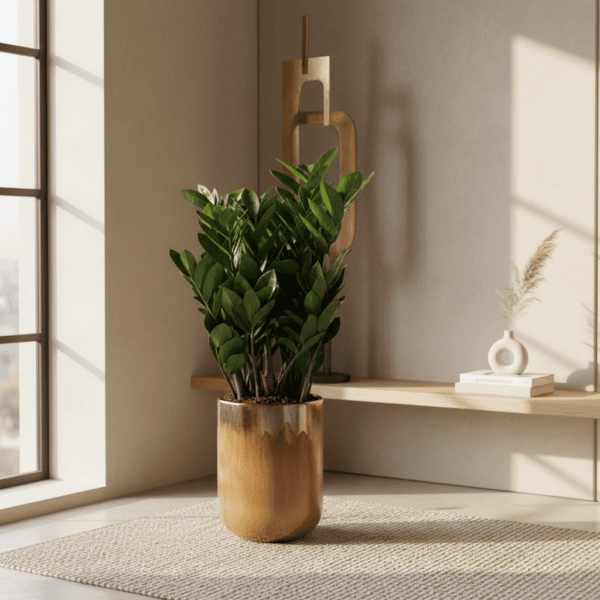
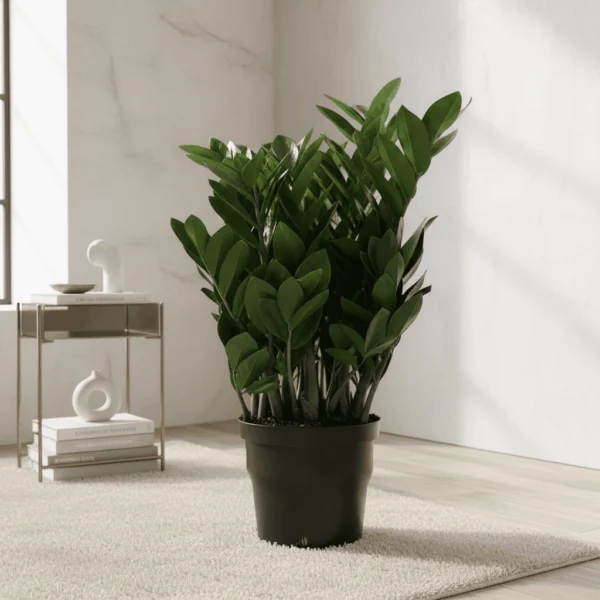
- ZZ Plant: A candidate for a lower-light position once prolonged darkness is excluded, with watering guided by the mix.
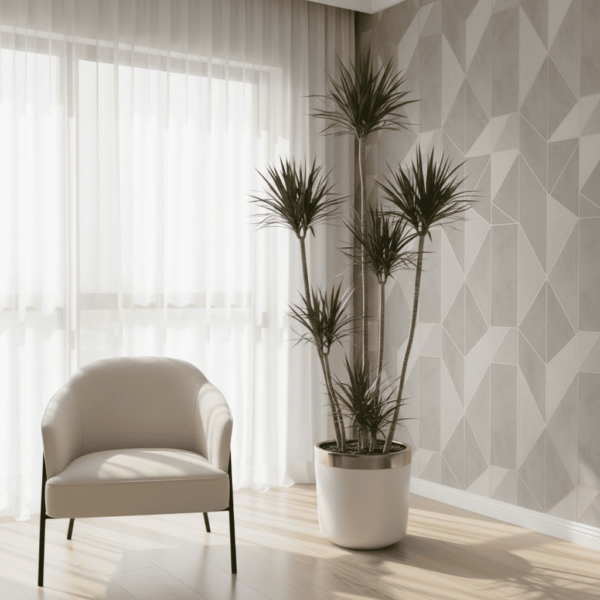
- Madagascar Dragon Tree: Its crowns sit at stem height, so assess light at the leaves rather than at the desk surface.
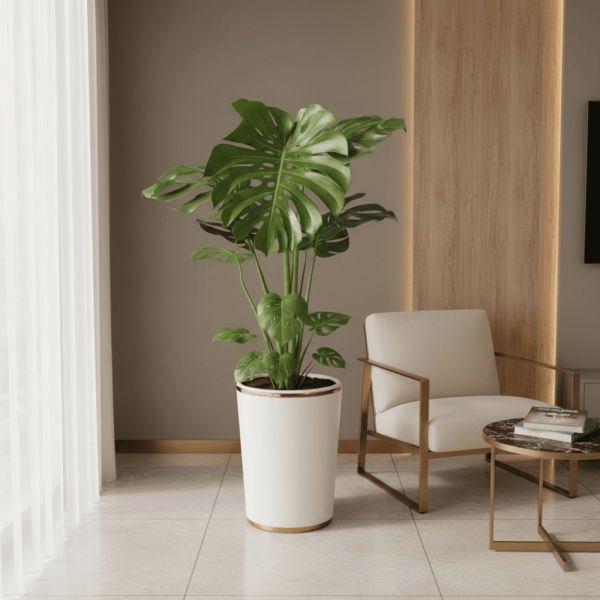
- Monstera Deliciosa: Include the full spreading canopy in the window-and-light plan, accounting for obstructions and leaf direction.
Featured
ZZ Plant
ZZ Plant — Glossy, deep green leaflets on upright stems; it copes with lower light and infrequent watering.
- Light: Bright indirect light to sun, introduced gradually.
- Watering: Water thoroughly only after most of the mix dries; never leave standing in water.
Hong Kong care guide: ZZ Plant (light, watering & common issues)
Before & after purchase · Plantshop Care Encyclopedia

Madagascar Dragon Tree
Madagascar Dragon Tree — Slender canes topped with narrow, deep green leaves edged in red.
Hong Kong care guide: Madagascar Dragon Tree (light, watering & common issues)
Before & after purchase · Plantshop Care Encyclopedia
Featured

Monstera Deliciosa
Monstera Deliciosa — A large, 130–150cm indoor plant with sculptural split leaves that brings confident tropical form to living rooms, offices and entrances.
- Best in bright, indirect light; avoid harsh afternoon sun
- Let the compost become almost dry, then water thoroughly and allow it to drain
Hong Kong care guide: Monstera Deliciosa (light, watering & common issues)
Before & after purchase · Plantshop Care Encyclopedia
