


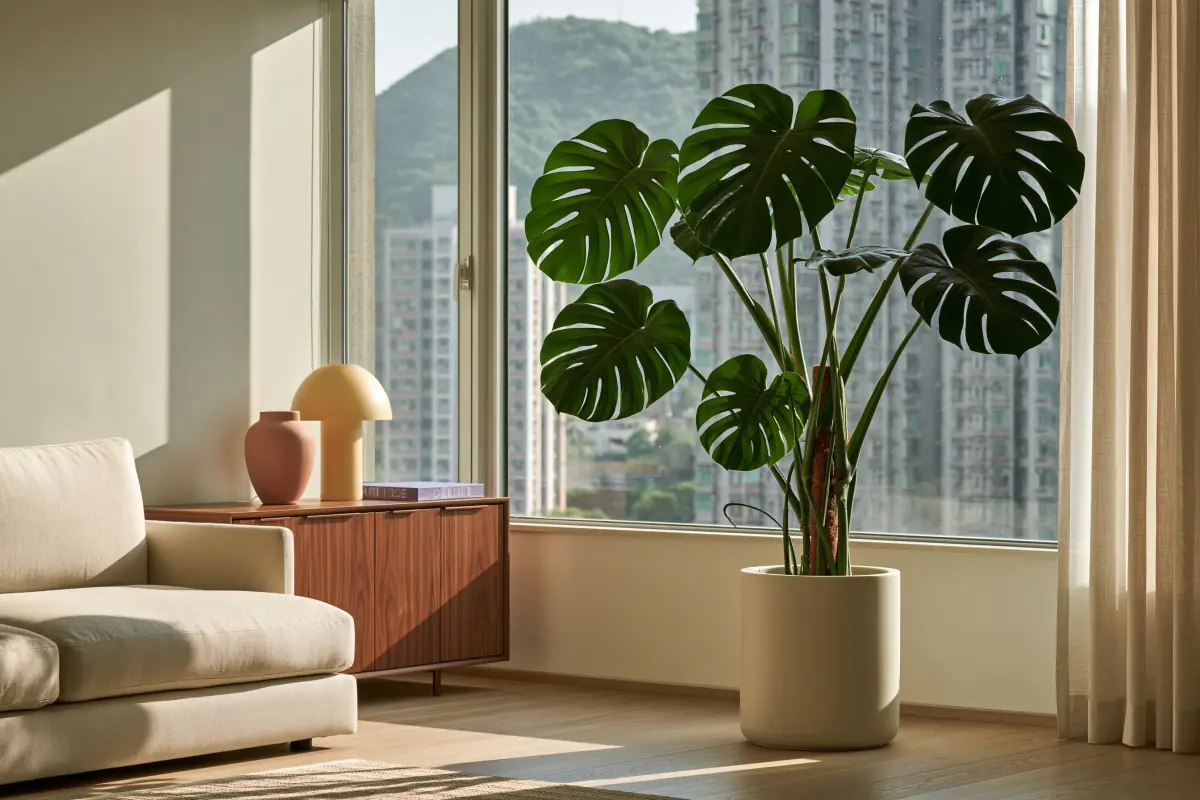

The first-month goal is stable conditions and useful observations
Start by inspecting, recording and choosing a suitable position, then care for the plant according to its actual moisture needs. There is no need to combine repotting, fertiliser, pesticide and heavy watering on the first day to help it settle. Multiple changes make later symptoms harder to interpret.
In this article
- The first-month goal is stable conditions and useful observations
- Arrival day: establish a reference point
- Copy this first-month observation plan
- Observe, investigate or act promptly?
- Repot, feed or prune for a reason
- A short six-part log is enough
- Common questions
- What to record for three newly arrived houseplants
The 30-day structure below is an observation framework, not a promise that every plant will settle or produce a leaf within a month. Species, previous conditions, transport and the new home all matter. Check the plant’s requirements in the care encyclopedia, then use the record to understand its response.

Arrival day: establish a reference point
- Remove transport packaging carefully. Avoid pulling leaf stalks and do not leave the plant sealed in its wrapping.
- Photograph the whole plant and relevant details. Record existing marks, breakages, the container and visible medium or drainage areas. Do not dismantle the pot simply to photograph roots.
- Check inner and outer pots. Establish how water drains and whether any is already trapped. Moist medium is not a reason to water again just because the plant is new.
- Use a position suited to the species. Avoid sudden intense sun, direct air-conditioning outlets and obstructed routes. Ask about previous light conditions rather than inferring them from a product photograph.
- Observe separately from existing plants. Check leaf undersides, stem joints and the medium surface. Avoid shared saucers and foliage touching neighbouring plants initially.
Penn State’s pest-prevention guidance supports separating newcomers and inspecting them repeatedly. Separation reduces opportunities for spread; one inspection without visible insects does not rule out pests.
Copy this first-month observation plan
| Stage | Focus | Useful record |
|---|---|---|
| Day 0: arrival | Whole plant, existing marks, container, trapped water and position | Reference photos, arrival moisture and position ID |
| Days 1–3 | Post-unpacking posture, obvious damage, light and leaks | Whether condition worsens or supplier contact is needed |
| Days 4–7 | How the medium dries, leaf undersides and stem joints | Watering decision, reason and drainage |
| Days 8–14 | Whether symptoms spread and conditions stay consistent | Any change made, its date and subsequent response |
| Days 15–30 | Repeated pest checks and the overall trend | A continuing care record and any reassessment needed |
These are inspection stages, not watering dates. Record ‘not watered’ when watering is unnecessary. Clear deterioration should be addressed when noticed, not held until the next stage.
Observe, investigate or act promptly?
| Observation | Check first | Next step |
|---|---|---|
| One old mark, unchanged, with otherwise stable condition | Whether it appears in arrival photographs | Record and compare without multiple interventions |
| Continuing yellowing or drooping | Moisture, light, moves and collected water | Investigate; do not automatically add water to wet medium |
| Possible insects, webbing or sticky deposits | Close-ups of several areas and nearby plants | Keep separate and seek identification; do not mix treatments casually |
| Soft stem base, unusual odour or rapid collapse | Moisture, stability and visible root-zone concerns | Seek prompt supplier or horticultural advice |
| Cracked pot, leakage or instability | Risk to people and flooring | Address safely without waiting for acclimatisation |
This is triage, not a diagnosis from symptoms alone. The RHS guide to an unwell houseplant also starts with examining its environment and care.
Repot, feed or prune for a reason
Repotting: not every new plant needs an immediate repot, and not every problem should wait a month. Broken containers, obvious drainage failure or root-zone concerns warrant prompt advice and an appropriate response. For a stable plant, first understand the existing medium and care.
Feeding: fertiliser is not a universal remedy for poor light, oxygen-starved roots or transport damage. Establish whether the plant is actively growing, whether fertiliser is already present and what the species needs. Pruning: photograph concerns first; do not remove every marked leaf simply to make the problem disappear visually.
If relocation is needed, record when and why, and avoid changing several unnecessary variables at once. This creates useful evidence for a later advice request.
A short six-part log is enough
Use one note format: date and position; medium condition; watering decision and reason; drainage completed; new symptoms with photographs; next action. Where more than one person provides care, share the record to prevent duplicate watering.
For advice, provide whole-plant and detail photographs, the container arrangement and recent changes. A single yellow leaf gives little context, and ‘perhaps watered a few days ago’ should remain an uncertainty. Contact the supplier promptly about arrival condition and consult the current after-sales and returns information; this article does not create a separate guarantee period.
Common questions
Does no new leaf in 30 days mean poor care?
Not on its own. Consider overall stability, season and growth habit, then check light and root-zone conditions.
Is leaf drop always acclimatisation?
No. Adjustment is one possibility, but continuing or rapid decline calls for investigation of moisture, light, damage and pests.
Will daily misting help it settle?
Misting does not provide the root ball with appropriate moisture and should not become a universal routine. Address the actual environment and species’ needs first.
When adding plants later, use what you learnt about light, space and your care routine to compare easy-care plants that suit daily life in your home.
What to record for three newly arrived houseplants
Use the first 30 days to establish a care record for your home. Apply the observation sheet to these plants, while judging watering from each pot’s growing medium and surroundings rather than giving every plant the same timetable.
- Monstera: Photograph a monstera’s new and older leaves, existing splits and overall orientation so that subsequent changes are easier to identify.
- Fiddle-Leaf Fig: For a fiddle-leaf fig, record leaf condition on arrival, normal blind positions and placement. When investigating a problem, adjust one factor at a time where practical.
- Burgundy Rubber Plant: For a burgundy rubber plant, photograph leaf surfaces, undersides and stems as a baseline, then record moisture checks and any leaf loss on the same sheet.
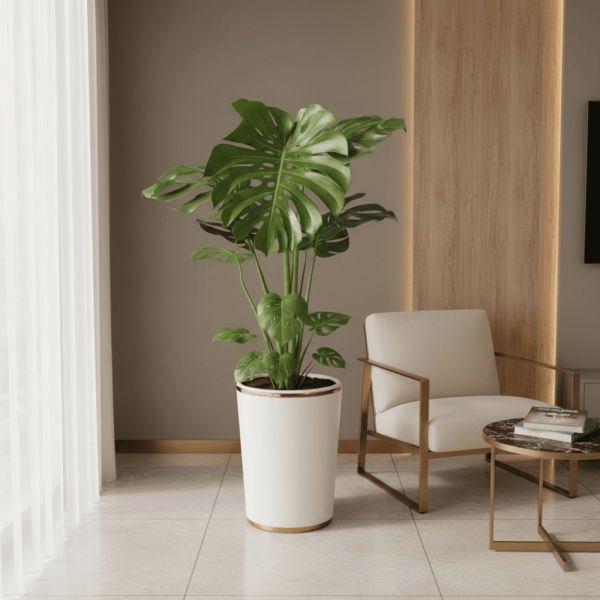
Featured

Monstera Deliciosa
Monstera Deliciosa — A large, 130–150cm indoor plant with sculptural split leaves that brings confident tropical form to living rooms, offices and entrances.
- Best in bright, indirect light; avoid harsh afternoon sun
- Let the compost become almost dry, then water thoroughly and allow it to drain
Hong Kong care guide: Monstera Deliciosa (light, watering & common issues)
Before & after purchase · Plantshop Care Encyclopedia

Featured

Fiddle-Leaf Fig
Fiddle-Leaf Fig — Large, violin-shaped leaves on an upright stem; it grows best in a steady, bright position.
- Light: Bright indirect light to gentle sun; keep the position stable.
- Watering: Water after the top 3–5 cm dries; reduce in winter or low light.
Hong Kong care guide: Fiddle-Leaf Fig (light, watering & common issues)
Before & after purchase · Plantshop Care Encyclopedia

Featured

Burgundy Rubber Plant
Burgundy Rubber Plant — glossy dark foliage and a distinct branching form for your living room or workspace. Choose a position with bright, indirect light.
Hong Kong care guide: Burgundy Rubber Plant (light, watering & common issues)
Before & after purchase · Plantshop Care Encyclopedia
