


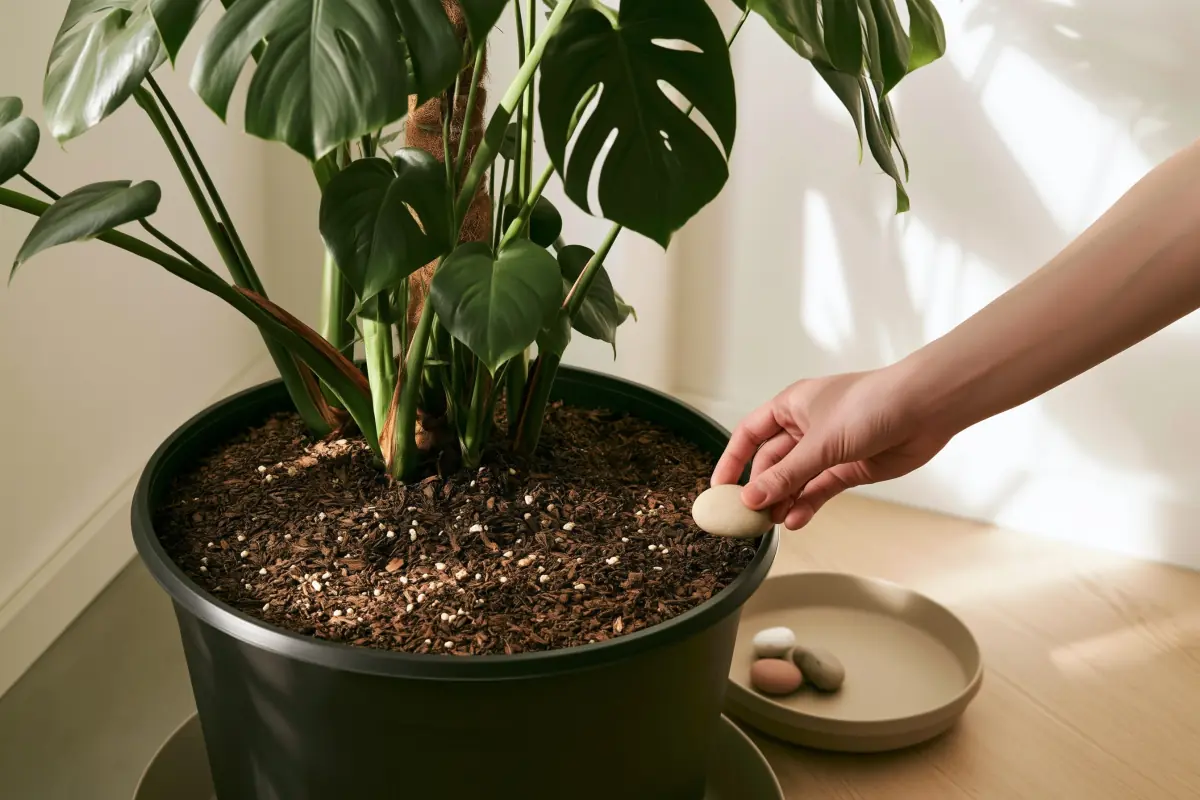

Drainage does not prove the whole root ball is wet
Fast drainage can be normal, or water may be bypassing much of the medium through gaps and channels. Some potting ingredients become difficult to wet again after drying severely. Speed of runoff alone cannot establish water repellency, root rot or a need to repot.
In this article
- Drainage does not prove the whole root ball is wet
- Four possibilities with different responses
- Start with checks that do not require unpotting
- Rewet only after confirming that the medium is dry
- Avoid improvised shortcuts
- Use the next watering to check whether it improved
- Common questions
- Apply the drainage check to the plants you grow
- Related care PDF
This guide concerns ordinary draining pots and potting media, not hydroponic or specialised self-watering systems. Start with current moisture, the path taken by water and the plant’s condition, rather than repeatedly pouring until the quantity feels sufficient.
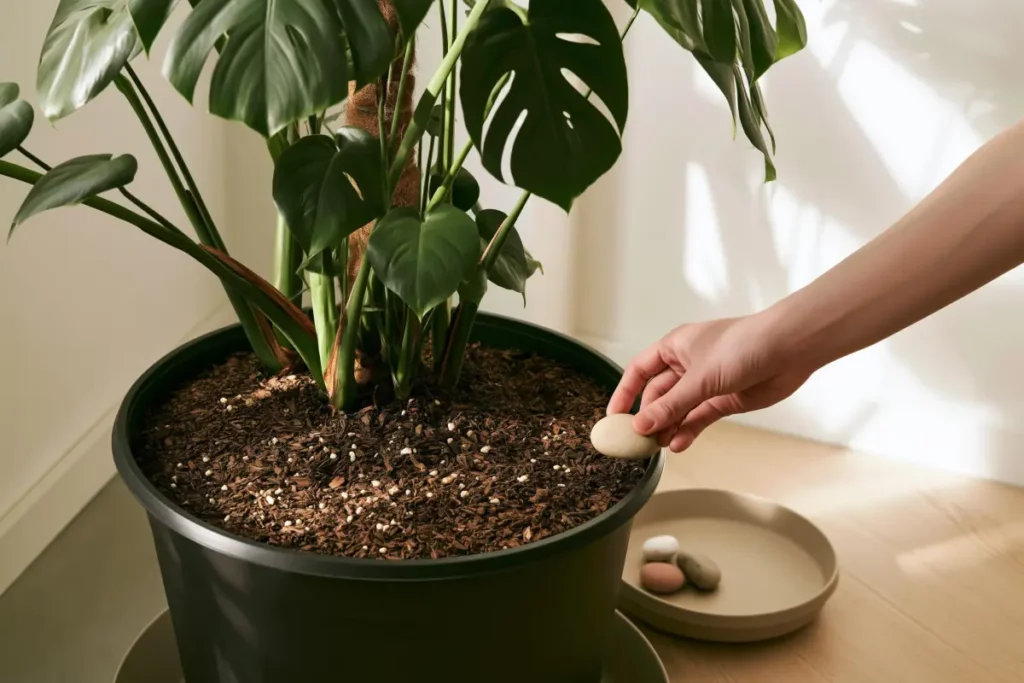
Four possibilities with different responses
| Possibility | Supporting observation | Insufficient evidence on its own |
|---|---|---|
| Normal drainage | Medium already contains moisture, or accessible areas become evenly moist | Runoff speed |
| Shrinkage and a gap at the wall | A visible gap with water travelling mainly around the edge | Surface colour alone |
| Dry medium is difficult to rewet | Water beads or runs off a dry surface while accessible inner areas remain dry | One pour interpreted as proof of a wholly repellent root ball |
| Medium or roots need reassessment | Persistent uneven wetting, substantial crowding or continuing decline | A single root visible at a drainage hole |
Iowa State’s houseplant guidance explains that severely dried medium can be hard to rewet, allowing water to run around it. This supports the distinction between runoff and wetting; it does not mean every species should dry completely before watering.
Start with checks that do not require unpotting
- Check the cover and saucer. Remove collected water safely. Drooping in already-wet medium is not a reason to assume thirst.
- Compare accessible areas. Where practical for the container and species, check gently below the surface near the edge and further in. Decorative stones do not indicate root-ball moisture.
- Look along the pot wall. Note obvious gaps, depressions or channels. Do not force a stick deep into the root ball or dig aggressively.
- Once watering is appropriate, observe one slow, even pass. Does water enter the medium or collect along one side? Seek help first if the arrangement is unstable or inaccessible.
Comparing a small pot’s wet and dry weight can provide another clue. Do not lift a large plant for this purpose. A probe or moisture meter also samples a location, not the entire root ball.
Rewet only after confirming that the medium is dry
Try slow, even watering in stages first. Give the first pass time to enter, then check several accessible areas. The aim is more even wetting, not reaching a fixed number of litres. If water repeatedly follows gaps while the centre stays dry, do not continue indefinitely.
For a manageable pot with open drainage holes and a confirmed dry root ball, ask whether brief bottom watering suits the plant and medium. Use a clean container, keeping water below the rim and stem base. Stay present, inspect progress, then remove and drain the pot when appropriately moist. Do not leave it overnight or use one soaking duration for every medium.
A large plant, closed container, suspected root problem or unfamiliar medium is unsuitable for improvised soaking. Iowa State’s explanation of potting ingredients describes differences in moisture retention and aeration, which is why the response must suit the actual medium.
Avoid improvised shortcuts
Do not add washing-up liquid, household cleaners or unidentified wetting agents. Household formulations are not designed for root-zone use. Avoid repeatedly puncturing the root ball with skewers or forcefully compacting the medium to close gaps. These can create damage without resolving the underlying condition.
Nor should one uneven watering trigger a move into a much larger pot. If the problem persists, record the medium, last repotting, watering method and plant response. Ask whether roots, medium or container need attention. Repotting is a targeted intervention, not the default answer to every drainage concern.
Use the next watering to check whether it improved
| Record | This time | Compare next time |
|---|---|---|
| Accessible moisture before watering | ____ | Whether dry and wet patches recur |
| Wall gaps and water path | ____ | Whether runoff still follows one route |
| Method and changes made | ____ | Compare documented changes only |
| Moisture in several areas afterwards | ____ | More even wetting, not just runoff |
| Cover-pot drainage and plant response | ____ | Any trapped water or continued decline |
Once stable, adjust inspection to the species. Preventing severe drying should not become a rule that every plant must remain saturated.
Common questions
Does immediate runoff mean the mix is too open?
Not necessarily. Drainage characteristics, existing moisture, wall gaps and pouring speed can all contribute.
Does drooping mean the pot should be soaked?
No. Check moisture and root-zone condition first. Soaking already-wet medium can make matters worse.
How can I prove the entire root ball is wet?
Without unpotting, it is usually difficult to prove moisture in every part. Use several observations and records, and seek further assessment if uneven areas persist.
Read the species care guidance alongside the actual pot and medium. The purpose of watering is to meet root needs, not simply to produce runoff.
Apply the drainage check to the plants you grow
If water runs through quickly, investigate the growing medium and root zone before considering a replacement plant. These products help identify the type you are caring for, so you can apply the checks to each pot.
- Monstera: For a monstera, check whether water has actually moistened the root ball, rather than judging only by drainage from the base.
- Areca Palm: For an areca palm, record surface and deeper moisture separately. A dry surface layer does not establish that the whole root ball needs rewetting.
- ZZ Plant: For a ZZ plant, establish moisture and root-zone condition first; do not keep adding water simply because some has run out.
Featured

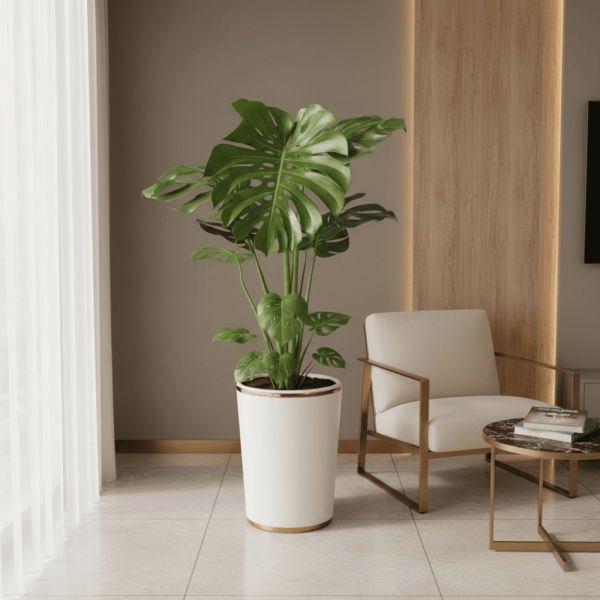
Monstera Deliciosa
Monstera Deliciosa — A large, 130–150cm indoor plant with sculptural split leaves that brings confident tropical form to living rooms, offices and entrances.
- Best in bright, indirect light; avoid harsh afternoon sun
- Let the compost become almost dry, then water thoroughly and allow it to drain
Hong Kong care guide: Monstera Deliciosa (light, watering & common issues)
Before & after purchase · Plantshop Care Encyclopedia


Areca Palm
Areca Palm — Feathery, arching fronds that soften a living room, studio or office corner.
- Light: Bright light indoors, protected from sudden intense western sun.
- Watering: Water as the surface dries, maintaining even moisture with drainage.
Hong Kong care guide: Areca Palm (light, watering & common issues)
Before & after purchase · Plantshop Care Encyclopedia
Featured
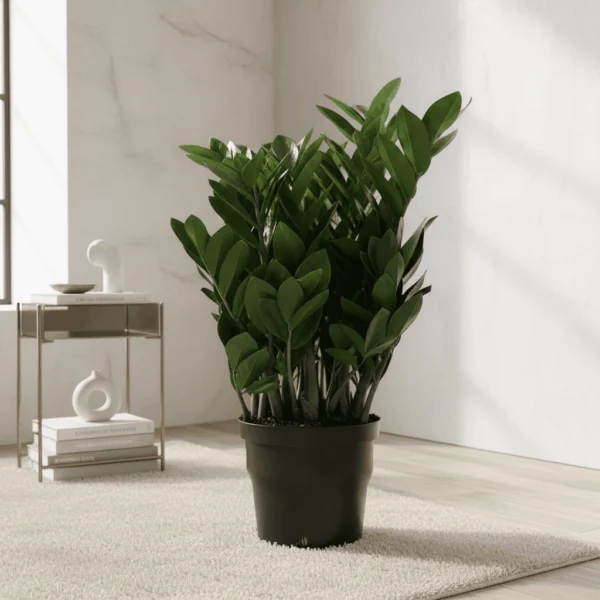
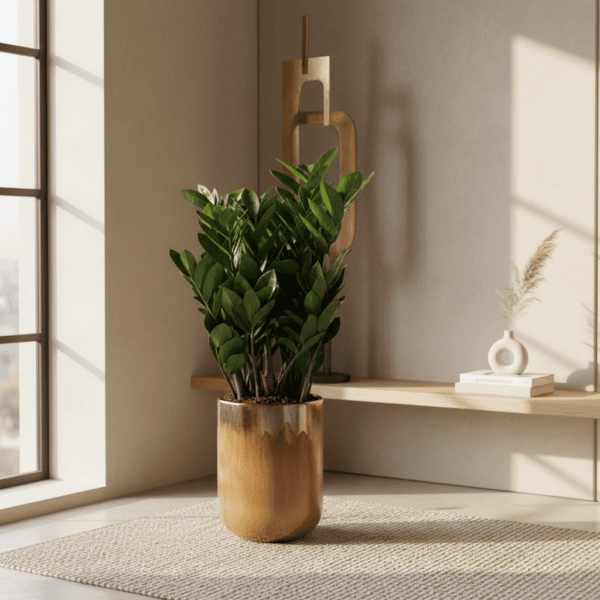
ZZ Plant
ZZ Plant — Glossy, deep green leaflets on upright stems; it copes with lower light and infrequent watering.
- Light: Bright indirect light to sun, introduced gradually.
- Watering: Water thoroughly only after most of the mix dries; never leave standing in water.
Hong Kong care guide: ZZ Plant (light, watering & common issues)
Before & after purchase · Plantshop Care Encyclopedia
