



The Honest Case for Renting — office plant rental guide
Hong Kong values efficiency above almost everything else. A full-time horticulturist on staff is a cost that very few SMEs will absorb. Rostering colleagues to share watering duties tends to hold for approximately two weeks before the plants begin declining, quietly and without fanfare. Plant rental emerged as the rational response to this particular city’s particular constraints: a supplier delivers, maintains on a schedule, and replaces anything that wilts. You pay the monthly fee; the plants remain in prime condition; the headache never materialises.
Behind the convenience, however, there are details worth understanding before you commit.
What Plant Rental involves The model is straightforward: a monthly fee covers the plants, regular maintenance — watering, pruning, fertilising — and complimentary replacement of any specimen that declines. When the contract ends, the plants return to the supplier.
For companies without a dedicated maintenance team, or for short-term installations such as exhibition spaces and event interiors, the model is sensible.
On pricing in the Hong Kong market: small potted plants (30–50cm) begin at around HK$100–200 per month; medium specimens (50–100cm) at HK$200–300; large plants (100cm and above) depend on species and design specification, with scale creating room for negotiation. PlantShop focuses on 130–180cm large specimens, each hand-selected, with transparent pricing. A WhatsApp message gets a direct quote.
What Is and Is Not Included Most rental services cover: delivery, scheduled maintenance, and free-of-charge replacement for specimens that decline through normal causes.
What is typically excluded:
Human-caused damage — a plant accidentally drowned by a well-meaning colleague’s extra attention may fall outside the replacement policy. Special requests — specified delivery windows, or the importation of particular planters. Plant relocation during office moves.
Before signing: clarify precisely what falls within and outside the replacement provision. The most costly surprise in plant rental is discovering that the pot that died last Tuesday is, in fact, your responsibility.
How to Assess a Supplier Plant quality. Visit the warehouse or showroom before committing. Healthy specimens carry glossy, unblemished foliage and stable root systems. A showroom of ailing plants is a preview of what you will receive.
Maintenance frequency. Typically weekly or fortnightly, adjusted by species and season. Hong Kong’s air conditioning desiccates plants faster than most suppliers’ fixed schedules account for. A maintenance programme that cannot flex between summer and winter is one designed for convenience, not for the plants.
Communication. This matters more than the monthly fee. When a plant develops a problem, you need a supplier who picks up, follows up, and takes responsibility. Request references from existing corporate clients before signing.
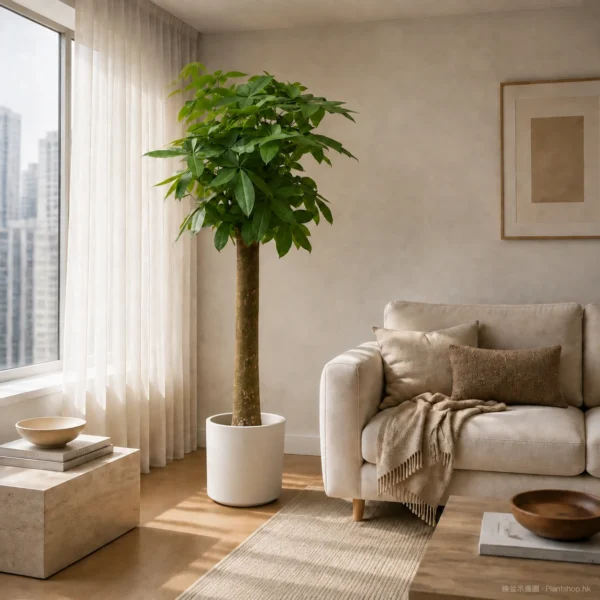
Rent or Buy? With dedicated care, purchasing is the more economical long-term choice — a Money Tree acquired for a few hundred dollars can share your office for years. But the operative question is not whether plants are cheaper to buy. It is who, specifically, will water them.
Most Hong Kong offices run air conditioning year-round with limited natural light — conditions that reduce survival rates for all but the most resilient specimens. Rather than watching plants decline through inattention, a rental arrangement that guarantees professional maintenance is the more practical proposition for the majority of commercial offices.
Neither model is universally superior. The right answer depends entirely on whether your company has someone with both the knowledge and the consistent time to tend to plants. Most do not, and honesty about this saves significant subsequent frustration.
One Practical Recommendation:
Start Small Begin with a few plants at reception on the shortest contract (six months at PlantShop) and evaluate maintenance quality, plant condition, and colleague response before adding more.
PlantShop offers office plant hire in Hong Kong, specialising in 130–180cm large specimens — but we will not tell you renting is always superior to buying. If you have a colleague with genuine plant knowledge and the time to exercise it, purchasing makes the better case. Each pot is hand-selected, and per-plant monthly rates are public: estimate your monthly rent with the calculator.
The real value of rental is converting a reasonable monthly fee into the complete elimination of concern: no watering schedules to remember, no fertilising decisions to research, no repotting emergencies. A problem arises; you WhatsApp us; a person responds. For HR managers and administrators carrying full plates, that peace of mind is worth considerably more than the monthly differential. — PlantShop Horticulture Team
Related Products
Below are the plants mentioned in this article, available for direct purchase. Each comes with a personal care card and WhatsApp support from our team:

FAQs
The Honest Case for Renting
Hong Kong values efficiency above almost everything else. A full-time horticulturist on staff is a cost that very few SMEs will absorb. Rostering colleagues to share watering duties tends to hold for approximately two weeks before the plants begin declining, quietly and without fanfare. Plant rental emerged as the rational response to this particular city's particular constraints: a supplier deliv
What is typically excluded:
Human-caused damage — a plant accidentally drowned by a well-meaning colleague's extra attention may fall outside the replacement policy. Special requests — specified delivery windows, or the importation of particular planters. Plant relocation during office moves.
