



Check what the cutting can grow
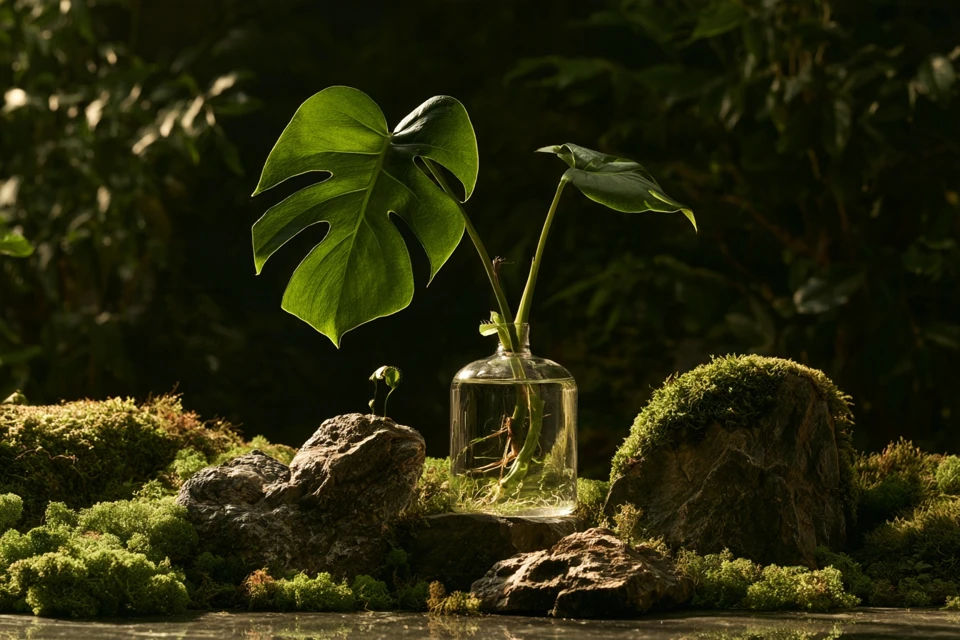
A single leaf in a glass can become a small windowsill ritual: a glance at the water, a search for roots, another week of waiting. Before giving it that space, check what came away from the parent. The leaf, its stalk and a section of stem have different roles.
In this article
Roots alone do not establish that a cutting can grow a new shoot. The species and the material matter. ZZ Plant can begin from leaf material; Monstera is normally propagated from a stem cutting; Rubber Plant can use a leaf-bud cutting. Recognising those differences before cutting is more useful than repeatedly changing the water, adding feed or moving the glass.
A long stalk is not necessarily a stem
Follow the plant’s structure from the outside in. The blade is the broad leaf surface; its petiole, or leaf stalk, leads back to the main stem. A node is a point on that stem where a leaf or bud arises. On Monstera, tracing the petiole all the way back is essential: a long stalk by itself is still not a complete stem cutting.
A Rubber Plant leaf-bud cutting keeps three parts together: the blade, the petiole and a short piece of stem containing the axillary bud, as described by NC State Extension. If the bud is difficult to see, take a clear stem photograph and ask an experienced grower. Peeling away leaves to hunt for it can damage the very structure you need.
Three plants, three material checks
| Plant | Material to identify | What not to infer |
|---|---|---|
| ZZ Plant | Healthy mature leaf material for a suitable leaf-cutting method | Other thick-leaved species do not automatically behave the same way |
| Monstera | A healthy stem section that includes a node | Roots on a detached leaf do not establish that it has a viable shoot bud |
| Rubber Plant | Blade, petiole and a stem section with a bud | Roots at the petiole base do not mean a new stem has formed |
Four checks before taking a cutting
- Check the parent’s health. Do not distribute material with unexplained spots, soft tissue or an unresolved pest problem.
- Confirm permission. An office or rented plant is not available for cuttings simply because it needs pruning.
- Prepare clean tools, a container and a label with the plant name, date and parts retained.
- Arrange suitable light and a place to observe it, away from food preparation. Wear gloves when handling sap, and keep tools and material out of reach of children and pets.
For a first attempt, avoid stripping the parent of many leaves. Use a small amount of suitable material to learn the anatomy while preserving its support and useful foliage. If you cannot judge the effect on its shape, postpone the cut.
Record roots and shoots separately
Iowa State Extension lists ZZ Plant among species suitable for leaf-petiole propagation; RHS describes stem cuttings for Monstera. Choose one method suited to the species and follow its requirements for medium, moisture and light instead of repeatedly switching between water and compost.
Keep separate notes on firmness, root development, new shoots and any soft decay. Do not pull a cutting from its mix every day to inspect the roots; dated photographs of visible growth are useful. Isolate deteriorating or foul-smelling material and do not pour suspect water into another plant’s pot.
Patience still needs the right starting point
Quick questions
Must a Monstera leaf without a node be thrown away?
You can enjoy it as a temporary display, but do not treat it as confirmed propagation material or promise a friend it will become a whole plant.
Will fertiliser produce a missing bud?
Feeding cannot replace a growing structure that was never included. Identify the material before changing its care.
When does it need a larger pot?
Look for a developing plant and a root system that can support further growth, not simply the first white root in a glass. If you want an established silhouette now, choosing a complete plant may better suit the purpose.
Compare the structures on an established plant
These established plants let you compare the structures discussed here. Buying one does not mean it needs to be cut immediately.
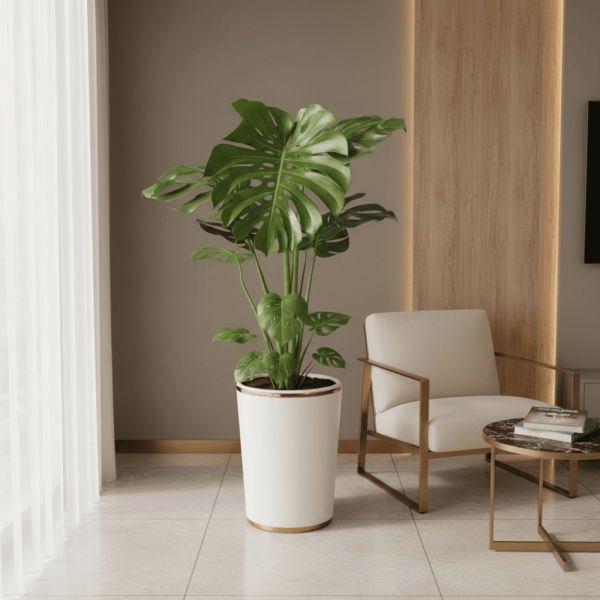
- Monstera Deliciosa: Use the junction between petiole and stem to learn where a node sits; confirm healthy nodal material before propagation.
- Burgundy Rubber Plant: Compare petiole, stem and axillary bud to understand why a leaf-bud cutting differs from a leaf alone.
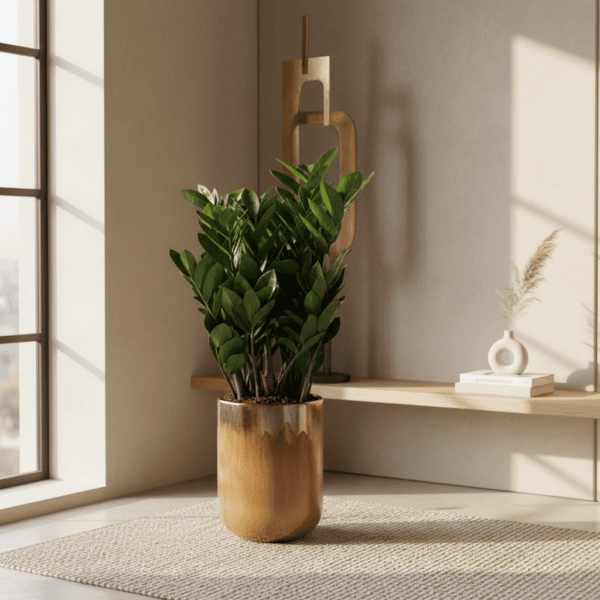
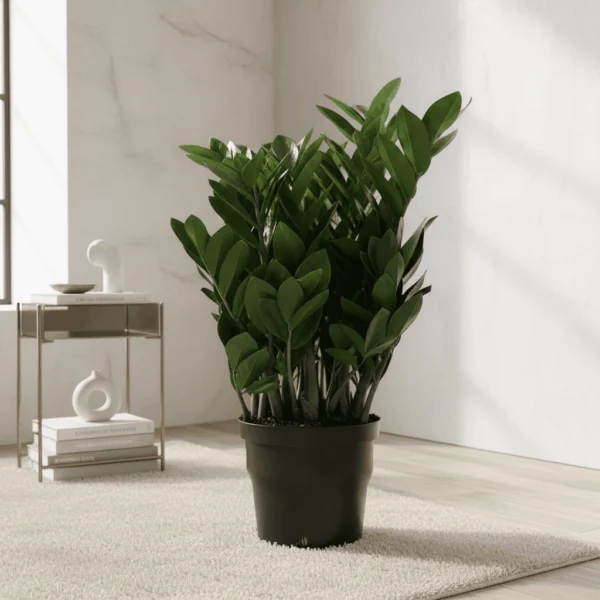
- ZZ Plant: A contrasting example in which leaf material can propagate. Choose it for patient observation rather than a fixed completion date.
Featured

Monstera Deliciosa
Monstera Deliciosa — A large, 130–150cm indoor plant with sculptural split leaves that brings confident tropical form to living rooms, offices and entrances.
- Best in bright, indirect light; avoid harsh afternoon sun
- Let the compost become almost dry, then water thoroughly and allow it to drain
Hong Kong care guide: Monstera Deliciosa (light, watering & common issues)
Before & after purchase · Plantshop Care Encyclopedia

Featured

Burgundy Rubber Plant
Burgundy Rubber Plant — glossy dark foliage and a distinct branching form for your living room or workspace. Choose a position with bright, indirect light.
Hong Kong care guide: Burgundy Rubber Plant (light, watering & common issues)
Before & after purchase · Plantshop Care Encyclopedia
Featured
ZZ Plant
ZZ Plant — Glossy, deep green leaflets on upright stems; it copes with lower light and infrequent watering.
- Light: Bright indirect light to sun, introduced gradually.
- Watering: Water thoroughly only after most of the mix dries; never leave standing in water.
Hong Kong care guide: ZZ Plant (light, watering & common issues)
Before & after purchase · Plantshop Care Encyclopedia
