



Look beyond the promise of easier watering
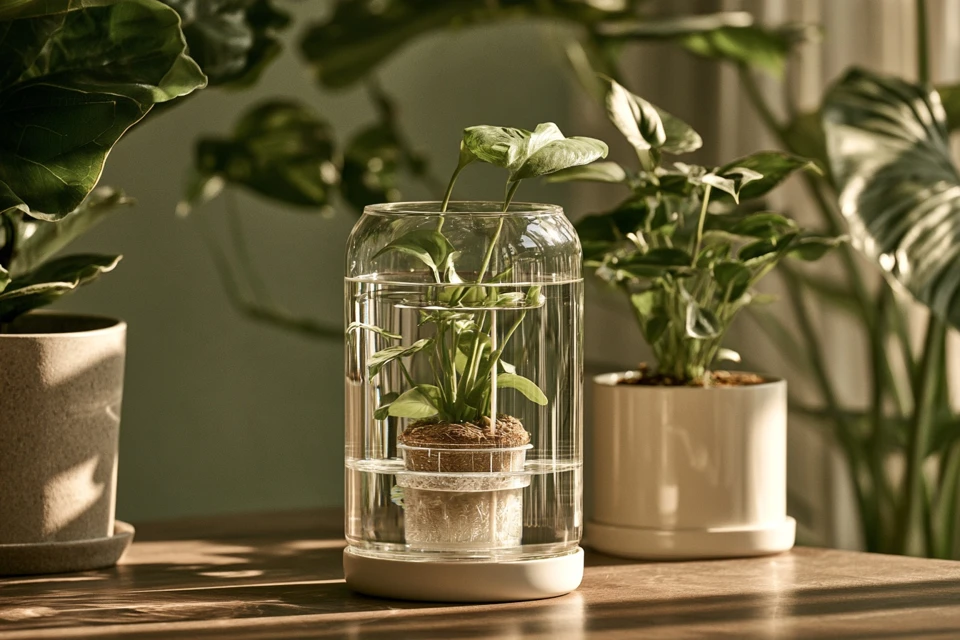
A concealed reservoir promises a little less work, but its attractive outer shell can also conceal the jobs that remain. In a small flat, there may be nowhere convenient to open the base, empty the water or lift out a heavy rootball. Consider those movements before choosing the finish.
In this article
A self-watering pot needs to suit the plant, its mix and the way water reaches the roots. Some plants suit a steadier supply; others need a drier interval. Establish the conditions a system will create before moving an established plant into it, and make inspection, cleaning and emptying part of the choice.

Look inside the design
Virginia Cooperative Extension describes self-watering containers in which a lower reservoir supplies the mix through a wick or similar arrangement. The separation and connection between reservoir and root zone are designed components. Leaving a nursery pot submerged in an ordinary watertight cover pot is not an equivalent system.
Ask which medium it requires, what the indicator measures, where the maximum water level sits, whether it has an overflow, how a newly transferred plant is started and which parts can be cleaned. Products sharing the same label may operate differently. Missing instructions or no safe way to empty the reservoir are reasons to postpone the switch.
Choose a candidate, not a whole collection
Start with one suitable candidate. A ZZ Plant’s tolerance of drier conditions does not make a continuous moisture supply an improvement. An Areca Palm may benefit from steadier moisture, but still needs an aerated root zone and a system the supplier considers suitable for the plant and mix.
Leave a recent arrival or freshly repotted plant out of the first trial. Continuing yellowing or a suspected root problem also needs attention before another variable is introduced. A stable, healthy specimen gives you something useful to compare with after the switch.
Make the first trial a supervised one
Do not make the conversion on the evening before a trip. Follow the manufacturer’s and plant supplier’s guidance for the existing rootball; washing all the roots or replacing every trace of mix is not a universal starting step. How old and new materials take up water needs observation, not just a glance at the float.
Note the first fill, indicator position and feel of accessible mix. At later checks, record reservoir and root zone separately. Water in the reservoir does not prove that it has reached the roots effectively; a falling level does not establish suitable moisture throughout the pot. Refilling and any drying interval must follow the particular system and species, not a household-wide timetable.
A trial record with separate observations
| Check | Reservoir and structure | Mix and plant | Next action |
|---|---|---|---|
| Start | Fill position, assembly and instructions | Existing foliage and rootball condition | Keep baseline photographs |
| Routine | Level changes and inspection access | Moisture at accessible points; foliage | Refill according to the design |
| Mismatch | Water present but rootball appears dry | Record positions without repeatedly probing roots | Check supply contact and ask the supplier |
| Continued decline | Leaks, odour or inaccessible cleaning | Persistent wetness, soft decay or other changes | Stop automatic refilling and arrange assessment |
What the indicator cannot tell you
Quick questions
Does it still need cleaning?
Yes. Inspect the reservoir and removable parts as directed. A concealed compartment is not automatically a clean one.
Does it guarantee unattended holiday care?
The name cannot establish that. Plant size, conditions, stored volume and actual delivery all matter; a real trial record comes first.
What if it proves unsuitable?
Ask the supplier to assess the root zone and next step rather than stripping and repotting the roots again that day. Keeping the original pot details and system instructions makes that conversation more useful.
Match the watering system to the plant
Compare these plants alongside the existing rootball, mix and proposed watering system. A self-watering container would need to be selected separately.
- Areca Palm: A steadier supply may be useful, subject to the system, mix and root aeration. Numerous fronds do not mean the reservoir should always be topped up.
- Monstera Deliciosa: The existing rootball’s response to the new supply is a key consideration. Assess a stable, healthy specimen first.
- ZZ Plant: A useful contrast for a plant that tolerates drier intervals; keeping a conventional draining pot may be easier to manage.

Areca Palm
Areca Palm — Feathery, arching fronds that soften a living room, studio or office corner.
- Light: Bright light indoors, protected from sudden intense western sun.
- Watering: Water as the surface dries, maintaining even moisture with drainage.
Hong Kong care guide: Areca Palm (light, watering & common issues)
Before & after purchase · Plantshop Care Encyclopedia
Featured

Monstera Deliciosa
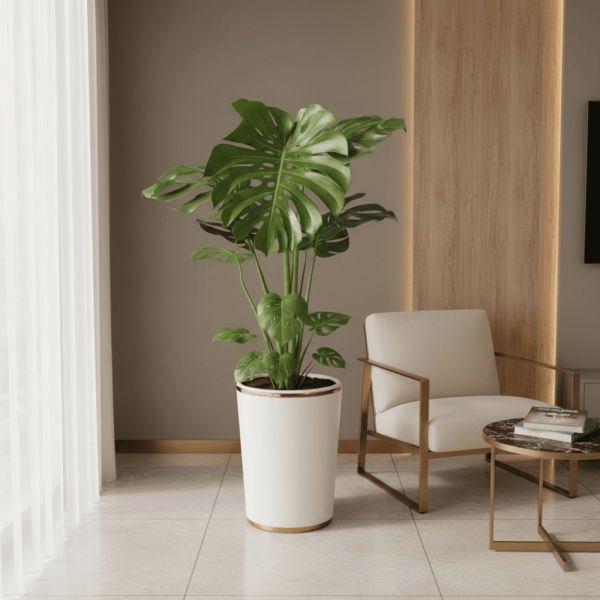
Monstera Deliciosa — A large, 130–150cm indoor plant with sculptural split leaves that brings confident tropical form to living rooms, offices and entrances.
- Best in bright, indirect light; avoid harsh afternoon sun
- Let the compost become almost dry, then water thoroughly and allow it to drain
Hong Kong care guide: Monstera Deliciosa (light, watering & common issues)
Before & after purchase · Plantshop Care Encyclopedia
Featured
ZZ Plant
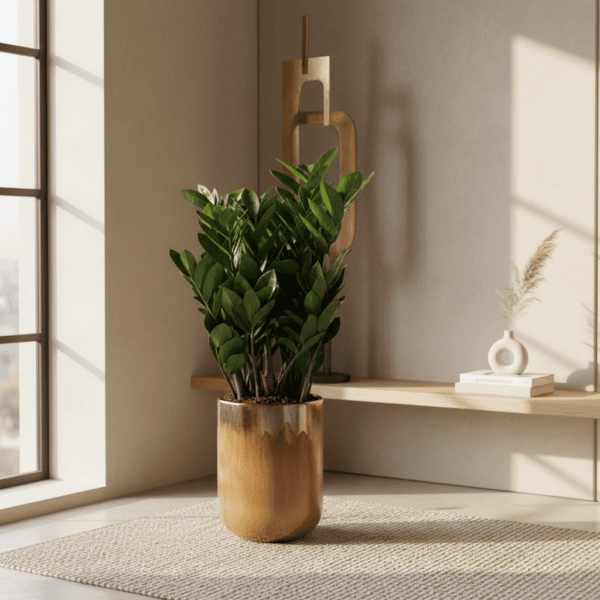
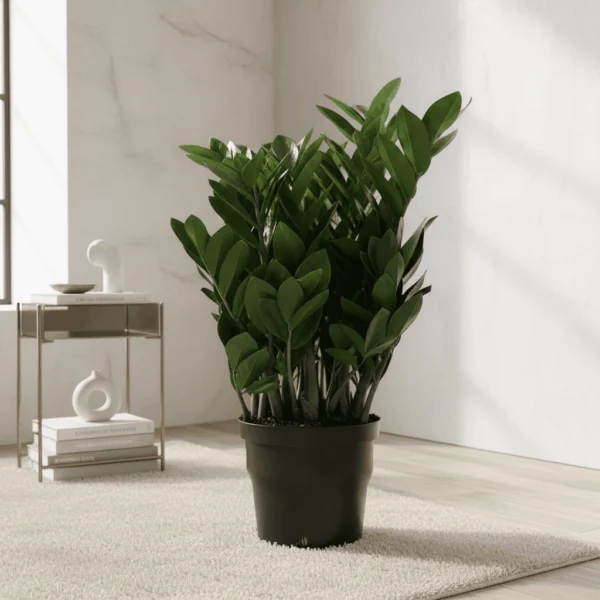
ZZ Plant — Glossy, deep green leaflets on upright stems; it copes with lower light and infrequent watering.
- Light: Bright indirect light to sun, introduced gradually.
- Watering: Water thoroughly only after most of the mix dries; never leave standing in water.
Hong Kong care guide: ZZ Plant (light, watering & common issues)
Before & after purchase · Plantshop Care Encyclopedia
