



Give the number a pot to belong to
A probe says “dry”, but the mix beneath your fingers still feels damp. It is a small contradiction that can turn a simple watering check into guesswork. In a decorative pot, bark on the surface and fresh mix around an older rootball can leave the two checks looking at quite different places.
In this article
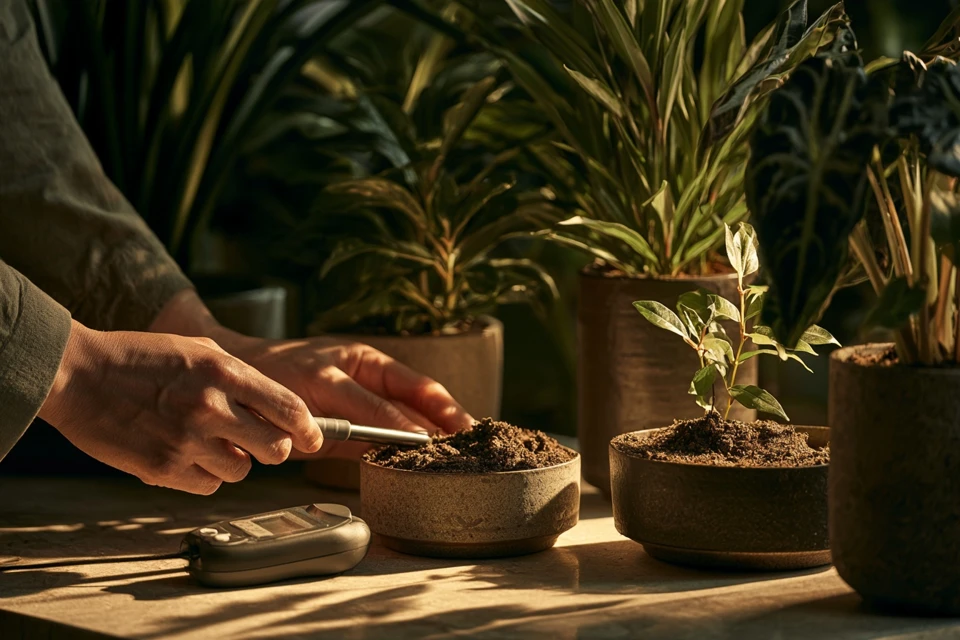
Pause before adding water. Establish where each check was made, then look for water beneath the nursery pot. A finger, a probe and the weight of a manageable container offer different clues; none describes the entire root zone. A short record for this particular plant will tell you whether the meter earns its place in the cupboard.
Know what the instrument measures
An air hygrometer measures relative humidity in the room. A soil meter uses a probe in the growing medium. A float in a self-watering pot shows the reservoir level. These are different instruments. Read the instructions for the intended medium, insertion method, reading time and whether the probe may remain in place.
A mark of “3” or “moist” is not a universal scale across brands, nor a percentage required by every plant. Do not transfer a useful ZZ Plant reading to an Areca Palm. Penn State Extension notes that meter results can be confusing to interpret and still need the context of the plant’s moisture requirements.
Build a reference during ordinary care
Choose a stable plant with safely accessible mix. Do not deliberately dry it out, or water it solely to manufacture a wet reading. Photograph the pot surface and identify one or two positions you can check again. Stop if you meet a root or a hard obstruction; the probe is not a drill.
Record the depth and feel of your manual check, then use the instrument as directed. When the plant genuinely needs its normal watering, let excess water drain and repeat the comparison consistently. Check again as the mix dries naturally. You are looking for a useful change over time. Weight can help with a small pot; lifting a heavy floor plant just to test it is unnecessary.
Keep one record per pot
| Item | Record now | Keep comparable next time |
|---|---|---|
| Plant and pots | Name, inner pot and cover pot | Same plant and drainage arrangement |
| Sampling position | Surface or accessible deeper mix | Note position and depth; never force the probe |
| Feel and reading | Dry, slightly moist or wet; scale value | Same instrument and reading method |
| Recent changes | Watering, feeding, repotting or a move | Treat a changed setup as a new reference |
| Action and response | Watered or not; drainage and foliage | Describe changes rather than writing “normal” |
When the checks disagree
When a dry reading meets a wet surface, check the probe’s contact and clean it according to its instructions. Resist pushing it repeatedly into the rootball. With the opposite mismatch—a wet reading and dry surface—look at accessible deeper mix and the cover pot. Either pattern calls for another observation, not an immediate diagnosis of root rot.
An old reference may stop being useful after repotting, a change of mix or feeding. Begin the comparison again. If the instrument barely responds to clearly different moisture conditions, set it aside and consult the instructions or manufacturer. There is little value in changing a sound care routine to accommodate an unhelpful gadget.
Some useful limits
Quick questions
Can the probe stay in the pot?
Follow the particular product’s instructions. Not every probe is designed for permanent installation. Clean it between pots and do not move an uncleaned probe from a suspect plant to a healthy one.
What if a large pot is too deep to check?
Accept that there are blind spots. Combine drainage, recent care and the plant’s condition. Persistently wet mix with continued decline warrants further assessment by the supplier; a surface reading cannot settle it.
Three plants, three moisture checks
Choose a plant alongside a checking routine you can manage. These three illustrate different observations to make; there is no need to buy a collection to use a meter.
- ZZ Plant: Its tolerance of drier intervals makes the natural drying phase useful in a meter comparison; do not transfer a palm’s moisture routine to this pot.
- Areca Palm: Leave access beneath the fronds to compare the reading with the mix while considering both moisture supply and root aeration.
- Burgundy Rubber Plant: Use the surface beginning to dry alongside the wider pot condition, with the probe as an aid. Check moisture before responding to drooping with more water.
Featured
ZZ Plant
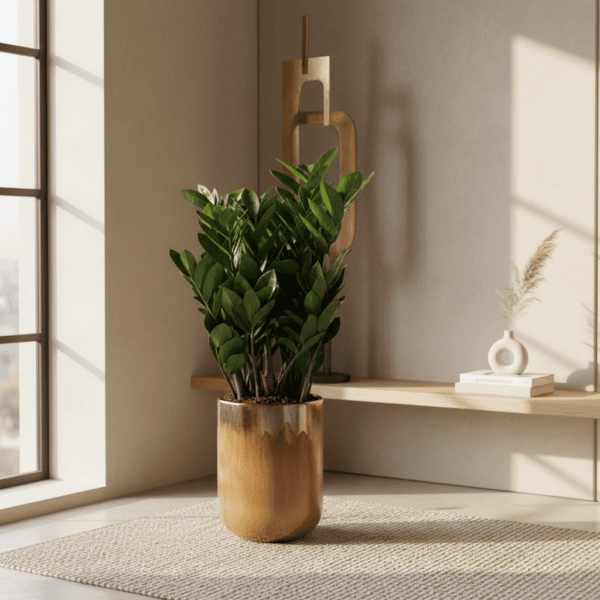
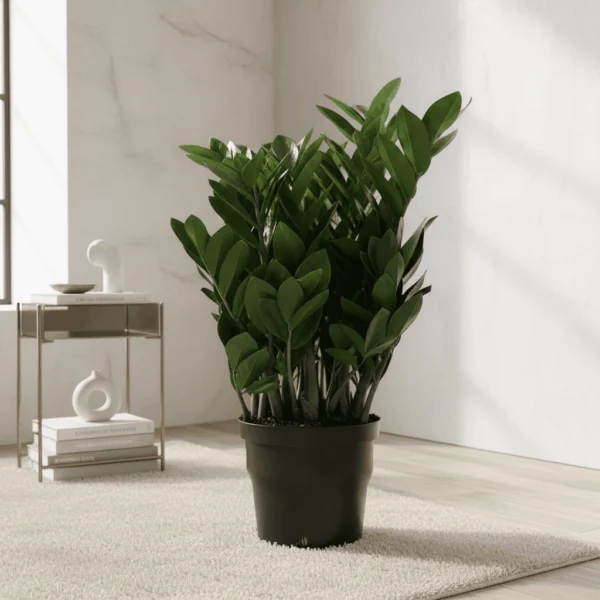
ZZ Plant — Glossy, deep green leaflets on upright stems; it copes with lower light and infrequent watering.
- Light: Bright indirect light to sun, introduced gradually.
- Watering: Water thoroughly only after most of the mix dries; never leave standing in water.
Hong Kong care guide: ZZ Plant (light, watering & common issues)
Before & after purchase · Plantshop Care Encyclopedia


Areca Palm
Areca Palm — Feathery, arching fronds that soften a living room, studio or office corner.
- Light: Bright light indoors, protected from sudden intense western sun.
- Watering: Water as the surface dries, maintaining even moisture with drainage.
Hong Kong care guide: Areca Palm (light, watering & common issues)
Before & after purchase · Plantshop Care Encyclopedia

Featured

Burgundy Rubber Plant
Burgundy Rubber Plant — glossy dark foliage and a distinct branching form for your living room or workspace. Choose a position with bright, indirect light.
Hong Kong care guide: Burgundy Rubber Plant (light, watering & common issues)
Before & after purchase · Plantshop Care Encyclopedia
