



Look at what has changed
The plant beside the sofa has begun to reach further into the room. Before turning the pot or buying a stake, look at where the change starts. New growth towards a window, a naturally spreading stem and an unstable plant or container need different responses.
In this article
View it from the front and side, using older photographs from the same position where you have them. A gradual change in outline calls for a different enquiry from a stem that suddenly gives way. The aim is to choose the next sensible step, with a closer assessment if the cause is unclear.

Make room for the plant's natural outline
A tree, a clump and a climber bring different lines to a room. A monstera’s extending stem and outward-reaching leaf stalks belong to the form of a climbing plant; they are not, by themselves, evidence of weakness. North Carolina State University’s plant profile describes its climbing habit in its native environment. That habit should inform its arrangement at home.
Confirm the plant’s identity before deciding whether an upright outline, climbing support or a more spreading form is appropriate. A product image shows a plant at a particular stage; it is not a permanent map for every leaf. Compare different large-plant forms when planning the space they may occupy.
Turn for the light, with room to move
If new growth gradually gathers on the window side, examine the light source and everyday obstructions. Where the plant and container can be turned safely, gradual changes in orientation can expose different sides to the light. An older, woody bend will not straighten immediately after one turn.
Rotation cannot compensate for insufficient light overall. Iowa State University’s guidance on relocating indoor plants notes that leaning or stretching towards light warrants a review of the position. Any move to brighter conditions should still be gradual.
Before turning the pot, check clearance around leaves, curtains and supports. For a climbing plant attached to a structure, consider whether the complete arrangement can move safely. Do not twist the main stem to achieve the preferred angle.
Support the stem without forcing the shape
A stake, climbing pole and ring support serve different purposes. Identify the main stem that needs support, then consider where a suitable structure can be installed. Do not force a thick stake through a densely rooted container. If repositioning the root ball or repotting is needed, plan the work together and ask the supplier for help if it is unfamiliar.
Use soft ties without constricting the stem, and check them as growth continues. With monstera, avoid fastening all the moving leaf stalks rigidly to the pole. If you cannot distinguish a leaf stalk from the main stem, identify them before proceeding.
Support also cannot replace a stable base. If the whole plant and pot rock to one side, assess the container, supporting surface and balance first. Curtain rails, cupboard doors and temporary adhesive hooks are not suitable anchors for a large plant.
What the lean may be telling you
| Observation | Check first | Possible next step |
|---|---|---|
| New growth gradually gathers towards the window | Light, obstructions and plant identity | Improve the lighting arrangement and assess gradual rotation |
| A climbing stem extends outwards | Natural habit, main stem and support position | Provide suitable support or space to spread |
| The whole pot rocks or tips easily | Base, floor, balance and supporting structure | Stop moving it and arrange a safe adjustment |
| A stem suddenly softens or collapses | Damage, moisture and recent changes | Protect and separate it while seeking diagnosis, rather than merely staking |
| An older bend remains stable | New growth and repeated physical contact | Retain the natural form or reconsider the position |
Watch the new growth
Record the adjustment date, original orientation, support position and a side-view photograph. During routine checks, look at new growth, tie tension and the stability of the pot. Judge progress against the plant’s actual growth rather than expecting it to straighten within seven days.
Turning, pruning, repotting and fertilising together makes the effect of each change harder to understand. A sudden deterioration should be addressed promptly rather than waiting for an observation period to finish. Consult the care encyclopedia for the relevant plant.
A natural curve can sit comfortably beside the straight edge of a sofa. Keep it where the plant is stable, the route remains clear and new growth has room.
Read each plant's shape on its own terms
- Monstera: Consider the climbing stem, room for leaf stalks and the support arrangement, rather than treating all outward growth as a fault.
- Fiddle-Leaf Fig: Compare the direction of new growth with the broader canopy, and check the stability of the container.
- Madagascar Dragon Tree: Where a plant has branching or curved stems, understand its existing form before judging a recent change.
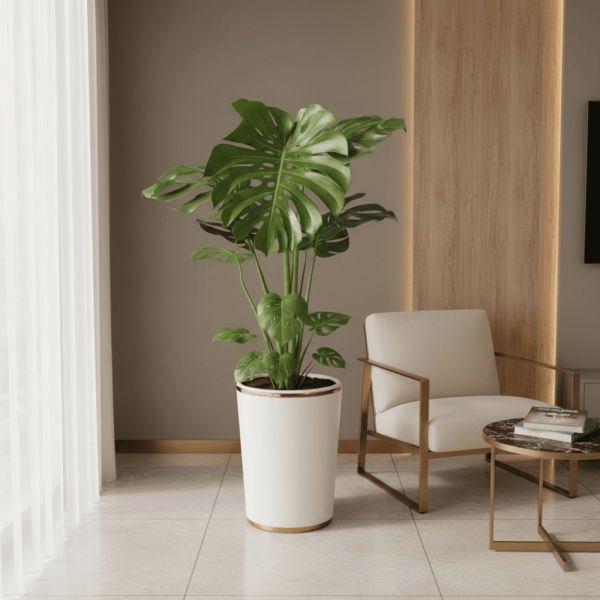
Featured

Monstera Deliciosa
Monstera Deliciosa — A large, 130–150cm indoor plant with sculptural split leaves that brings confident tropical form to living rooms, offices and entrances.
- Best in bright, indirect light; avoid harsh afternoon sun
- Let the compost become almost dry, then water thoroughly and allow it to drain
Hong Kong care guide: Monstera Deliciosa (light, watering & common issues)
Before & after purchase · Plantshop Care Encyclopedia

Featured

Fiddle-Leaf Fig
Fiddle-Leaf Fig — Large, violin-shaped leaves on an upright stem; it grows best in a steady, bright position.
- Light: Bright indirect light to gentle sun; keep the position stable.
- Watering: Water after the top 3–5 cm dries; reduce in winter or low light.
Hong Kong care guide: Fiddle-Leaf Fig (light, watering & common issues)
Before & after purchase · Plantshop Care Encyclopedia
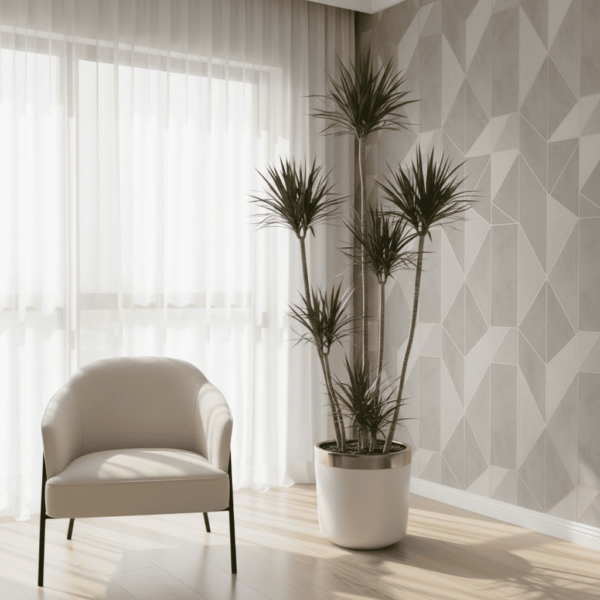

Madagascar Dragon Tree
Madagascar Dragon Tree — Slender canes topped with narrow, deep green leaves edged in red.
Hong Kong care guide: Madagascar Dragon Tree (light, watering & common issues)
Before & after purchase · Plantshop Care Encyclopedia
