



Style the room with someone in the seat
From the doorway, a plant may sit neatly beside a cabinet. On screen, its leaves can seem to grow out of a colleague’s head or cover the corner of the whiteboard. Test plants for a video-call background with the actual camera, usual seating and normal room conditions before choosing what to buy. A glimpse of foliage can be enough.
Take the seats people use and open the company’s meeting system. This gives you a more useful view than a photograph of an empty room: the one remote participants will see. Begin here whether you are buying plants or considering office plant rental.
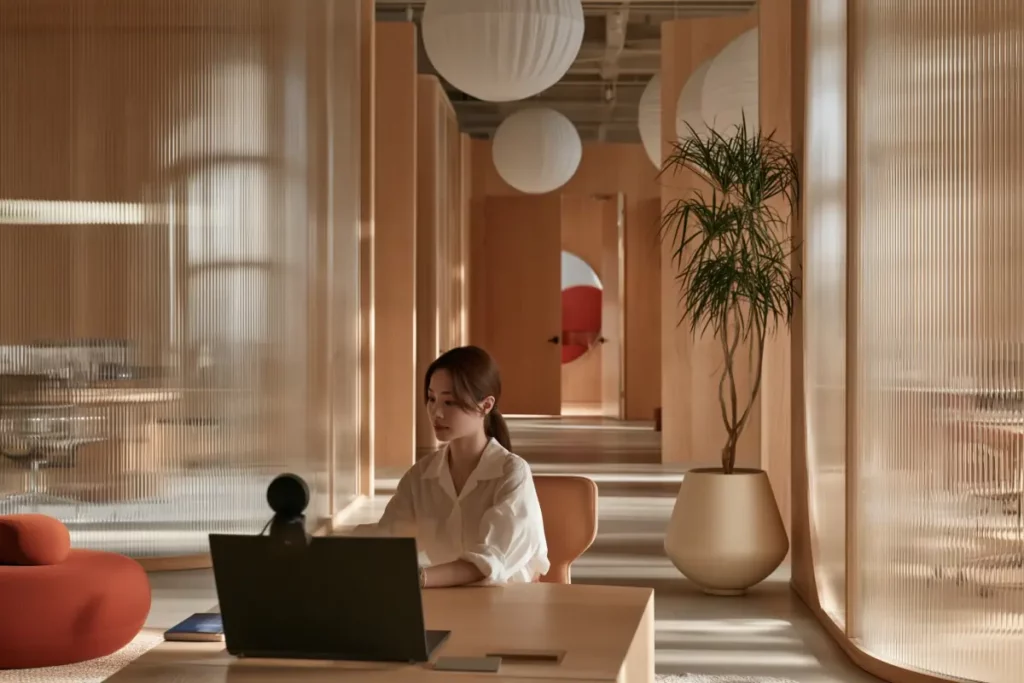
Let the camera show you the edges
Check whether the camera uses automatic framing, follows the speaker or switches between wide and close views. An arrangement that works in one still image may be awkward when the system reframes. Test an empty room, the usual number of seated participants and someone standing at the whiteboard. Remove confidential information from screens before saving test images.
Begin with the plant towards the side or further back in the frame. Watch for foliage merging with people’s outlines. A tall plant does not have to occupy the centre, and a partial view of the canopy can still add depth. Check the physical routes as well: chairs and doors need to move freely.
One clear outline can be enough
Broad leaves read as a block of colour; fine leaves draw lighter lines. Look at what is already behind the seats—shelving, a company name or a large screen—and try one clear outline before adding another plant.
Repeat a colour from the wall or cabinetry in the planter to keep the background coherent. Check reflections from glass and glossy surfaces through the camera. When buying, confirm what the product actually includes; a photograph of a complete setting does not establish that every planter and accessory is part of the purchase.
The composition will change as the plant grows. Include a quick framing check during routine care rather than pruning to preserve an unchanging silhouette.
A brighter image does not mean better growing light
A camera may brighten the room automatically. That is not a measurement of light at the plant. Pay particular attention to meeting rooms where blinds stay closed to avoid backlighting people’s faces.
Iowa State University’s guide to environmental problems in houseplants considers light, temperature and humidity when assessing plant condition. Record normal blind, lighting and air-conditioning use alongside the camera test.
If the preferred background position is too dark in everyday use, place the plant elsewhere in the room and let the wall or furniture provide the backdrop. A video-call light should not be assumed to provide adequate plant lighting without assessment.
A rehearsal for the next meeting
| Test | On camera | In the room |
|---|---|---|
| Usual number of people seated | No leaves obscuring faces or merging with heads | Clear space to pull out chairs and stand |
| Someone presenting at the whiteboard | Writing and the speaker remain visible | Enough space to walk and write |
| Automatic camera framing | Acceptable close and wide views | No repeated plant moves needed |
| Normal blind operation | Manageable reflections and backlighting | Actual light at the plant recorded |
| Maintenance access | A tidy planter exterior | Access to inspect potting mix, drainage and water |
Record adjustments and who will make them. A numerical score is unnecessary: the practical questions are whether people can use the room and the plant can be cared for.
Keep the arrangement ready for the next call
Once the test is complete, keep a room-position image with no sensitive information and identify where the plant belongs. Administration, cleaning and plant-care teams should know who may move it, where it returns after cleaning and who deals with standing water. A convenient cleaning arrangement should not leave the plant permanently in a dark corner.
For a rental enquiry, share normal blind hours, a suitable camera image and the room’s restrictions. Confirm the proposed plants and planters against the actual conditions and service arrangement. At the next meeting, people should be able to pull out a chair and begin, with no last-minute rearranging.
Compare the leaves through the camera
- Burgundy Rubber Plant: Dark, broad leaves create a distinct area of colour. Test their separation from pale walls and people’s outlines.
- Madagascar Dragon Tree: Narrow leaves introduce lines. Check the actual canopy width rather than assuming a slim stem means a small footprint.
- ZZ Plant: Compare the spread of its leafy stems with the available space beside cabinetry. Lower-light tolerance still requires a useful light source.
Choose using confirmed product specifications and the room test, with the plant’s growing needs included in the decision.

Hot

Burgundy Rubber Plant
Burgundy Rubber Plant — glossy dark foliage and a distinct branching form for your living room or workspace. Choose a position with bright, indirect light.
A nursery pot is included. Decorative pots are available as an upgrade. Check the specifications, choose your pot and add to your basket.
Hong Kong care guide: Burgundy Rubber Plant (light, watering & common issues)
Before & after purchase · Plantshop Care Encyclopedia
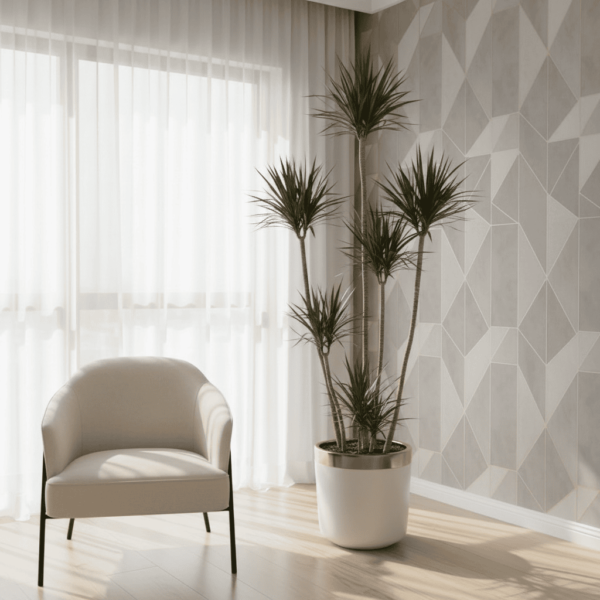

Madagascar Dragon Tree
Madagascar Dragon Tree — Slender canes topped with narrow, deep green leaves edged in red.
- Ships in its original nursery pot; decorative planters are available as an upgrade.
Pet safety is not confirmed for this plant. Keep it out of reach of cats, dogs and children.
Hong Kong care guide: Madagascar Dragon Tree (light, watering & common issues)
Before & after purchase · Plantshop Care Encyclopedia
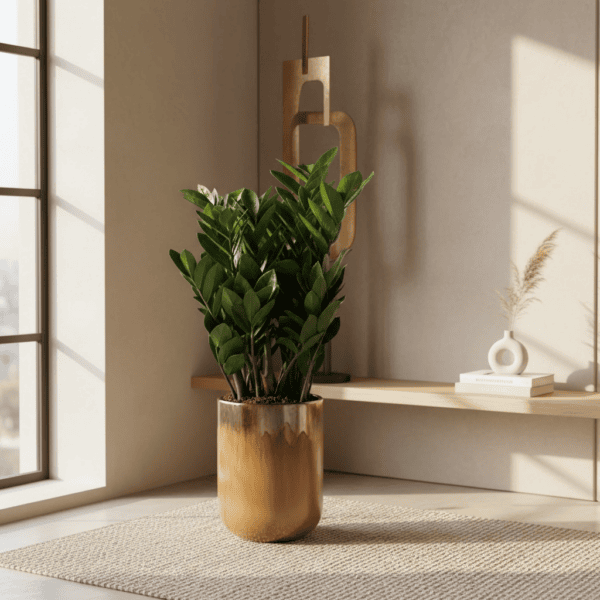
Hot

ZZ Plant
ZZ Plant — Glossy, deep green leaflets on upright stems; it copes with lower light and infrequent watering.
- Light: Bright indirect light to sun, introduced gradually.
- Watering: Water thoroughly only after most of the mix dries; never leave standing in water.
- Ships in its original nursery pot; decorative planters are available as an upgrade.
Keep away from pets and children that chew leaves, and wash your hands after contact with the sap.
Hong Kong care guide: ZZ Plant (light, watering & common issues)
Before & after purchase · Plantshop Care Encyclopedia