



Level: Intermediate
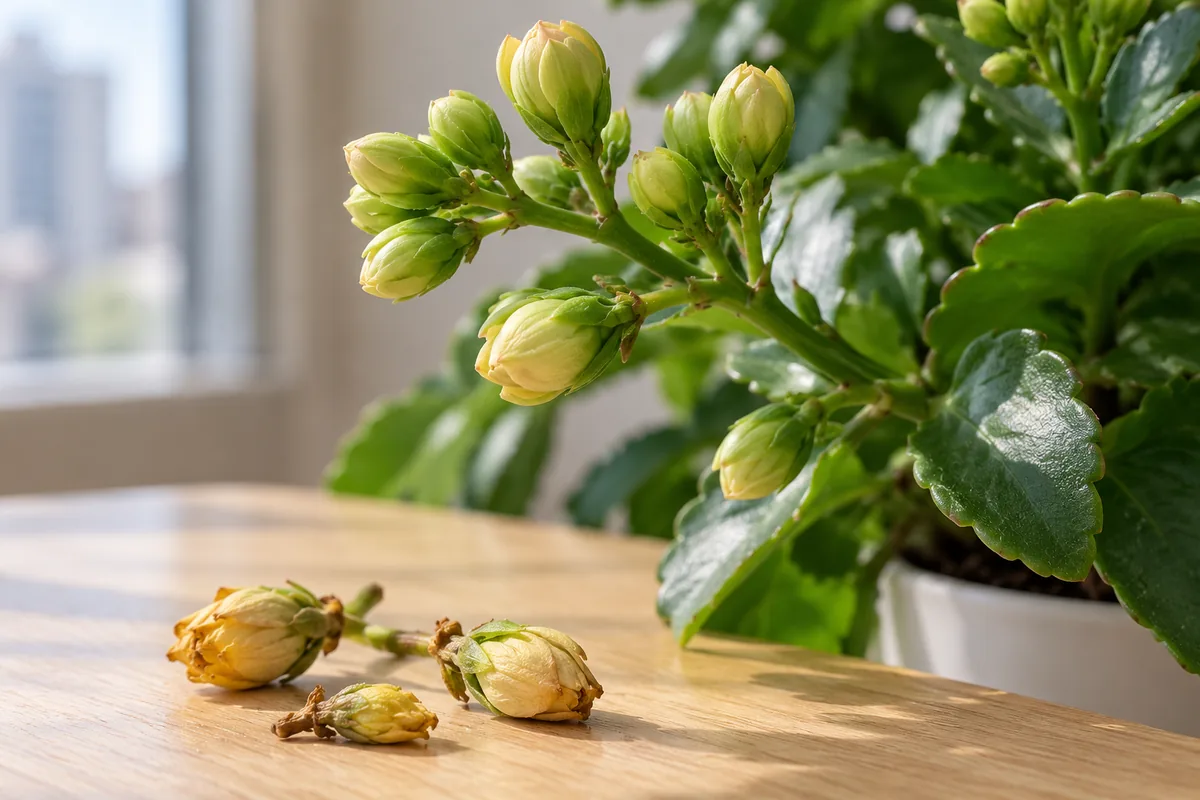
Buds that fall before opening are most often a reaction to sudden change: drafts, swings in temperature or humidity, a move to a new spot, or water that is too little or too much [1][2][4]. Gases such as ethylene, weak light and insects can also cause it [2][5]. Check what changed recently, then rule causes out one by one.
Key points
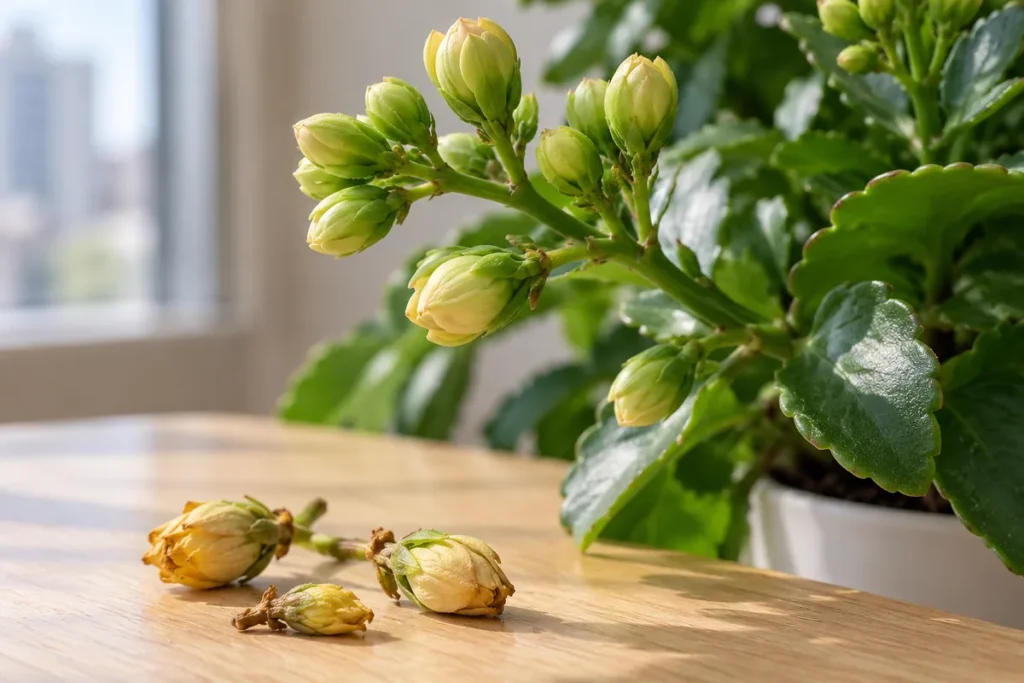
- Bud drop usually follows sudden change in draught, temperature or humidity, and buds dislike being moved [1][2].
- Both dry and wet extremes can drop buds, so check the mix before adding water [2][4].
- Ethylene can come from incomplete fuel burning and similar sources, but you need environmental clues, not just fallen buds [5][2].
- If one plant keeps dropping buds despite good care, the plant itself may be at fault [2].
How do I know it is bud drop and not normal flower fade?
Look at the state of the buds as they fall. The American Orchid Society says buds are the most sensitive part of an orchid and easily affected by the growing environment [2]. Buds that yellow, brown or shrivel before opening and then drop count as bud drop. A flower that opens and then fades is a different matter. The Society’s article is about orchids, so applying it to other flowering plants is an extension of its logic, not a direct finding.
On a phone, swipe sideways to see every column.
| Clue | Possible cause | Next step |
|---|---|---|
| Plant near an air-conditioner outlet, door or window gap | Draught or temperature shock [1][2] | Move out of the airflow and keep conditions steady |
| Recently moved from outdoors or another room | Weaker light, no night cooling, sudden change [3][2] | Return to similar light and temperature, and stop moving it |
| Mix dried out before buds fell | Short drought [4][2] | Check the mix and water evenly |
| Mix stays wet and the plant looks weak | Damaged roots cannot supply water [2] | Unpot and look at roots; see root rot |
| Near a kitchen, gas appliance or smoke | Gases including ethylene, depending on clues [2][5] | Move away and check appliances and ventilation |
| Distorted buds, tiny insects on leaves | Insects such as aphids or thrips [2] | Inspect with a lens; see thrips |
Why do drafts and temperature swings drop buds, especially with air conditioning?
Sudden temperature change is among the most common causes. University of Minnesota Extension says holiday cactus can drop buds because of drafts or sudden shifts in temperature or humidity, and prefers not to be disturbed once buds form [1]. The American Orchid Society lists drafts from windows, air-conditioning or heating vents, even a rush of hot air from an oven, and swings from running heating or cooling only part of the day [2].
The Hong Kong Observatory’s 1991 to 2020 normals give a July mean maximum of about 31.6°C and a December mean minimum of about 16.2°C [6]. Moving from outdoors into an air-conditioned room, or heating a room at night, can produce large swings. These are outdoor figures, so measure the temperature at the plant with a thermometer.
For gardenia, the New York Botanical Garden says buds drop after a move indoors because of lower light and no night-time temperature drop. It suggests a drop of 10 to 15 degrees, with units not stated in the text and presumably Fahrenheit [3]. That advice is for gardenia and should not be applied to every plant.
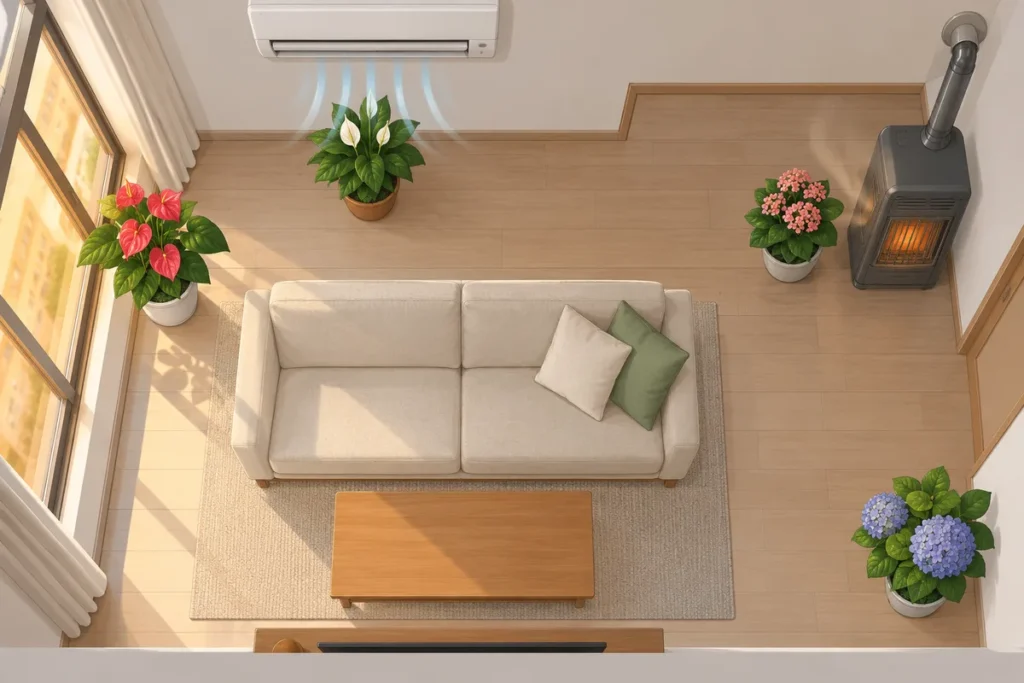
Hong Kong tip: spots under air-conditioner outlets, beside hot glass, and near water heaters or hobs often cause bud drop. Once buds appear, avoid moving the plant.
Can too little or too much water drop buds?
Yes, in both directions. Clemson Extension says flowers or buds can dry and drop after a short lack of moisture, in guidance written for landscape plants [4]. The American Orchid Society explains that a dry plant may withdraw water from buds, and that overwatering can damage roots so the plant cannot absorb enough, with the same result. Water sitting on buds or in bud sheaths can also encourage fungal and bacterial rots [2]. Minnesota Extension adds that excess water may drop holiday cactus buds and lead to wilting and root rot [1].
In practice, check the mix with a finger before watering, make sure the pot drains, and empty the saucer. To tell dry from wet, see overwatered or underwatered?. The Society also notes that cold water can shock a plant into dropping buds [2], so avoid very cold water.
What is ethylene, and where might it come from at home?
Ethylene is a plant hormone gas that can help or harm depending on timing and amount. The University of Wisconsin clinic says incomplete burning of fuel produces it, and that vehicle exhaust, wood-stove smoke and natural gas can contain it [5]. The American Orchid Society lists ripening fruit, gas leaks, inefficient gas stoves or heaters, engine exhaust, tobacco smoke, open fires and smog [2].
There are limits to this evidence. It comes mainly from the orchid society and from greenhouse or clinic cases. We found no source giving a safe level for household pot plants, so we cannot say a given concentration will drop buds. If you suspect a boiler or stove is burning badly, the Wisconsin clinic advises having it checked and notes that such faults can also produce carbon monoxide [5]. Deal with safety first and call a qualified engineer or your supplier.
Does a fruit bowl next to a plant drop buds? The Society lists ripening fruit as a source [2] but gives no distance or amount, so keeping flowering plants apart from it is the safer choice.
What about light, humidity and insects?
On light, the American Orchid Society says weak light stops buds developing properly, while direct sun on buds can overheat and dry them [2]. University of Illinois Extension places gardenia among plants wanting direct light [8], and the New York Botanical Garden suggests 6 to 8 hours of sun for indoor gardenia [3]. Minnesota Extension notes that changes in the direction and amount of light can also drop holiday cactus buds [1].
On humidity, Iowa State Extension says flowering houseplants benefit from moderate feeding and high humidity [7], and the Orchid Society says dry or fluctuating humidity can affect buds [2]. There is no single humidity figure for air-conditioned rooms, so use a hygrometer. For insects, the Society says aphids and thrips feed on buds and cause poor development or drop [2]. Follow product labels for any treatment. See aphids.
What to do, step by step
- Think back two weeks: any move, air-conditioner change, repotting, feeding or curtain change? List them.
- Move the plant out of air-conditioner outlets, doorways, hobs and water heaters, to a spot with steady light [1][2].
- Check the mix, water evenly, and empty the saucer [2][4].
- Inspect buds and leaf undersides with a lens for insects [2].
- Record temperature and humidity at the plant for several days and look for sudden swings [1][2].
- Then keep conditions steady and reassess. This is practical advice, as the sources give no standard waiting time.
What not to do
- Do not keep moving or turning the plant once buds form [1].
- Do not pour on water when buds fall. Dry and wet extremes can both cause it, so check the mix first [2][4].
- Do not use very cold water, which can shock the plant [2].
- Do not over-feed or mix your own pesticide. Doses above the plant’s tolerance can damage buds [2].
- Do not assume ethylene just because buds fell. You need environmental clues.
How do I prevent it, and when should I give up?
To prevent it, give budding plants a fixed spot away from outlets and appliances, keep water steady, and use a thermometer to know the night temperature. When should you give up? The Orchid Society notes that occasionally an orchid keeps aborting buds even in perfect conditions, possibly from a genetic fault, in which case it suggests discarding the plant [2].
If you also see yellowing leaves, persistently wet mix or a bad smell, deal with the roots first. If you suspect a gas leak or faulty appliance, make the home safe before returning to the plant.
Frequently asked questions
Why does my gardenia drop buds after coming indoors?
The New York Botanical Garden says it is due to lower indoor light and the lack of a night-time temperature drop [3]. It suggests 6 to 8 hours of sun, more humidity and no overwatering [3].
Will a humidifier stop bud drop?
The Orchid Society says very dry or swinging humidity can affect buds [2], and Iowa State says flowering houseplants like higher humidity [7]. There is no single target for air-conditioned rooms, so measure with a hygrometer and avoid keeping leaves wet.
Does misting the buds help?
The evidence is weak. The Orchid Society warns that water sitting on buds or in sheaths supports fungal and bacterial growth [2], so we do not suggest spraying buds.
Can the plant recover after buds drop?
Often the plant itself is fine. If bud drop repeats after conditions are steady, check roots and insects [2]. The sources give no standard recovery time.
Could fruit in the kitchen drop buds on nearby plants?
The Orchid Society lists ripening fruit as an ethylene source [2] but gives no distance. Keeping flowering plants away from the fruit bowl and hob is the safer choice.
Sources
- University of Minnesota Extension: “Holiday cacti” — Holiday cactus bud drop: drafts, sudden temperature or humidity change, light direction, excess water
- American Orchid Society: “Bud Blast” — Common causes of orchid bud blast: water, temperature, atmosphere, light, insects, humidity, genetics
- New York Botanical Garden, Mertz Library: “Why do the buds of my gardenia fall after bringing it in from summering outdoors?” — Gardenia bud drop after moving indoors: lower light, no night temperature drop, humidity, avoid overwatering
- Clemson Home & Garden Information Center: “Why Plants Fail to Flower or Fruit” — Temporary lack of moisture can dry and drop flower buds (landscape plant guidance)
- University of Wisconsin Plant Disease Diagnostics Clinic: “April 2021: Tomato in the Basement, Canary in the Coalmine” — Ethylene sources: incomplete fuel combustion, exhaust, wood-stove smoke, natural gas contaminant; have appliances checked
- Hong Kong Observatory: “Monthly Meteorological Normals for Hong Kong (1991-2020)” — 1991-2020 monthly mean maximum and minimum temperature
- Iowa State University Extension: “How to Care for Flowering Houseplants” — Flowering houseplants and moderate feeding with high humidity
- University of Illinois Extension: “Lighting (Houseplants)” — Indoor light bands in foot-candles; gardenia listed among direct-light plants
Further reading
- Back to Plant Doctor
- Plant won’t flower: light, feeding and pruning timing
- Overwatered or underwatered? A side-by-side check
- Plants in air-conditioned rooms
- Aphids on houseplants
- How to Keep Plants Alive in an Air-Conditioned Office (Hong Kong)
Sources checked: 31 October 2026. This is general guidance, not an on-site diagnosis. Always follow the product label.
