



Level: Beginner
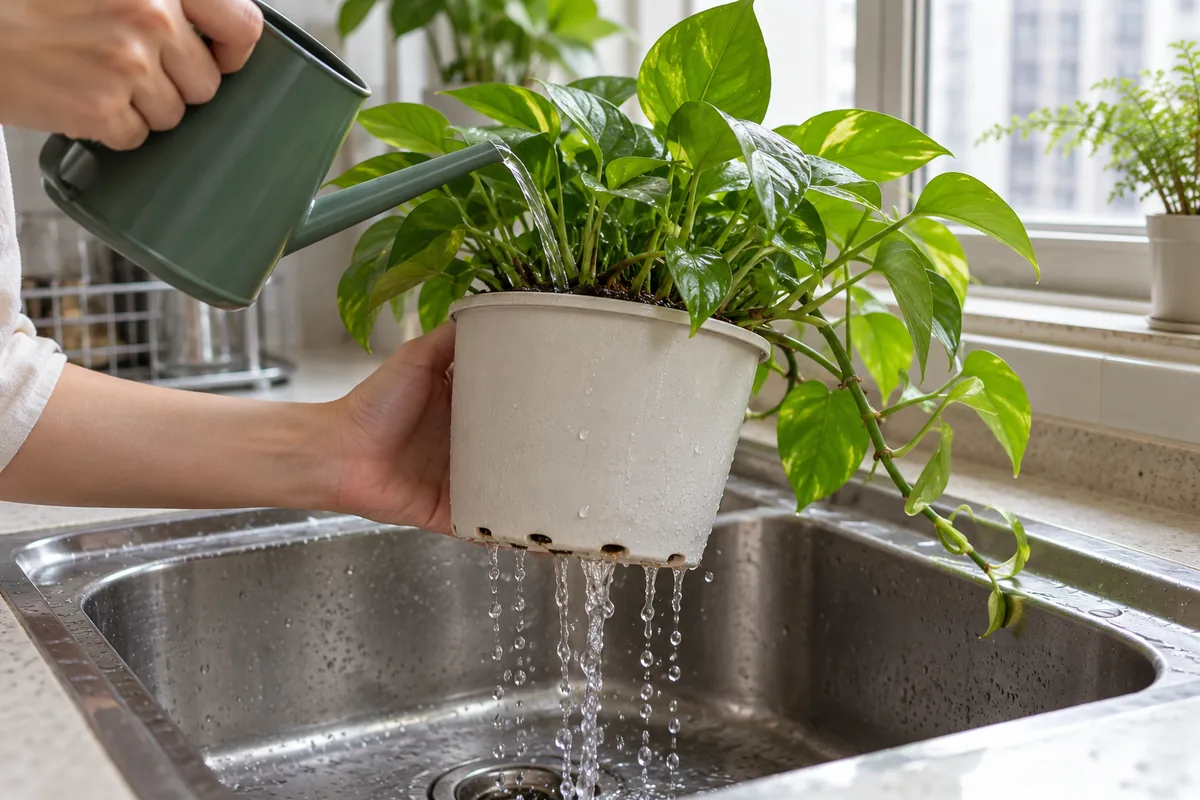
The safest way to water a houseplant is to push a finger into the soil, water only when it is dry an inch or two down, and keep going until water runs out of the drainage hole. Then empty the saucer. Do not water by the calendar, because light, warmth, pot and plant size all change how fast the soil dries.
Key points
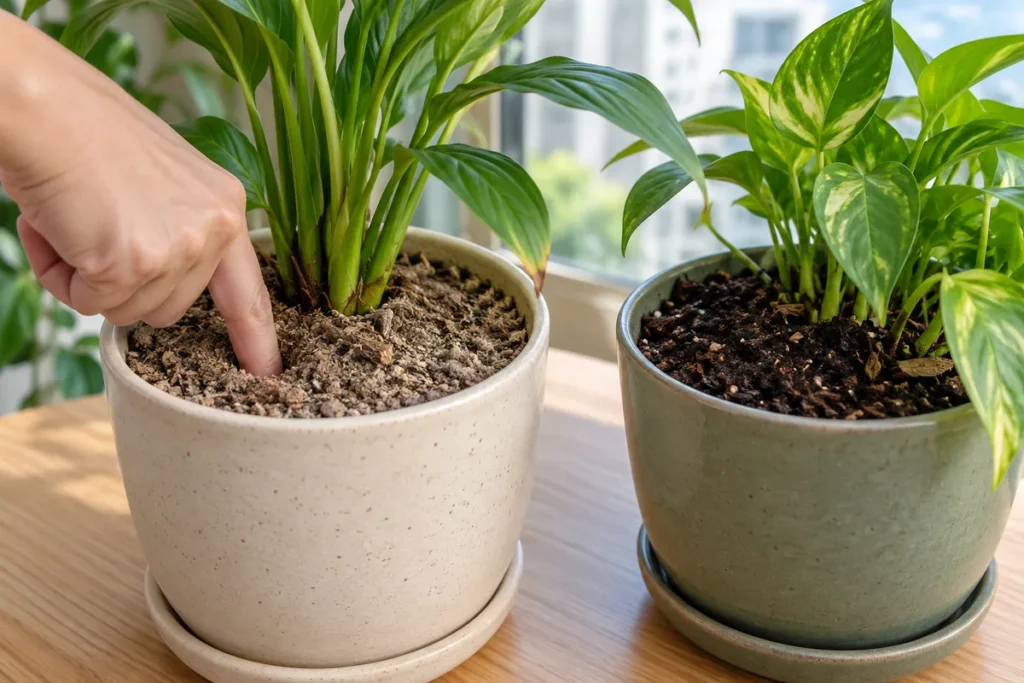
- Test before you water: a finger an inch or two deep; if it is dry, water, and if it is wet, check again in a day or two[1][5].
- Water thoroughly until it drains, rather than a little each time[2][3].
- Empty standing water: Iowa State suggests after about 30 to 45 minutes, Missouri after one hour[1][2].
- Hong Kong’s seasons differ a lot[7], so pots may dry at very different speeds in summer and winter. Follow the soil, not the date.
How should I water a houseplant?
Iowa State says improper watering is the number one reason people have problems with houseplants[1]. The aim is a wet-dry cycle: let the soil dry out, without letting the plant wilt, then soak it thoroughly and let the excess drain away[1][5].
- Test the soil with a finger an inch or two deep. If it is dry, it is time to water[1].
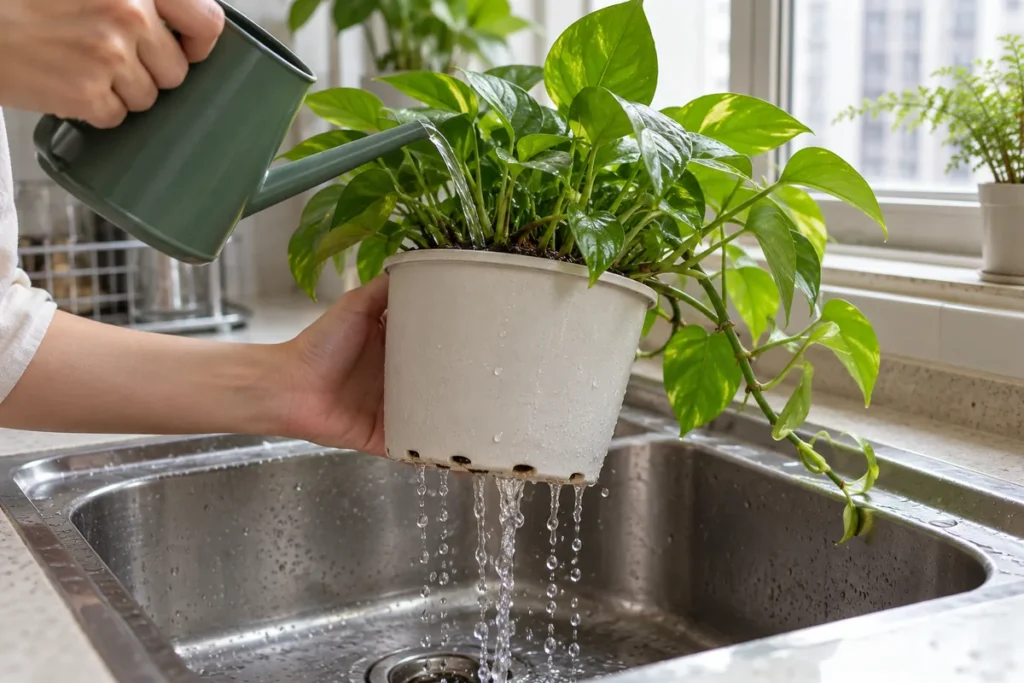
- Take the plant to a sink or tub, away from floors and furniture[1].
- Use a small-spouted can, keep water off the leaves and wet the whole soil mass, not just the top inch[2].
- Keep going until water comes out of the drainage hole[2][3].
- Let it drain, then empty the saucer or outer pot: after about 30 to 45 minutes according to Iowa State[1], or after one hour according to Missouri[2].
How do I know when it needs water?
Use the state of the soil, not a timetable. Iowa State says a fixed schedule gives some plants too much and others too little[1], and Missouri agrees that no general schedule fits all houseplants[2]. These checks work best in combination.
On a phone, swipe sideways to see every column.
| Clue | Possible meaning | Next step |
|---|---|---|
| Finger an inch or two down feels dry | Time to water[1][5] | Follow the steps above |
| Soil still feels wet or cool | No need yet[1] | Check again in a day or two[1] |
| Pot feels much lighter than after the last watering | Mix may have dried[3][4] | Confirm with the finger test |
| Surface pale, cracked or pulling from the pot edge | Already quite dry[2] | Water thoroughly, soak if needed (see below) |
| Foliage slightly dull or just beginning to wilt | Iowa State lists these as extra clues[1] | Use as backup, do not wait for obvious wilting |
| Dowel pushed to the bottom comes out dry | Bottom of a large pot may be dry[3] | Useful for big containers |
Missouri advises not letting plants wilt, because severe drying can already have damaged roots[2]. If you cannot tell whether the plant is too wet or too dry, read overwatering vs underwatering.
How much water should I give?
Water until it runs out of the base, not a fixed number of cups. Maryland and Missouri use this standard[2][3]. Oregon State, writing about garden containers, also says to water slowly until it drips from the drain holes and then recheck moisture[6]. Note that this source is about outdoor and garden containers, not houseplants specifically.
A pot that is too large, or old compacted mix, can stay wet for longer, so Iowa State advises a sensible pot size with a drainage hole[5]. For large pots, a dowel pushed to the bottom shows wet soil by sticking or darkening[3].
If the plant sits inside a decorative outer pot, check it for standing water after every watering. Missouri notes that pots wrapped in foil or placed in deep planters can still hold water[2].
What if the soil is so dry the water runs straight out?
Iowa State says very dry potting soil can be hard to re-wet, so water may run around the edge and out of the base[1]. It suggests watering several times, or submerging the root ball for about 30 minutes[1]. Maryland also says shrunken mix may need several applications[3].
Missouri describes bottom watering: stand the pot in a pan or bucket of water until the surface turns moist, meaning the whole root ball is wet[2]. With regular bottom watering, white salts can build up on the surface, and occasional watering from the top helps flush them out[2].
After a soak, lift the pot out to drain and empty the saucer, rather than leaving the roots sitting in water[1].
Which water should I use?
Ordinary water is usually fine. Iowa State says that if water is safe to drink, most indoor plants can use it[1], and Missouri says the chlorine and fluorine often found in city water do not normally harm plants[2].
The RHS sees it differently. It says chlorine in tap water can be toxic and suggests letting water stand in an open container for at least 24 hours[4]. The sources disagree, and we have not found a university source that supports the 24-hour step. Standing water overnight does no harm, but skipping it also fits the Iowa State and Missouri advice[1][2].
Iowa State says dehumidifier water is fine for most plants, though heavy long-term use can build up metals such as aluminium, copper or lead in the soil[1]. It calls rainwater the ideal source[1], and Missouri advises against continuous use of water run through most water softeners[2].
What watering habits should I avoid?
- Watering by date without testing the soil. Iowa State says to check on a schedule, not water on one[1][5].
- Splashing a little each time and only wetting the surface. This is our inference from the advice to wet the whole soil mass[2].
- Leaving saucers or sleeves full of water. Roots left in water for long periods will rot[1].
- Waiting for heavy wilting. Missouri advises against letting plants wilt[2].
- Filling a pot with no drainage hole. See decorative planters without drainage holes first.
How does Hong Kong’s climate change my watering?
Hong Kong Observatory data for 1991 to 2020 give a mean temperature of about 16.5°C in January and 28.9°C in July[7]. Missouri says light, temperature, humidity, pot and plant size all affect how fast soil dries[2], and the RHS says plants in a cool room need less water than in a warm one[4]. So pots may dry faster in summer than winter. That is our inference from the sources and will not apply to every plant.
Rain days also differ by season: about 5.7 in January against about 19.3 in June[7]. These are outdoor figures. Balcony pots are exposed to rain, wind and sun, and Missouri and Oregon State both note that container moisture changes quickly[2][6]. Air-conditioned rooms, sunny windows and closed rooms in a humid spell all vary, so test the soil first.
Before and after a typhoon, balcony pots can be soaked or sitting in water. Check soil and saucers before watering. This simply extends the test-first advice.
When should I recheck or get help?
If you follow the method and the plant keeps yellowing or drooping, go back and check the roots and drainage. Missouri warns that roots can block the drainage hole, which you can test with a finger or stick[2]. If unpotting shows soft, rotten roots, read the root rot guide.
For a valuable or large plant, send photos of the plant, mix and roots to a horticulturist or plant clinic. This guide is general, not an on-site diagnosis.
Frequently asked questions
Should I water once a week?
Not as a rule. Iowa State says a fixed timetable gives some plants too much water and others too little[1]. Check the soil every day or two and water only when it is dry.
Should I leave tap water out overnight?
You can, but it may not be needed. The RHS suggests at least 24 hours because it regards chlorine as toxic[4], while Iowa State and Missouri say safe drinking water or city water is generally fine[1][2].
How long should I soak a dry pot?
Iowa State suggests about 30 minutes for a very dry root ball[1]. Lift it out to drain and empty the saucer afterwards.
Why is there white crust after bottom watering?
Missouri says regular bottom watering can leave a white salt deposit on the soil, and watering from the top now and then helps wash it out[2].
How can I check the bottom of a big pot?
Maryland suggests pushing a long dowel to the bottom, where wet soil sticks or discolours it[3]. You can also lift the pot and compare its weight[3][4].
Sources
- Iowa State University Extension: “How to Care for Houseplants” — Why not to water on a schedule, finger test, watering until it drains, soaking for about 30 minutes, emptying the saucer after 30-45 minutes, water sources including dehumidifier water
- University of Missouri Extension: “Caring for Houseplants (G6510)” — Watering until it drains, discarding standing water after one hour, top versus bottom watering, salt build-up from bottom watering, chlorine in city water
- University of Maryland Extension: “Overwatered Indoor Plants” — Lifting the pot, dowel test, watering until water exits, shrunken mix needing several applications, emptying saucers
- Royal Horticultural Society (RHS): “How to grow houseplants (RHS Growing Guide)” — Water by need, lighter pots are drier, cool rooms need less water than warm ones, view on chlorine in tap water
- Iowa State University Extension: “Diagnosing Houseplant Problems Related to Poor Culture” — Wet-dry cycle, pot not too large, drainage hole, old compacted mix holds more water
- Oregon State University Extension: “Watering Basics” — Garden and container guidance: potting mix drains and dries fast, water until it drips from the holes, recheck moisture afterwards (outdoor setting)
- Hong Kong Observatory: “Monthly Meteorological Normals for Hong Kong (1991-2020)” — 1991-2020 monthly mean temperature (16.5°C in January, 28.9°C in July) and rain days
Further reading
- Back to Plant Doctor
- Overwatering or underwatering?
- Root rot: confirming and treating it
- Holiday watering plan
- What water to use for houseplants
- Water runs straight through the pot
Sources checked: 31 October 2026. This is general guidance, not an on-site diagnosis. Always follow the product label.
