



Level: Beginner
A sour or rotten smell from potting soil most often points to mix that stays wet and short of oxygen, or to rotting roots. University of Wisconsin and Chicago Botanic Garden both say rotted roots may smell [1][2]. Smell alone cannot name the cause, so slide the plant out and check the roots and drainage.
Key points
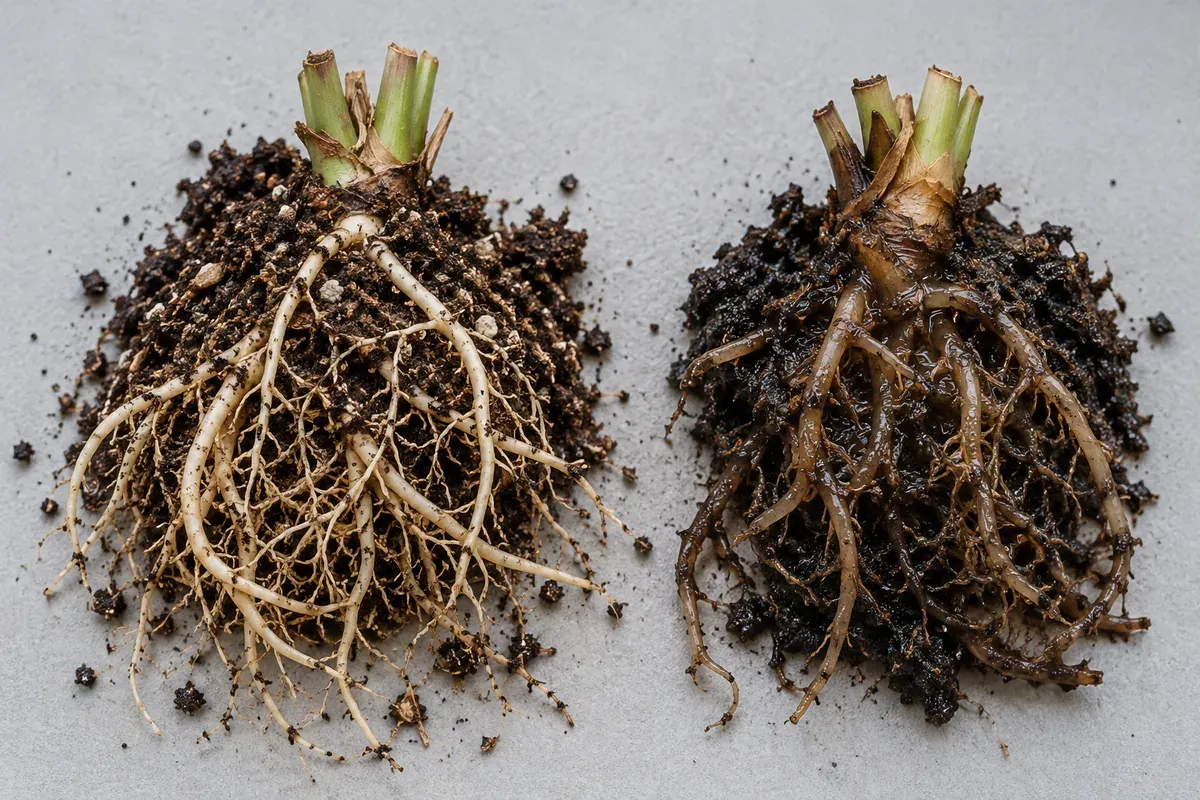
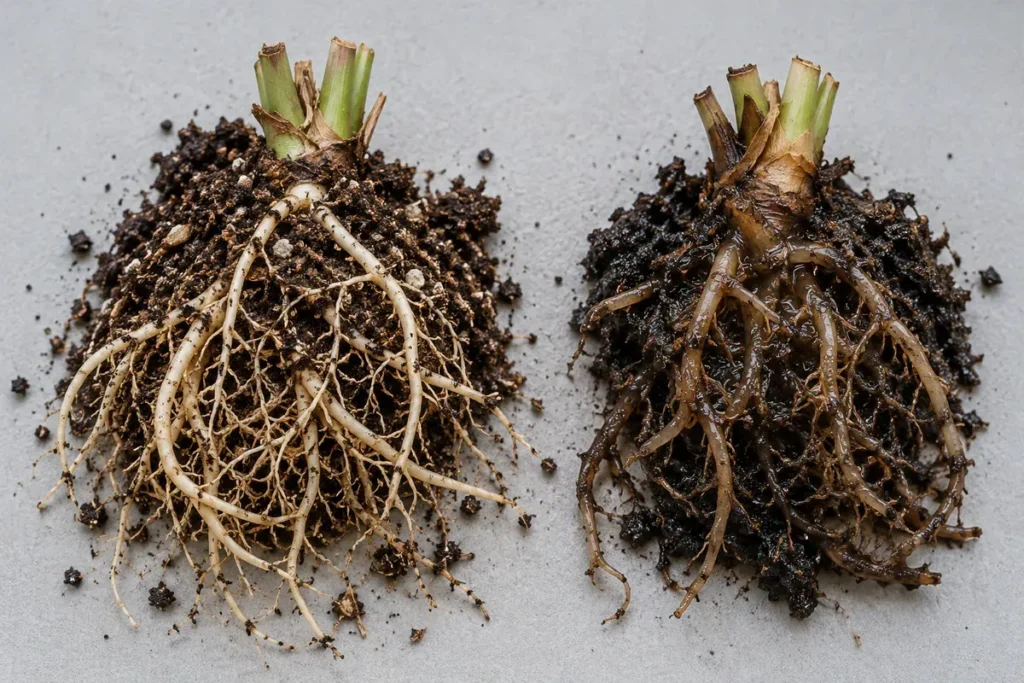
- Rotted roots may smell, and they are soft and brown; healthy roots are firm and white [1][2][3].
- Saturated soil runs out of oxygen and roots switch to anaerobic respiration, so pots that stay wet are at risk [5].
- We found no university source linking a specific smell to a specific cause, so check roots and drainage rather than relying on your nose [1][2].
- Water by need, ensure drainage, and refresh the mix with a well-drained one if needed [4].
Why does potting soil smell?
The direct evidence we found is that rotted roots may smell. University of Wisconsin Extension says rotted roots are soft and brown and may have a bad odour [1]. Chicago Botanic Garden says infected or rotten roots are soft, darkened and often smell unpleasant [2].
As to how the mix itself goes off, a 2025 peer-reviewed review by Zhang and colleagues says oxygen runs out in saturated soil and roots switch to anaerobic respiration [5]. UMass Amherst Extension describes outdoor mulch piles that go sour where oxygen runs out [6]. That is an outdoor analogy. Our own inference, not stated in the sources, is that a potted mix kept wet and airless could behave similarly, but we found no source measuring this in houseplants.
So treat the smell as a prompt to investigate, not a diagnosis.
How do you tell root rot from wet mix or a fresh-bag smell?
Slide the plant out. Iowa State says healthy roots are firm and white, while rotted roots are mushy and brown or reddish [3]. If roots are still firm, the problem looks more like wet or poorly drained mix. If they are mushy, see root rot.
On a phone, swipe sideways to see every column.
| Clue | Possible cause | Next step |
|---|---|---|
| Sour smell, soft brown roots | Commonly root rot [1][2][3] | Trim soft roots, repot in fresh mix; see root rot |
| Sour smell, roots still firm and white | Possibly wet, low-oxygen mix [5] | Stop watering until the mix dries; improve drainage |
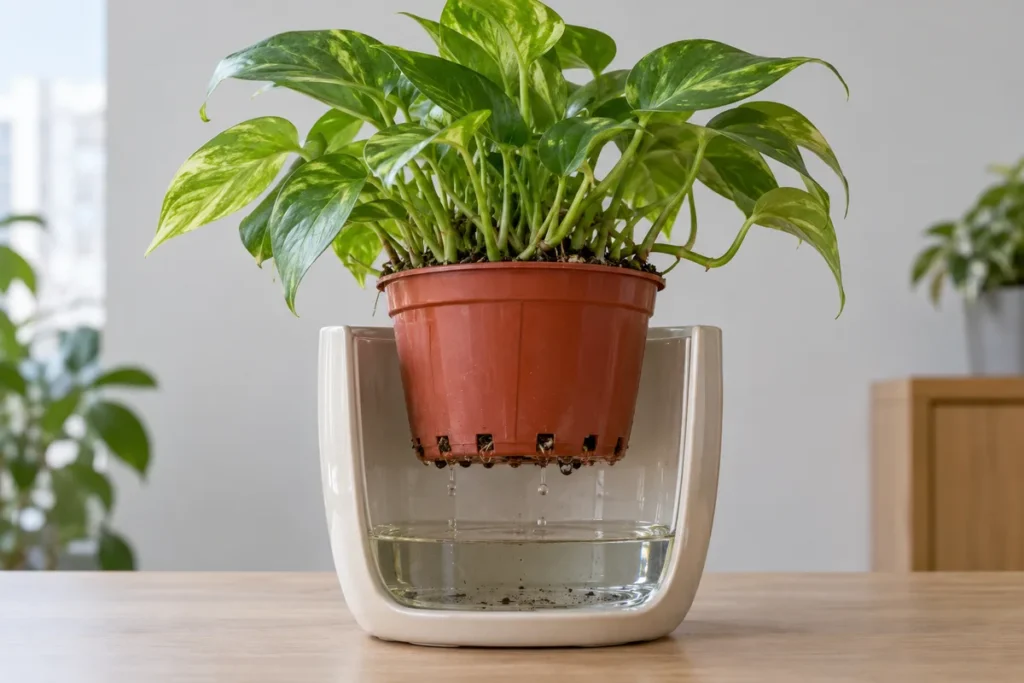
| Water standing in the saucer or outer pot | Base of the pot stays saturated [4] | Empty it; do not let the pot sit in water |
| White or fuzzy growth on the surface | May be mould or mineral deposit | See mould on soil and white marks on potting mix |
| Mild earthy smell from a freshly potted plant | We found no university source on this | Check roots and make sure the mix is not staying wet |
Limp leaves can look like thirst, but watering a rotting root system makes it worse. Iowa State advises checking the roots and soil moisture before watering [3].
What should you do, step by step?
- Stop watering and check the moisture. Iowa State advises watering by need rather than on a schedule [4].
- Empty the saucer or outer pot, and confirm the pot has drainage holes and is not too big [4].
- Slide the plant out. Trim soft brown roots and keep healthy ones [2][3].
- If needed, repot in fresh, well-drained potting mix [4].
- Watch new growth and leaves. If it keeps getting worse, see root rot.
Beginners should do steps 1 and 2. Intermediate growers add steps 3 and 4. Advanced growers can look at mix structure in potting mix science.
What should you avoid?
- Do not flush the pot with lots of water to wash the smell away. That keeps the mix wet and low in oxygen [5].
- Do not rely on charcoal. Clemson mentions a charcoal layer in closed glass terrariums to prevent sour-smelling soil [7]. That is a sealed, no-drainage setting. We found no matching evidence for ordinary drained pots.
- Do not assume pests. Small insects in damp mix can just follow the moisture; see springtails or fungus gnats.
- Do not reuse smelly old mix as is. See before an old pot comes back into use.
Water held in an outer pot keeps the inner pot’s base wet, a common household cause. For decorative pots, see planters without drainage holes.
How do you prevent smelly soil in Hong Kong homes?
Hong Kong Observatory 1991–2020 normals show mean relative humidity of about 82–83% from March to May [8]. High humidity does not mean every plant needs less water, but when mix dries slowly it matters more to check before watering.
- Beginner: push a finger about one knuckle deep before watering, and use pots with holes.
- Intermediate: empty saucers regularly and avoid oversizing pots [4].
- Advanced: choose a well-drained mix and adjust it to the plant [4].
Air-conditioned rooms and humid spells such as the wet spring can dry the same pot at very different speeds, depending on position.
When should you get help, or give up?
If most roots are mushy and the stem base is black and soft, the plant may not recover; see stem rot. If leaves keep dropping two to three weeks after trimming and repotting, take photos to a nursery or a horticulturist.
For a valuable or sentimental plant, photograph the roots before trimming. It helps an expert advise you.
Frequently asked questions
Does a sour smell always mean root rot?
No. Rotted roots may smell [1][2], but wet, low-oxygen mix may do similar [5]. Slide the plant out: firm white roots look healthy, mushy brown ones look rotted [3].
Will fresh soil fix the smell?
Iowa State suggests repotting in fresh, well-drained mix when needed [4]. If watering and drainage stay the same, the problem may return.
Can charcoal in the base remove the smell?
Clemson mentions charcoal in closed terrariums to prevent sour soil [7]. We found no university evidence that it works in ordinary drained pots.
Why does water in the outer pot matter?
Iowa State advises not letting pots sit in saucers or outer pots full of water [4]. Our own inference is that the base then stays saturated and short of oxygen [5].
Because Hong Kong is humid, should I always water less?
No. The Observatory data only shows higher relative humidity from March to May [8]. Check the soil in the pot instead of the weather alone.
Sources
- University of Wisconsin Extension Horticulture: “Root Rots on Houseplants” — Appearance of rotted roots: soft, brown, possibly a bad odour; common root-rot fungi
- Chicago Botanic Garden: “Overwatered houseplants” — Healthy versus rotten roots; rotten roots often smell unpleasant
- Iowa State University Extension: “Root Rots of Houseplants” — Healthy roots firm and white, rotted roots mushy and brown; wilting can look like thirst
- Iowa State University Extension: “Diagnosing houseplant problems related to poor culture” — Water by need, container not too big, drainage hole, no standing water in saucers, fresh well-drained mix
- Frontiers in Plant Science (peer-reviewed review, Zhang et al., 2025): “A review of soil waterlogging impacts, mechanisms, and adaptive strategies” — Saturated soil depletes oxygen and roots switch to anaerobic respiration
- UMass Amherst Extension: “Hort Notes: Beware of Sour Mulch” — Large outdoor mulch piles can go sour where oxygen runs out (an analogy only, not potted plants)
- Clemson University Home & Garden Information Center: “Indoor Plants – Terrariums” — Closed glass terrariums use a charcoal layer against sour-smelling soil
- Hong Kong Observatory: “Monthly Meteorological Normals for Hong Kong (1991-2020)” — 1991–2020 monthly mean relative humidity
Further reading
- Back to Plant Doctor
- Root rot: how to read the roots and recover
- Potting mix science: pores, saturated layers and mixes
- Mould on soil: whether to clean it, how to prevent it
- Plant saucers and mosquitoes: a Hong Kong checklist
Sources checked: 31 October 2026. This is general guidance, not an on-site diagnosis. Always follow the product label.
