


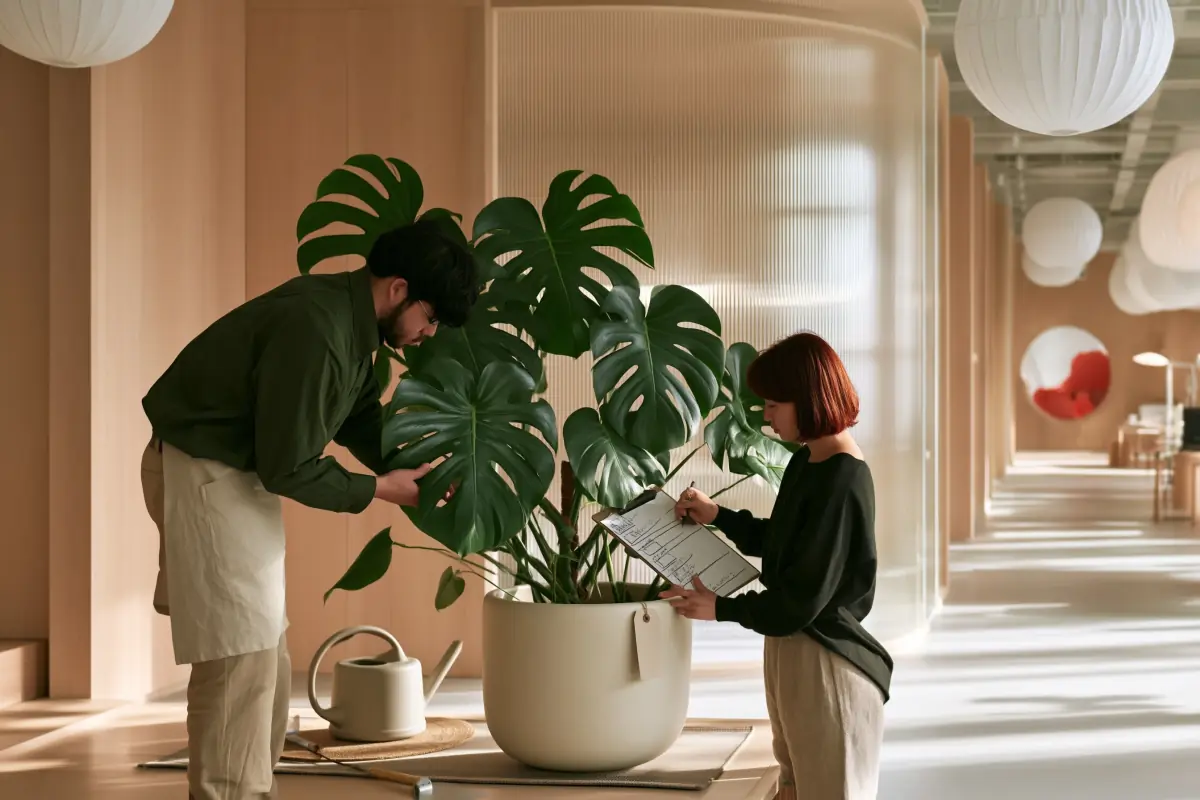

Check what changes instead of simply watering more
Plan around the actual light, temperature, moisture needs and access during the closure, with one person coordinating. Do not saturate every plant in advance or allow several colleagues to provide unrecorded extra care.
In this article
- Check what changes instead of simply watering more
- Ask facilities five questions
- Plan by circumstances rather than plant size alone
- Test watering arrangements before leaving
- Copy this holiday plant-care handover sheet
- On reopening, read the record before acting
- Common questions
- Make the holiday plan specific to each plant
- Related care PDF
A ten-day closure differs between a daylit office, an internal room dependent on lights and a glazed area where air conditioning stops. They cannot share an automatic watering calendar. If you use plant rental, confirm holiday arrangements early; routine service does not automatically imply holiday access.
Ask facilities five questions
- Will all lights be switched off? For plant lights, confirm timer settings, power and permission to operate during closure. Ordinary room lights should not be assumed sufficient without assessment.
- How will blinds and curtains be left? What matters is the light actually reaching plants after the doors close, not window direction alone.
- What happens to air conditioning and ventilation? Record shutdowns or reduced hours. Do not assume this makes every pot dry faster or slower.
- Who is authorised to enter? Confirm building bookings, reception, any escort requirement and an emergency contact. Keep access codes out of the plant-care sheet.
- Will cleaning, building work or relocation take place? Arrange suitable temporary positions and protection rather than allowing plants to disappear into a dark store room.
Plan by circumstances rather than plant size alone
| Closure condition | First step | Confirm |
|---|---|---|
| Conditions remain broadly unchanged | Review recent drying records and species needs | Whether an interim check is needed and who decides on watering |
| Lights or blinds change substantially | Assess actual available light | Suitable lighting or an agreed temporary position |
| Air conditioning stops in a sun-exposed area | Understand temperature and moisture changes during shutdown | Checks, any relocation and responsibility |
| New, recently moved or already unwell plants | Do not rely on the old routine alone | Existing issues addressed and observation agreed |
| No access for an extended period | Tell the supplier early | A workable care, relocation or temporary-holding arrangement |
This is a planning aid, not a guarantee of how many days a plant can cope. Size, container, medium and environment all matter; a large pot is not proof of drought tolerance.
Test watering arrangements before leaving
On the last working day, decide from actual conditions whether watering is needed and drain the surplus. Do not fill cover pots as reserve tanks or stand every plant in the same depth of water.
The RHS holiday-care guide notes that watering arrangements can fail through insufficient supply, displacement or excessive wetness. Trial drip, wick or self-watering devices under observation using the actual pot and conditions. Check suitability, leakage and how long the supply lasts.
One successful trial is not a promise of indefinite unattended operation. Large plants and arrangements near timber, carpets or company equipment need a safe inspection and failure-response plan. A last-minute device should not replace unresolved responsibility and access arrangements.
Copy this holiday plant-care handover sheet
| Field | Information | Confirmation |
|---|---|---|
| Closure and reopening | Early finishes, extensions and supplier holidays | ____ |
| Position list | IDs and plants needing particular attention | ____ |
| Lights, blinds and air conditioning | Actual holiday settings and approver | ____ |
| Last inspection | Date, moisture, watering decision and drainage | ____ |
| Interim checks | Dates, authorised person and inspection scope | ____ |
| Abnormalities and leaks | Contact, permitted actions and escalation conditions | ____ |
| Changes | Who informs the supplier and updates the record | ____ |
| Return handover | First reviewer and record location | ____ |
Mark tentative visits as unconfirmed. An assumption that another colleague will attend is not a care arrangement.
On reopening, read the record before acting
Establish whether anyone watered during closure, power was interrupted or plants moved. Then check collected water, flooring, foliage and accessible medium. Do not respond to drooping by watering every pot immediately.
Restore normal operating arrangements with attention to light changes, avoiding a sudden move from a dim position to strong direct sun. Photograph the whole plant and details of any issue, with moisture and environmental history for the responsible person. Deal safely with cracked pots, leaks or instability first and assign review dates to other concerns.
Record gaps in the plan, such as denied access, duplicate watering or blinds changed by cleaners. Improve the same process for the next closure rather than starting from guesses again.
Common questions
Does a seven-day closure always require watering?
Duration alone cannot decide. Consider species, starting moisture, medium, pot and holiday conditions to establish checks and watering need. An inspection need not lead to watering.
Can we leave plant lights on for 24 hours?
Continuous operation is not a substitute for a suitable lighting plan. Confirm plant needs, output, operating hours and the company’s electrical-safety arrangements.
Who should know if the closure is extended?
Notify the plant-care coordinator and arranged service provider, then reconfirm access, light and the next check. Changing the company calendar alone does not update plant care.
For corporate greening or a holiday-care enquiry, prepare closure dates, the position list and access restrictions before visiting corporate services. Check species requirements alongside the care encyclopedia.
Make the holiday plan specific to each plant
Start a pot-by-pot office inventory with these three plants. Holiday care depends on their current condition, lighting and site arrangements; the retail product grid does not imply that rental or holiday visits are included.
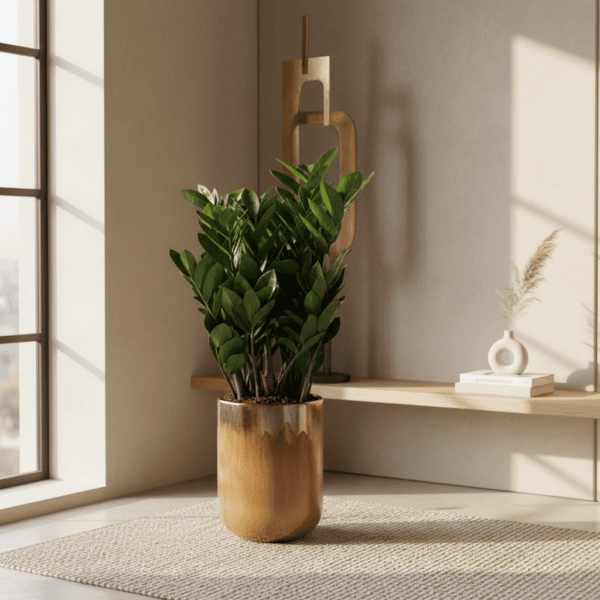
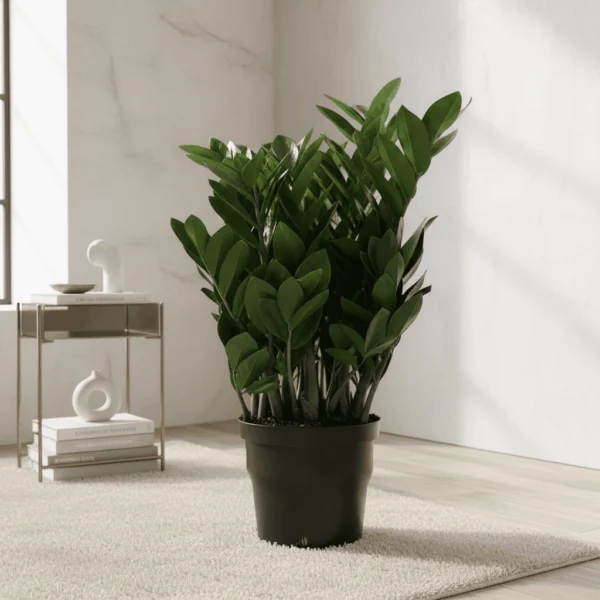
- ZZ Plant: For a ZZ plant, record moisture and the last watering before closure rather than soaking the pot in anticipation of the holiday.
- Madagascar Dragon Tree: For a dragon tree, check whether closure will remove its usual daylight or artificial lighting, and name the person responsible for checking it.
- Burgundy Rubber Plant: For a burgundy rubber plant, include blinds, air-conditioning arrangements and the return-to-work leaf check, rather than recording only a pre-holiday watering.
Featured
ZZ Plant
ZZ Plant — Glossy, deep green leaflets on upright stems; it copes with lower light and infrequent watering.
- Light: Bright indirect light to sun, introduced gradually.
- Watering: Water thoroughly only after most of the mix dries; never leave standing in water.
Hong Kong care guide: ZZ Plant (light, watering & common issues)
Before & after purchase · Plantshop Care Encyclopedia


Madagascar Dragon Tree
Madagascar Dragon Tree — Slender canes topped with narrow, deep green leaves edged in red.
Hong Kong care guide: Madagascar Dragon Tree (light, watering & common issues)
Before & after purchase · Plantshop Care Encyclopedia

Featured

Burgundy Rubber Plant
Burgundy Rubber Plant — glossy dark foliage and a distinct branching form for your living room or workspace. Choose a position with bright, indirect light.
Hong Kong care guide: Burgundy Rubber Plant (light, watering & common issues)
Before & after purchase · Plantshop Care Encyclopedia
