



The useful outcome is a workable position schedule
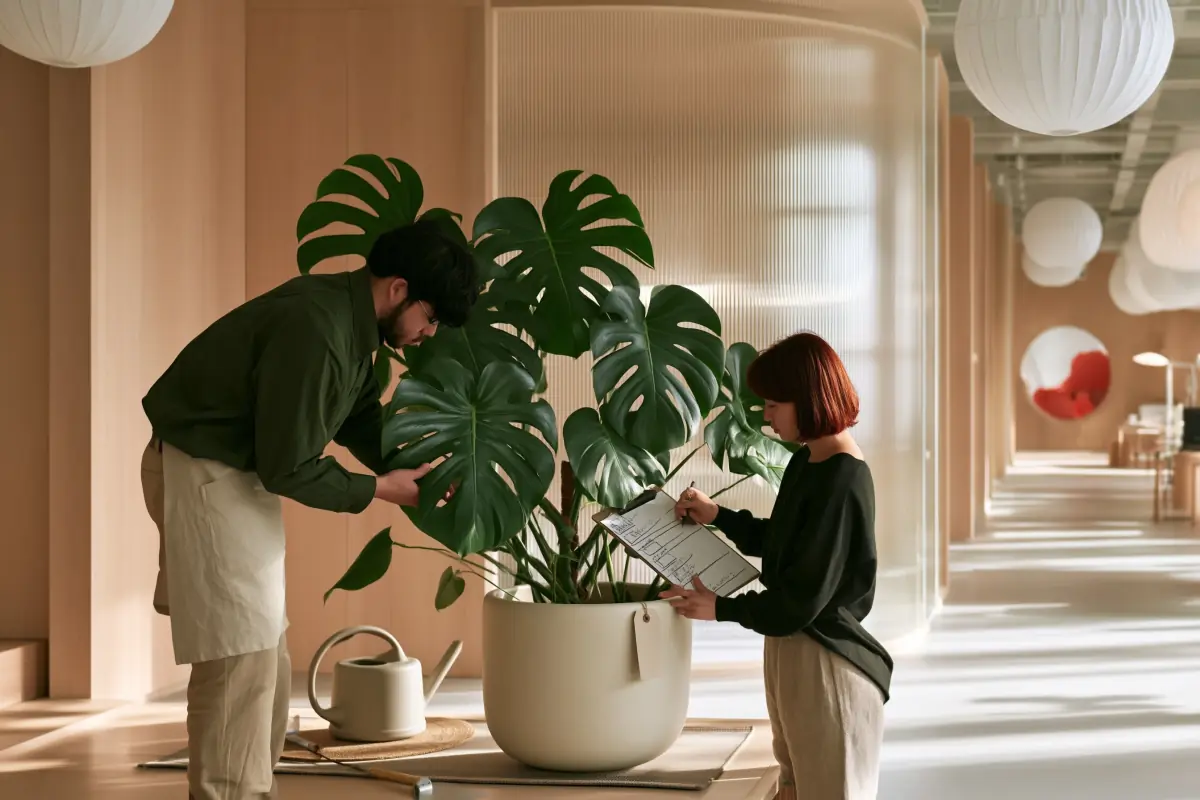
A useful survey does more than produce photographs and a total number of plants. It gives each proposed position an ID, records its conditions and unresolved limitations, and assigns the next action. Species, containers and maintenance arrangements can then follow from that information.
In this article
- The useful outcome is a workable position schedule
- Prepare four things before the visit
- Check conditions at every proposed position
- Copy this position-by-position survey sheet
- Example: a glass meeting room that still needs a different position
- Carry the survey into the proposal
- Questions from administrative and facilities teams
- Plants to compare during your office survey
This procurement worksheet is an editorial tool from Plantshop for administrative, facilities and design teams. It is not a certification standard or a statement that every listed task is included in a rental package. Confirm the actual scope in the quotation. Start with our office plant rental service if you need an overview.
Prepare four things before the visit
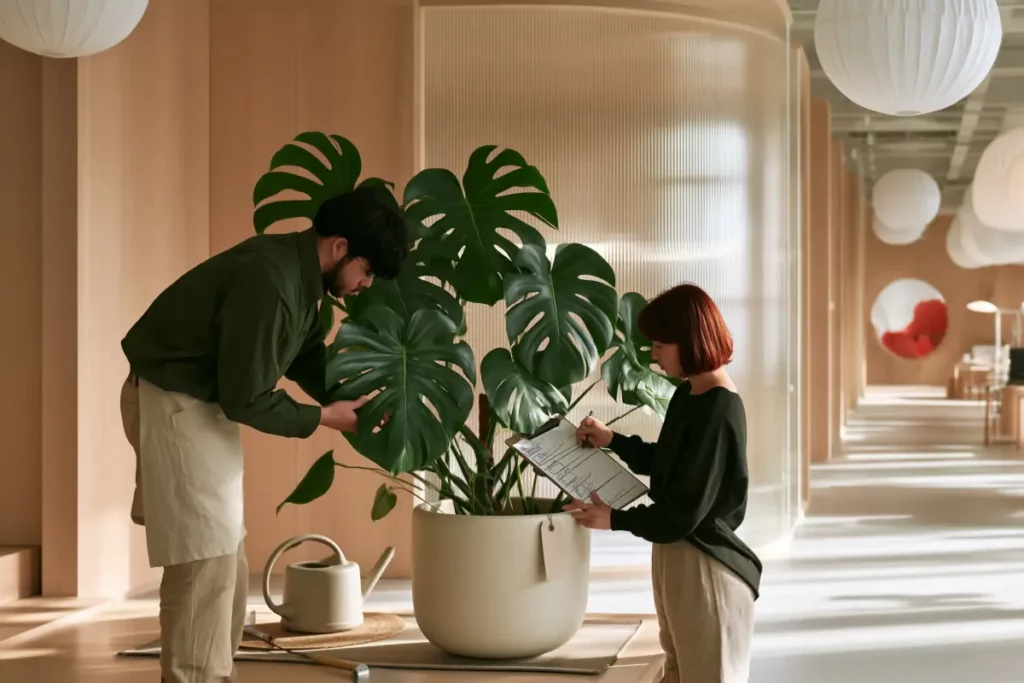
- A simple layout. Mark reception, work areas, meeting rooms, the pantry and candidate positions. A drawing containing security arrangements is unnecessary.
- Normal operating arrangements. Record working days, weekends, holidays, blinds, lighting and air conditioning. A fully lit office during a visit may not reflect ordinary or closed-office conditions.
- Building-management requirements. Check delivery bookings, goods lifts, the handling route, access hours and any restrictions on work. Label unknowns for confirmation.
- Decision makers and contacts. Identify who approves appearance, who approves locations and who receives maintenance records, so the project does not develop three conflicting versions.
Before sharing photographs, exclude screens, documents, access-control details and identifiable employees where possible. A plant supplier needs to understand positions, not receive sensitive company information.
Check conditions at every proposed position
Light: assess daylight at expected leaf height, external obstructions, blinds and lighting hours. A windowless room needs an assessment of artificial light, not merely the label ‘low-light plants’. Air conditioning: record the direction and operating hours of outlets and whether foliage will sit in the airflow. Do not assume all air-conditioned rooms need more, or less, watering.
Circulation: check people, chair backs, door swings, cupboards and equipment-maintenance access. Do not substitute a generic clearance for building requirements covering routes and fire-safety equipment. Maintenance: establish how water is obtained and removed, where tools can be placed and how containers will be handled.
The RHS growing guide explains why environment and drainage affect care. The worksheet below turns that principle into site questions; it does not transplant a British seasonal timetable into a Hong Kong office.
Copy this position-by-position survey sheet
| Field | Site record | Owner or next action |
|---|---|---|
| Position ID, purpose and available footprint | ____ | Location approval: __ |
| Daylight, lights and blind schedule | ____ | Further observation: __ |
| Airflow and holiday operating arrangements | ____ | Facilities contact: __ |
| Doors, chairs, routes and equipment | ____ | Building check: __ |
| Floor finish, outer pot and leak protection | ____ | Container proposal: __ |
| Water, drainage and maintenance hours | ____ | Supplier confirmation: __ |
| Delivery route and goods-lift booking | ____ | Booking owner: __ |
| Open issues and target date | ____ | Follow-up owner: __ |
An unresolved location need not hold up every other position. Confirm suitable areas first and leave uncertain ones pending rather than forcing a plant into a poor location to reach a target quantity.
Example: a glass meeting room that still needs a different position
This is an illustrative scenario, not a customer case. A glass meeting room looks bright, but blackout blinds are closed during meetings and lights are switched off at night. The proposed plant position is also directly in front of an air outlet. Photographs taken during the survey could overstate the light normally available.
Confirm actual blind usage, then consider a position with more dependable light. If the original location must be retained, assess suitable lighting and avoidance of direct airflow before discussing species. A replacement service does not make persistently unsuitable growing conditions suitable.
Carry the survey into the proposal
Ask the proposal to use the same position IDs and specify plant names, expected overall height and canopy spread, container arrangements, maintenance and outstanding decisions. When quantity or location changes, update the conditions that go with it. Changes to lighting, power or building services need the appropriate professionals and building-management approval; they are not automatically part of plant delivery.
This is also the time to express the visual brief precisely: a single focal plant at reception, for example, or several smaller planting points across a work area. A checkable arrangement is easier to deliver than an instruction to make the office look more premium.
Questions from administrative and facilities teams
Can a supplier quote from photographs alone?
Photographs support an initial discussion but may not show light duration, handling restrictions or maintenance access. Record important assumptions and confirm whether a site visit is needed.
Should we decide the number of plants first?
A budget and indicative range are useful. The final quantity should follow suitable positions, rather than filling unsuitable corners to meet a predetermined total.
Does a survey mean the service is booked?
No. Confirm whether a visit is offered, any charges, availability and the delivery scope with the supplier.
Take the completed sheet to your plant rental enquiry. For living walls or landscape work, see corporate greening services rather than assuming a standard pot-plant arrangement covers every requirement.
Plants to compare during your office survey
Use these products to create a shortlist, then check light, direct air-conditioning draughts and clear access at each position. The product grid shows retail information; rental specifications and charges are agreed for the site.
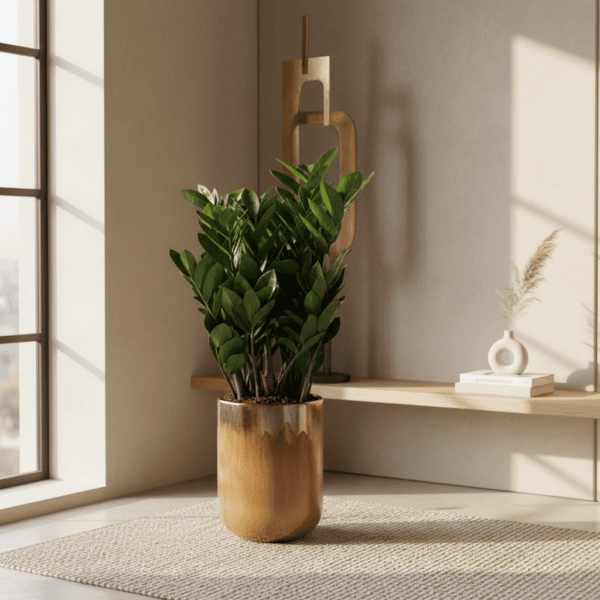
- ZZ Plant: For a ZZ plant, record lighting during working hours and after lights are switched off; low-light tolerance does not remove the need for assessment.
- Madagascar Dragon Tree: A dragon tree has upright stems and narrow leaves. Include the spread of its leaf tips when measuring, rather than recording only the pot.
- Areca Palm: An areca palm’s spreading fronds make it a useful reference when checking space behind chairs, nearby air outlets and maintenance access.
Featured
ZZ Plant
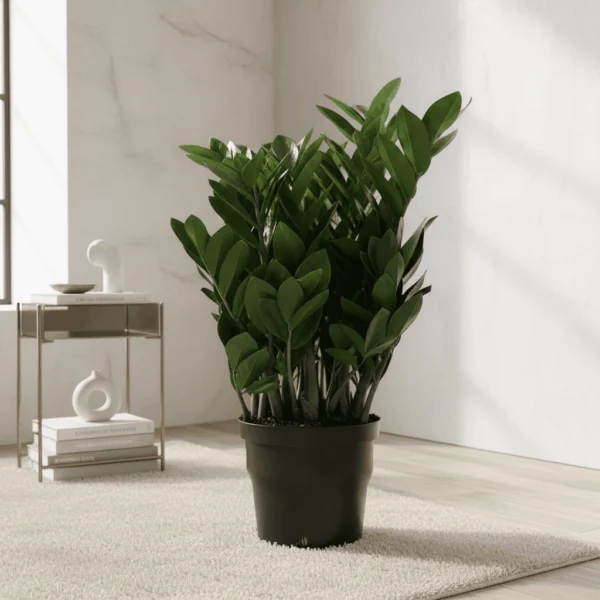
ZZ Plant — Glossy, deep green leaflets on upright stems; it copes with lower light and infrequent watering.
- Light: Bright indirect light to sun, introduced gradually.
- Watering: Water thoroughly only after most of the mix dries; never leave standing in water.
Hong Kong care guide: ZZ Plant (light, watering & common issues)
Before & after purchase · Plantshop Care Encyclopedia


Madagascar Dragon Tree
Madagascar Dragon Tree — Slender canes topped with narrow, deep green leaves edged in red.
Hong Kong care guide: Madagascar Dragon Tree (light, watering & common issues)
Before & after purchase · Plantshop Care Encyclopedia


Areca Palm
Areca Palm — Feathery, arching fronds that soften a living room, studio or office corner.
- Light: Bright light indoors, protected from sudden intense western sun.
- Watering: Water as the surface dries, maintaining even moisture with drainage.
Hong Kong care guide: Areca Palm (light, watering & common issues)
Before & after purchase · Plantshop Care Encyclopedia
