


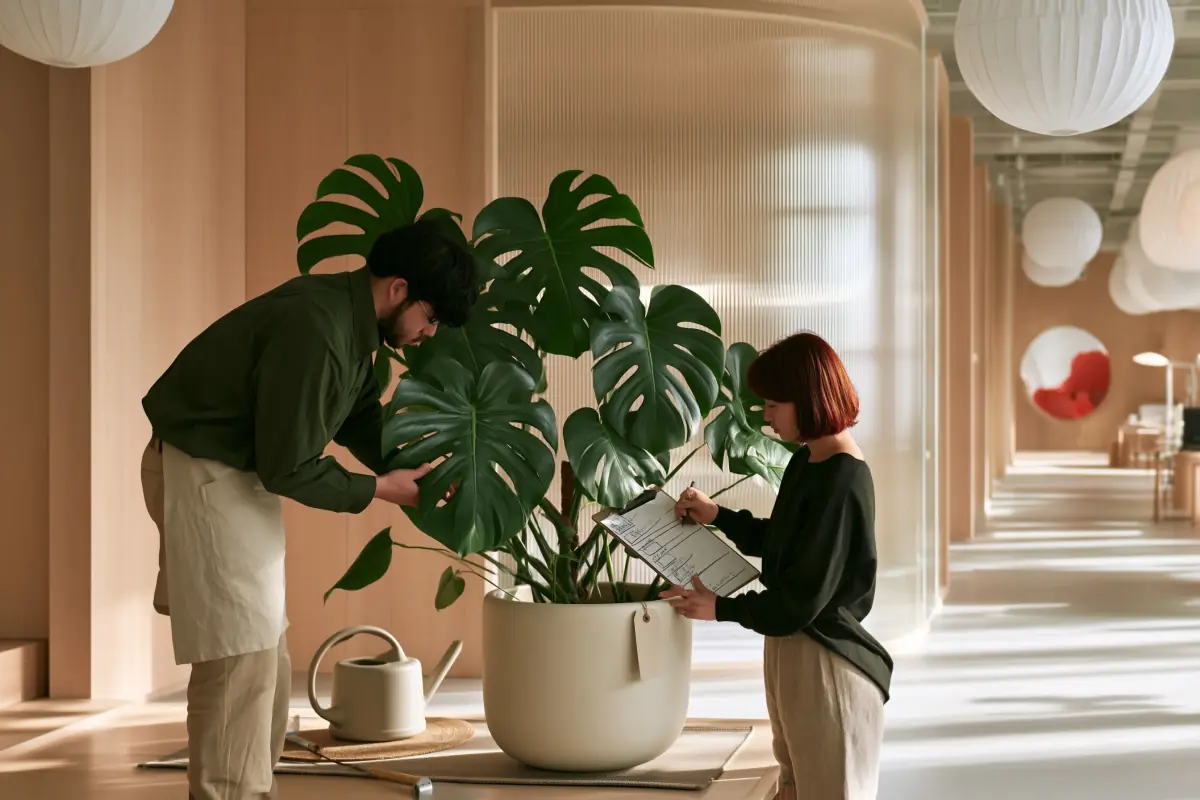

Review both the work and what happened afterwards
A useful maintenance review connects three things: each plant’s condition, work performed and follow-up of abnormalities. An attendance note does not establish that every plant was inspected, and a good photograph does not establish that drainage or the next action has been addressed.
This Plantshop worksheet is a management aid for administration, facilities teams and suppliers, not an accreditation or a list automatically included in every service package. Define the agreed scope of plant rental and maintenance first, then decide which records are appropriate.
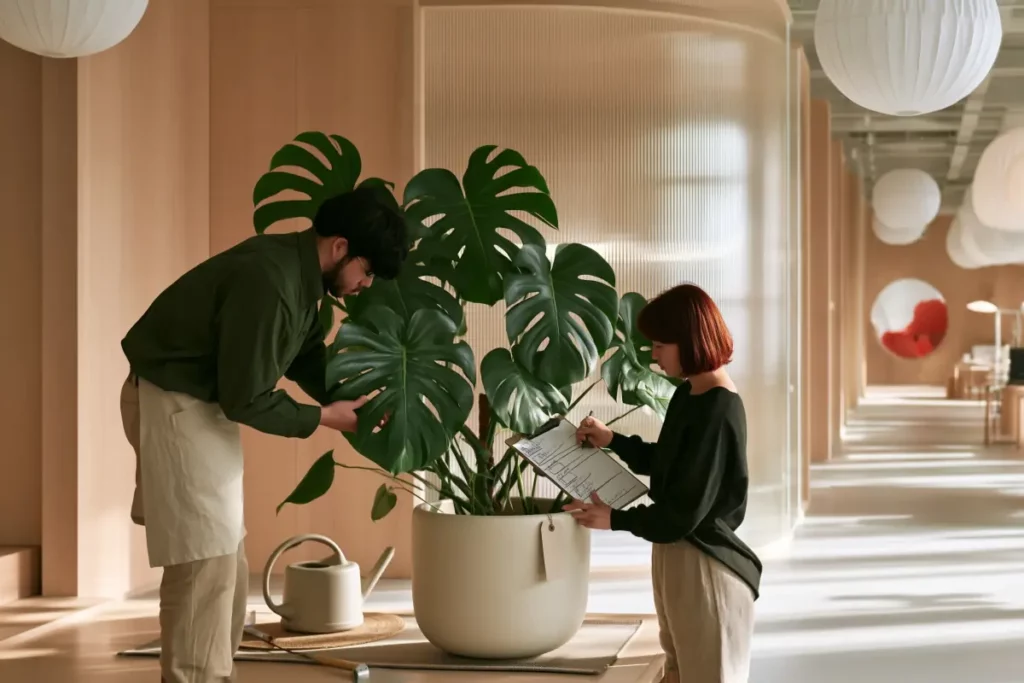
Keep a baseline so new problems are identifiable
Retain the position IDs used at installation, with species, container, installation date and reference photographs. Add an event when a plant moves, is replaced or repotted, or when lighting and air conditioning change. Do not silently overwrite the previous record.
Take comparable photographs from similar angles and distances. The purpose is to follow trends, not create a better-looking image. Foliage, posture and new damage can help, but photographs cannot establish moisture, and automatic exposure can alter apparent colour. Avoid staff, documents and screens.
Record the decision, not just that water was added
| Inspection area | Observable record | Follow-up when needed |
|---|---|---|
| Whole plant | New yellowing, wilt, damage and any spread | Photographs, possible factors and further checks |
| Medium and watering | Areas checked, moisture judgement and reason to water or not | Investigation of uneven drying or prolonged wetness |
| Container and drainage | Collected water, cracks, leaks and stability | Safe action and setup changes |
| Leaf undersides, joints and pest signs | What was seen, plant ID and close-up | Identification, separation and appropriate response |
| Cleaning and pruning | Work needed and performed, retaining the original issue record | Reason for anything deferred and next step |
| Environmental changes | Blinds, lights, air conditioning, moves or extra watering by staff | Actions requiring the company or supplier |
A long report is unnecessary. ‘Not watered: medium still moist; review at the next check’ is more informative than an unexplained blank. Watering at every visit is not evidence of good maintenance.
Give every open issue a next action
Track five fields: plant ID; first observation date; facts and photographs; action and owner; review date and outcome. If observation is the action, specify what will be monitored, such as whether new yellowing continues or the medium stays wet after drainage is corrected.
Penn State’s plant-health diagnostic guidance recognises environmental and other non-pathogen causes. Consider position, light and care changes alongside symptoms rather than treating yellowing as proof of a fertiliser deficiency or using disease treatment before identifying the problem.
Record access restrictions and pending company decisions too, with an owner to resolve them. A location that could not be entered should not be marked as inspected.
Four simple figures for a service review
These are optional management measures, not industry standards or a health score. Agree the scope first and do not reduce the review to one reward-or-penalty number.
| Measure | Definition | Limit |
|---|---|---|
| Completed visits | Completed visits / confirmed planned visits in the period | List rescheduling and denied access separately; attendance does not measure health |
| Issues awaiting review | Items without a completed follow-up at the review date | Separate those not yet due from those past the agreed date |
| Recurring issues | Records of similar symptoms recurring at the same position | Prompts investigation, not automatic attribution of supplier fault |
| Replacements | Number replaced and the recorded reason for each | Neither a high nor a low count proves service quality |
If no visits were planned, report the proportion as ‘not applicable’, not 100%. When a replacement performs better, retain the position and environmental-change history to understand what changed.
When should replacement be discussed?
Discuss the next step when condition keeps deteriorating, safety is affected, the agreed display requirement is no longer met or suitable corrective care has not helped. Investigate the cause first. Replacing a plant with the same type in an unchanged, inadequately lit position can repeat the problem.
Record the original plant, reason, replacement arrangement, any relocation and a new observation baseline. Charges, eligibility and timing belong to the confirmed service agreement; this article sets no free-replacement condition or response deadline.
Common questions
Is weekly attendance always better than fortnightly?
Frequency alone is insufficient. Plants, sites and tasks differ. Assess whether the arrangement meets actual needs and issues receive timely attention.
Should every plant be photographed at every visit?
Discuss the need and cost, but repeated photographs are not always useful. Comparable baseline, issue and follow-up images are often more targeted.
Should we record watering by a colleague?
Yes. Extra watering changes the evidence. Notify the responsible person and restore a single shared care record.
When reviewing a proposal, take the position schedule, visit arrangements and open issues to your corporate plant rental enquiry, rather than asking only about visits per month.
Choose useful inspection views for each plant form
You can share one inspection form across the office, but photograph angles and observation points should suit each plant. These products provide name and appearance references; rental maintenance and replacement conditions follow the agreed service arrangements.
- Areca Palm: For an areca palm, record the whole canopy, leaf tips and condition near the pot surface rather than photographing only one outer frond.
- Madagascar Dragon Tree: Use the same angle to compare a dragon tree’s crowns, stems and pot surface, making existing issues easier to track.
- Burgundy Rubber Plant: Inspect both sides of a burgundy rubber plant’s leaves. If there are marks or dust, record their location and change before deciding on follow-up.


Areca Palm
Areca Palm — Feathery, arching fronds that soften a living room, studio or office corner.
- Light: Bright light indoors, protected from sudden intense western sun.
- Watering: Water as the surface dries, maintaining even moisture with drainage.
- Ships in its original nursery pot; decorative planters are available as an upgrade.
Keep away from pets and children that chew leaves, and wash your hands after contact with the sap.
Hong Kong care guide: Areca Palm (light, watering & common issues)
Before & after purchase · Plantshop Care Encyclopedia
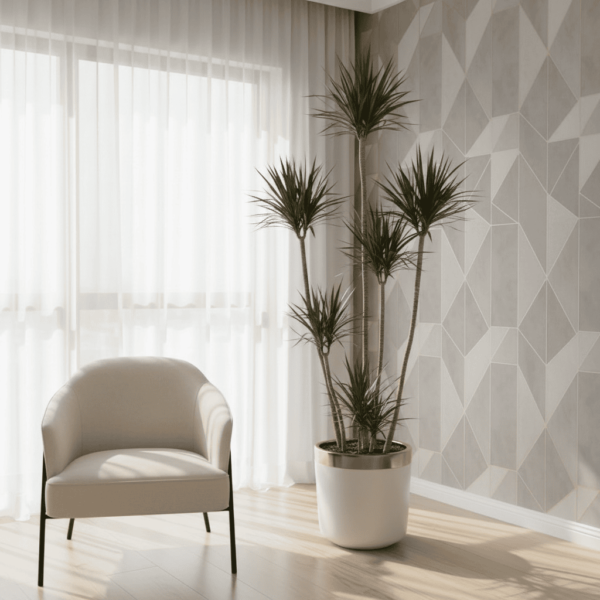

Madagascar Dragon Tree
Madagascar Dragon Tree — Slender canes topped with narrow, deep green leaves edged in red.
- Ships in its original nursery pot; decorative planters are available as an upgrade.
Pet safety is not confirmed for this plant. Keep it out of reach of cats, dogs and children.
Hong Kong care guide: Madagascar Dragon Tree (light, watering & common issues)
Before & after purchase · Plantshop Care Encyclopedia

Hot

Burgundy Rubber Plant
Burgundy Rubber Plant — glossy dark foliage and a distinct branching form for your living room or workspace. Choose a position with bright, indirect light.
A nursery pot is included. Decorative pots are available as an upgrade. Check the specifications, choose your pot and add to your basket.
Hong Kong care guide: Burgundy Rubber Plant (light, watering & common issues)
Before & after purchase · Plantshop Care Encyclopedia