



Level: Advanced
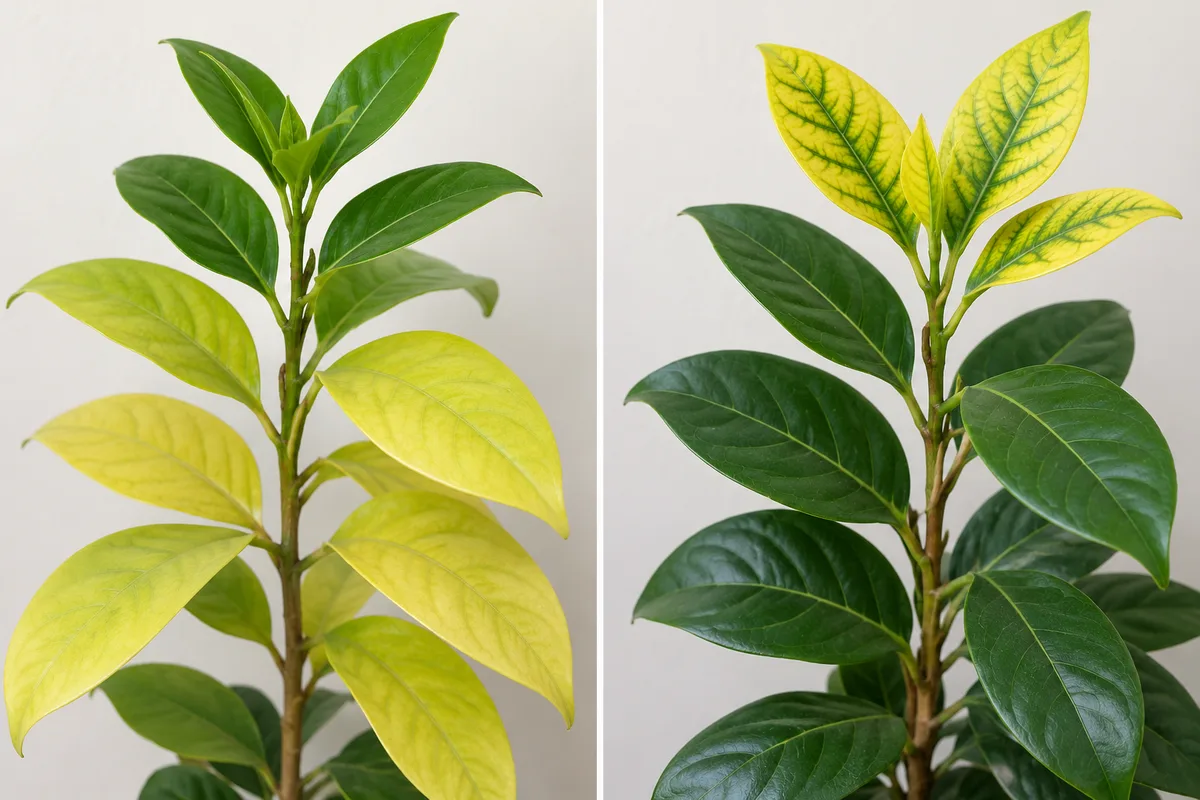
The most useful clue is whether old or new leaves show symptoms first. Nitrogen and phosphorus problems tend to show on older leaves [1][3], calcium and iron on newer ones [1][2]. But roots, salts, pH and waterlogging can mimic deficiency, so rule them out before adding fertiliser [1][4].
Key points
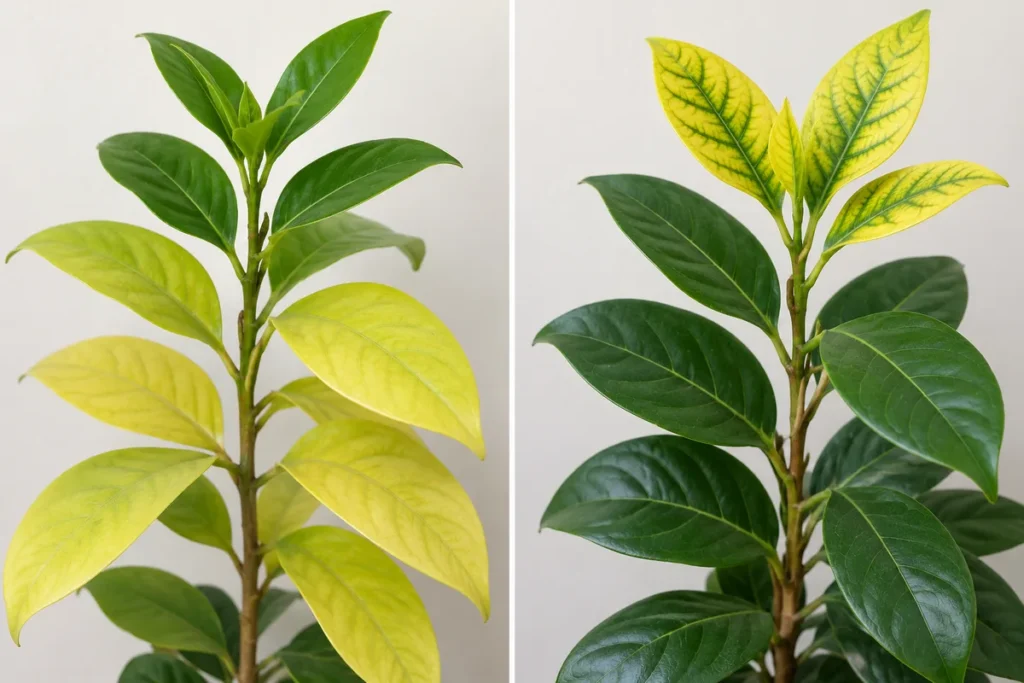
- Check position first: N, P, K and Mg symptoms tend to appear on older leaves, Ca and Fe on newer ones [1][2][3].
- Yellow new leaves with green veins may be an iron problem, often linked to high pH rather than missing iron [1][2].
- Damaged roots, salt build-up and waterlogging can all look like deficiency, so do not feed first [1][4].
- Most university guidance here covers landscape plants, so treat it as a guide for pots, not proof [1][2][3].
Why is nutrient deficiency so easy to misdiagnose?
Many problems turn leaves yellow or brown. The University of Maryland says deficiency symptoms are very hard to tell from pest, disease, soil and irrigation problems, that slow growth and small leaves can be a better sign than leaf colour, and that soil tests help (the page covers woody landscape plants) [2]. UC IPM says deficiency-like symptoms often come from anything that makes roots unhealthy, including salts, pH problems, waterlogging and root pathogens [1].
Pots deserve extra care because the root zone is small. Clemson says salt build-up can damage roots, causing slow growth, brown leaf tips, lower leaf drop and wilting [4], which looks a lot like deficiency. So the table below lists possibilities, not diagnoses.
Old leaves or new leaves: why does position matter?
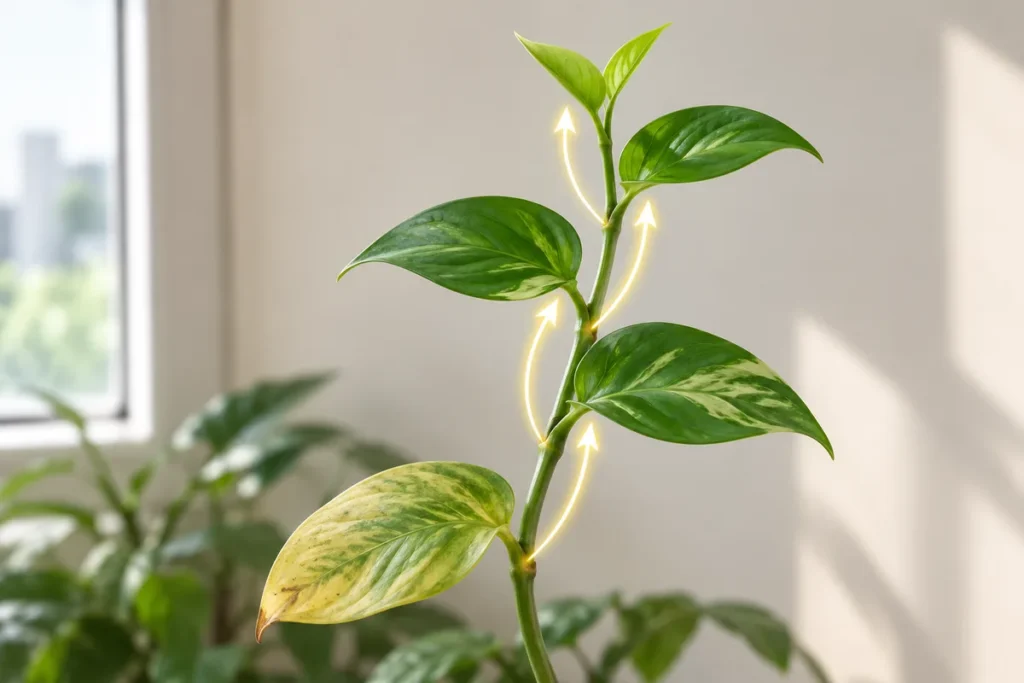
Some nutrients can move within the plant. When supply runs short, the plant pulls them from older leaves for new growth, so symptoms show on older leaves first. NC State says nitrogen moves readily, so even a badly deficient plant may keep greener new leaves, and phosphorus is highly mobile, so deficiency shows first on older leaves [3]. Calcium and iron move less. Maryland says calcium deficiency shows first on new leaves [2], and UC IPM describes new foliage turning yellow or whitish with green veins when iron is short [1].
Magnesium is trickier. Maryland says it shows first on older leaves as yellowing between veins and at the edges, looks like iron deficiency at the start, then develops reddish-purple blotches and dead leaf margins [2]. Checking whether the yellowing is on old or new leaves is the quickest way to separate the two.
N, P, K, Ca, Mg and Fe: quick comparison table
On a phone, swipe sideways to see every column.
| Clue | Possible cause | Next step |
|---|---|---|
| Older leaves evenly pale green to yellow, new growth sparse and small but mostly green [1] | Possibly nitrogen | Rule out roots and watering, then see fertiliser basics |
| Dark green leaves with purple on the underside or veins; Maryland describes bronze to purple undersides on older leaves [1][2] | Possibly phosphorus (sources differ on where it shows first) | Check temperature and roots; phosphorus deficiency is rare in landscapes [1] |
| Older leaf edges and areas between veins yellow or brown, edges curling or crinkling [1][2] | Possibly potassium | Rule out salt build-up, then feed to the label |
| Small, yellow new leaves with dead tips [2] | Possibly calcium (only one source here, so weak evidence) | Check roots and water first; do not add calcium on this clue alone |
| Older leaves yellow between veins and at edges, later reddish-purple blotches and dead margins [2] | Possibly magnesium | Rule out root and pH problems first |
| New leaves yellow or whitish with green veins [1][2] | Possibly iron, or high pH locking iron up | See pale new leaves and pH and EC |
The sources disagree on phosphorus. UC IPM says young broadleaf foliage turns abnormally dark green and may be purplish underneath [1]. Maryland says older leaves are dark green on top and bronze to purple underneath [2]. NC State says phosphorus is highly mobile, so deficiency shows first on older leaves [3]. Our reading: where phosphorus shows first is not settled, so use position only as a supporting clue.
How do you confirm it without feeding blindly?
Work through this order before trusting leaf colour.
- If in doubt, unpot and check the roots. Soft, rotted roots and long-wet mix point to root rot.
- Look for white crust on the pot rim and drainage hole. It suggests salt build-up [4], see fertiliser burn.
- Recall what you fed and how often. Too much or too frequent feeding can harm plants [5].
- Note where the yellowing is: old or new leaves, whole leaf or between veins [1][2].
- Consider pH. Maryland links iron deficiency to high soil pH and says iron can be present but unusable above pH 6.5 [2]. That figure comes from landscape soil. We found no source applying it to potting mix.
Home pH strips may not be accurate, and we found no source showing they are reliable for diagnosing potted plants. Use a trusted plant diagnostic service if you need confirmation.
What should you do once you suspect a deficiency?
Clemson recommends a complete feed for indoor plants, used at label strength [4]. New Hampshire says stunted growth with yellow or purple tints may mean a plant needs balanced fertiliser, though fertiliser alone may not revive it [5]. A sensible order:
- Fix roots, salts and drainage first so the plant can take nutrients up.
- If the plant is growing, use a balanced feed at label or reduced strength, as in fertiliser basics.
- Change one thing at a time and judge by newly grown leaves, because old yellow leaves usually do not regain colour. That is a common observation, not something these sources state.
- Only add a single-nutrient product, such as for iron or magnesium, if there are clues pointing to it, not leaf colour alone.
What should you avoid?
- Feeding at the first yellow leaf. Roots, salts and waterlogging can cause similar symptoms [1][4].
- Adding several supplements at once. You cannot tell which worked, and you may add to the salt load.
- Piling on phosphorus or other nutrients to be safe. Clemson says that when phosphorus and potassium are already sufficient, more may bring no benefit, and plants need more nitrogen and potassium than phosphorus [6]. NC State adds that excess phosphorus may inhibit iron availability [3].
- Copying landscape doses of acidifiers or magnesium salts. Those sources are about outdoor soil, and we found no clear pot doses, so do not make up your own mixes.
How do you prevent it, and when should you ask for help?
Prevention comes down to healthy roots, free drainage and sensible feeding. New Hampshire suggests flushing pots about every four months to prevent salt build-up [5]. Use label strength for houseplant feeds and reduce general-purpose ones. Also review your potting mix and watering.
If roots and feeding are sorted but new leaves are still yellow, small or distorted a month or two later, or you also see pests, spots or soft stems, send clear photos and the plant name to a horticulturist or a plant diagnostic service rather than testing one nutrient after another.
Frequently asked questions
Are yellow new leaves with green veins always iron deficiency?
No. UC IPM says yellow-white new leaves with green veins point to iron or manganese deficiency [1]. Maryland links iron deficiency to high soil pH [2], so iron may be present but unavailable. Root problems should be ruled out too [1].
Will yellow old leaves turn green again?
The sources do not say. Nutrients such as nitrogen and phosphorus are moved from older to newer leaves [3], so judge recovery by newly grown leaves. That is our inference, not a promise.
How do I treat calcium deficiency?
Only one source here, Maryland, describes calcium symptoms: small, yellow new leaves with dead tips, in woody landscape plants [2]. The evidence is weak for houseplants. Check roots, watering and salts first, and do not add calcium on symptoms alone.
Is a soil test useful for a potted plant?
Maryland treats soil tests as an important diagnostic tool [2], but for landscape soil. We found no university source covering potting mix, so ask a professional lab.
Sources
- University of California IPM (UC IPM): “Common Nutrient Deficiency Symptoms” — Symptoms for N, P, K, Mg and Fe; deficiency symptoms often stem from roots, salts, pH or waterlogging (landscape plants)
- University of Maryland Extension: “Nutrient Deficiency of Trees and Shrubs” — Where symptoms of N, P, K, Ca, Mg and Fe first appear; iron and pH; magnesium resembling iron early on; soil tests (woody landscape plants)
- NC State Extension: “A Gardener’s Guide to Fertilizing Trees and Shrubs” — Nitrogen and phosphorus move within the plant so deficiency shows on older leaves; pH affects iron; excess phosphorus can inhibit iron (landscape plants)
- Clemson University Home & Garden Information Center: “Indoor Plants” — Lower fertiliser needs indoors; salt build-up causes slow growth, brown tips, lower leaf drop and wilting; white crust warning sign
- University of New Hampshire Extension: “Fertilizing Houseplants” — Stunted growth and yellow or purple tints may call for balanced feed but fertiliser alone may not be enough; excess harms plants; flushing pots
- Clemson University Home & Garden Information Center: “Reading A Fertilizer Label” — Plants need more nitrogen and potassium than phosphorus; adding P and K when already sufficient may not help
Further reading
- Back to Plant Doctor
- Fertiliser basics: NPK, timing and amounts
- Fertiliser burn: what to do after over-feeding
- Yellow new leaves with green veins: iron, magnesium and pH
- pH and EC for potted plants
- Yellow leaves: causes and how to tell them apart
Sources checked: 31 October 2026. This is general guidance, not an on-site diagnosis. Always follow the product label.
