



Level: Intermediate
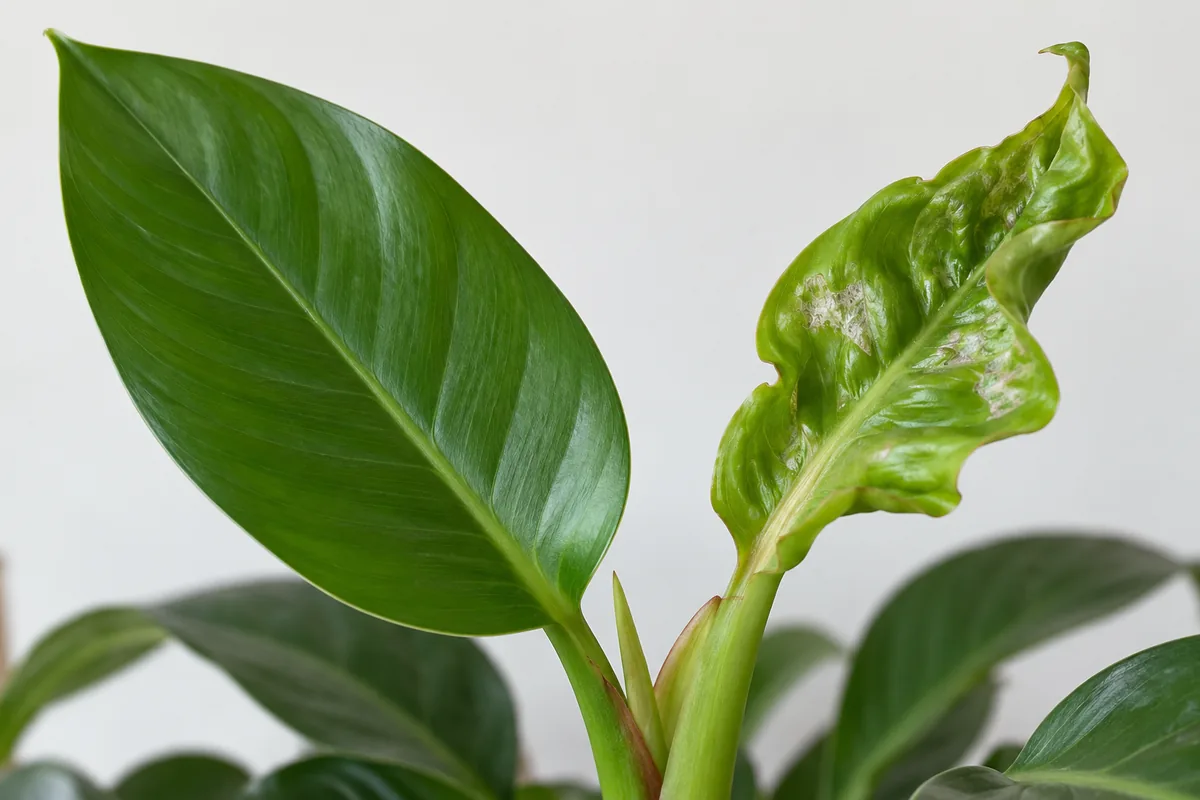
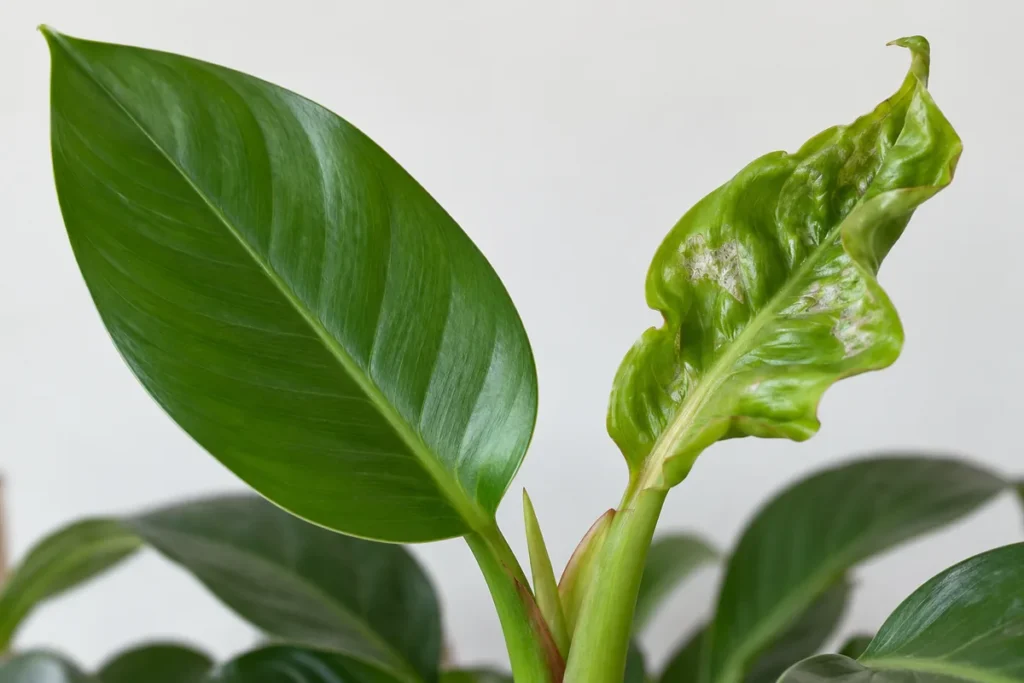
Puckered, twisted or cupped new leaves usually point to one of four things: sap-sucking pests such as thrips or mites, growth-regulator herbicide, a nutrient problem such as calcium, or root and environmental stress [1][5][6]. The causes look alike, so check the pattern: several new leaves in a row, silvery scars or dark specks suggest pests [1][2].
Key points
- One distorted new leaf followed by normal ones may not be an active problem; several in a row deserves a proper check.
- Silvery scars with tiny dark specks suggest thrips; thick, cupped new leaves may be broad or cyclamen mites [2][3].
- If several plants nearby are hit, or the plant sits near a spray source, consider herbicide [5].
- Treatment will not flatten damaged leaves; judge progress by the new leaves that follow [2].
How can you tell the cause from the pattern?
Start with the pattern, not a single guess. UC IPM lists aphids, mites, thrips and true bugs among the causes of distorted leaves [4], and its houseplant page names thrips plus broad and cyclamen mites [1]. It also warns that broad and cyclamen mite damage resembles boron or zinc shortage and herbicide injury [3]. So the table below only narrows things down.
On a phone, swipe sideways to see every column.
| Clue | Possible cause | Next step |
|---|---|---|
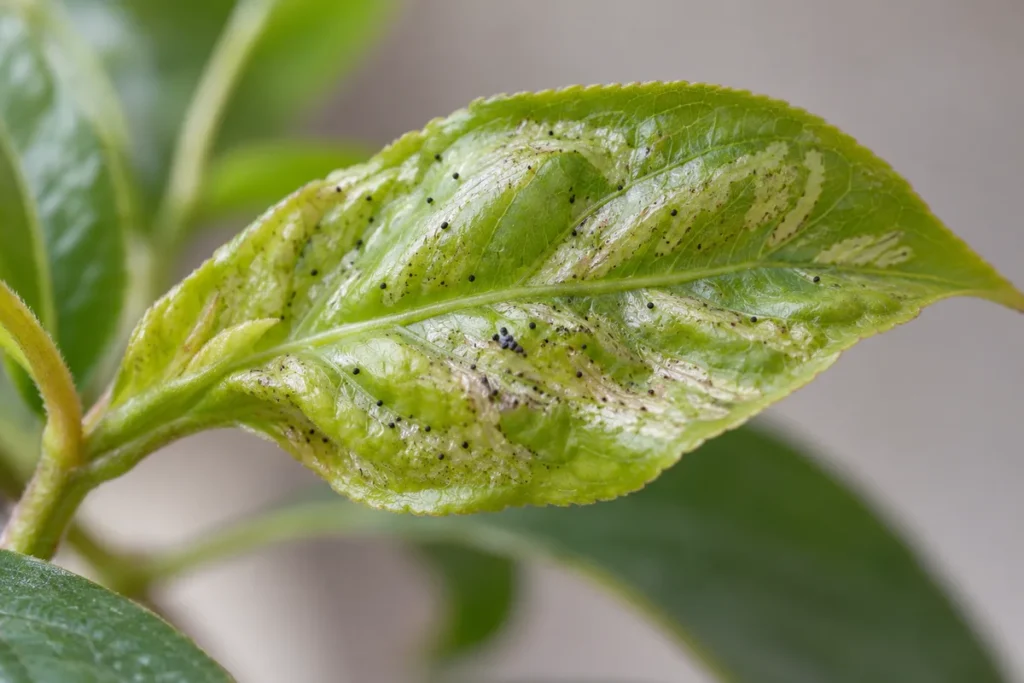
| Silvery or brown scars on new leaves, tiny dark specks nearby | Commonly thrips; UC IPM describes silvery scarring and dark frass [2] | Tap a new leaf over white paper; use yellow or blue sticky traps [2] |
| Cupped, curled, thick, small new leaves, buds affected | Possibly broad or cyclamen mites (flower-crop source) [3] | Check buds and leaf folds; mites are very hard to see, so consider expert help [1] |
| Curled new growth with white cast skins or stickiness | Possibly aphids [1] | Check undersides and tips; isolate if found |
| Several plants affected near a window or spray area, twisting appearing 1-2 weeks later | Possibly growth-regulator herbicide (garden source) [5] | Recall any spraying; move the plant away and watch new leaves |
| Growing tip alive but young leaves distorted, edges may dry | Possibly calcium shortage or another nutrient problem (greenhouse source) [6] | Rule out root rot, pests and poor drainage first; consider testing [6] |
| One puckered leaf, the next one normal | Our own inference: a one-off stress or a leaf that was held up while unfurling | Watch the next leaf; see leaves that struggle to unfurl |
Photograph the newest leaf every few days. If the next leaf is normal, the earlier distortion is old damage.
How do thrips, mites and aphids distort new leaves?
UC IPM says thrips rasp the leaf surface, leaving silvery or brown scarring and dark specks, plus curled or distorted shoot tips [2]. The key point is that damage often shows only after tissue has expanded, by which time the thrips may be gone [2]. Its houseplant page also lists thrips among pests that cause distorted growth [1].
Broad and cyclamen mites are tiny. UC IPM says their leaves become cupped, curled, dwarfed and thickened, and the mites feed in buds, where sprays rarely reach [3]. The houseplant page says these mites are too small to see unaided [1]. That is why distorted new growth sometimes has no visible culprit.
Aphids can also curl and distort leaves, and UC IPM mentions white cast skins [1]. If you suspect pests, see thrips, spider mites and aphids.
Evidence note: the UC IPM thrips page is written for gardens, and the calcium source is about greenhouse crops, so treat both as directions for houseplants, not rules.
How do you recognise herbicide injury?
University of Minnesota Extension says growth-regulator herbicides such as 2,4-D and dicamba can deform and stunt new growth, with symptoms showing about one to two weeks after a neighbour’s lawn is treated [5]. It adds that nutrient deficiencies tend to be even, while herbicide injury hits plants near the spray source [5].
That source is about outdoor gardens, and we found no source on indoor pots. Think of it only if your balcony or window plants sit close to a spray area; this is our own inference, not a source conclusion. Ask building management about recent spraying, or check whether other plants show the same pattern.
UC IPM also notes that chemical misuse can injure houseplants and that mite damage is sometimes mistaken for chemical injury [1]. Even if you suspect a chemical, check for pests.
Does calcium shortage cause distorted new leaves?
It can, but it is the easiest cause to over-blame. University of New Hampshire Extension says that in calcium shortage the growing tip stays alive while young leaves distort and edges may die back; it also says to rule out root rot, insects and poor drainage and to confirm with testing [6].
None of our sources say houseplants are commonly short of calcium. UNH’s tips on lowering humidity and spraying calcium are greenhouse practices and should not be copied to a living room pot. UC IPM also says mite damage looks like boron or zinc shortage [3], so adding calcium to a mite problem wastes time. For wider nutrient clues, see the nutrient deficiency guide.
What should you do about it?
- Move the plant away from others to stop any pest spreading.
- In good light, use a hand lens on new leaves, undersides, buds and leaf folds.
- Tap a new leaf over white paper to see if tiny insects fall out; yellow or blue sticky traps can help [2].
- If you see nothing but distortion continues, note for one to two weeks whether new leaves improve.
- If you suspect herbicide, move the plant away from the source, ventilate and watch new growth; do not add fertiliser straight away.
- If pests are confirmed, follow the product label; see also integrated pest management.
Remember that already-distorted leaves will not return to normal because of a treatment; UC IPM says they stay until they drop or are pruned and new growth appears [2]. Judge progress by new leaves, not old ones.
What should you avoid?
- Do not spray insecticide just because a leaf looks odd; UC IPM stresses confirming the pest first [2].
- Do not pile on fertiliser. Mite damage, boron or zinc shortage and herbicide injury can look the same [3], and extra feed can muddy the picture.
- Do not cut off the whole plant because of old distorted leaves; check the new ones first.
- Do not keep a suspect plant beside healthy ones.
How can you stop it happening again?
Prevention is early detection and keeping problems out. UC IPM notes thrips can spread on infested plants [2], so keep new plants apart for a while before placing them with others (our own advice). See quarantine and hygiene.
- Look at new leaves and buds once a week while they are small.
- In high-rise homes, notice any spraying near balconies and windowsills and move sensitive plants away.
- After a typhoon, tidy leaves and keep air moving so new growth is not damaged.
- Avoid frequent fertiliser changes; follow the label dose.
Hong Kong tip: strong wind and heat on balconies can also damage new growth. If only one leaf is affected, watch the next one first.
When should you get help or give up?
If several new leaves in a row are distorted, growth has stalled or roots look unhealthy, ask a plant professional to inspect the real plant. Mites are hard to see and hide in buds [1][3], so a hand lens or an expert may be needed.
If only a few leaves are affected and new growth is gradually normal, you can usually keep the plant. If every new leaf stays distorted for months after environment and roots are ruled out, then consider whether it is worth keeping. That timeframe is our own rule of thumb; the sources give no standard.
Frequently asked questions
Is puckered new growth always thrips?
No. UC IPM lists aphids, mites, thrips and true bugs among the causes of distorted leaves [4]. Look at the pattern, marks and any insects before deciding.
Why can’t I find any insects?
UC IPM says damage often appears after tissue has expanded, when thrips may have left [2], and broad and cyclamen mites are tiny and feed in buds [3].
Will distorted leaves flatten out again?
UC IPM says pesticides will not restore injured tissue [2]. We found no source saying distorted leaves recover on their own; judge progress by the next new leaves.
Should I just add calcium?
We would not. UNH says to rule out root rot, insects and poor drainage first and to confirm by testing [6], and UC IPM says mite damage resembles boron or zinc shortage [3].
Can a neighbour’s weed spray harm indoor plants?
Outdoor sources say growth-regulator herbicides distort new leaves, with symptoms about one to two weeks later [5]. We found no source on indoor pots, so treat it as a lead to check, not a conclusion.
Sources
- UC IPM (University of California): “Houseplant Problems” — Houseplant pests that distort growth: thrips, aphids, broad and cyclamen mites; mite damage can pass for chemical injury
- UC IPM (University of California): “Thrips” — Thrips damage signs, confirmation (white paper, sticky traps), pesticides do not restore injured tissue (garden setting)
- UC IPM (University of California): “Broad Mite and Cyclamen Mite” — Broad and cyclamen mites cup, curl and thicken leaves; feed in buds; boron or zinc shortage and herbicide look similar
- UC IPM (University of California): “Common Signs and Symptoms on Plants Damaged by Pest Insects, Mites, Slugs, and Snails (Arthropods) and the Probable Causes” — Distorted leaves can come from aphids, mites, thrips, true bugs and others (nursery setting)
- University of Minnesota Extension: “Herbicide injury on garden plants” — Growth-regulator herbicides deform new leaves; symptoms after about 1-2 weeks; deficiencies tend to be even, herbicide injury hits plants near the source (garden setting)
- University of New Hampshire Extension: “Scouting & Managing Greenhouse Nutrient Problems” — In calcium shortage the tip stays alive but young leaves distort; rule out root rot, insects and poor drainage first; confirm by testing (greenhouse setting)
Further reading
- Back to Plant Doctor
- Thrips: silvery scars and dark specks
- Nutrient deficiency guide
- New leaves smaller than usual
- Quarantine and hygiene for new plants
- New leaves that struggle to unfurl
Sources checked: 31 October 2026. This is general guidance, not an on-site diagnosis. Always follow the product label.
