



Level: Beginner
Chill damage happens at temperatures above freezing but too cold for the plant, and UF/IFAS Extension says many tropical foliage plants can be harmed below about 10°C [3]. Symptoms can appear days later, so do not rush to cut leaves [4][6].
Key points
- Chill damage does not need frost. Tropical and subtropical plants are the most vulnerable, and longer exposure, lower temperatures and faster drops all raise the risk [3][4][5].
- Symptoms can keep developing for days. Landscape guidance suggests waiting 3-7 days before judging, and avoiding feeding, heavy pruning and excess watering meanwhile [4][6].
- Hong Kong’s urban January mean minimum is about 14.6°C [7], usually above the chill range, but windowsills, balconies and draughty spots can be colder at night.
- Most of the research comes from greenhouses, nurseries or landscape plants, so applying it to potted houseplants is an inference [3][5][6].
How can you tell chill damage from other problems?
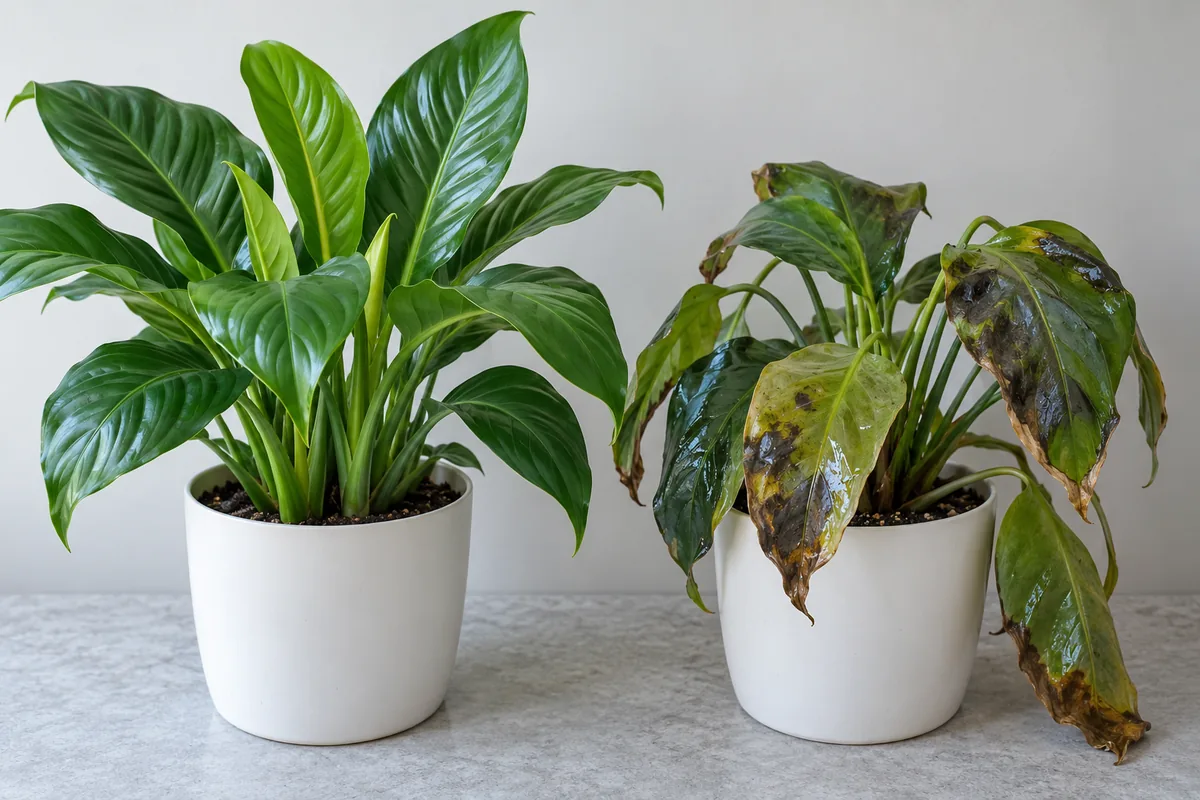
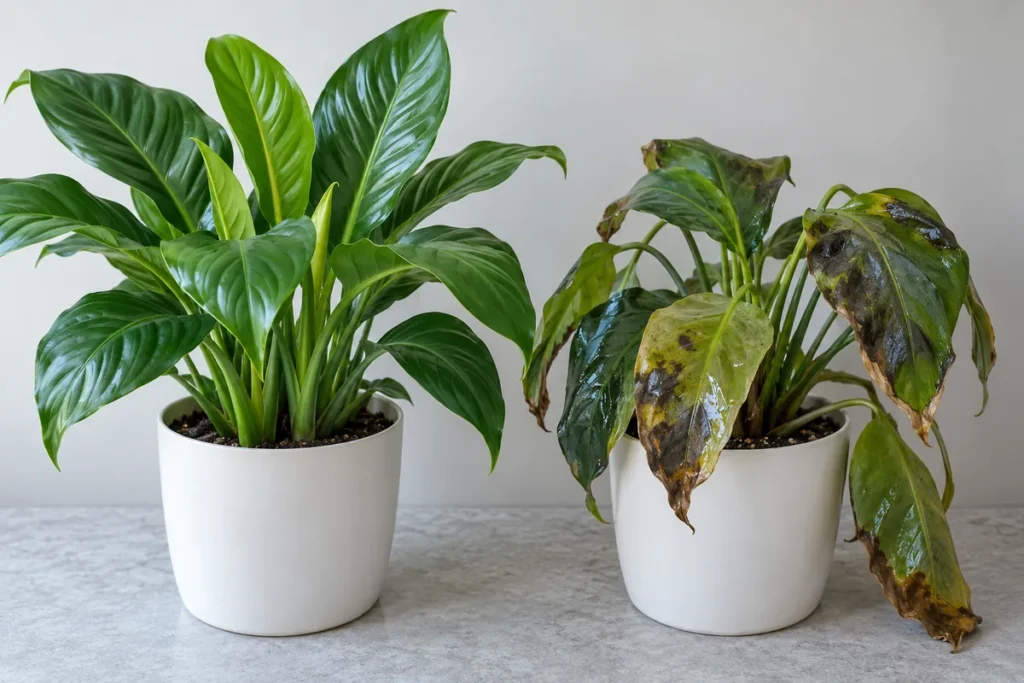
Check whether the plant has recently been cold, then look at the symptoms. The Royal Horticultural Society says blackened leaves, leaf droop and whole-plant collapse are symptoms of cold damage, commonly seen in unheated rooms such as porches [1]. UF/IFAS lists the common signs as rapidly wilting leaves with water-soaked areas, sunken pits, faster ageing, more decay, reduced growth, and browning of damaged tissue after warming [3].
Damage may not show at once. In a UF/IFAS Dieffenbachia trial, one cultivar still had more injured leaves 5 to 12 days after chilling [4]. Dieffenbachia is considered one of the most sensitive foliage genera, so your plant may behave less dramatically, but a delay of days is a reasonable expectation [4].
On a phone, swipe sideways to see every column.
| Clue | Possible cause | Next step |
|---|---|---|
| Leaves water-soaked, dark or limp after a cold night | Chill damage is more likely [3][4] | Move to a warm, sheltered spot, do not cut yet, reassess after 3-7 days [6] |
| Blackened leaves and droop in an unheated porch or by a window | Cold damage is common here [1] | Check the plant’s temperature needs and move it from the cold spot [1] |
| Yellow leaves with dry edges, plant in an airflow | RHS says draughts can cause yellowing and dry edges, so wind may be the issue, not just cold [1] | Check airflow; see plants in air-conditioned rooms |
| Stem base turning reddish-brown and soft | UF/IFAS describes this on chilled Dieffenbachia, progressing to a collapsing stem [4] | Check the base and compare with stem rot |
| Droops but the mix is still wet | Cold or root rot, and the two can occur together | Unpot and check roots; see root rot |
| White or brown patches after moving to a bright window | Probably not cold | See leaf sunburn |
Hong Kong note: during humid spells before or after a cold front, glossy wet-looking leaves are not always chill damage. Judge by recent minimum temperature, location and symptoms together.
What temperature harms tropical plants in Hong Kong?
It depends on the species and on how long the cold lasts, and sources do not agree on a single number. UF/IFAS says most subtropical and tropical foliage plants are susceptible below about 10°C, with chilling injury defined between freezing and roughly 8-12°C [3]. Another UF/IFAS publication gives a wider chilling range from just above freezing to about 15°C [4]. UC IPM adds that tropical and subtropical plants are the most susceptible and that a rapid, substantial drop can injure many species [5]. A safe habit is to treat about 10°C as a starting point, not a safe line.
For Hong Kong, Observatory 1991-2020 normals show a mean daily minimum of about 14.6°C in January, 15.3°C in February and 16.2°C in December at headquarters [7]. These are long-term monthly averages and sit above the ranges above, but on the coldest nights the minimum can be well below the monthly mean (our inference, not part of that table). An Observatory officer once said 12°C is an important reference point for cold weather warnings, which also weigh humidity and wind [8]. That is a guide for people, not a plant threshold.
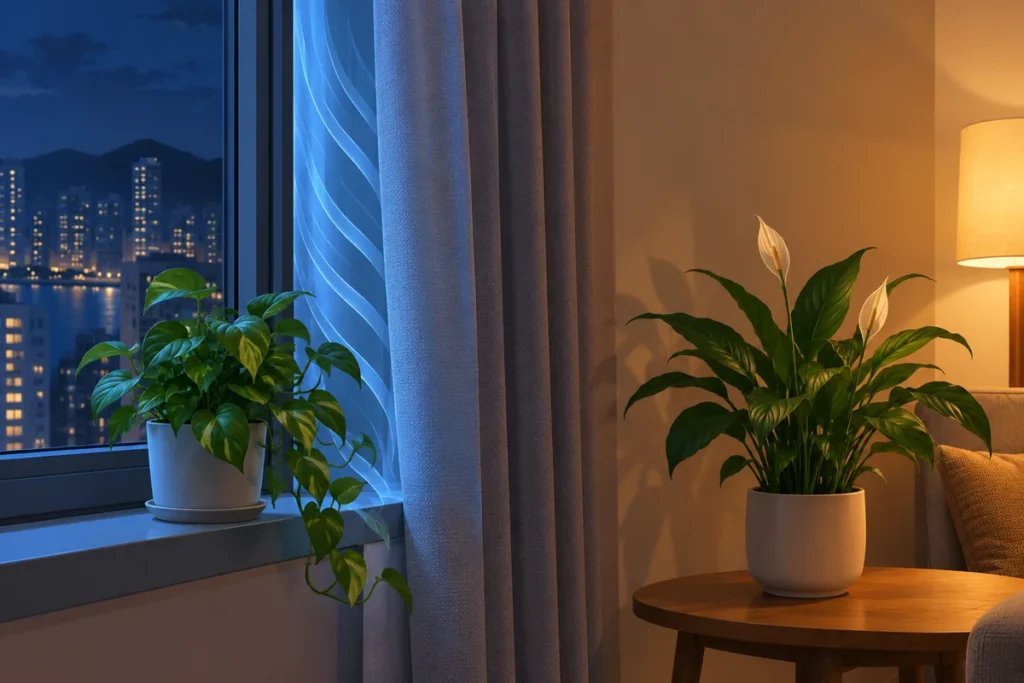
Indoors is not automatically safe. UF/IFAS notes that interior plants can suffer chilling injury if indoor temperatures fall low enough for long enough [4], and the RHS says plants on windowsills can suffer when cold air is trapped between glass and curtains [1].
Species also differ widely. In the UF/IFAS Dieffenbachia trial, cultivars ranked very differently, with some barely affected and one dying completely after a short chill [4]. Check your own plant’s label or a reliable guide for its temperature needs [1].
What should you do before and after a cold night?
Move plants off cold spots beforehand, then wait before acting afterwards. Some steps below come from houseplant advice and some from greenhouse or landscape sources, and each is labelled.
- Before the cold, pull plants away from windows and draughts. The RHS advises against leaving houseplants on windowsills behind curtains on frosty nights [2], and notes cold air collects behind curtains [1]. Hong Kong rarely has frost, so applying this is our inference.
- Bring balcony pots indoors or tuck them against a sheltered wall. UC IPM suggests covering sensitive landscape plants overnight with cloth rather than plastic, with the cover open at the bottom so soil heat helps [5]. On a balcony, check that a cover cannot blow away.
- Keep the mix neither bone dry nor soaked. UC IPM suggests irrigating dry topsoil at least 3 days before cold weather to help soil hold heat [5], and UF/IFAS says dry media hold less heat [3]. After the cold, UF/IFAS says to keep soil slightly moist but not saturated, because overwatering limits oxygen [6]. For pots, check the mix first; see how to water.
- After the cold, do not cut yet. UF/IFAS says wait at least 3-7 days before assessing injury [6].
- Avoid feeding, heavy pruning and excess water meanwhile. UF/IFAS says these can add stress and encourage weak new growth [6].
- Prune once new growth shows. Green tissue is alive and brown or black tissue is damaged; if unsure, wait for new growth so you do not cut living tissue [6].
None of these sources give a recovery timetable for houseplants. UF/IFAS only says injury depends on temperature, duration and plant condition [3][4]. New leaves are the best sign.
What should you avoid during a cold snap?
- Cutting off every black leaf immediately. Symptoms can keep changing for days [4], and UF/IFAS suggests waiting 3-7 days [6].
- Watering and feeding in a panic. UF/IFAS advises against feeding and excess watering after cold damage [6].
- Wrapping the plant tightly in plastic overnight. UC IPM recommends cloth, not plastic [5]. Plastic against leaves may also trap moisture (our inference).
- Warming a chilled plant quickly beside a heater or hot vent. The RHS notes that plants near direct heat often suffer scorched leaves [1], and UF/IFAS describes browning developing when warm weather follows chilling [3].
- Assuming Hong Kong is never cold enough. Windowsills, balconies and windy corners can be colder at night than the middle of a room (a general inference; measure with a thermometer).
How do you prevent cold damage at home?
Know what your plants need and avoid cold spots. The RHS suggests checking the plant label, RHS Find a Plant or a reliable book for temperature needs and comparing them with what the plant actually gets [1]. A small thermometer that records the night minimum on a windowsill, on the balcony and mid-room is more reliable than guessing.
- Curtains: on cold nights, move windowsill plants away from the glass before drawing the curtains [1][2].
- Balcony wind: UF/IFAS notes dry winds can make plants lose water faster than cold-limited roots can replace it, causing leaf-tip burn up to fully brown leaves [6]. Watch exposed pots, and see high-rise balconies.
- Water less in winter: most plants take up less water in cool months; see dormancy.
- Choose plants suited to your conditions: UC IPM advises choosing species adapted to the local climate and seasonal temperatures [5].
When should you give up or ask a specialist?
If the stem base is soft and collapsing and the whole plant looks water-soaked and smells bad, recovery is less likely. In the UF/IFAS Dieffenbachia trial one sensitive cultivar died entirely after a short chill [4], but cultivars differ widely, so do not assume your plant will behave the same.
A safer approach is to wait 3-7 days [6], inspect the stem base and roots, and then decide how much to keep. If green tissue remains, keep it. If you also suspect root rot, see root rot. If the plant matters to you or several plants show the same pattern, photograph them and ask a plant specialist.
This is general guidance only. For balcony or rooftop plants, put your own safety first during strong cold winds and wet surfaces.
Frequently asked questions
Should I cut off black leaves straight after a cold snap?
Better to wait. Cold damage often looks worst just after the event, and UF/IFAS recommends waiting at least 3-7 days before assessing injury [6]. Symptoms can also keep developing [4], so cutting early may remove tissue that is still alive.
What temperature in Hong Kong harms plants like money trees or monstera?
We did not find a reliable species-by-species table for those plants, so we cannot give a threshold for each. UF/IFAS says many tropical foliage plants can be harmed below about 10°C [3], but species differ widely, so check your plant’s label or a reliable guide [1].
Why is my plant drooping after the cold when the mix is still wet?
Cold can make leaves limp [1][3], and overly wet mix can limit oxygen [6]. Both can occur together, so drooping alone cannot separate them. Unpot and check roots; see root rot.
Can I wrap a plant in plastic overnight to keep it warm?
UC IPM recommends cloth rather than plastic, with the cover left open at the bottom [5]. That advice is for landscape plants, so on a balcony make sure the cover cannot be blown away.
How should I place a windowsill plant on winter nights?
Move it away from the glass before drawing the curtains. The RHS says cold air is trapped between window and curtain [1], and advises not leaving houseplants on windowsills behind curtains on frosty nights [2]. Hong Kong rarely has frost, so this is an application by inference.
Sources
- Royal Horticultural Society (RHS): “How to Help a Poorly Houseplant” — Cold damage symptoms, checking a plant’s temperature needs, cold air trapped behind curtains
- Royal Horticultural Society (RHS): “Greenhouse, conservatory and houseplants: January tips” — Not leaving houseplants on windowsills behind curtains on frosty nights (UK setting)
- UF/IFAS Extension: “Cold Protection of Foliage Plants in Shadehouses and Greenhouses” — Chilling injury temperature range, common symptoms, how dry and wet media hold heat (shadehouse and nursery setting)
- UF/IFAS Extension: “Chilling Injury in Tropical Foliage Plants: III. Dieffenbachia” — Chilling injury depends on exposure time, can occur indoors, Dieffenbachia symptoms, damage that kept increasing days after chilling (one-genus trial)
- University of California IPM (UC IPM): “Chilling Injury” — Tropical plants most susceptible, rapid temperature drops can injure, covering with cloth not plastic overnight (landscape plants)
- UF/IFAS Extension, Miami-Dade County: “Good Strategies for Cold Damage in the Landscape: Recovery, Not Panic.” — Waiting 3-7 days before assessing, avoiding feeding, heavy pruning and excess water, pruning once new growth shows (landscape plants)
- Hong Kong Observatory: “Monthly Meteorological Normals for Hong Kong (1991-2020)” — 1991-2020 monthly mean daily minimum temperature (Observatory headquarters)
- Hong Kong Government News (news.gov.hk): “Record cold weather warning lowered” — Observatory officer on cold weather warnings weighing temperature, humidity and wind, with 12°C as a reference point (2004 report)
Further reading
- Back to Plant Doctor
- Plants in air-conditioned rooms
- Dormancy: adjusting water and feeding in winter
- Root rot: how to confirm it, treat it and when to stop
- High-rise balconies: wind, salt and reflected heat
Sources checked: 31 October 2026. This is general guidance, not an on-site diagnosis. Always follow the product label.
